


Italian Renaissance Chest
An italian renaissance chest carries the weight of centuries in solid walnut and cypress, offering timeless storage that anchors a room with undeniable historical presence.
Italian Renaissance Chest
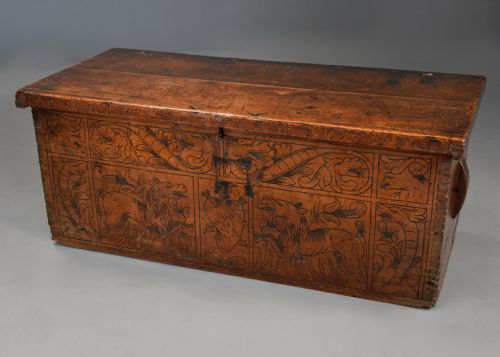
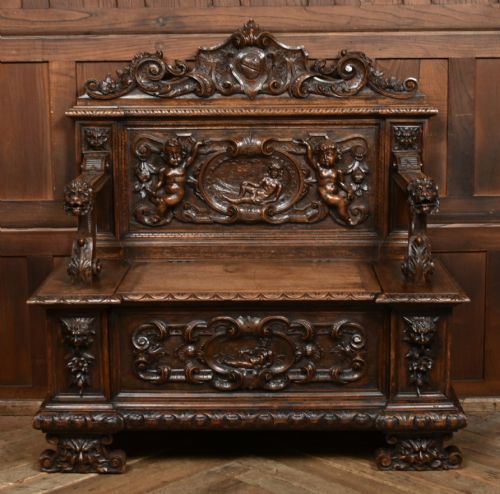
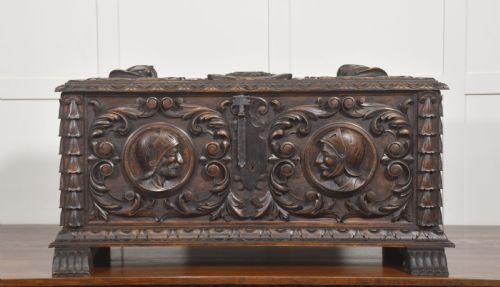
When you search for an italian renaissance chest, you encounter substantial antique storage pieces that range from early walnut coffers to nineteenth-century revival cassoni and cassapanca benches. These objects function primarily as heavy trunks, marriage chests, and decorated storage boxes created for grand domestic interiors.
The versions most commonly met on this page include seventeenth-century walnut chests alongside nineteenth-century Renaissance revival examples featuring marquetry, figural medallions, or bone inlay. Alongside standard chests, the selection extends to related forms such as table cabinets, caskets, hall benches, and commodes.
Materials and construction
Construction relies heavily on dense timbers such as walnut, cypress, cedarwood, and fruitwood, often joined with robust iron hardware. Workshops shaped these primary woods through carving, panel construction, and surface gilding.
Decorative detailing incorporates contrasting elements including ebony, bone inlay, and multi-wood marquetry. Gilt wood and gilt decorations further enhance specific surfaces on formal pieces.
Italian Renaissance Chest Retail Price Guide 2026
Typical asking prices for italian renaissance chest among the pieces listed under this phrase on Sellingantiques today, from the lower quarter to the upper quarter. They describe what is for sale here now, not the wider market.
Some nineteenth-century makers could not resist adding tiny bone-inlaid details to tables just to show off their intricate sawing skills.
Judging quality and period character
Quality rests upon the crispness of the original carving and the integrity of the timber patination. Pieces retaining their early surface character demonstrate superior craftsmanship compared to heavily restored examples.
The sophistication of secondary decorative elements, such as figural medallions, bone-inlaid panels, and marquetry work, distinguishes standard regional production from exceptional workshop output.
The Italian Renaissance Chest Glossary
- Cassone
- A large Italian chest or coffer traditionally associated with marriage and used to hold bridal trousseaus. These pieces frequently display rich carvings and gilt decoration.
- Cassapanca
- An Italian wooden bench featuring a high back and arms, with a seat that lifts to reveal a storage chest beneath. This form combines seating with the utility of a coffer.
- Coffer
- A strongbox or chest used for storing valuables, textiles, or documents. They typically feature heavy timber construction and secure iron fittings.
- Marquetry
- The art of applying pieces of veneer to a structure to form decorative patterns and pictures. It utilises various contrasting woods and organic materials.
- Bambocci
- Carved figurative supports or small grotesque figures often found on northern Italian furniture. They add sculptural animation to cabinet and commode corners.
Italian Renaissance Chest: Frequently Asked Questions
What is a cassone?
A cassone is a traditional Italian marriage chest used historically to transport and store a bride's household goods and linens.
These large trunks were often commissioned for weddings and decorated with elaborate carvings, gilt wood, or painted panels.
How were these chests used?
These pieces served primarily for the secure storage of valuable textiles, clothing, documents, and household treasures in grand interiors.
Some variants, like the cassapanca, doubled as seating benches while maintaining internal storage capacity.
How do I live with an antique chest?
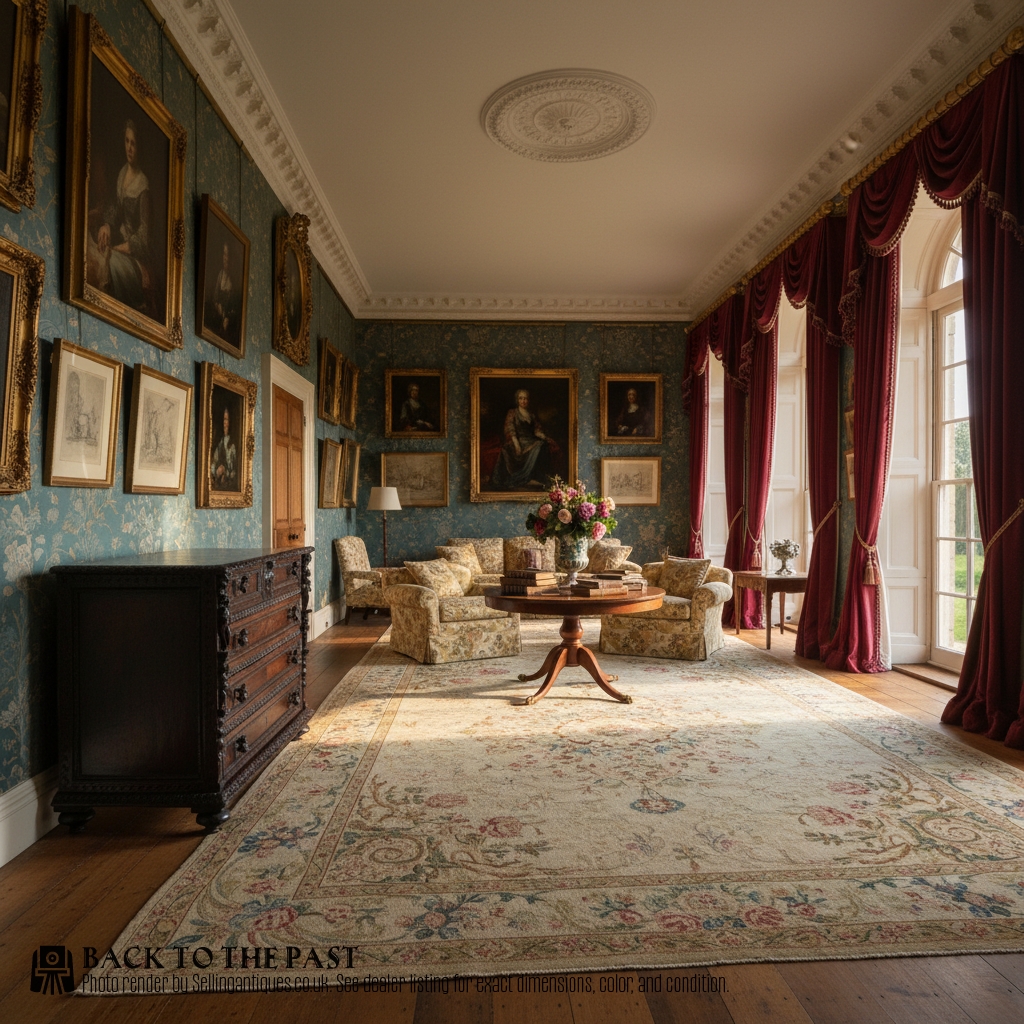
An antique chest functions effectively as a coffee table, blanket box, or sculptural focal point in a hallway or living room.
Keep wooden surfaces away from direct heat sources and sudden humidity changes to preserve the ancient timber and patination.
How do I tell original pieces from revivals?
Original period pieces show authentic timber shrinkage, period-appropriate joinery, and natural wear patterns built up over centuries of use.
Nineteenth-century revival pieces often display mechanical uniformity or eclectic material combinations like bone inlay and fruitwood characteristic of later craftsmanship.