

Antique Oak Bureau Desk
An antique oak bureau desk offers a solid fall-front writing surface combined with practical storage for correspondence and documents.
What these pieces are
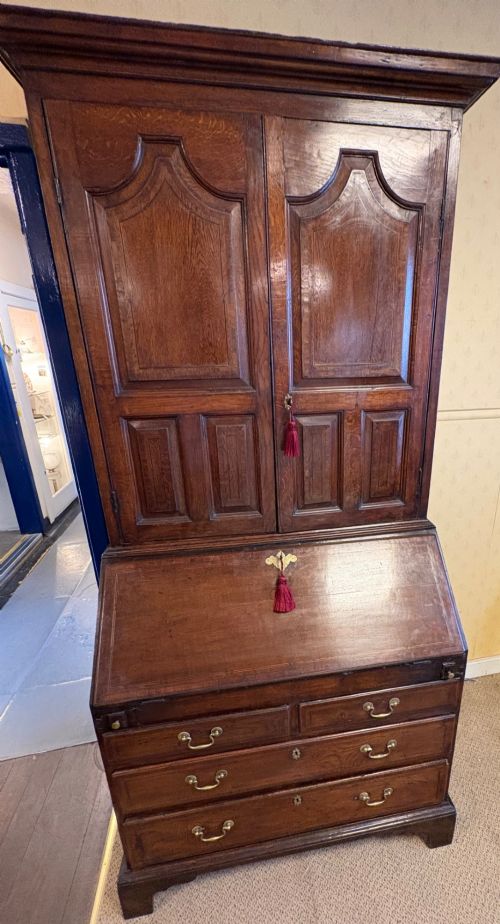
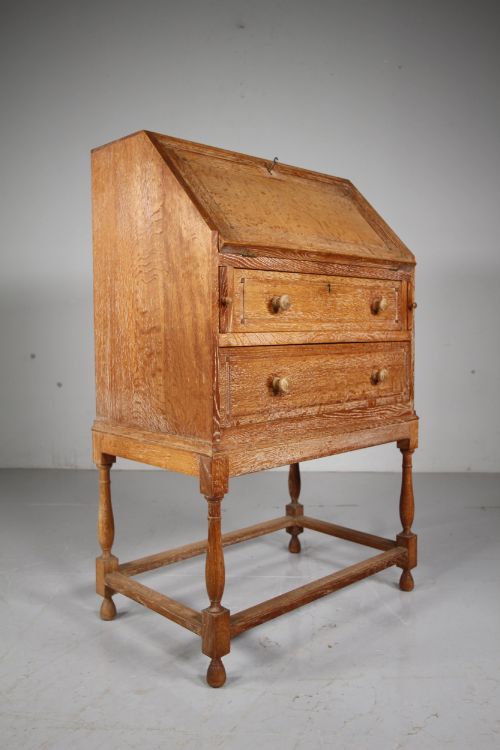
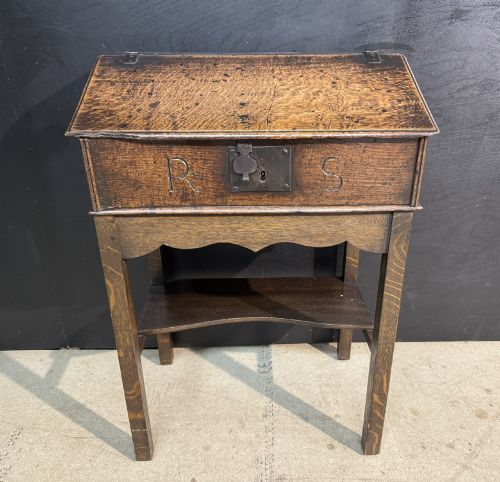
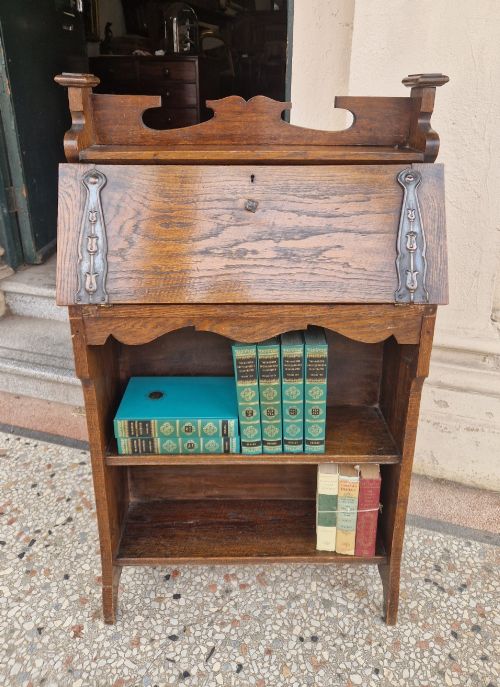
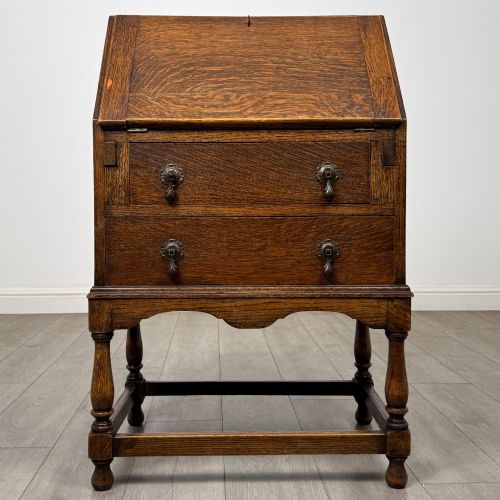
An antique oak bureau desk is a functional writing cabinet designed with a sloping fall-front flap that opens to reveal a fitted interior of small drawers and pigeonholes. These items range from sturdy seventeenth-century forms to refined eighteenth-century Georgian examples and later revival pieces.
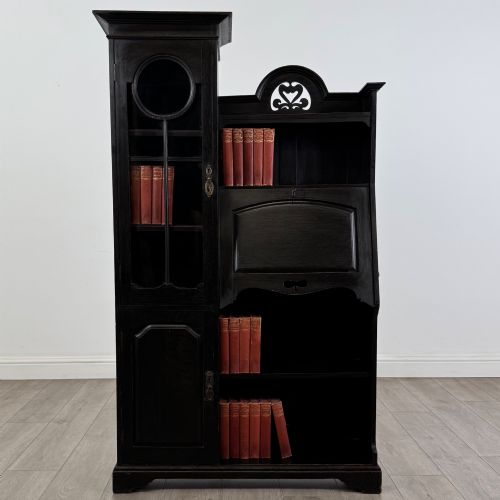
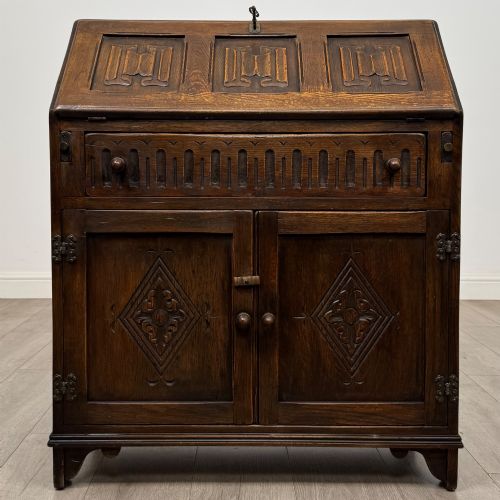
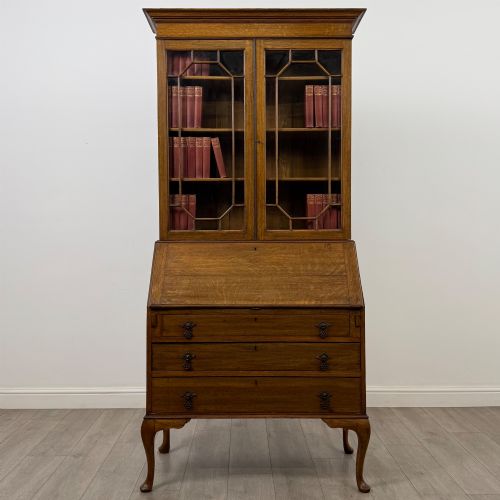
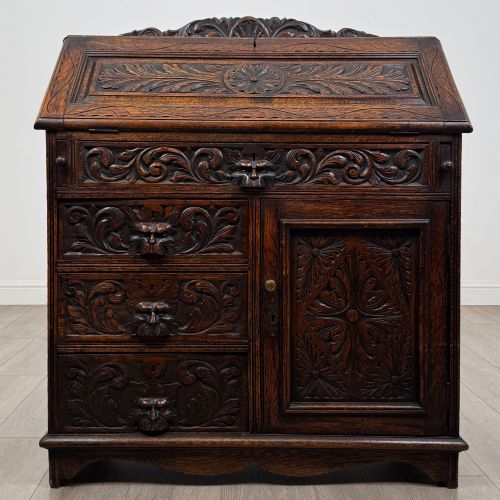
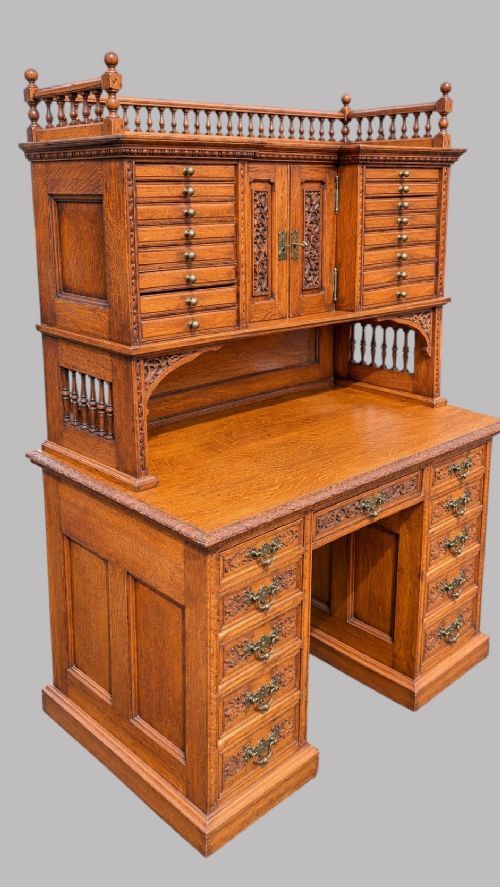
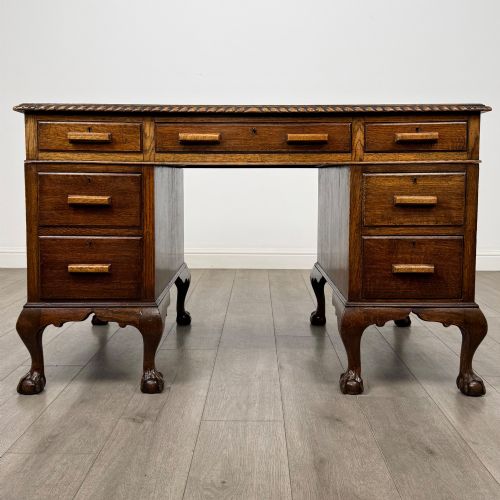
The pieces seen on this page span the seventeenth century, the Georgian period, the Victorian era, and the Edwardian period, up to the nineteen-twenties. Buyers frequently encounter Edwardian and Jacobean revival interpretations alongside earlier Georgian clerk and office desks.
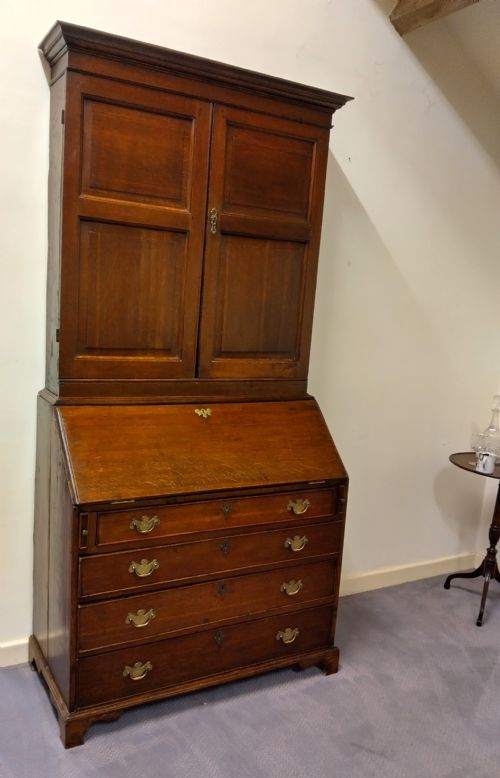
Forms include slimline roll-top variations, bureau bookcases, and compact country desks featuring internal secret drawers. The primary timber across all periods is oak, occasionally accompanied by brass hardware or secondary woods.
How they were made
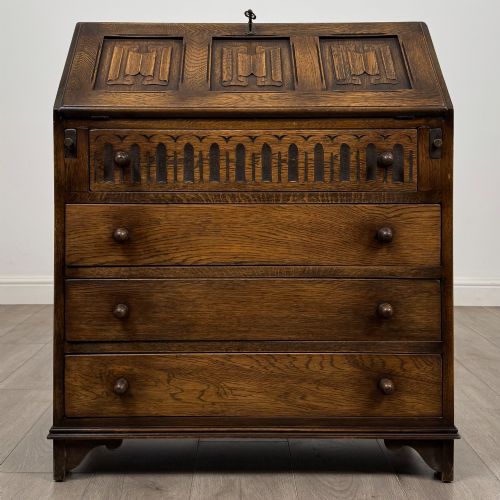
Cabinet makers utilised solid oak timbers, joining panels with traditional methods such as dovetailing for drawer construction and mortise and tenon joints for frames. Surfaces display carved linenfold motifs, geometric panels, or plain grain depending on the period.
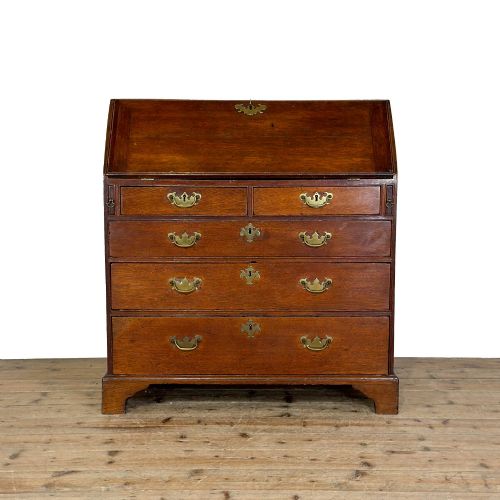
Hardware consists of brass handles and escutcheons secured to the fall-fronts and drawer fronts. Interiors are constructed with small pigeonholes, hidden compartments, and miniature drawers assembled by hand.
Retail Price Guide 2026
Typical UK retail prices for oak bureau desk, calculated from the Sellingantiques database of over a million retail prices indexed since 2003. This retail price guide relies exclusively on Sellingantiques data; no external sources or auction records are used, so the figures do not describe the wider market.
Listings feature oak material across periods from the 17th century through the Edwardian era and 1920.
What varies in quality
Quality rests in the selection of the oak timber and the precision of the internal arrangement. Superior examples exhibit finely figured grain and intricate internal configurations with secret compartments, whereas simpler pieces show plain construction.
The integrity of the fall-front hinges and the smoothness of the drawer actions distinguish higher grade desks from standard utility items. Carved decoration ranges from crisp, deep hand-carving to simpler, mechanical execution on later revival pieces.
Wylie & Lochhead·Globe Wernicke·Liberty
The Antique Oak Bureau Desk Glossary
- Bureau
- A writing desk with a sloping hinged lid that covers a fitted interior of drawers and pigeonholes. This form provides a concealed workspace when closed.
- Fall-front
- The hinged sloping panel on a bureau that drops down to form the writing surface. It rests upon pull-out lopers when opened.
- Lopers
- The wooden pull-out supports that slide out from beneath the fall-front to hold the writing flap level. They prevent the hinges from bearing the full weight of the user's arms.
- Pigeonhole
- A small open compartment inside the desk interior used for sorting letters and papers. These compartments often surround a central small cupboard or secret drawer.
- Secretaire
- A cabinet or chest containing a built-in writing drawer or fall-front writing compartment. The term frequently applies to pieces combining drawer storage with a desk function.
Frequently Asked Questions
How do I use a bureau desk?
Pull out the wooden lopers beneath the sloping flap, then lower the fall-front to create a stable writing surface. The internal compartments store stationery, while the lower drawers hold larger documents.
Keep the leather or wood writing surface conditioned and avoid placing heavy loads on the open fall-front flap to protect the hinges.
How do I spot a secret drawer?
Examine the pigeonhole section inside the bureau for removable partitions, sliding panels, or false bottoms. These concealed spaces often require pressing a hidden spring or removing an inner small drawer to release.
Cabinet makers in eighteenth and nineteenth-century desks built these compartments to secure private letters and valuables.
How do I tell periods apart?
Seventeenth-century and revival pieces display heavy oak construction with geometric mouldings or carved linenfold panels. Georgian desks show cleaner lines, finer dovetailing, and proportions designed for domestic writing.
Victorian and Edwardian items often incorporate tambour shutters, roll-top mechanisms, or revival styles reflecting earlier historic aesthetics.