
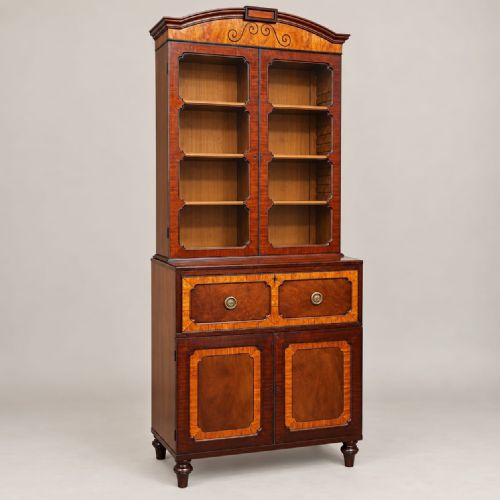
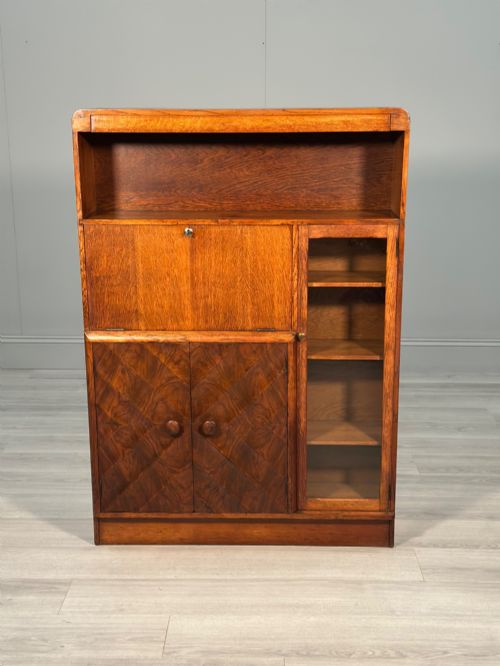
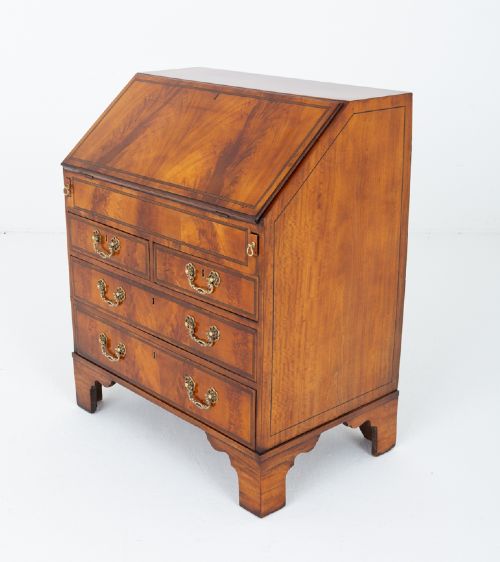
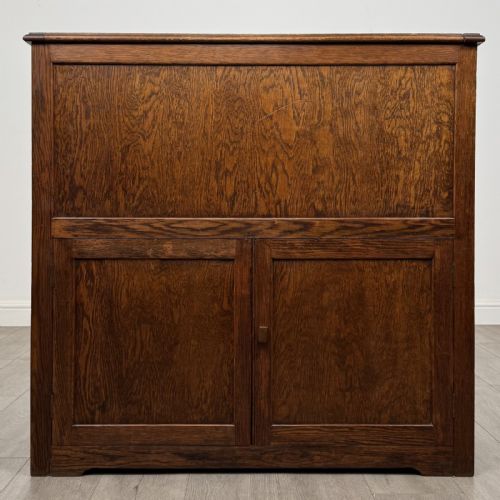
Vintage Wooden Bureau Desk
A vintage wooden bureau desk offers dedicated writing space and clever compartment storage, uniting historical craftsmanship with practical daily utility.
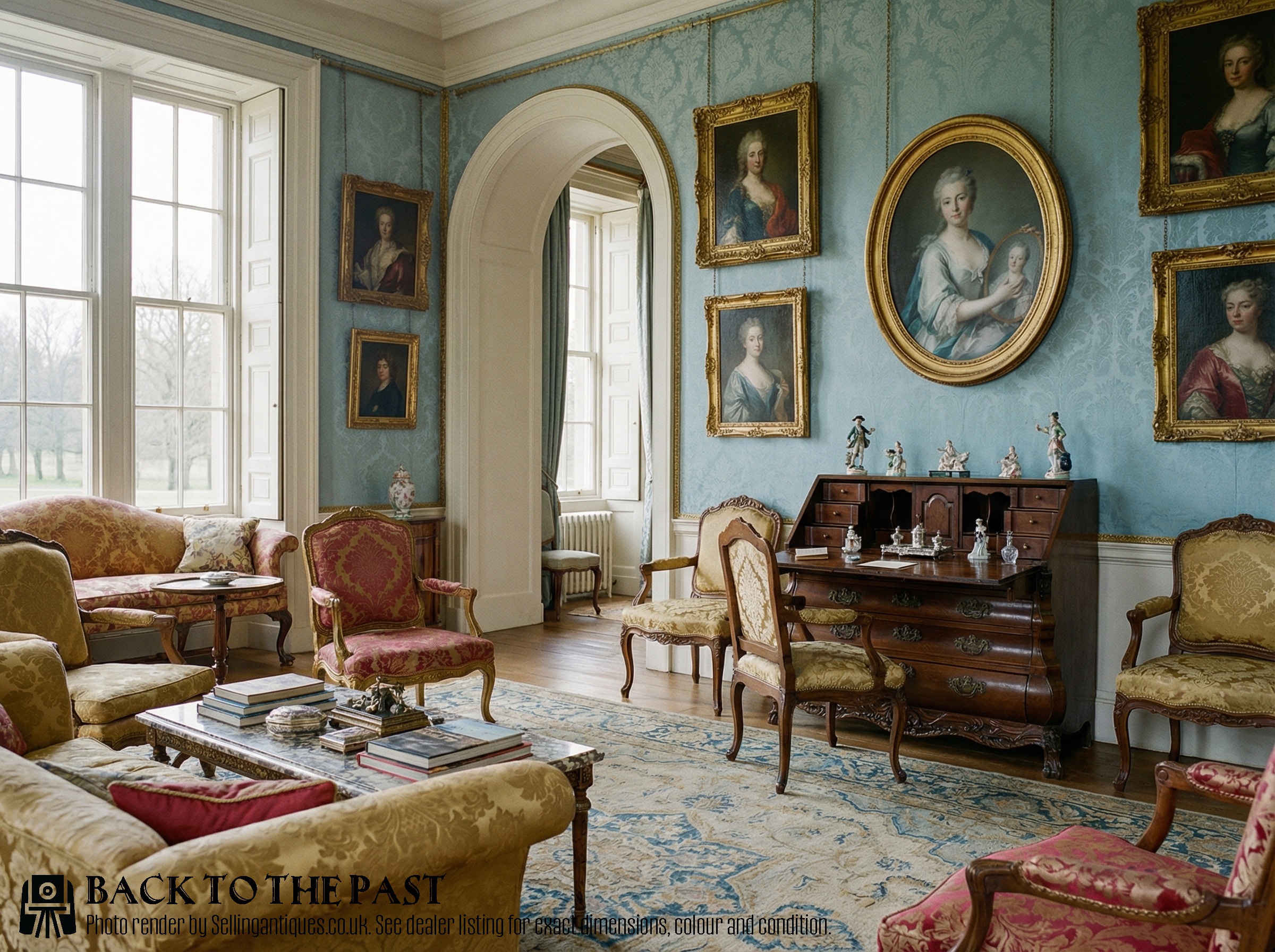
Vintage Wooden Bureau Desk
A vintage wooden bureau desk encompasses writing furniture designed with enclosed compartments, drop-front flaps, cylinder lids, or roll tops for domestic and study use. Buyers exploring this category encounter a diverse selection spanning Georgian, Victorian, Edwardian, and Art Deco periods.
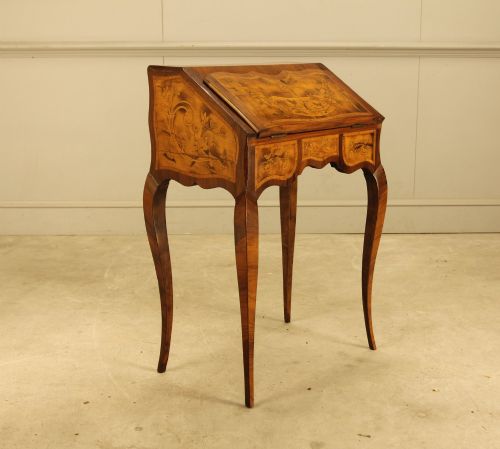
The assortment includes traditional fall front writing bureaux, pedestal desks, cylinder desks, and bureau bookcases originating from English, French, and Welsh workshops. Mahogany, oak, and walnut form the predominant structural choices across these traditional and Arts and Crafts forms.
Makers ranging from large retail furnishers to specific regional craftsmen produced these utilitarian pieces to serve domestic study and library needs. The surviving examples demonstrate how historic writing furniture adapts to modern home offices while retaining period character.
Materials and construction
Cabinet makers utilised dense hardwoods including mahogany, oak, walnut, and maple, often applying decorative satinwood or burr elm veneers to primary surfaces. Structural stability relied on traditional joinery techniques paired with timber framing suited to heavy domestic use.
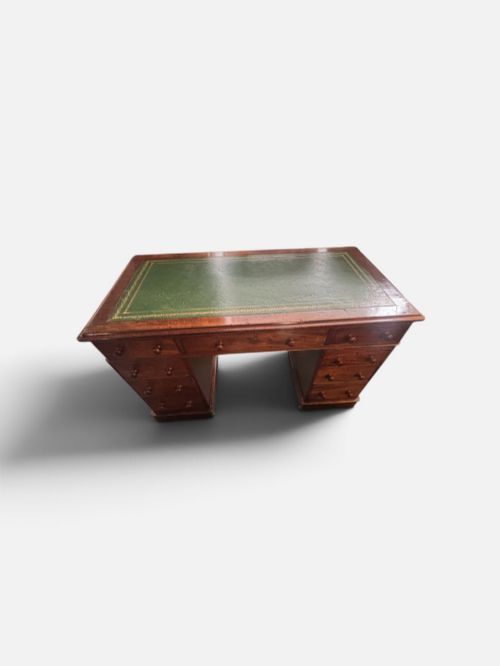
Writing surfaces frequently incorporated inset leather panels bordered by gold tooling to provide a smooth, durable medium for handwriting. Brass handles, key escutcheons, and glass panel doors completed the fitted interiors and external cabinetry.
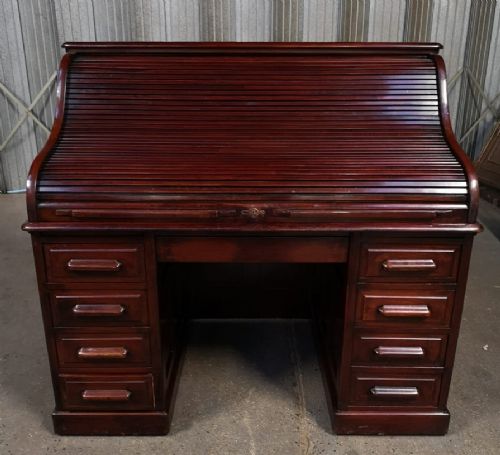
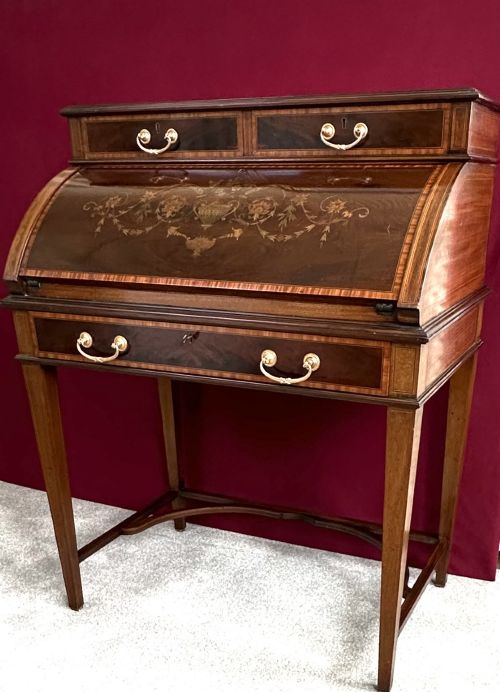
Specialised mechanical elements such as tambour shutters, roll tops, and fall-front hinges allowed internal pigeon holes and small drawers to remain concealed when not in use.
Listings feature wooden writing furniture spanning Georgian, Victorian, Edwardian, and Art Deco periods, executed in mahogany, oak, and walnut.
Distinctions in quality
Quality rests upon the selection of timber figures, such as burr walnut or figured mahogany, and the precision of the cabinet maker's joinery. Superior pieces display seamless integration of internal drawers, smooth mechanical actions for cylinder tops, and original brass hardware.
Maker attribution elevates certain examples, particularly those bearing labels from established furnishers or documented craftsmen from the Cotswold School and London workshops. The integrity of secondary woods, original leather inserts, and internal compartment layouts also distinguish standard production items from finer commissions.
James Mein of Kelso·Heals of London·Arthur Basil Reynolds·Bryn Mawr·Maple and Co·Étienne Kohlmann
The Vintage Wooden Bureau Desk Glossary
- Fall front
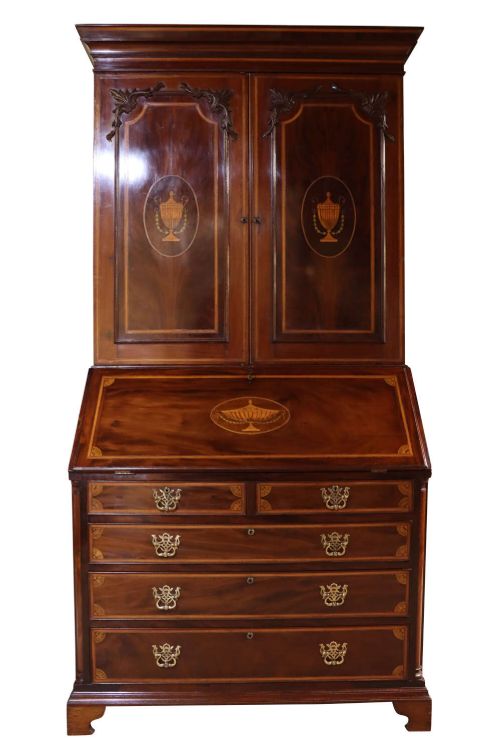
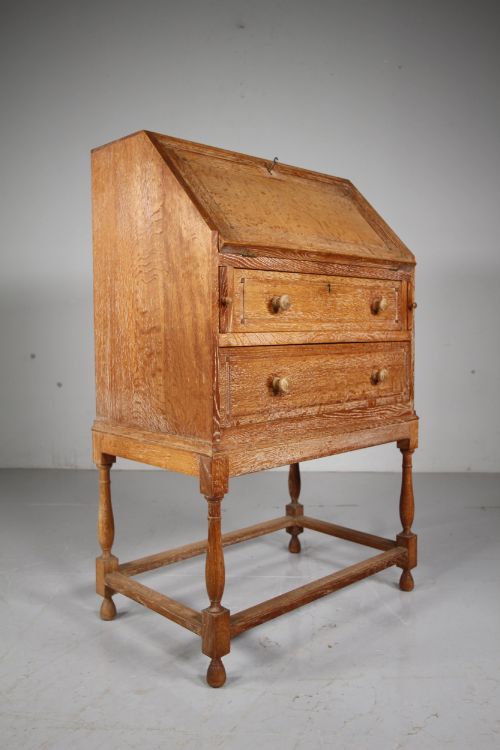
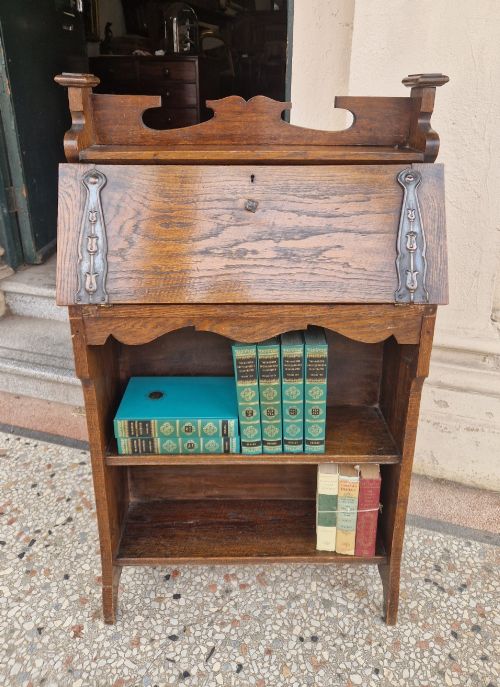
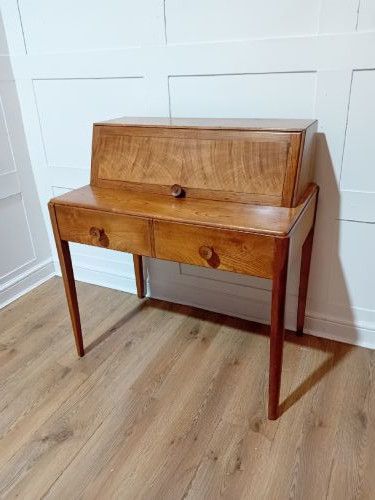
- A hinged writing flap that pulls down to reveal an internal arrangement of small drawers and pigeon holes. This surface provides a flat writing area when open and conceals paperwork when closed.
- Pedestal desk
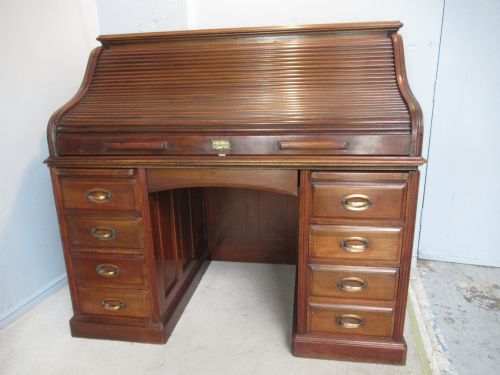
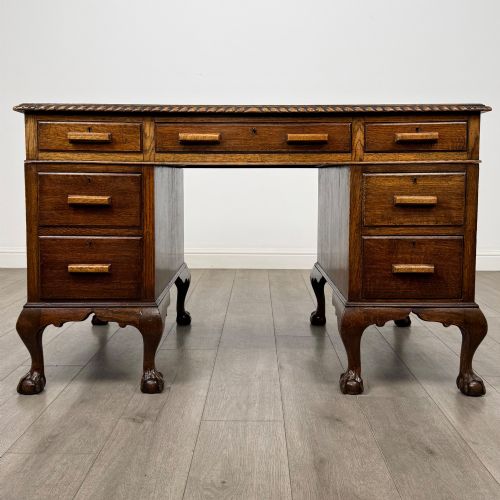
- A heavy freestanding writing table supported by two banks of drawers flanking a central kneehole space. These large desks usually feature inset leather writing surfaces on top.
- Roll top
- A flexible slatted wooden tambour sliding in curved tracks to cover the upper desk workspace and pigeon holes. It operates through a continuous track system built into the desk carcass.
- Cylinder desk
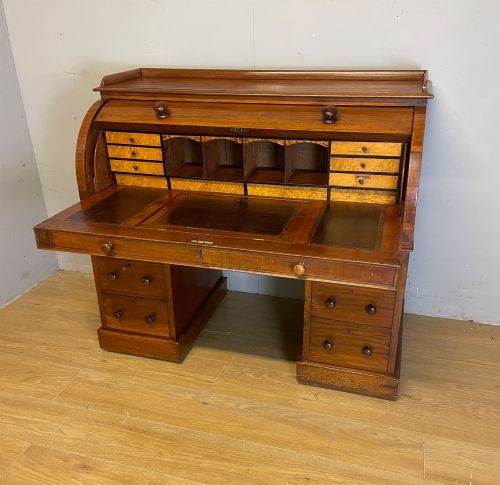
- A desk featuring a quarter-circle rotating wooden cylinder that rolls back to expose a pull-out writing slide and internal compartments. This mechanism protects the writing surface while maintaining a compact profile.
- Pigeon hole
- A small open compartment built into the upper interior of a desk or bureau for sorting letters and documents. These compartments often sit above miniature drawers inside the writing space.
Vintage Wooden Bureau Desk: Frequently Asked Questions
How do I use a bureau desk at home?
A bureau desk functions effectively as a compact home office workspace by utilising its pull-out writing slides and internal pigeon holes for laptop storage and stationery.
The enclosed fall front or roll top allows paperwork to remain hidden away out of sight when work concludes for the day.
How do I identify Georgian and Victorian desks?
Georgian desks typically display restrained mahogany construction with bracket feet and fine brass handles, reflecting 18th-century proportions and cabinet making standards.
Victorian and Edwardian examples often incorporate darker woods, heavier pedestal configurations, carved detailing, and occasionally roll top mechanisms or leather inset tops.
What woods were used for antique desks?
Cabinet makers predominantly utilised native and imported hardwoods including mahogany, English and Welsh oak, and walnut for structural stability and rich grain patterns.
Finer examples frequently incorporated decorative veneers such as burr elm, satinwood, and maple to accentuate drawer fronts and writing flaps.