
Antique Slanted Secretary Desk
An antique slanted secretary desk combines a sloping fall-front writing surface with concealed compartments and drawers for organised correspondence.
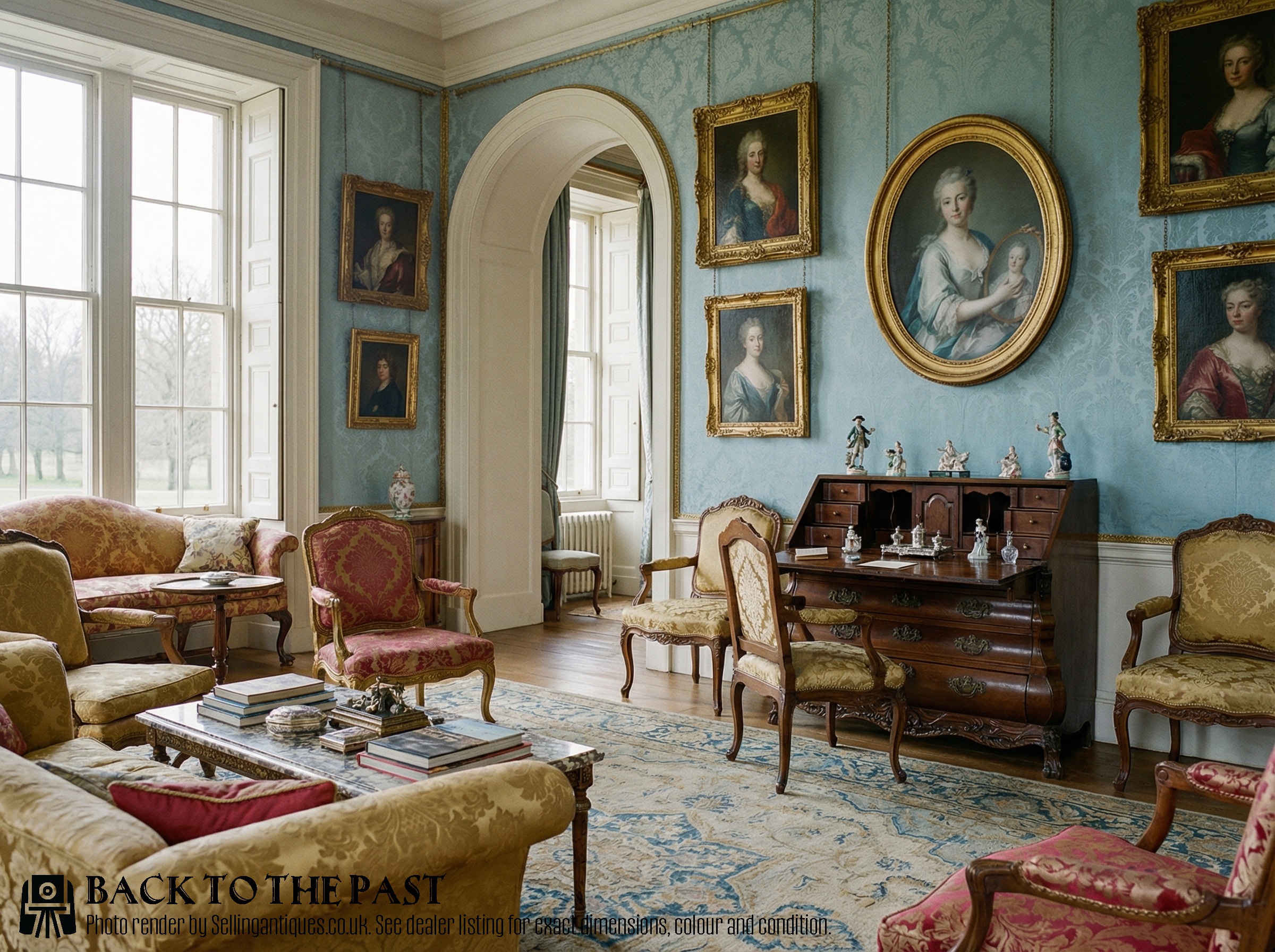
Antique Slanted Secretary Desk
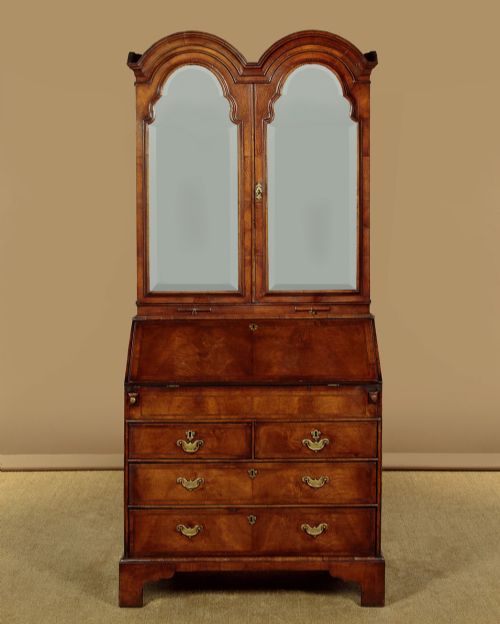
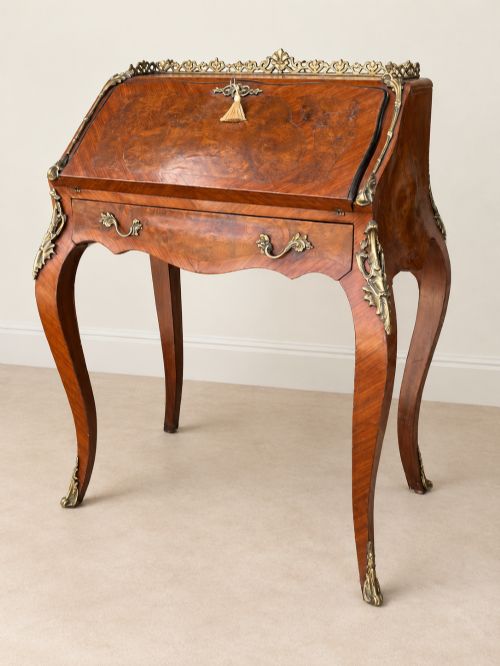
An antique slanted secretary desk, commonly referenced through terms like bureau and bureau bookcase, serves as a dual-purpose writing cabinet and storage unit. These pieces typically feature a hinged writing flap that angles downward to reveal an interior fitted with small drawers and pigeonholes.
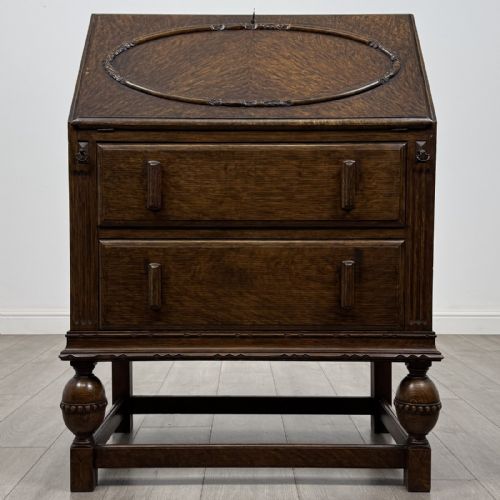
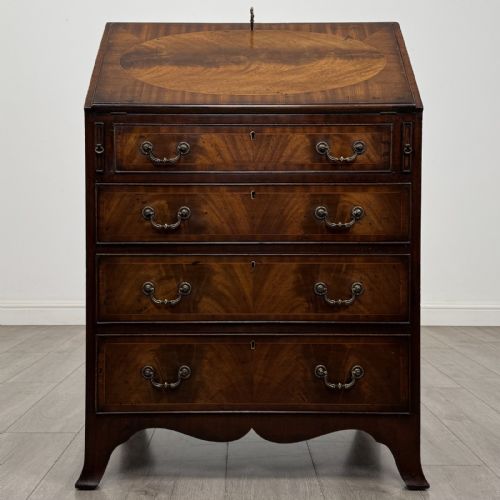
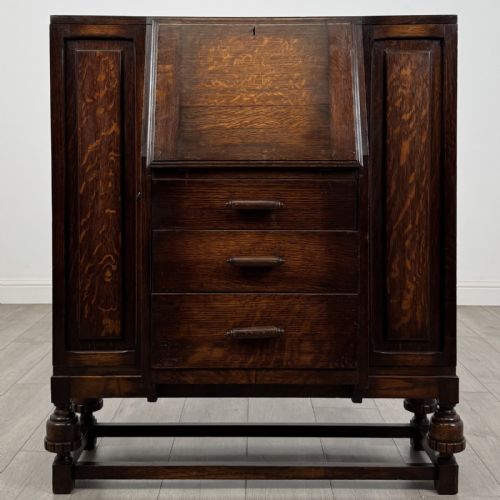
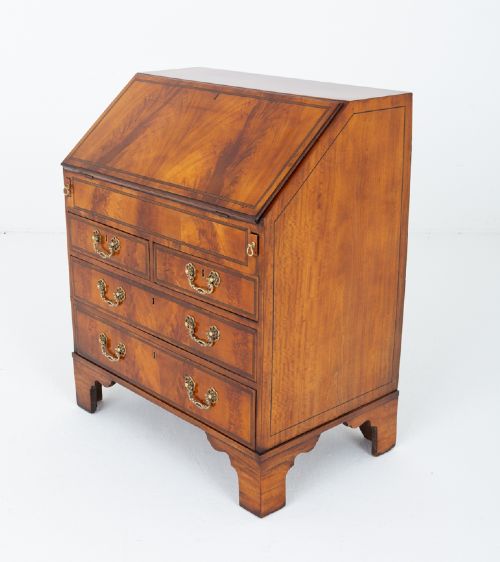
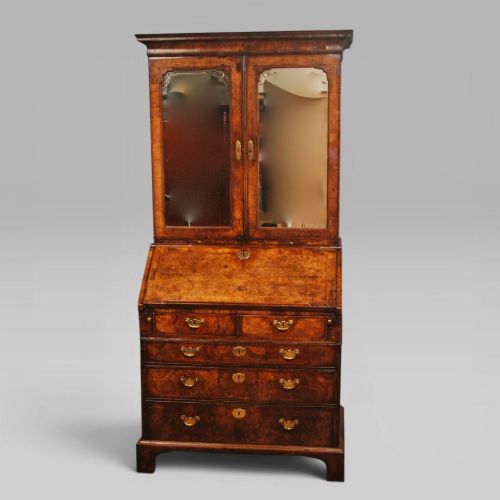
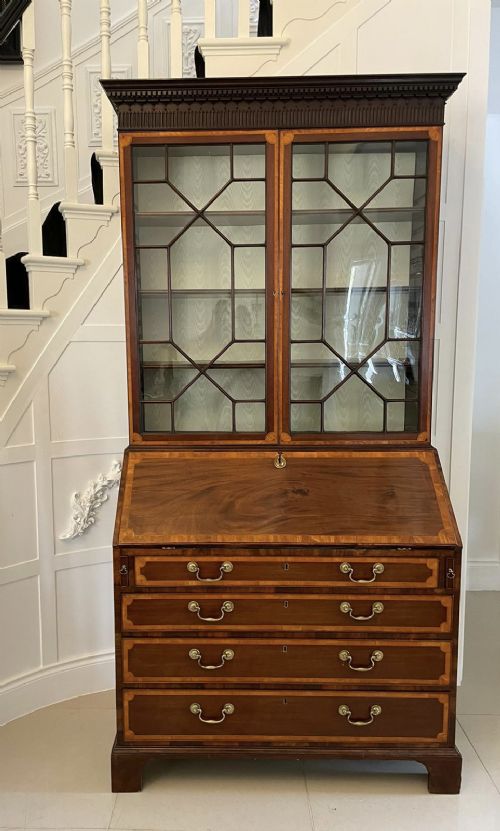
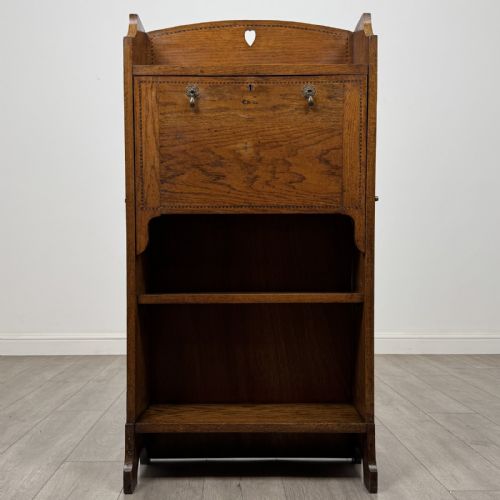
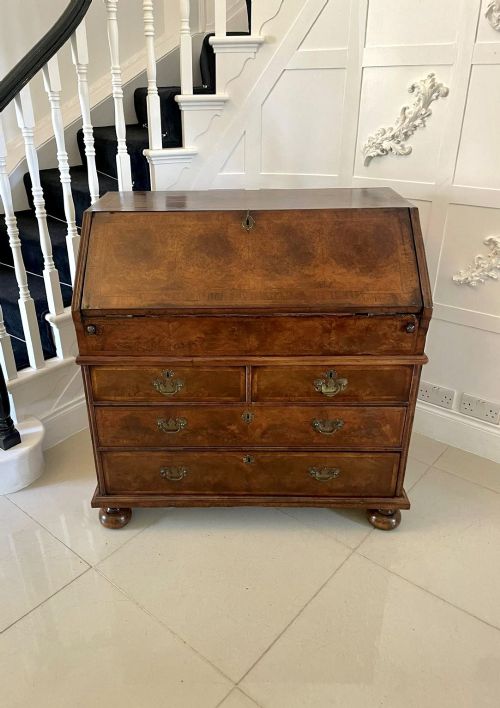
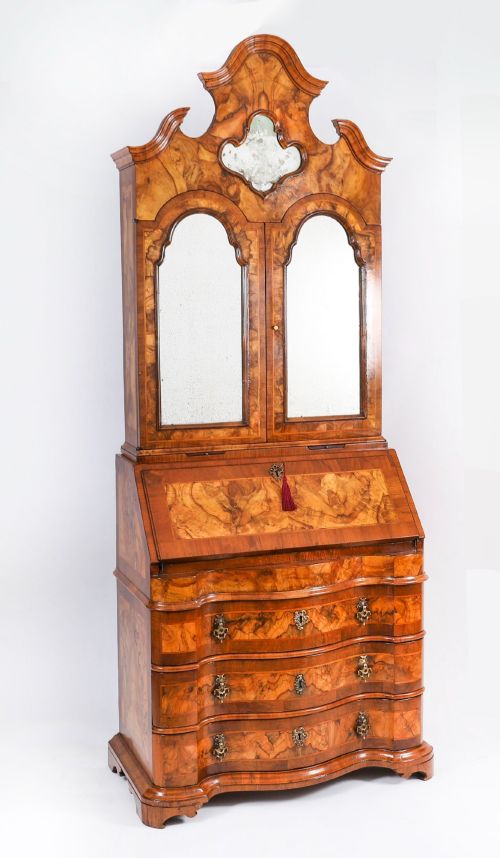
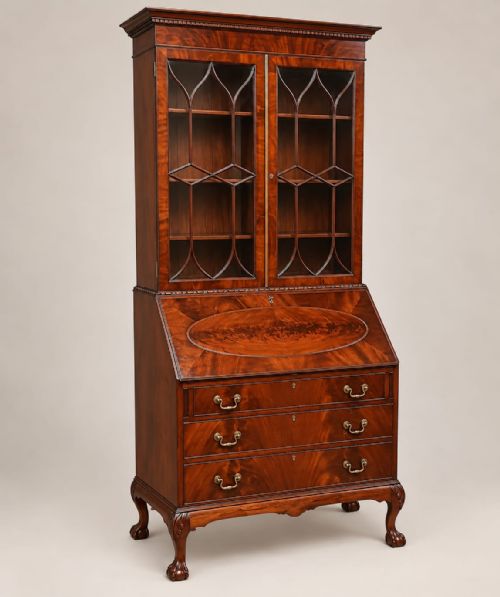
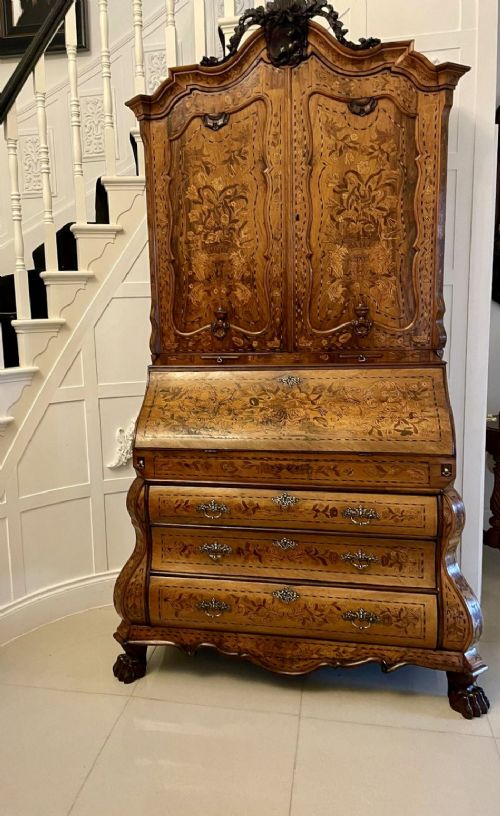
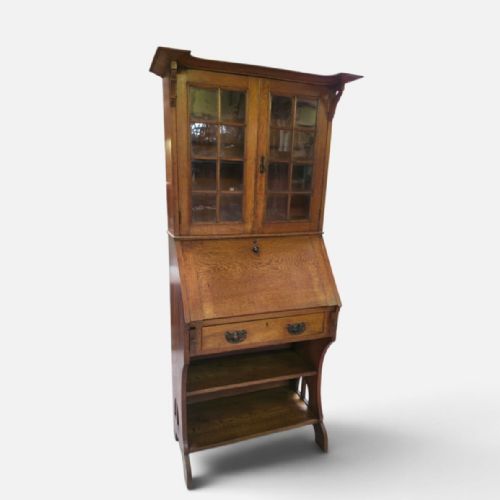
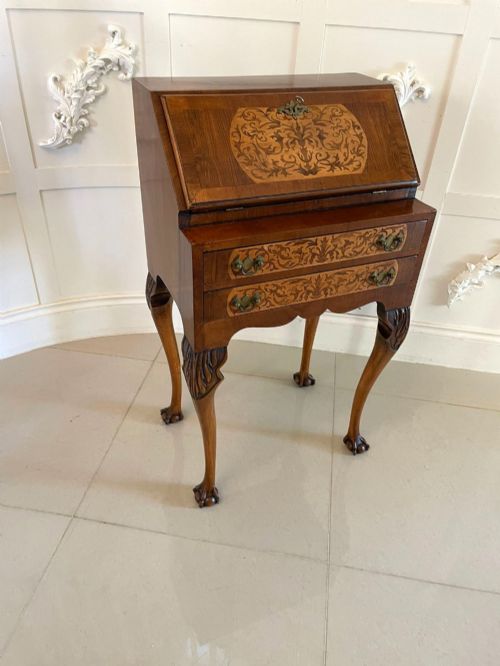
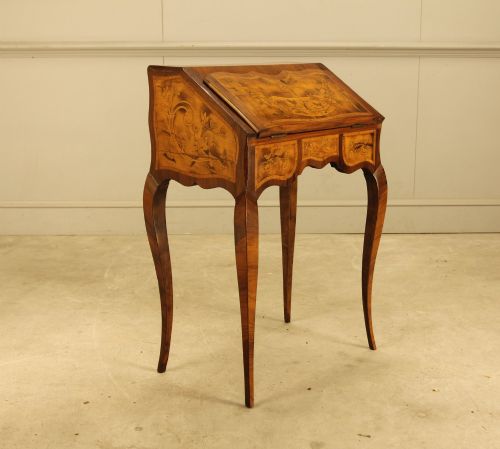
The selections available range from compact freestanding writing desks to tall bureau bookcases featuring glazed upper display cabinets. Oak, mahogany, and burr walnut dominate the forms, originating from periods spanning the eighteenth century through to the Edwardian era and the nineteen-twenties.
Makers often incorporated bracket feet, fitted steps inside the writing compartment, and occasionally specialised details such as red leather writing surfaces or bombe-shaped profiles. Buyers frequently encounter George III mahogany examples alongside Edwardian oak variations and Queen Anne burr walnut designs.
How they were made
Cabinet makers constructed these desks using solid timbers and decorative veneers such as mahogany, burr walnut, and oak, applied over secondary framing woods. The writing flaps required sturdy brass hinges and internal support lopers to bear the weight of daily correspondence.
Intricate interiors utilised fine dovetail joinery for the small drawers and stepped compartments hidden behind the sloping fall front. Glazed doors on the bookcase variants relied on wooden muntins to hold individual panes of glass securely within the upper cabinet frame.
Some early oak examples arrive adapted for modern television housing, proving that old cabinets are remarkably accommodating.
What varies in quality
The refinement of the interior arrangement largely dictates the standing of an antique slanted secretary desk, particularly where stepped pigeonholes and secret compartments show meticulous joinery. Figured timber selections, such as highly patterned burr walnut or rich flame mahogany veneers, separate standard utilitarian pieces from exceptional examples.
Proportion and the handling of secondary details like bracket feet, inlaid parquetry, and floral marquetry influence the overall presence of the cabinet. Furthermore, the crispness of carved elements, including linenfold panels on oak versions or fine mouldings on bookcase cornices, marks the distinction between ordinary production and superior craftsmanship.
Heals of London·Arthur Basil Reynolds·Larkin
The Antique Slanted Secretary Desk Glossary
- Bureau
- A desk featuring a sloping hinged lid that drops down to form a writing surface. It conceals a fitted interior of small drawers and pigeonholes.
- Fall Front
- The hinged panel on a cabinet or desk that pulls down or slants forward to provide access to a writing area. This sloping surface defines the classic secretary form.
- Lopers
- Pull-out wooden arms or brackets positioned beneath a sloping desk flap to support it when open. They slide back into the cabinet frame when the writing surface is closed.
- Marquetry
- Decorative veneer work formed by fitting together small pieces of wood, shell, or ivory to create pictorial designs on furniture surfaces. Floral patterns often appear on Dutch and French pieces.
- Parquetry
- Geometric mosaic woodwork used for ornamenting furniture surfaces with regular patterns like squares or triangles. It creates a structured pattern across drawer fronts and cabinet panels.
Antique Slanted Secretary Desk: Frequently Asked Questions
What is an antique slanted secretary desk?
An antique slanted secretary desk is a dual-purpose piece of furniture featuring a sloping fall-front lid that opens to reveal a writing surface and internal compartments. Below this writing flap, storage drawers provide space for papers and household items.
These pieces often include upper bookcase sections with wooden or glazed doors. They evolved through various stylistic periods, reflecting changing domestic needs for a dedicated writing space.
How were these desks used historically?
Historically, these desks served as private writing cabinets for correspondence, account keeping, and the storage of important documents. The sloping lid provided a comfortable angle for handwriting while concealing the messy contents of the desk when closed.
Bookcase variants allowed owners to store and display bound volumes behind glass doors above the writing surface. This combined multiple functions into a single vertical footprint suitable for period parlours and studies.
How do I distinguish eighteenth-century desks from Edwardian pieces?
Eighteenth-century desks typically display heavy reliance on solid mahogany or burr walnut with fine hand-cut dovetails and traditional bracket feet. The interior joinery often incorporates stepped drawers and secret compartments constructed with older softwood linings.
Edwardian reproductions and interpretations frequently utilise golden oak or yew wood, sometimes featuring machine-cut elements or distinct decorative motifs like linenfold carving. Examining the secondary woods, internal construction methods, and overall patination helps clarify the true age of the piece.
How do I integrate a bureau bookcase into a modern room?
A bureau bookcase functions well as a focal point in a living room or home office, offering concealed workspace and vertical display storage. Closing the fall-front flap instantly hides paperwork and laptops, maintaining a tidy appearance in the room.
The upper glass-fronted shelves accommodate books, ceramics, or collections, while the lower drawers provide practical everyday storage. Placing the desk against a solid wall allows the proportions of the tall bookcase top to balance the room.