





18th Century Dutch Bureau
When you choose an 18th century dutch bureau, you acquire a substantial writing desk defined by rich marquetry and characteristic form.
18th Century Dutch Bureau
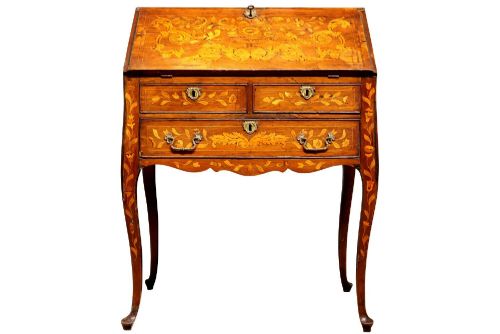
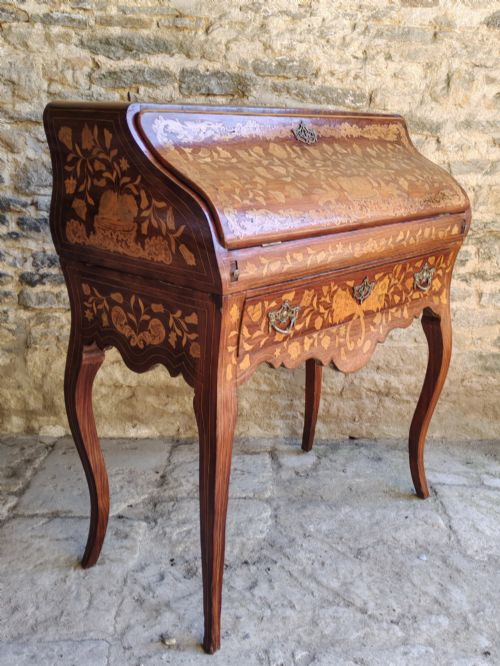
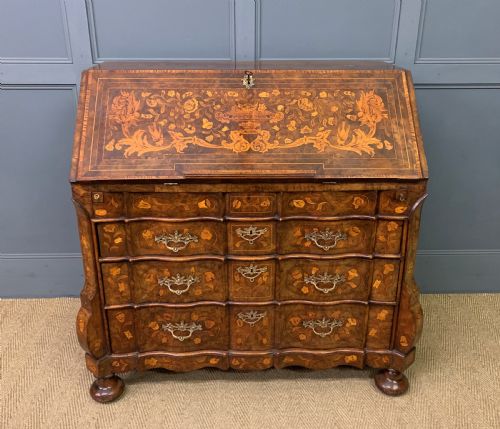
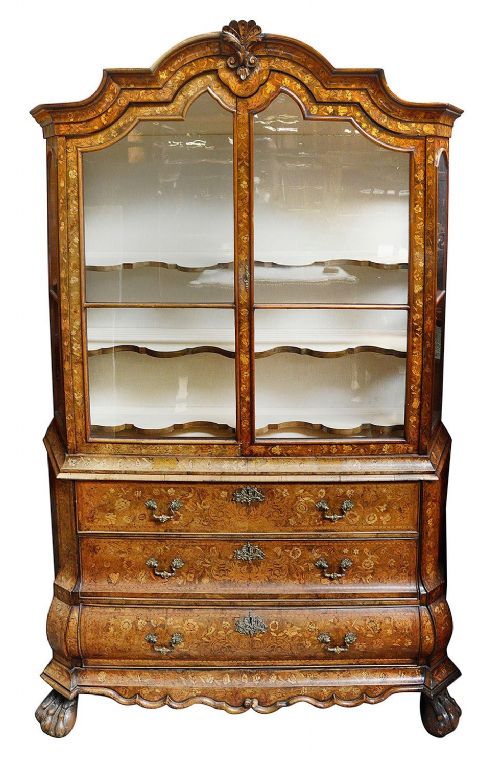
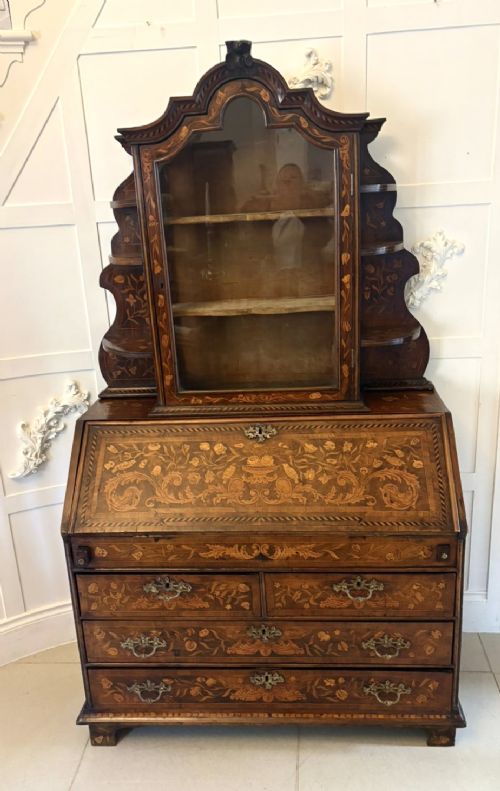
An 18th century dutch bureau brings together a sloping writing flap and functional drawer storage, often appearing with stepped interior compartments and fitted pigeonholes. These pieces frequently manifest as distinct fall-front desks or grand bureau bookcases featuring upper display sections with glass doors.
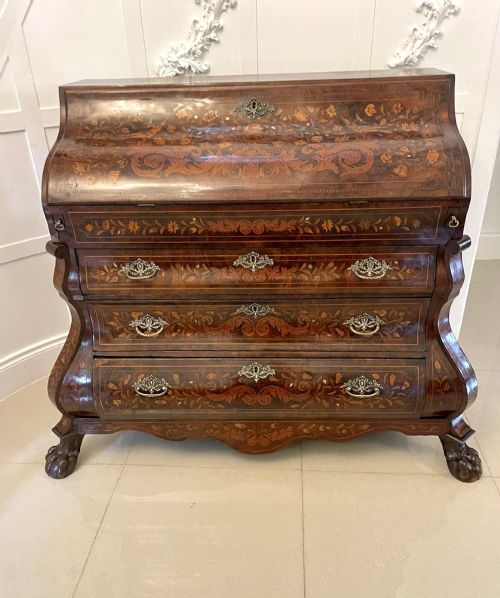
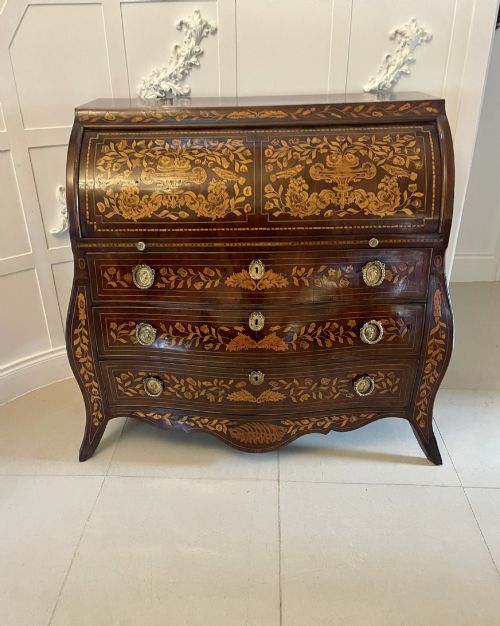
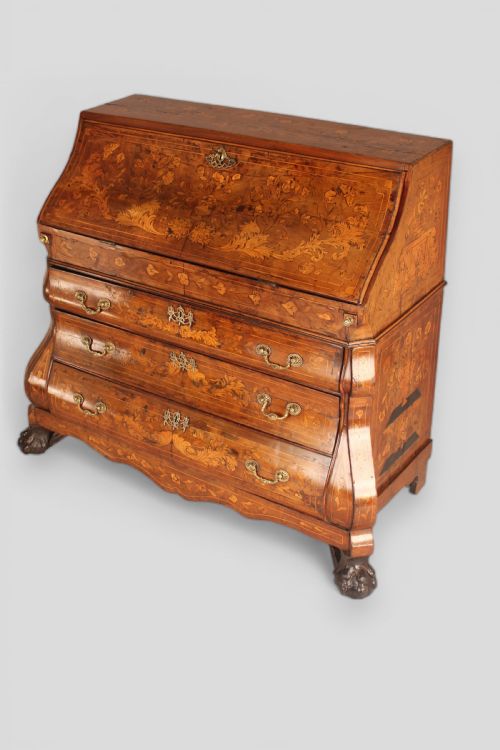
The profile often displays the characteristic bombe contour, where the timber curves outwards towards the base in a swelling silhouette. Walnut and burr walnut form the foundation of most examples encountered, frequently enriched with elaborate floral marquetry in lighter fruitwoods.
How they were made
Cabinet makers built these carcasses using solid timbers such as walnut, mahogany, oak, and fruitwood, often applying burr veneers across the primary surfaces to create complex grain patterns. Drawer linings and secondary elements typically relied on native hardwoods.
Marquetry panels were meticulously hand-cut, assembling contrasting veneers of fruitwoods into floral and botanical motifs before embedding them flush into the background timber. Brass handles and escutcheons provided functional hardware, while carved details shaped the feet and friezes.
The listings on this site frequently pair walnut and burr walnut with intricate fruitwood marquetry in floral patterns.
What varies in quality
The precision and complexity of the floral marquetry dictate much of the distinction between pieces, with superior examples exhibiting intricate shading and tight adherence to the wood grain. The handling of the bombe curve also varies, requiring immense skill to shape the timber without distortion.
Interior configuration plays a vital role in separating standard work from exceptional craftsmanship, particularly the complexity of the central cabinet door, secret compartments, and pigeonhole arrangement within the writing well.
The 18th Century Dutch Bureau Glossary
- Bombe
- A swelling, convex contour found on the front and sides of furniture bases, curving outwards towards the feet. This silhouette requires advanced joinery to construct successfully from solid timber and veneers.
- Marquetry
- A decorative technique where small pieces of contrasting veneer are assembled into pictorial patterns, such as floral sprays. These designs are then glued onto the structural carcass of the furniture.
- Bureau bookcase
- A combination form featuring a slant-front desk compartment below a tall glazed display cabinet or bookcase. This upper section typically provides shelving for books or porcelain.
- Burr walnut
- Timber taken from the abnormal growth growths of a walnut tree, yielding highly figured patterns with swirling knots. It was frequently used as a prized veneer on high-status case furniture.
- Secretaire
- A piece of furniture containing a fitted writing drawer or drop-front desk section designed for correspondence. It often conceals smaller drawers and pigeonholes inside.
18th Century Dutch Bureau: Frequently Asked Questions
How do I use a bureau desk?
The sloping fall-front opens downward to form a horizontal writing surface, supported by automatic wooden lopers that slide out as the flap is lowered. This reveals a fitted interior containing small drawers and pigeonholes for stationery.
Beneath the writing area, graduated horizontal drawers offer substantial storage space for household papers or linens. The entire piece functions as both a dedicated writing station and a handsome focal point for a reception room.
What is a bombe front?
A bombe front refers to furniture featuring a pronounced convex curve that swells outward from the waist toward the base. This sculptural shape is characteristic of continental cabinet making from the period.
Crafting this contour required thick timbers and expert shaping to maintain structural integrity while displaying elaborate veneer work. The swelling profile gives the furniture a weighty, sculptural presence.
Where were these bureaus made?
These pieces originate from workshops in the Netherlands during the Georgian era and surrounding decades. Urban centres such as Amsterdam and Haarlem housed skilled guilds of cabinet makers.
Master craftsmen in these workshops developed distinct regional styles, combining dense native walnuts with intricate floral inlay techniques. Export trade also distributed these distinctive desks across neighbouring European markets.
How do I care for burr walnut?
Burr walnut veneer requires consistent indoor humidity levels and protection from direct sunlight to prevent the timber from drying out or splitting. Gentle dusting with a dry, soft cloth maintains the polished surface without abrasive cleaners.
Applying microcrystalline wax periodically helps nourish the old polish and protects the delicate marquetry inlay. Avoid placing these pieces near active heat sources or damp areas.