





Dutch Floral Marquetry Bureau
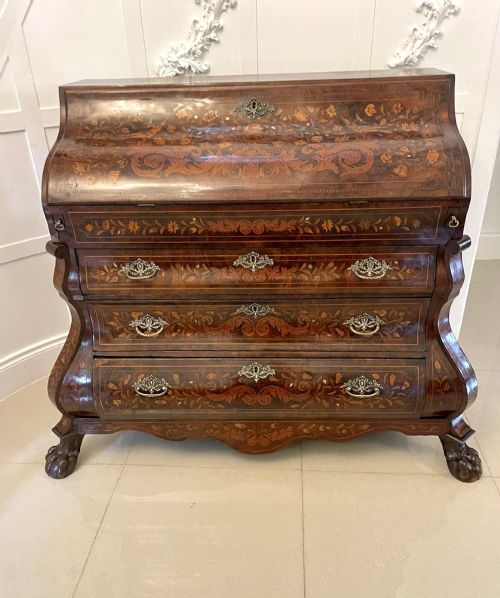
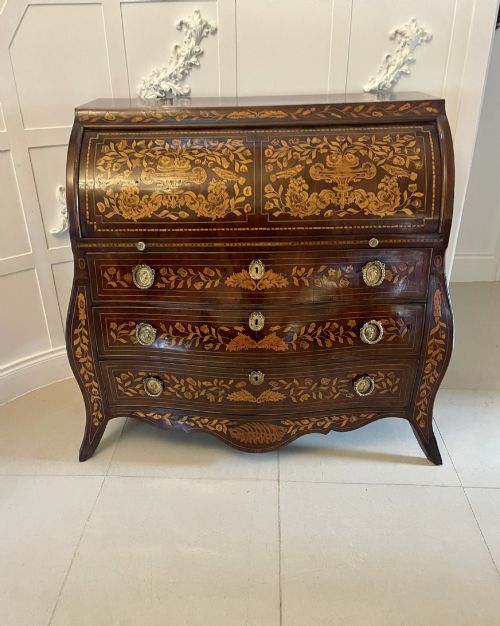
A dutch floral marquetry bureau brings elaborate floral imagery and shaped cabinetry together in one striking writing piece.
Dutch Floral Marquetry Bureau
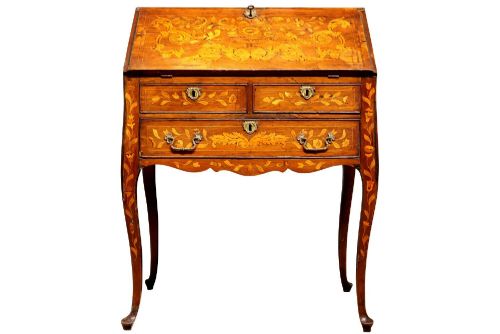
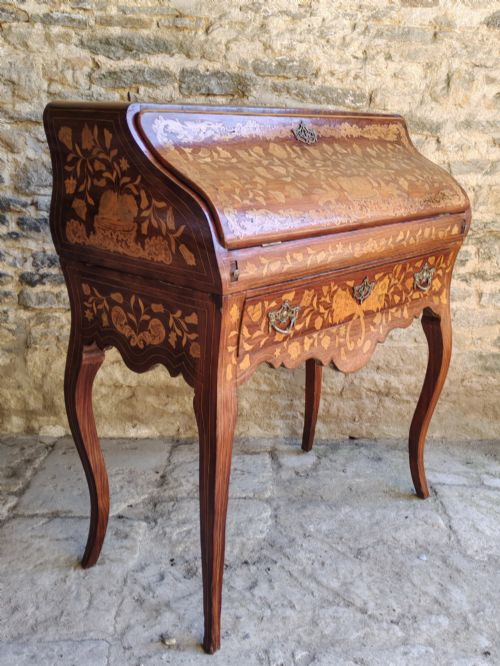
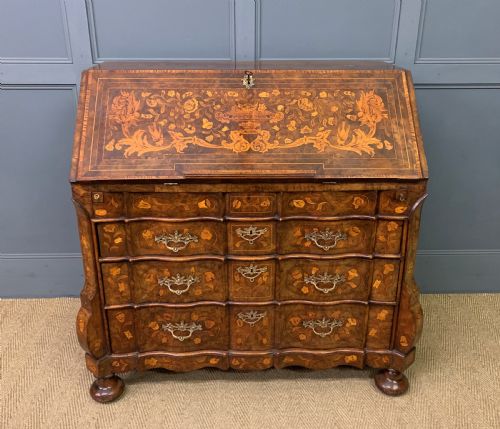
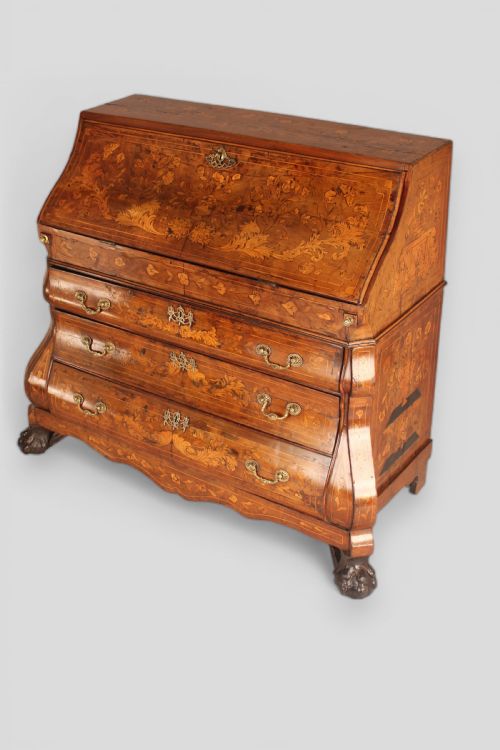
A dutch floral marquetry bureau stands as a sophisticated writing desk, often combining a sloping fall front with internal compartments and drawers. These pieces frequently appear in walnut or burr walnut, bringing rich natural grain patterns beneath dense floral designs.
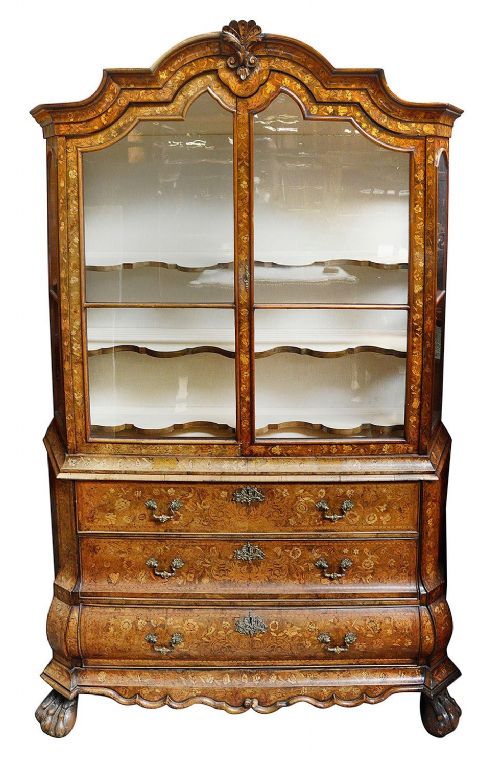
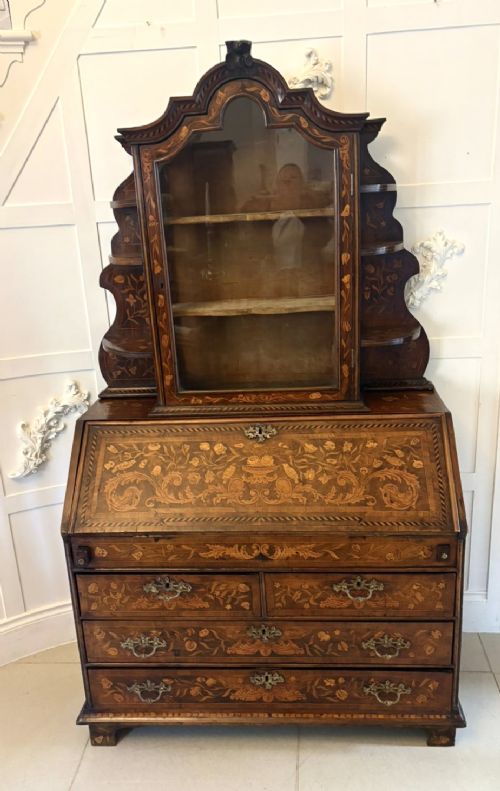
The form spans straightforward fall-front desks to grand bureau bookcases and cylinder desks. Many examples adopt a bombe shape, where the lower section swells outward with curved drawer fronts.
Originating largely across the eighteenth and nineteenth centuries, these items reflect diverse stylistic phases from Dutch Baroque to Rococo Revival. Buyers meet varied formats ranging from compact writing boxes on stands to towering cabinets with glazed upper sections.
How they were made
Cabinet makers constructed the foundational carcase using solid timbers like walnut or mahogany, applying decorative veneers across the exterior surfaces. Fruitwoods provided contrasting tones for the intricate floral imagery.
Craftsmen cut delicate fruitwood inlay and marquetry pieces by hand, fitting them together like puzzles before pressing them into the primary wood base. Brass hardware such as handles and escutcheons secured the drawers and doors.
Listings feature walnut, burr walnut, mahogany, and fruitwood materials across eighteenth and nineteenth century periods.
What varies in quality
The precision and density of the floral marquetry dictate much of the visual success of the piece, separating routine workshop production from exceptional cabinet work. Artisans who achieved subtle shading across individual leaves and petals created greater depth.
The handling of the bombe contour reveals the underlying skill of the maker, requiring expert joinery to maintain structural integrity while curving solid timber and veneer. The choice of burr walnut veneer also marks higher status pieces.
Morison of Edinburgh
The Dutch Floral Marquetry Bureau Glossary
- Marquetry
- A decorative technique where small pieces of veneer are assembled into pictorial patterns on a wooden background. This differs from inlay by covering the entire surface rather than fitting into carved recesses.
- Bombe
- A bulging, outward-curving profile seen on the lower sections of chests and desks. This swelling shape requires advanced woodworking skill to execute properly.
- Bureau
- A writing desk featuring a sloping lid that drops down to form a writing surface over a set of drawers. Inside lie pigeonholes and small secret compartments.
- Cylinder bureau
- A desk with a rolling curved shutter that retracts to reveal the writing surface and interior fittings. It offers an alternative to the traditional sloping fall front.
- Escritoire
- A tall writing cabinet with a fall-front panel that opens to create a desk space. These often include upper shelving or display areas.
Dutch Floral Marquetry Bureau: Frequently Asked Questions
What is a dutch floral marquetry bureau?
A dutch floral marquetry bureau is a traditional writing desk decorated with detailed wood veneers depicting flowers and foliage. These desks usually feature a sloping front that opens to reveal compartments for writing materials.
Such pieces often incorporate burr walnut and fruitwood elements, reflecting historical Dutch cabinet making traditions from the eighteenth and nineteenth centuries.
How do I date a bureau?
Dating involves examining the structural timbers, the type of walnut or mahogany used, and the style of the marquetry work. Eighteenth century examples frequently display bombe curves and baroque floral motifs.
Later nineteenth century interpretations often revive these earlier aesthetics with slightly different construction methods and secondary woods. Comparing the interior drawer construction helps clarify the period.
Where should I place one?
These bureaus suit studies, living rooms, or hallways where their decorative wood surfaces can be fully appreciated. Their substantial presence works well against plain walls that highlight the floral marquetry.
Keep them away from direct sunlight and strong heat sources to protect the delicate fruitwood veneers and prevent timber movement.
How do I maintain the wood?
Maintain the finish by dusting gently with a dry, soft cloth and applying appropriate wax polish sparingly. Avoid liquid cleaners or silicone sprays which can damage historical veneer surfaces.
Stable room humidity prevents the marquetry pieces from lifting or shrinking over time.