

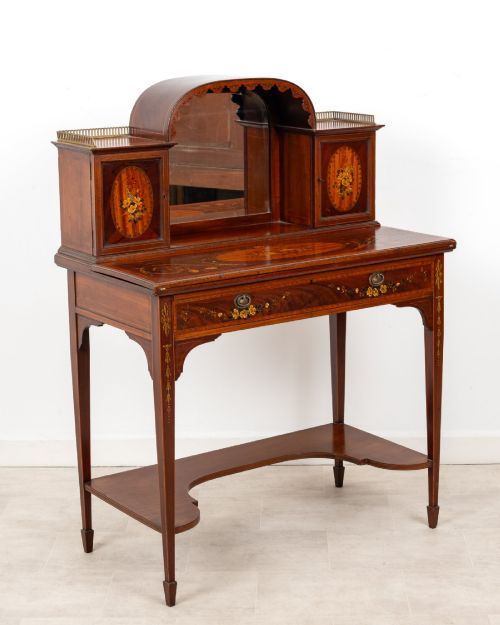
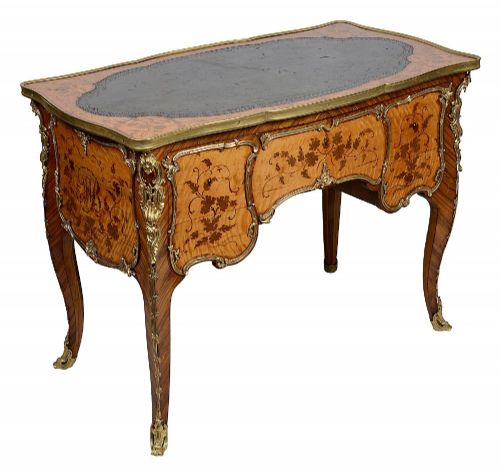
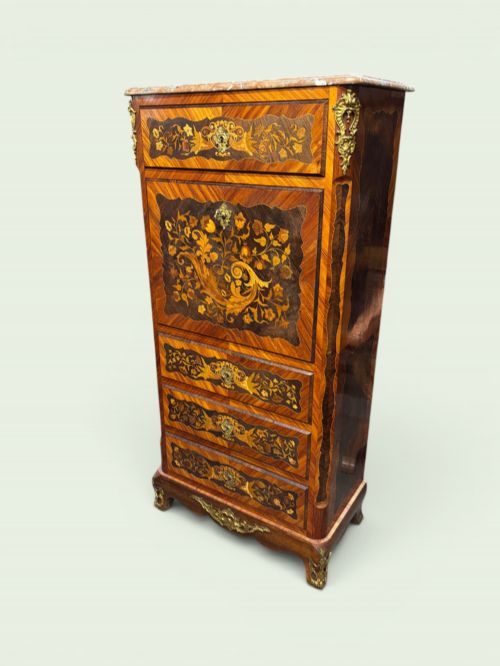
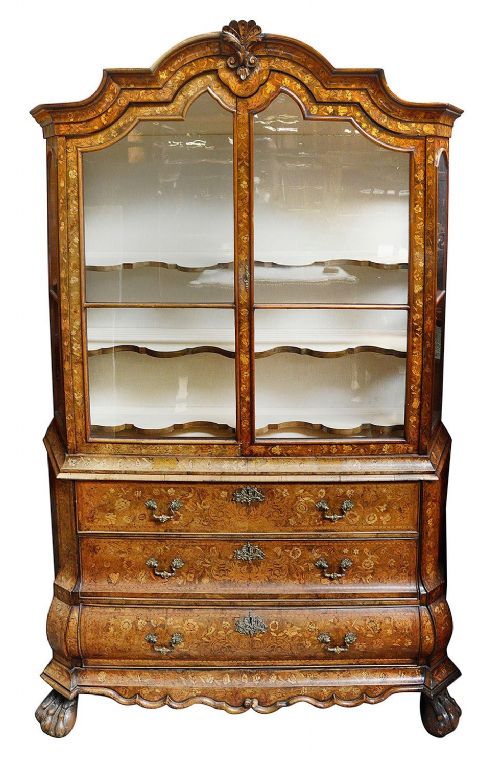


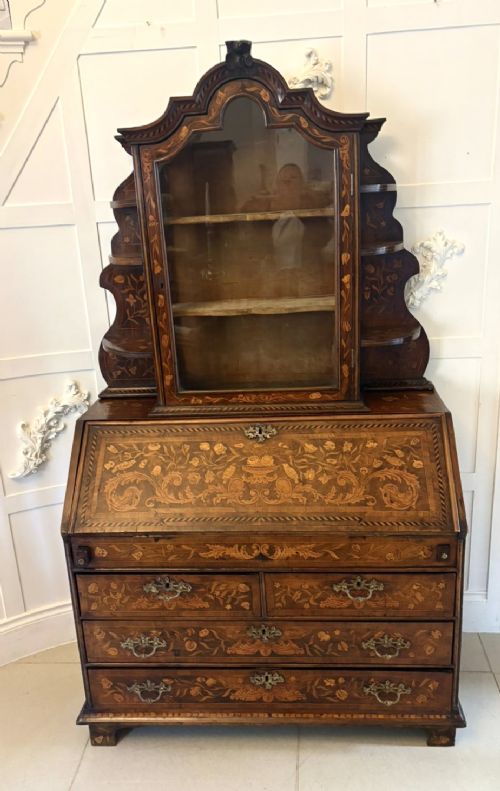
Floral Inlaid Bureau
A floral inlaid bureau brings together practical writing storage and intricate floral marquetry from periods spanning the eighteenth to the twentieth centuries.
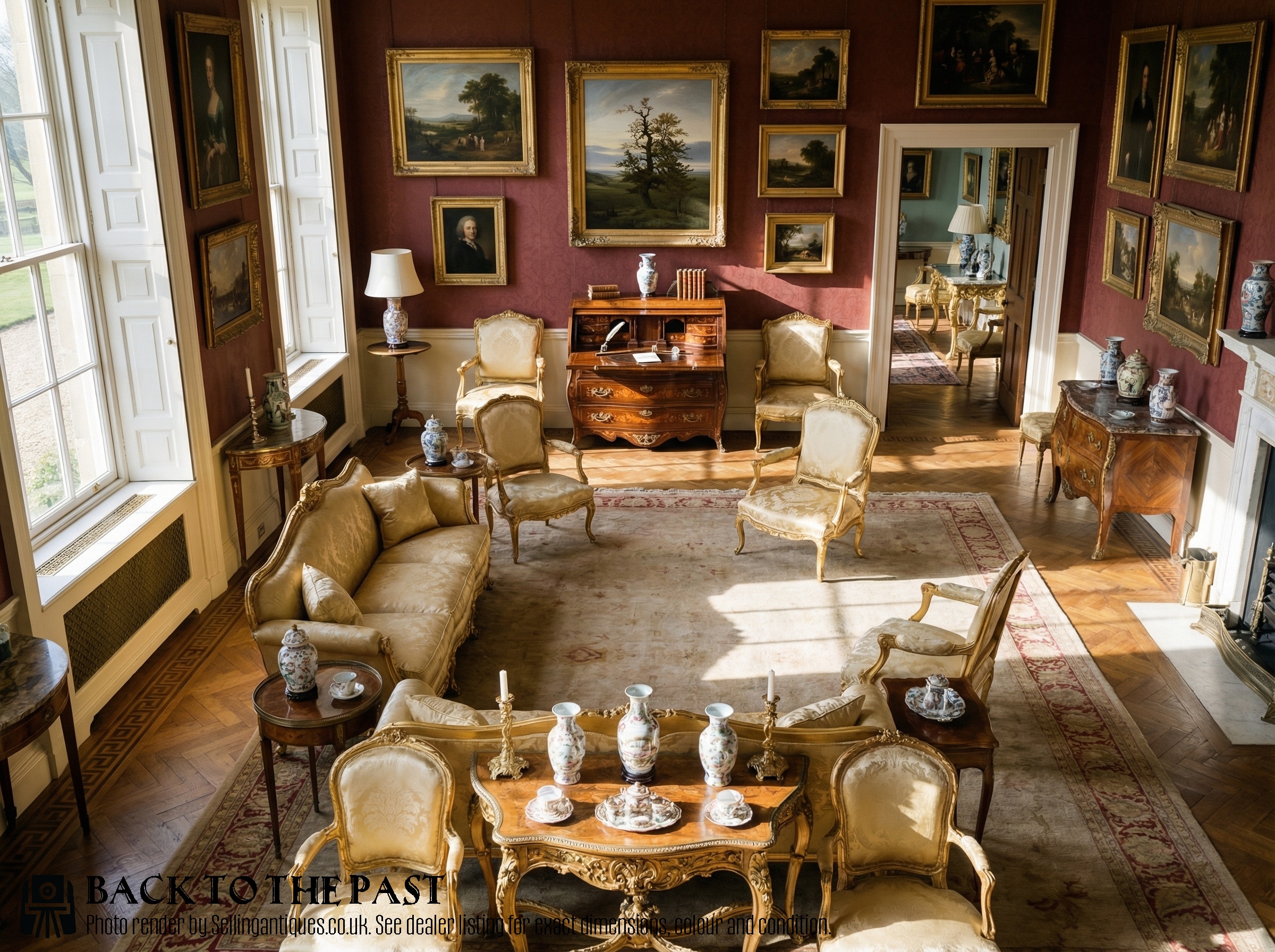
Floral Inlaid Bureau
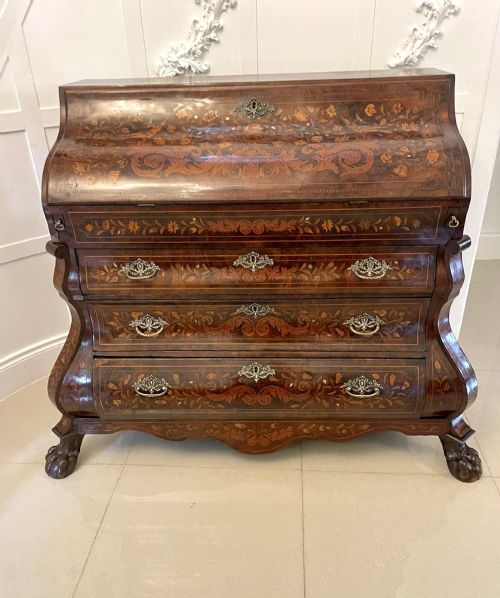
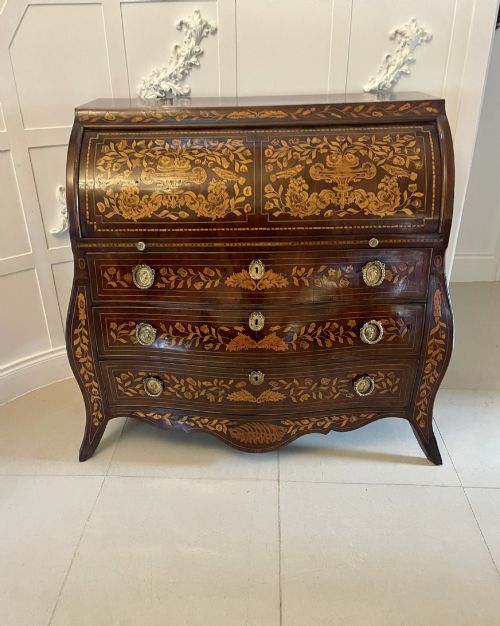
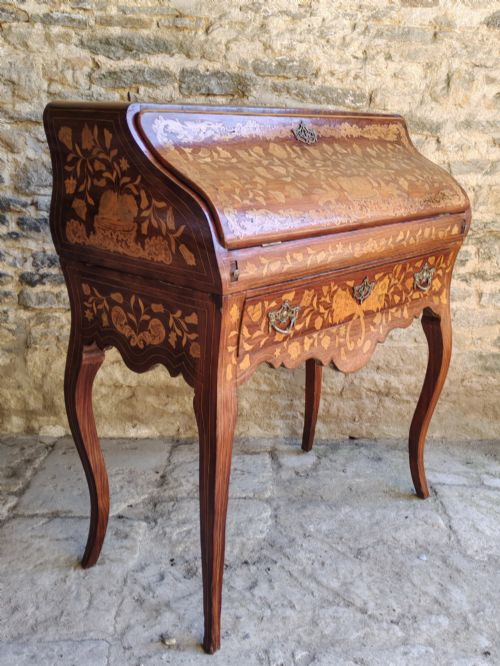
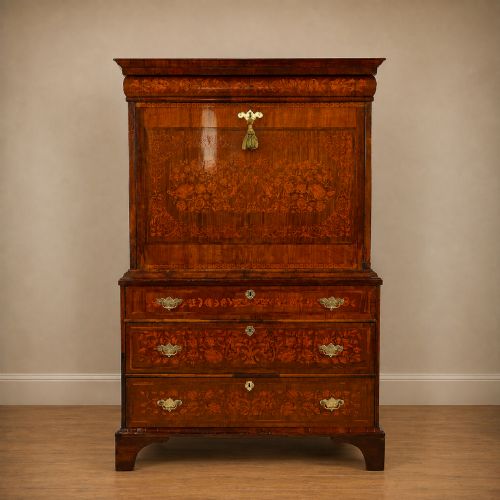
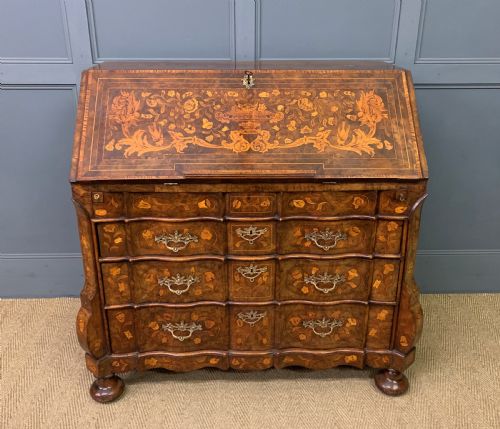
A floral inlaid bureau serves as a writing desk fitted with a sloping flap that opens to reveal internal compartments and drawers. These pieces appear frequently in walnut and mahogany, often taking the form of robust bureau bookcases or distinctive bombe shapes.
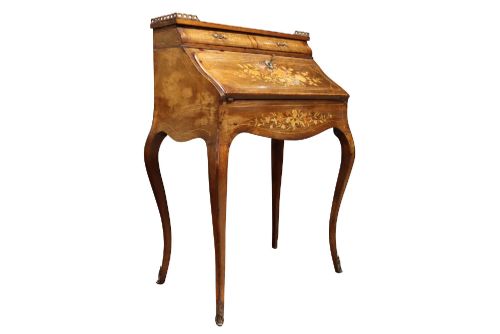
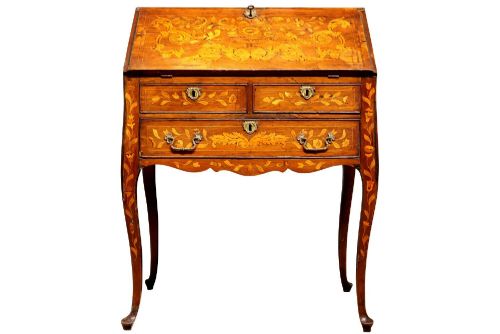
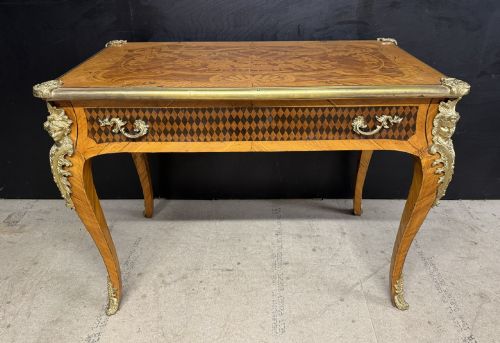
The selections on this page range from eighteenth century Dutch marquetry examples to nineteenth century French styles such as the bureau plat and bonheur-du-jour. Buyers encounter regional variations that include English Georgian pieces alongside continental works employing elaborate floral designs.
How they were made
Cabinet makers utilised foundational timbers such as walnut, mahogany, and rosewood, applying contrasting veneers to create detailed floral marquetry. Woods like fruitwood and satinwood provide the tonal variations necessary for petal and stem motifs.
Metal mounts in brass and ormolu frequently accent French pieces from the nineteenth century, reinforcing structural corners and framing drawer fronts. Construction techniques involve precise cutting of wood veneers to fit tightly into recessed channels across the writing surface and fall front.
Many floral bureaus feature secret compartments hidden behind dummy drawers inside the fall-front desk interior.
What varies in quality
The complexity and precision of the floral marquetry dictate the upper tiers of quality, where diverse timbers render petals and foliage with distinct shading. Simpler execution relies on repeating geometric floral patterns with fewer tonal wood varieties.
Substantial structural forms like bombe shapes require meticulous carpentry to maintain curved drawer fronts and balanced proportions. Finer examples retain original brass hardware and well-fitted interior stationery compartments that show minimal timber movement over time.
The Floral Inlaid Bureau Glossary
- Marquetry
- Decorative veneer work forming pictures and patterns by assembling thin pieces of wood. Craftsmen use various timber species to achieve natural colour gradations in floral scenes.
- Bombe
- A bulging or swelling contour found on the front and sides of furniture chests and desks. This curved profile demands advanced woodworking skill to execute properly.
- Escritoire
- A writing cabinet or desk fitted with drawers and a writing surface. The term often describes tall cabinet forms with drop fronts.
- Ormolu
- Gilded bronze used for decorative mounts and feet on furniture. It provides metallic contrast against dark woods like mahogany and walnut.
- Bureau plat
- A flat-topped writing table without a superstructure, standing on legs. These French tables often feature elaborate marquetry tops and bronze mounts.
Floral Inlaid Bureau: Frequently Asked Questions
What is a floral inlaid bureau?
A floral inlaid bureau is a writing desk featuring a hinged writing flap decorated with wood veneer floral patterns. These pieces combine practical storage with decorative craftsmanship.
Such desks appear in various forms, including slope-front writing cabinets and larger bureau bookcases originating from English and continental workshops.
How do I date a marquetry bureau?
Dating relies upon timber selection, hardware styles, and structural characteristics associated with specific periods like the eighteenth century or the Victorian era. Walnut and bombe shapes often point to earlier continental origins.
Later nineteenth-century pieces frequently display French revival styles incorporating ormolu mounts and exotic woods such as rosewood and satinwood.
Where were these bureaus made?
Many floral inlaid bureaus originate from Dutch workshops known for detailed marquetry depicting flowers, birds, and urns. Others stem from French cabinet makers working in various revival styles.
English cabinet makers also produced significant numbers during the Georgian period, utilising walnut and mahogany as primary timbers.
How do I care for wood marquetry?
Maintaining marquetry surfaces involves keeping furniture away from direct sunlight and sudden temperature changes that affect wood veneers. Regular dusting with a dry cloth protects the polished timber finish.
Avoiding excessive moisture prevents the small veneer segments forming the floral patterns from lifting or separating from the base wood.