
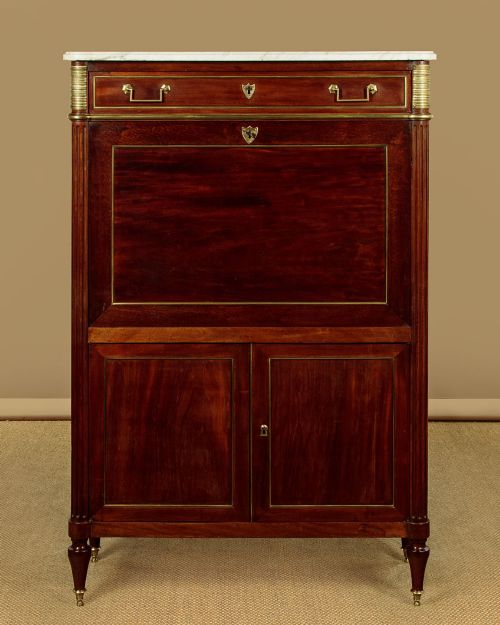
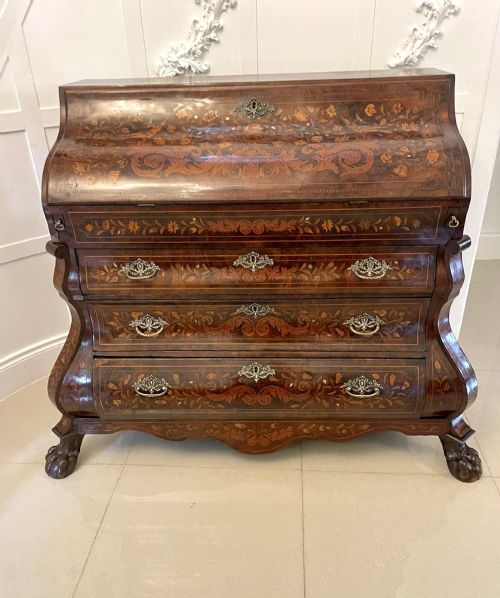
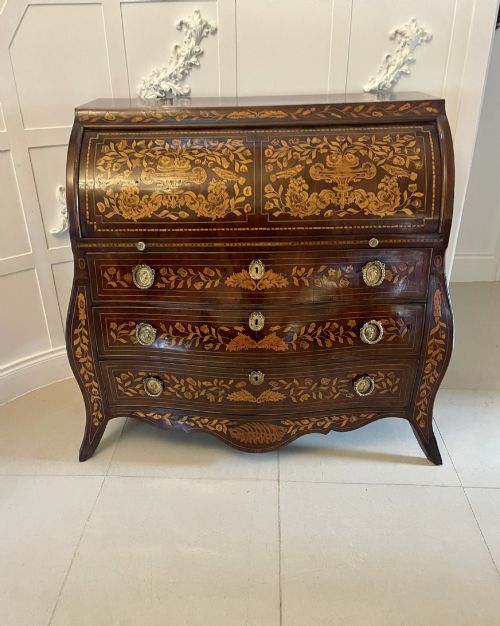
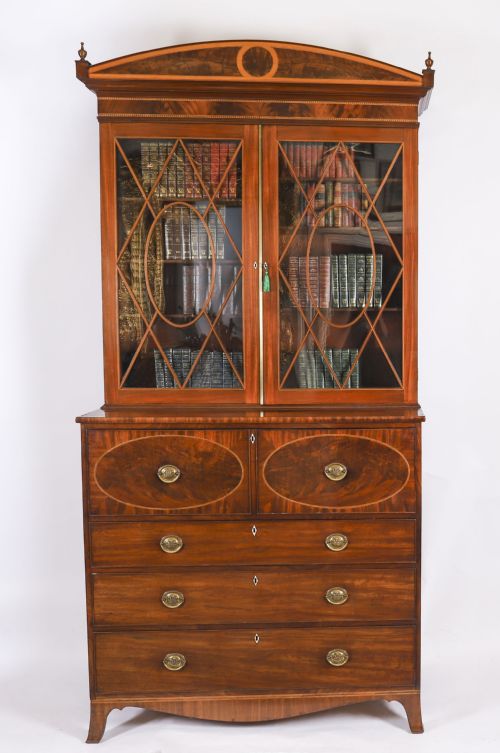


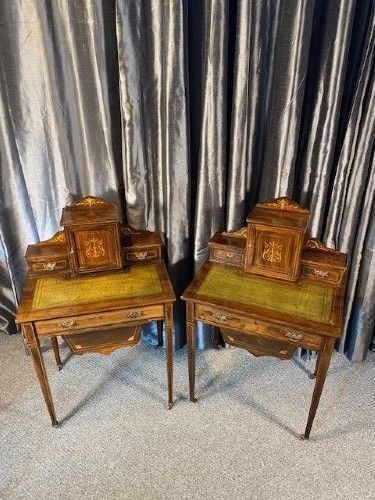
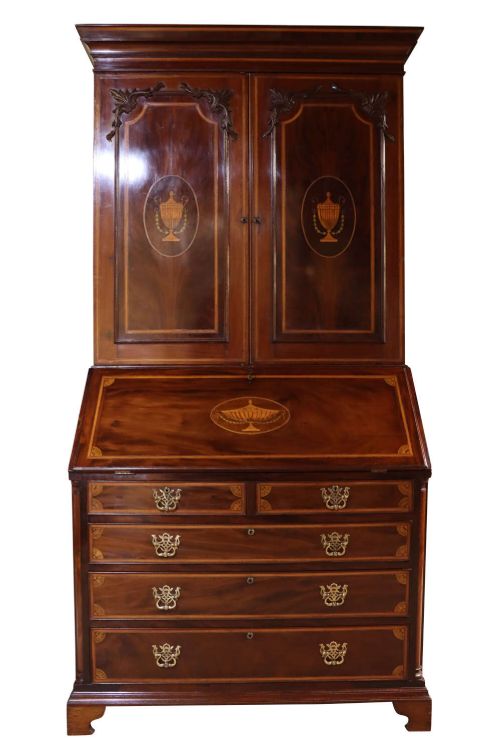
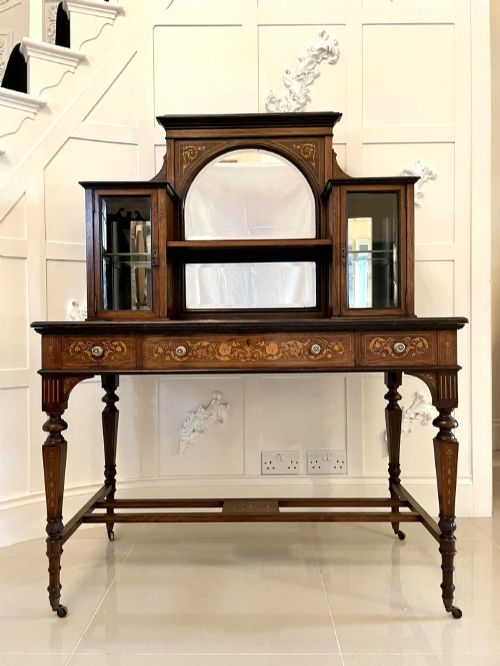
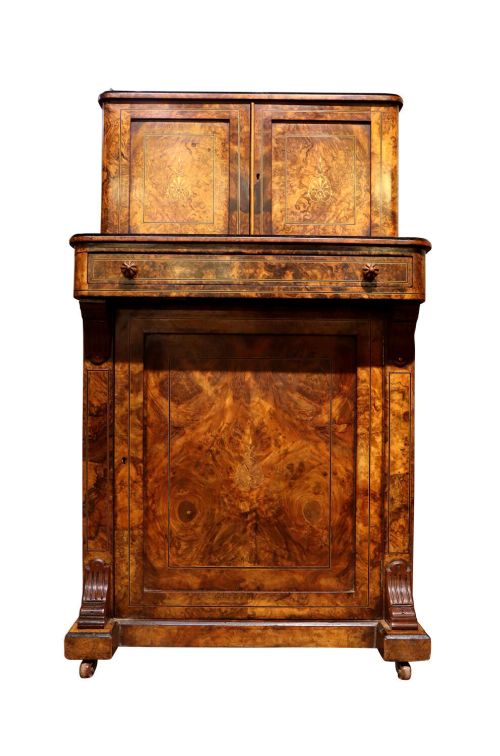
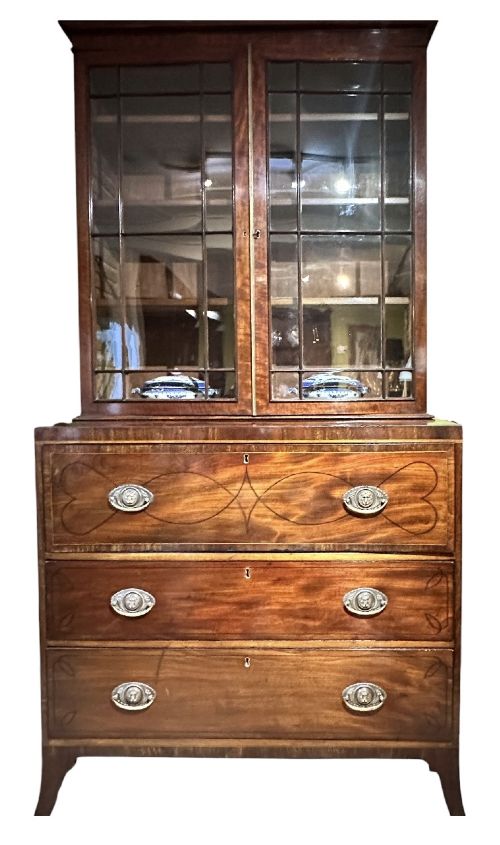
Inlaid Writing Cabinet
An inlaid writing cabinet gathers correspondence and keeps papers composed behind a decorated fall front.
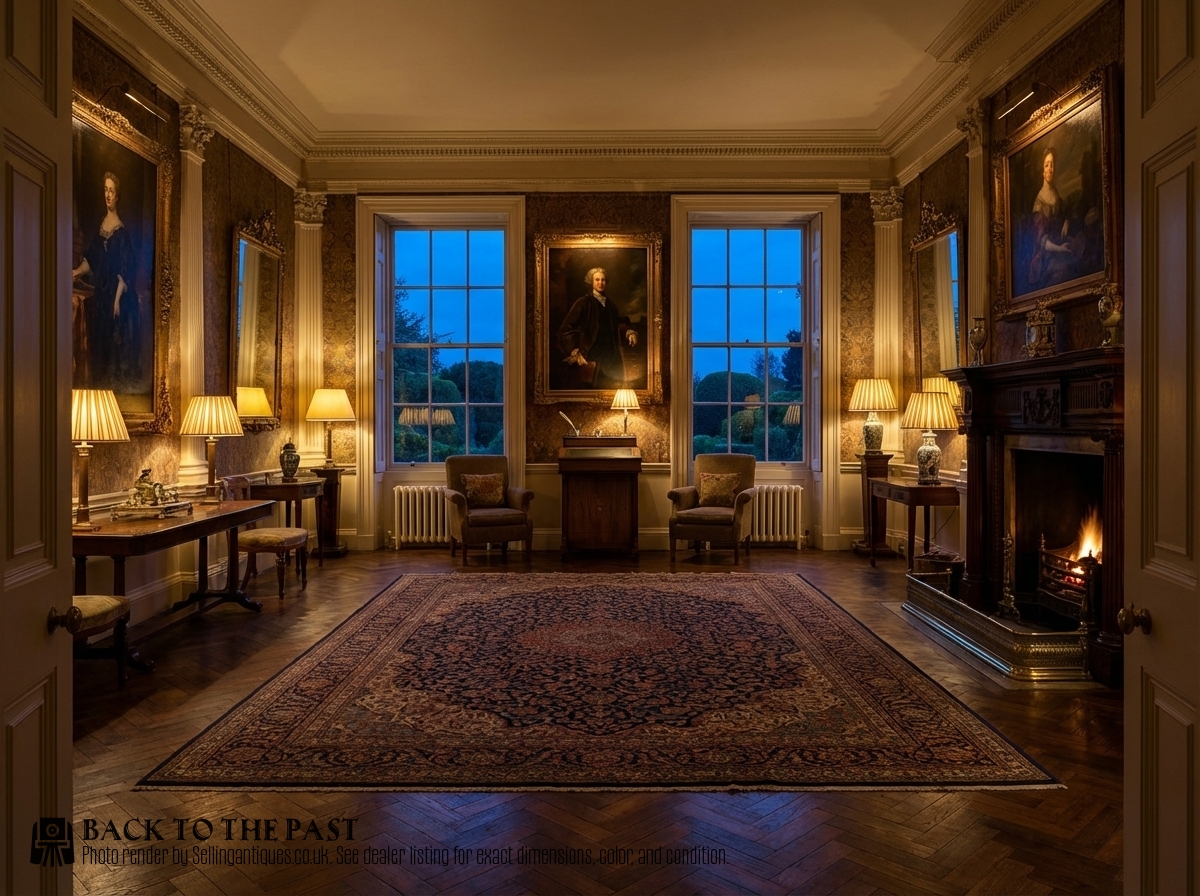
Inlaid Writing Cabinet
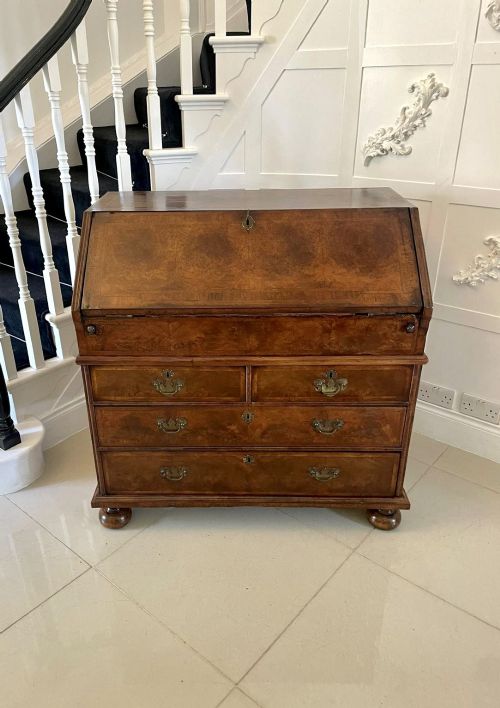
An inlaid writing cabinet brings together compartments for letters and a surface for writing, ornamented with decorative timber work. When searching for an inlaid writing cabinet, buyers encounter bureau bookcases, secretaire chests, cylinder desks, and fall-front escritoires from the seventeenth century through to the Edwardian period.
The eighteenth and nineteenth centuries supply the greatest number of examples on this page. George III and Victorian pieces dominate the selection, alongside Edwardian satinwood pieces and earlier seventeenth-century walnut variants.
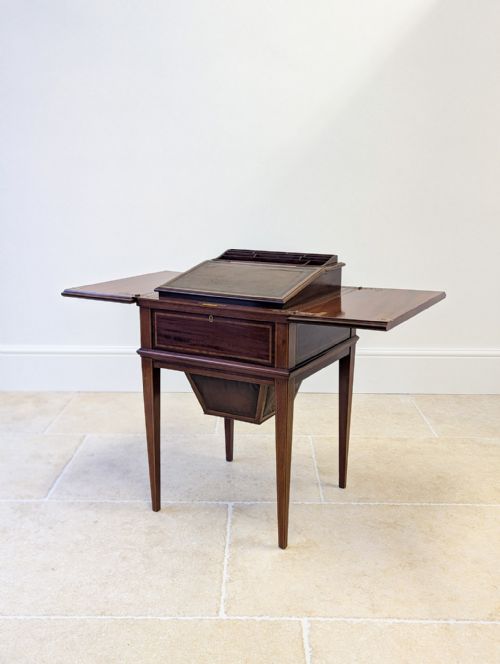
Forms range from compact table-top stationery cabinets and Davenport desks to tall bureau bookcases and French marquetry secretaire semaniers. Mahogany, burr walnut, and rosewood serve as the primary foundational timbers across these varied formats.
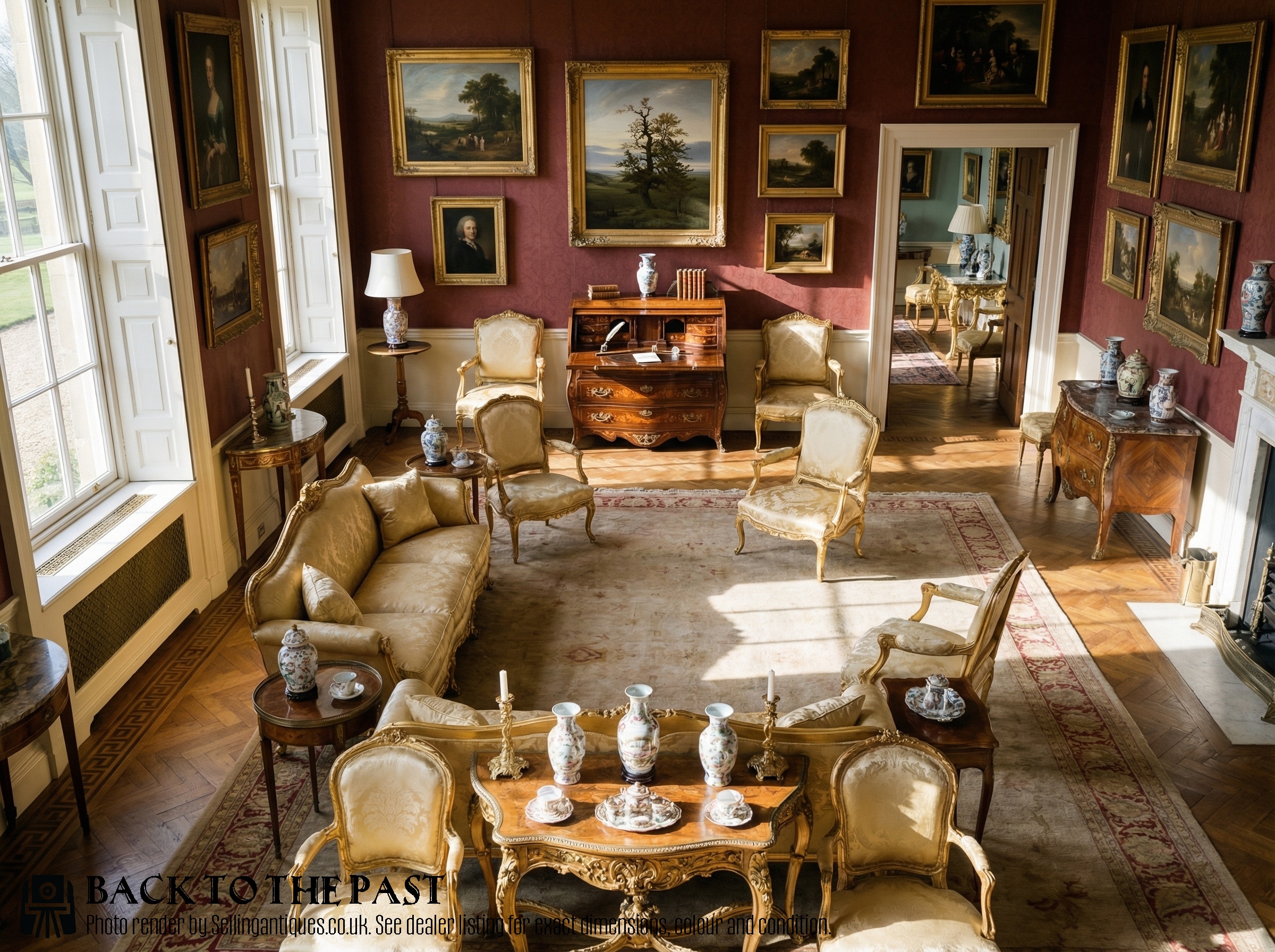
Materials and construction
Cabinet makers built these pieces using solid timbers and supportive veneers of mahogany, walnut, satinwood, and rosewood. Surface decoration relies on marquetry and parquetry patterns, incorporating contrasting woods and brass elements.
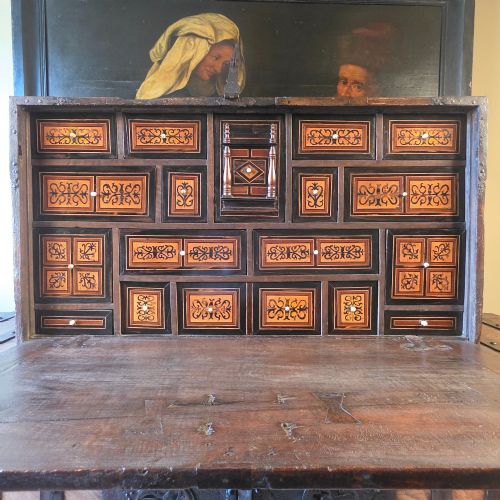
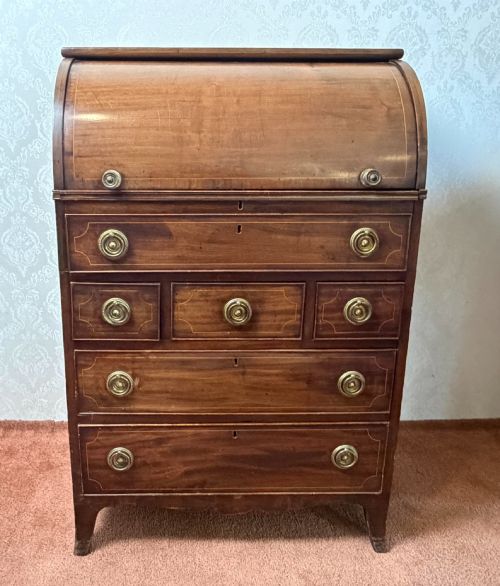
Writing compartments often deploy specialised mechanisms like cylinder fronts, tambour shutters, or drop-down writing surfaces termed abattants. Internal drawers and pigeonholes organise stationery while structural frames support heavy upper bookcases or stationery compartments.
Listings span from seventeenth-century William and Mary examples through Georgian, Regency, and Victorian periods to Edwardian satinwood pieces.
Markers of execution
Quality rests in the precision of the marquetry and the choice of cabinet timbers. Finely figured burr walnut, flame mahogany, and detailed satinwood inlay elevate a piece beyond standard production.
Construction standards reveal themselves in the fit of internal drawers, the smoothness of sliding tambour doors, and the preservation of original brass hardware or ormolu mounts.
Maison Krieger·Chapman London
The Inlaid Writing Cabinet Glossary
- Marquetry
- Decorative veneer applied in pictorial or geometric patterns using various coloured woods. This technique adorns the fronts and surfaces of many bureau cabinets.
- Secretaire
- A piece of furniture containing a concealed writing drawer or a fold-down flap that serves as a desk. These often combine bookcase sections with lower storage.
- Escritoire
- A writing cabinet featuring a fall-front desk flap concealing internal compartments. Originating in earlier periods, these serve a compact writing function.
- Tambour
- A sliding door constructed from narrow vertical strips of wood glued to a canvas backing. It conceals desk interiors smoothly.
- Parquetry
- Geometric mosaic woodwork used for floors and cabinet surfaces. It forms repeating patterns distinct from pictorial marquetry.
- Abattant
- A vertical fall-front panel on a cabinet that drops down to form a writing surface. This mechanism appears on tall secretaire chests.
Inlaid Writing Cabinet: Frequently Asked Questions
What is an inlaid writing cabinet?
An inlaid writing cabinet is a piece of furniture designed for correspondence, featuring a dedicated writing surface and compartments for stationery alongside decorative wood veneers.
These pieces range from compact tabletop boxes to tall bureau bookcases spanning the seventeenth to twentieth centuries.
How do I date an antique cabinet?
Dating relies on timber choices, construction methods, and stylistic cues. Eighteenth-century pieces frequently employ flame mahogany and intricate floral marquetry, while Edwardian examples often use lighter satinwood.
Hardware styles, secondary woods inside drawers, and joinery techniques provide further evidence for establishing the period of manufacture.
How should I care for antique veneer?
Antique veneer requires stable indoor humidity and protection from direct sunlight to prevent the timber from drying out or warping. Dusting with a dry cloth maintains the surface without stripping historical polishes.
Applying specialised wax feeds the wood and preserves the depth of inlaid patterns over time.