
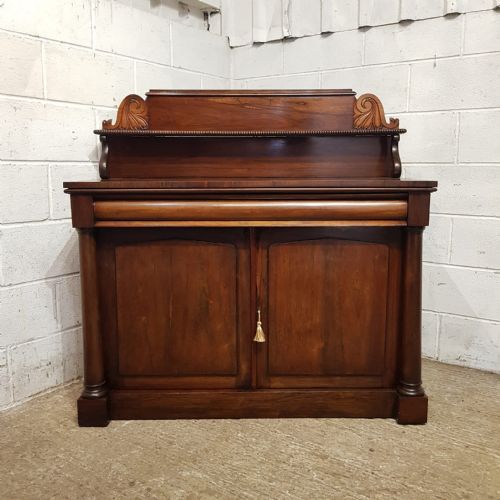

Antique Rosewood Bureau
An antique rosewood bureau brings rich, dark timber and clever hidden compartments to a room, offering a dedicated writing surface that doubles as a handsome cabinet.

What an antique rosewood bureau is
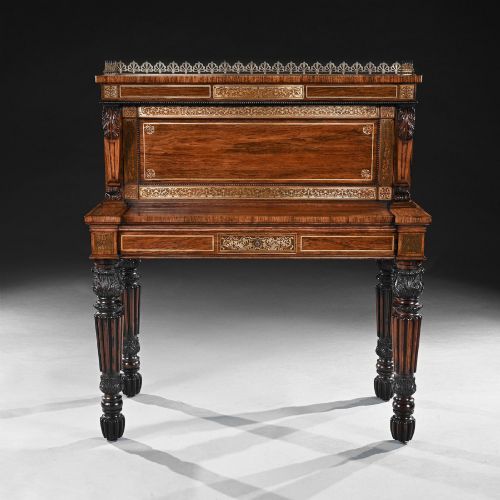
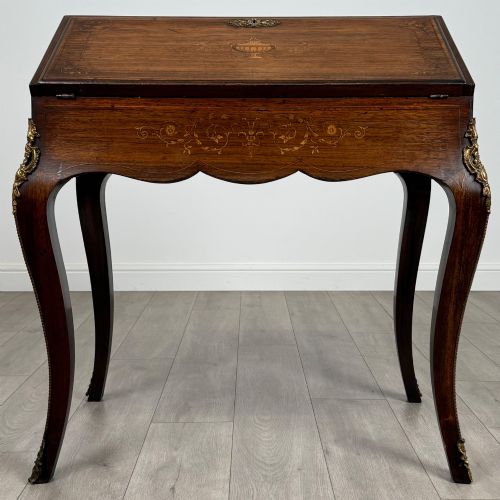
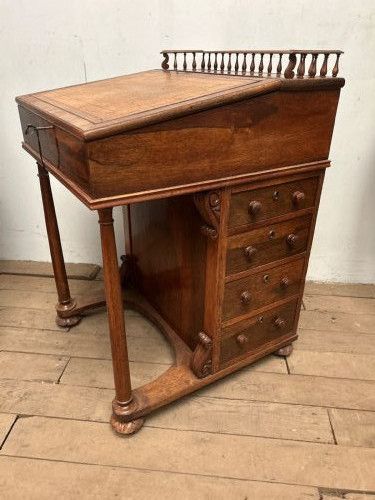
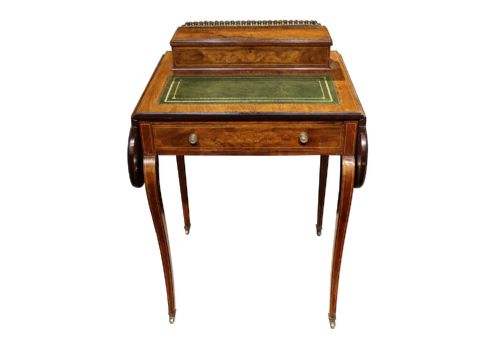
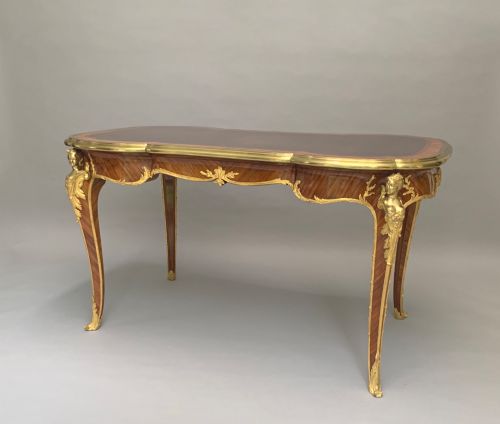
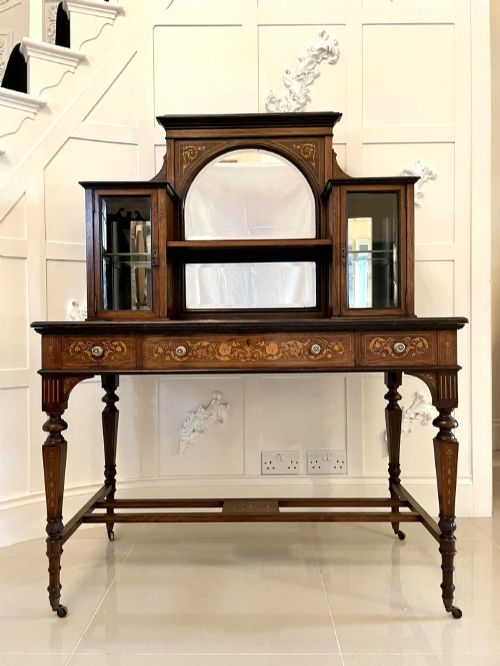
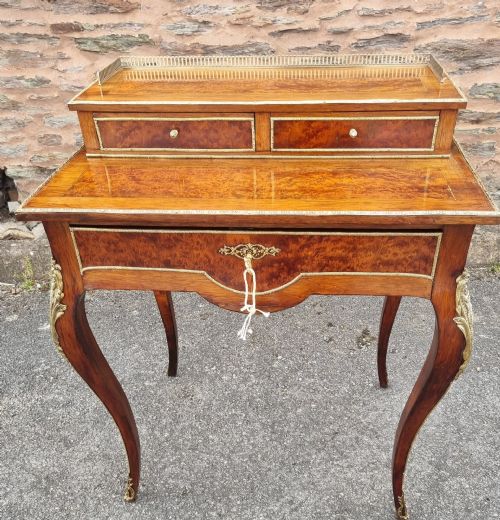
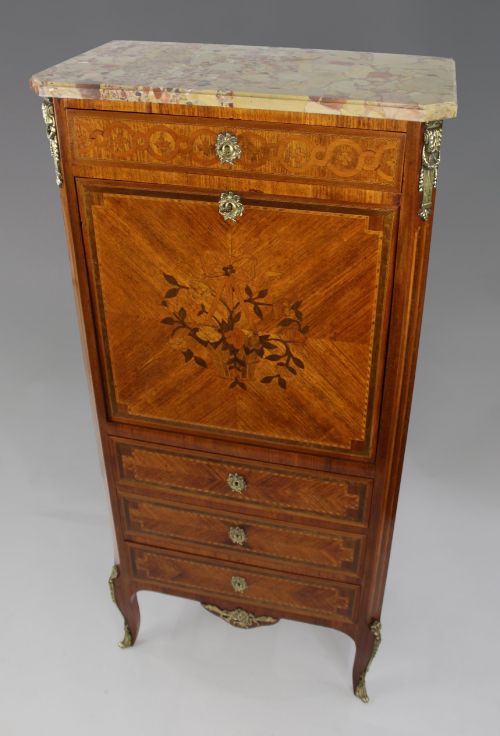
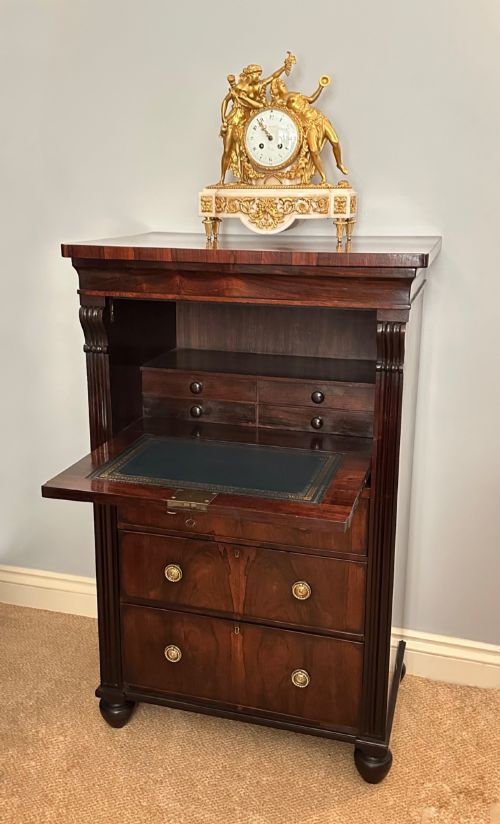
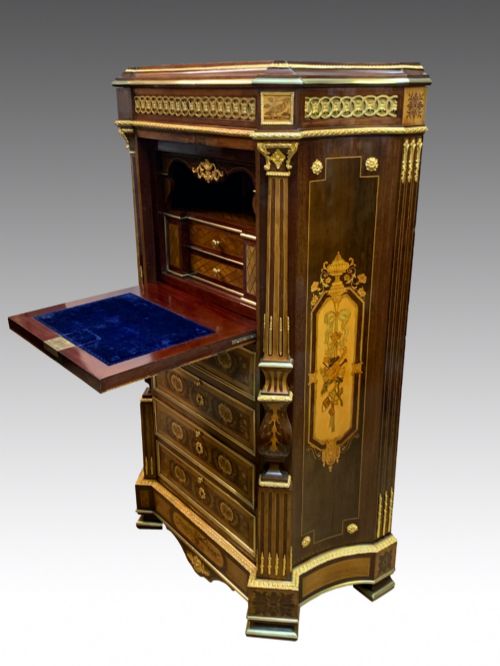
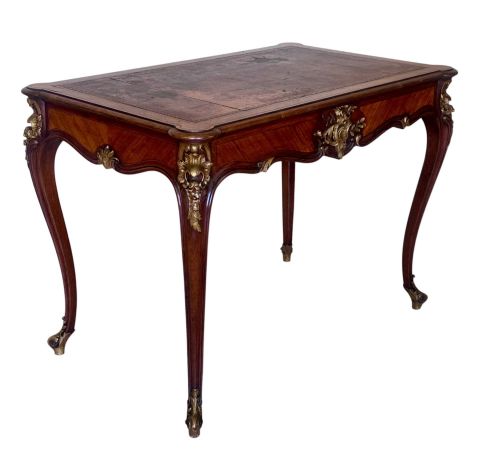
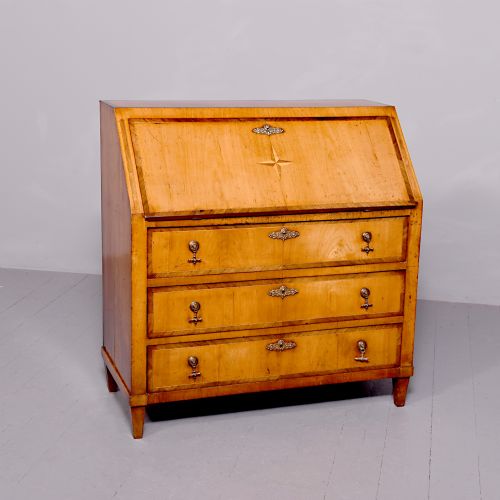
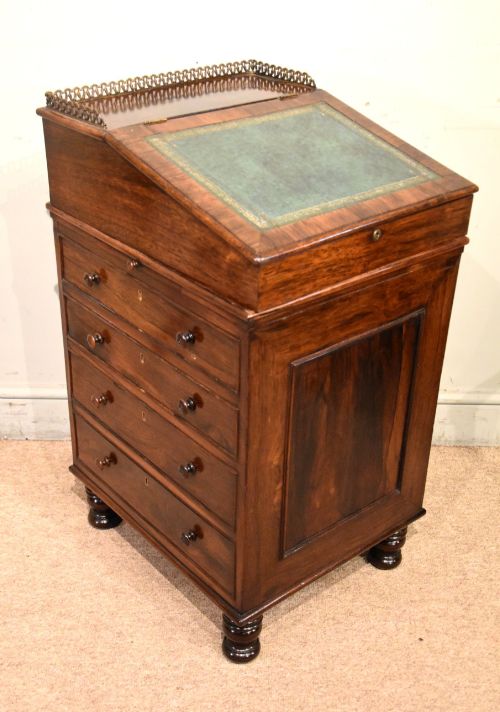
An antique rosewood bureau encompasses a variety of compact writing furniture designed for domestic use, from sloping fall-front cabinets to refined davenports and delicate bonheur du jour desks. These pieces span the Regency, Victorian, and Edwardian eras, alongside earlier eighteenth-century examples and continental pieces.
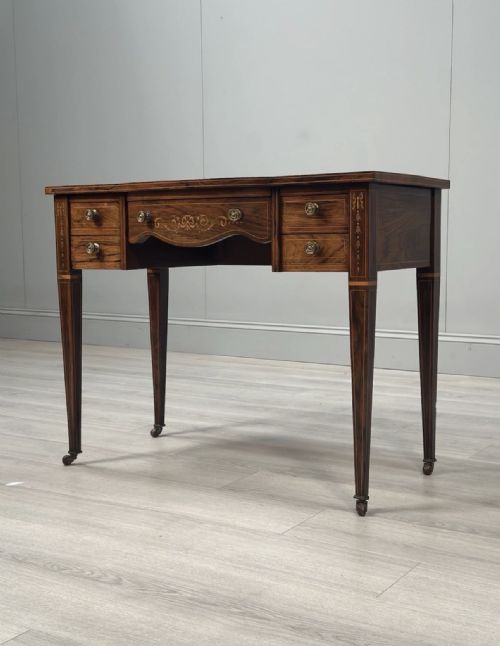
The version most commonly met on this page is the Davenport or the bureau de dame, often enriched with marquetry or satinwood inlay. Regency and Victorian variants frequently appear alongside Sheraton Revival interpretations and French cabinetwork.
Buyers seek these desks for their rich grain, heavy timber, and ingenious internal fittings, which combine a practical workspace with refined proportions suitable for period and contemporary interiors alike.
How they were made
Cabinetmakers utilised dense rosewood veneers over solid secondary timbers, often incorporating contrasting satinwood inlay and intricate marquetry patterns to decorate the exterior surfaces. Brass mounts, galleries, and inlay lines were integrated into the design to accent the dark grain of the wood.
Writing surfaces were typically inset with panels of tooled leather, providing a durable and smooth plane for correspondence. Internal drawers, pigeonholes, and secret compartments were constructed with fine dovetail joints and small turned knobs.
Retail Price Guide 2026
Typical UK retail prices for rosewood bureau, calculated from the Sellingantiques database of over a million retail prices indexed since 2003. This retail price guide relies exclusively on Sellingantiques data; no external sources or auction records are used, so the figures do not describe the wider market.
The archive includes Dutch, French, and English bureau forms ranging from simple davenports to elaborate bureau bookcases.
What varies in quality
The refinement of the marquetry and the precision of the satinwood inlay separate standard production from exceptional cabinetwork. Crispness in the brass mounts and the seamless fit of internal writing slides indicate higher workshop standards.
The choice of rosewood grain and the depth of its natural colour influence the visual weight of the piece. Superior examples maintain original fitted interiors and retain their fitted brass hardware without later replacement.
John McLean
The Antique Rosewood Bureau Glossary
- Bureau
- A writing desk, often featuring a sloping lid that opens to reveal pigeonholes and small drawers.
- Rosewood
- A dense, heavily figured timber valued for its dark purple-brown colour and contrasting black grain.
- Marquetry
- Decorative veneer work arranged in pictorial or geometric patterns using various coloured woods.
- Davenport
- A small, compact writing desk with a sloping top and drawers opening to one side.
- Bonheur du jour
- A light lady's writing desk featuring a small cabinet or set of shelves upon the upper surface.
Frequently Asked Questions
How do I identify a Regency rosewood bureau?
Regency pieces often display classical restraint, clean architectural lines, and the use of brass inlay or mounts against the dark rosewood timber.
They date from the early nineteenth century and frequently incorporate finely turned feet and restrained brass stringing rather than heavy floral marquetry.
Where should I place a bureau in my home?
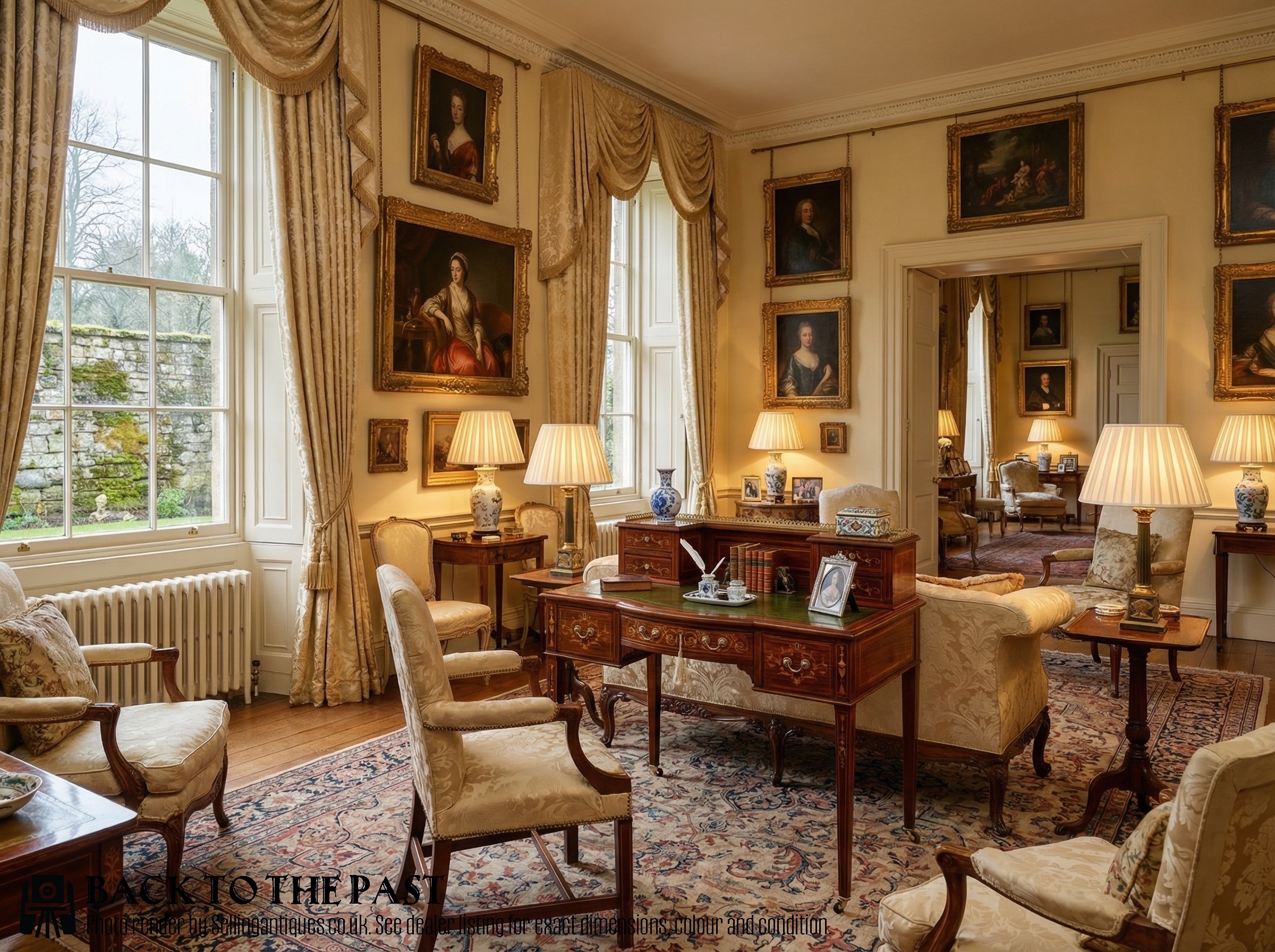
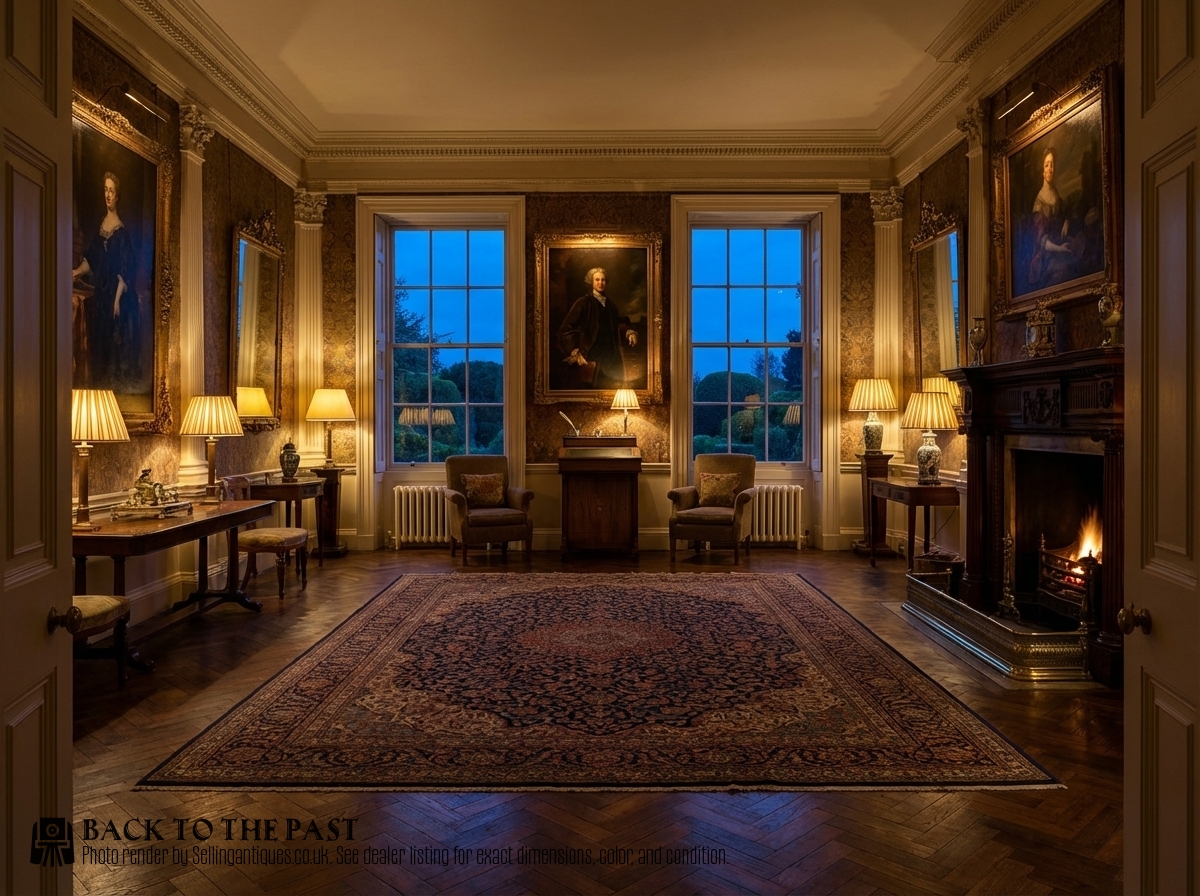
Because many antique rosewood bureaus feature finished backs, such as freestanding davenports or partner pieces, they can sit comfortably in the middle of a room rather than pushed solely against a wall.
Their compact proportions also make them suitable for studies, landings, or living rooms where space is at a premium.
What is a bureau de dame?
A bureau de dame is a feminine writing desk, frequently of French origin, often decorated with elaborate marquetry and kingwood or rosewood veneers.
These pieces tend to be smaller and more decorative, designed for light correspondence rather than heavy administrative work.