
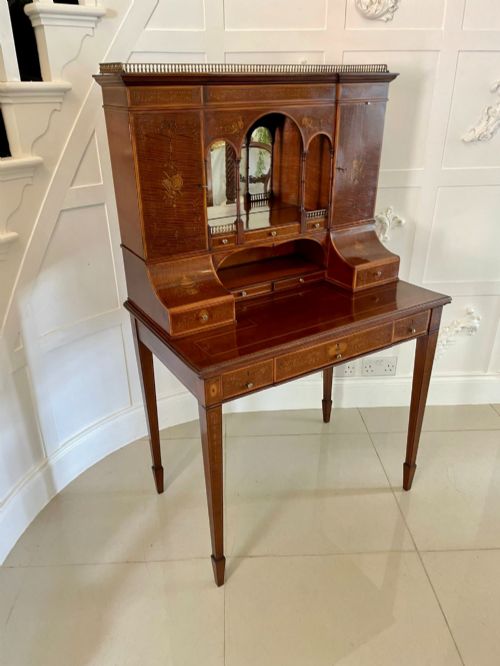
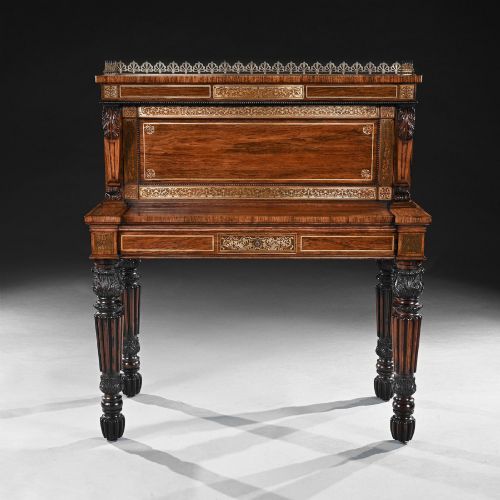
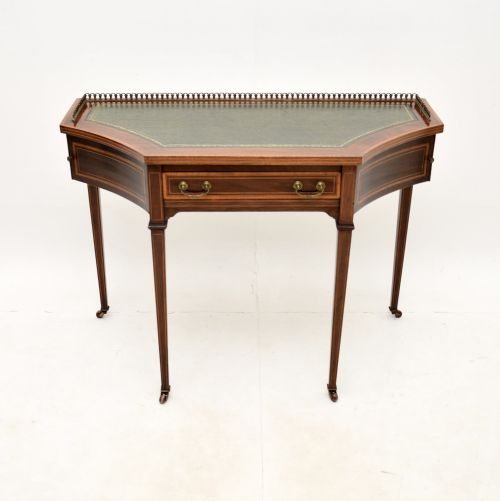

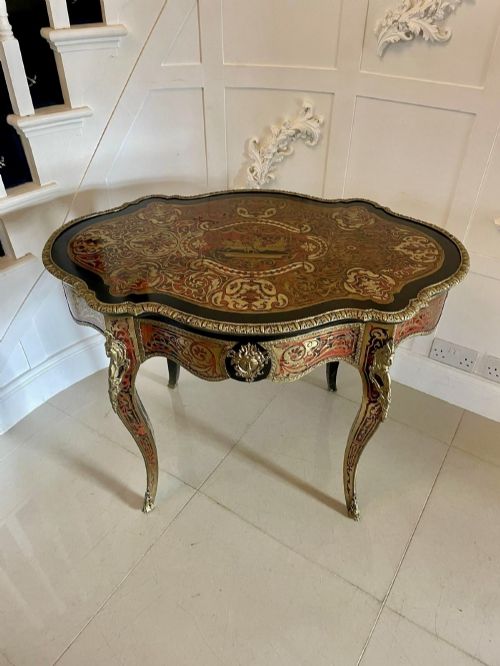
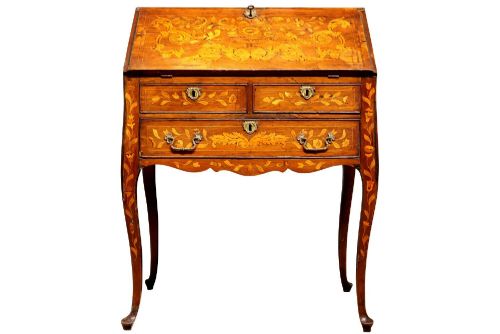
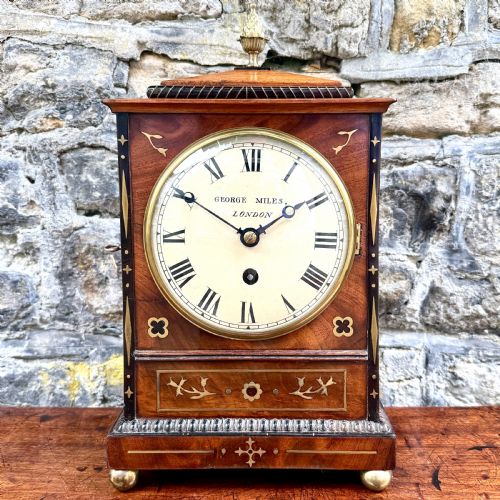
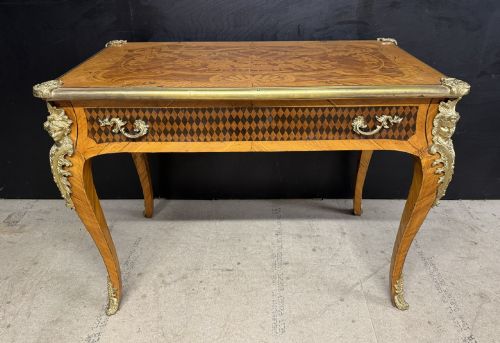
Brass Inlaid Desk
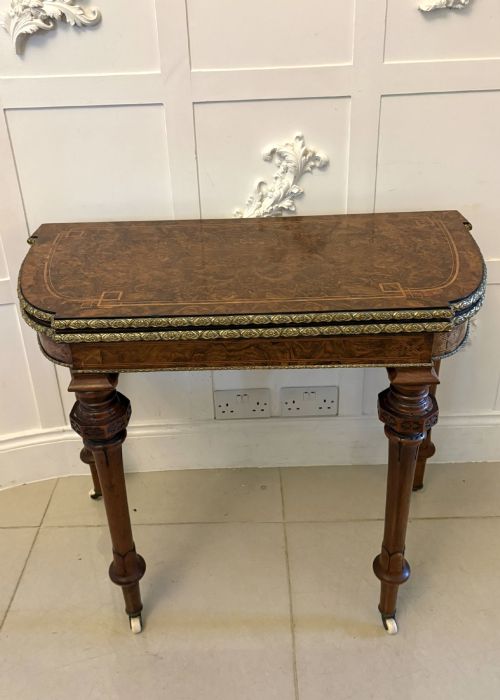
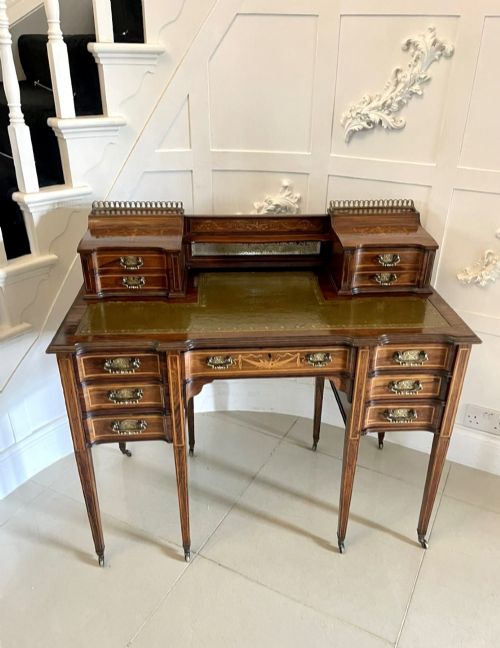
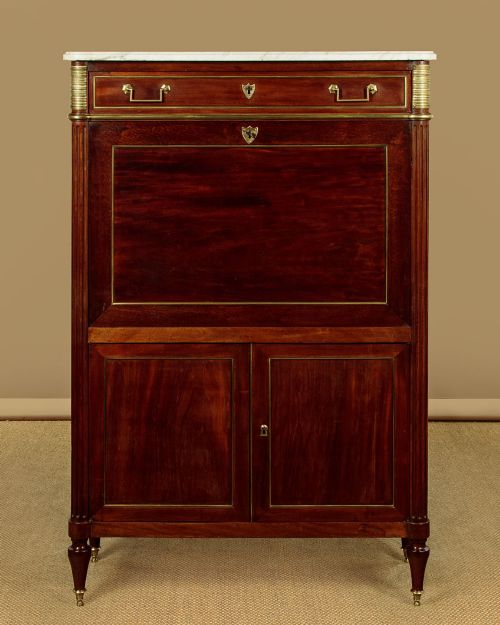
When considering a brass inlaid desk, you are looking at fine timber writing furniture embellished with metallic detail designed to catch the light.
Brass Inlaid Desk
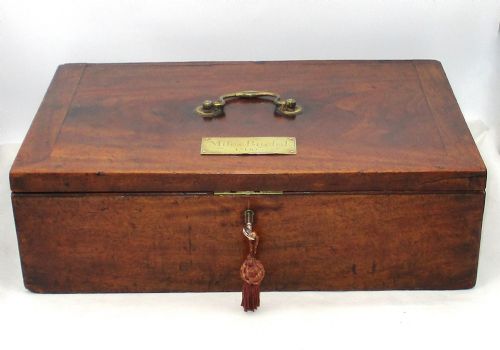
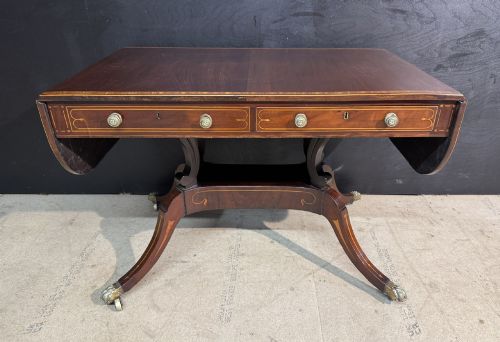
A brass inlaid desk encompasses various utilitarian writing forms from the Georgian, Regency, and Victorian eras, alongside Edwardian interpretations. The selection frequently includes compact writing slopes, portable campaign pieces, and larger freestanding tables designed for domestic studies or libraries.
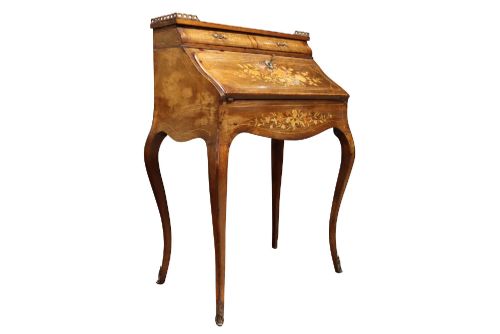
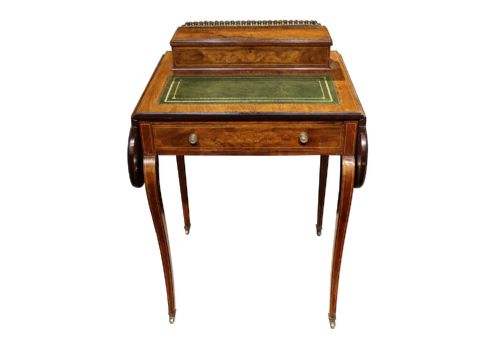
Makers produced these surfaces in forms ranging from pedestal desks and partners' desks to ladies' writing tables and cylinder desks. Rosewood and mahogany serve as the primary foundational timbers for these distinct shapes, often enhanced by contrasting secondary woods.
The aesthetic bridges formal British cabinetry and continental influences, incorporating Boulle work and French stylistic revivals. Buyers encounter everything from simple line-inlaid lap desks to elaborate scrolling foliate brass ornament set into dark exotic grain.
Materials and Technique
Cabinetmakers constructed these pieces using dense hardwoods such as rosewood, mahogany, and ebonised wood, frequently selecting figured veneers like burr walnut and satinwood for visual depth. These primary timbers provide a dark, stable backdrop designed to contrast sharply with bright metallic insertions.
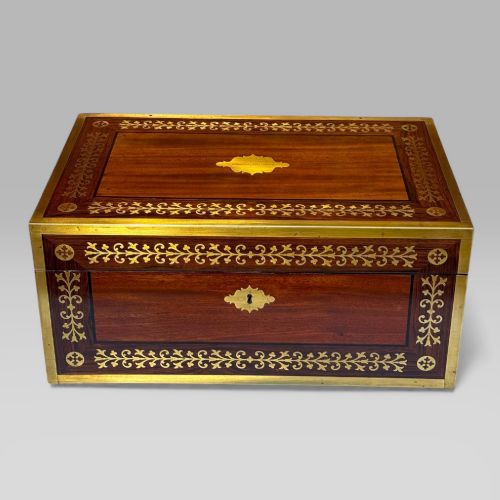
The brass inlay technique involved hand-cutting thin sheet brass into delicate foliate scrolls, geometric lines, or Boulle-style motifs, then recessing the metal flush into channels carved within the wooden surface. Craftsmen secured the brass elements using animal glue and tiny pins, subsequently scraping and polishing the entire plane until the wood and metal met without a perceptible edge.
Brass Inlaid Desk Retail Price Guide 2026
Typical asking prices for brass inlaid desk among the pieces listed under this phrase on Sellingantiques today, from the lower quarter to the upper quarter. They describe what is for sale here now, not the wider market.
Listings feature brass inlaid desks spanning the Georgian, Regency, Victorian, and Edwardian periods, utilising rosewood, mahogany, satinwood, and ebonised wood.
Separating the Grades
Quality rests upon the precision of the metalwork and the selection of the timber beneath it. Superior examples display tight, seamless integration where the brass sits perfectly flush with the wood, whereas lesser items reveal gaps filled with dark stopping or lifting edges.
The complexity and depth of the engraving inscribed into the brass distinguish standard production from exceptional workshop output. Finer pieces maintain original fitted interiors, functioning locks, and unblemished leather writing surfaces that complement the exterior brass ornamentation.
Maple & Co.·Gillows Oxford Street Workshop·Edwards & Roberts·Collinson & Lock·Dent of London
The Brass Inlaid Desk Glossary
- Boulle work
- A style of marquetry consisting of tortoiseshell and brass inlay, named after the cabinetmaker André-Charles Boulle. It adds intricate metallic contrast to the surface of desks and cabinets.
- Writing slope
- A portable box with a hinged sloping lid that opens to reveal a velvet or leather-lined writing surface and compartments for stationery. Regency examples frequently feature elaborate brass stringing or cut brass plaques.
- Pedestal desk
- A heavy freestanding desk comprising two supporting pedestals of drawers beneath a large rectangular top. They often feature inset leather writing surfaces framed by brass borders.
- Secretaire
- A writing cabinet featuring a fall-front or sliding drawer that drops down to form a desk surface. They conceal internal nests of small drawers and pigeonholes.
- Stringing
- Thin inlay lines of contrasting wood or metal set into the surface of a piece to outline drawers, panels, or tops. Brass stringing is characteristic of Regency period case furniture.
Brass Inlaid Desk: Frequently Asked Questions
How do I date a brass inlaid desk?
Dating relies on observing the primary timber, the style of the brass cutting, and the internal construction methods of the drawers. Regency pieces often utilise rosewood with fine foliate cut brass, whereas Victorian examples favour mahogany or walnut with heavier geometric line inlay.
Secondary woods inside the drawers and the presence of handmade screws or dovetails offer further chronological clues. Comparing the overall silhouette to documented catalogue styles helps narrow the decade of manufacture.
Were these desks used for travel?
Certain forms, particularly writing slopes and campaign desks, were specifically built for travel and military use. These compact pieces often feature brass carrying handles, reinforced brass corners, and locking mechanisms to secure contents on journeys.
Larger pedestal and library desks remained stationary in domestic homes or offices. Their brass details were purely decorative rather than structural reinforcements for transit.
How should I care for the brass inlay?
Maintenance requires keeping the timber and metal clean using dry or slightly damp microfibre cloths without harsh chemical polishes. Excess liquid cleaner can seep beneath the brass edges and loosen the historical animal glue holding the metal in place.
Feeding the surrounding wood with appropriate wax helps prevent timber shrinkage, which is the primary cause of brass inlay lifting over time. Gentle handling ensures the flush surface remains intact.
What is the difference between a writing table and a slope?
A writing table is a complete freestanding furniture piece with legs, designed to sit permanently in a room for correspondence. A writing slope is a portable portable box placed on top of another table or used on the lap.
Slopes fold in half to enclose inkwells and paper, whereas tables provide a fixed, open platform with integrated drawer storage beneath the writing plane.