


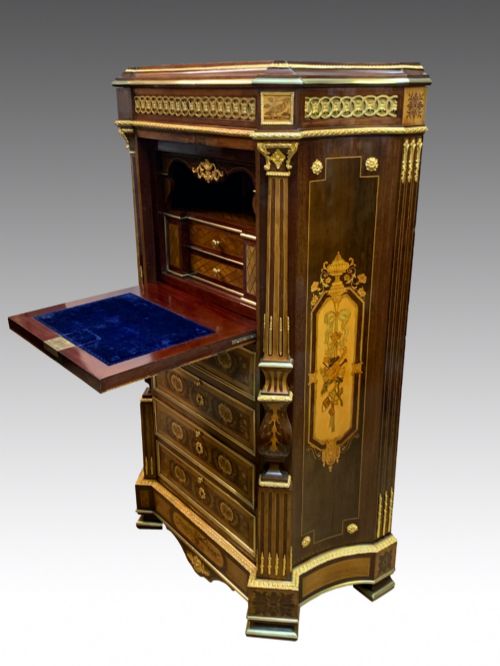
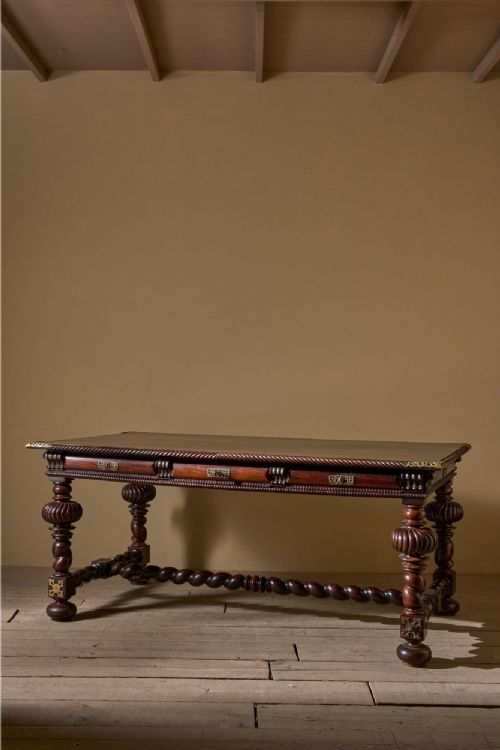
Dark Rosewood Desk
A dark rosewood desk brings rich timber grain and classic craftsmanship to a study, offering a sturdy surface for daily correspondence.
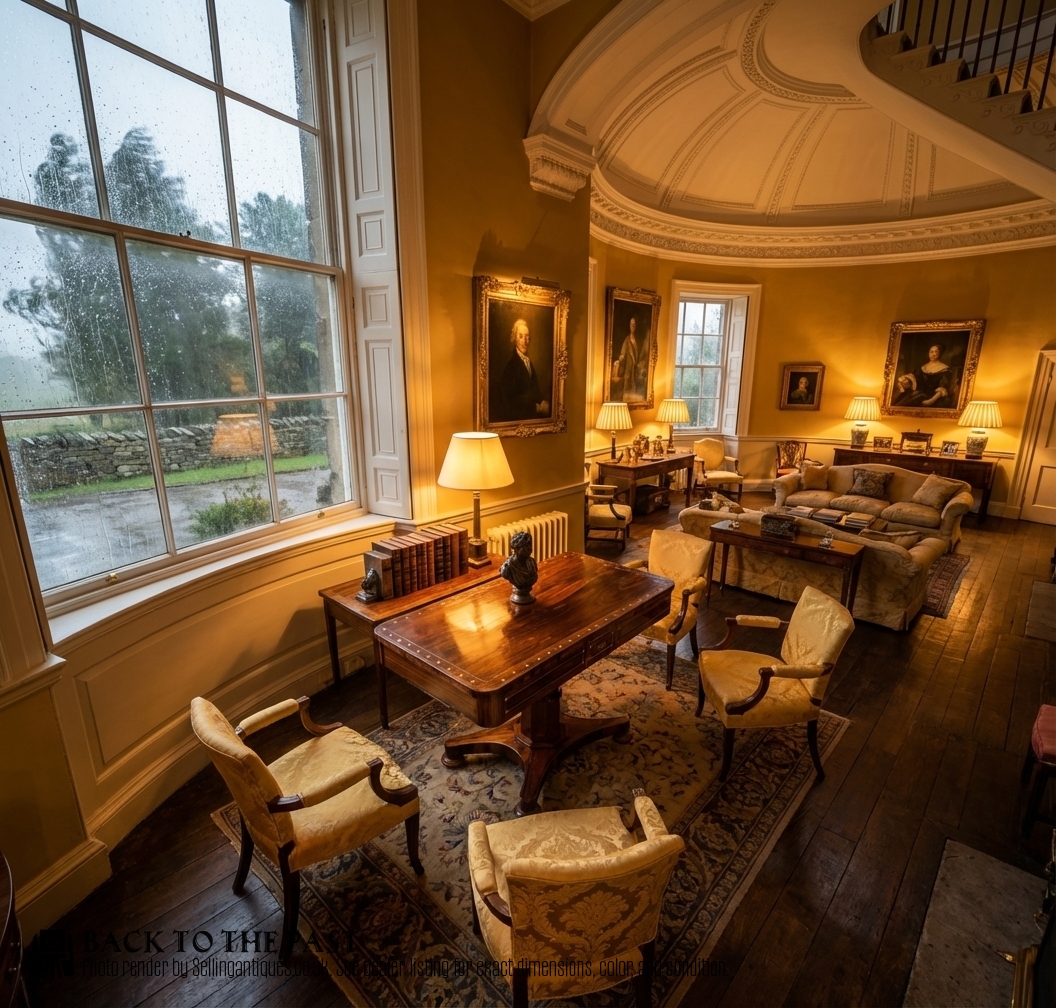
Dark Rosewood Desk
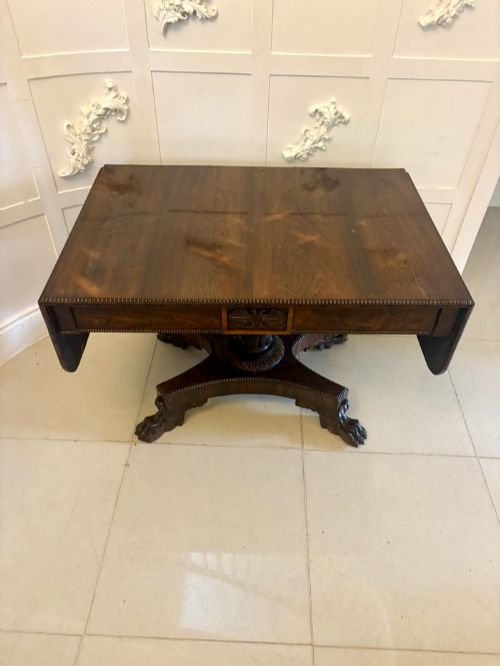
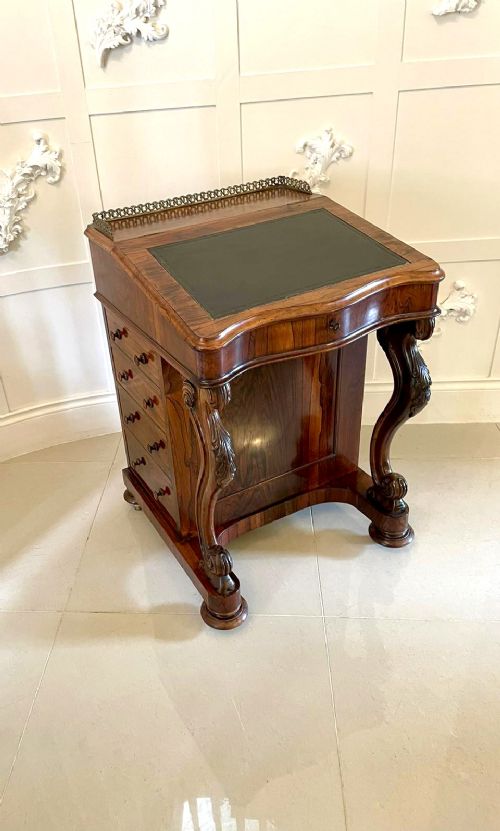
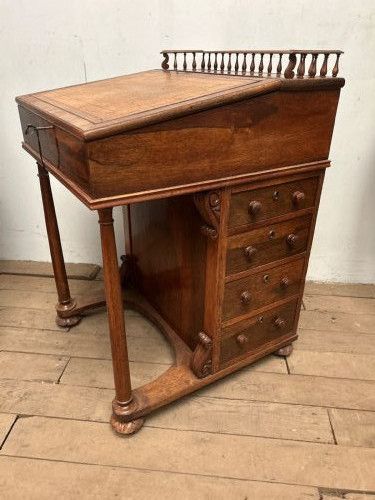
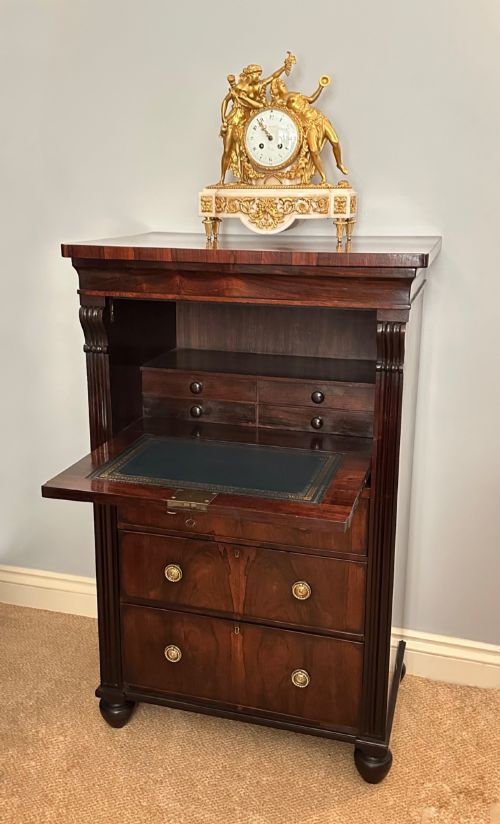
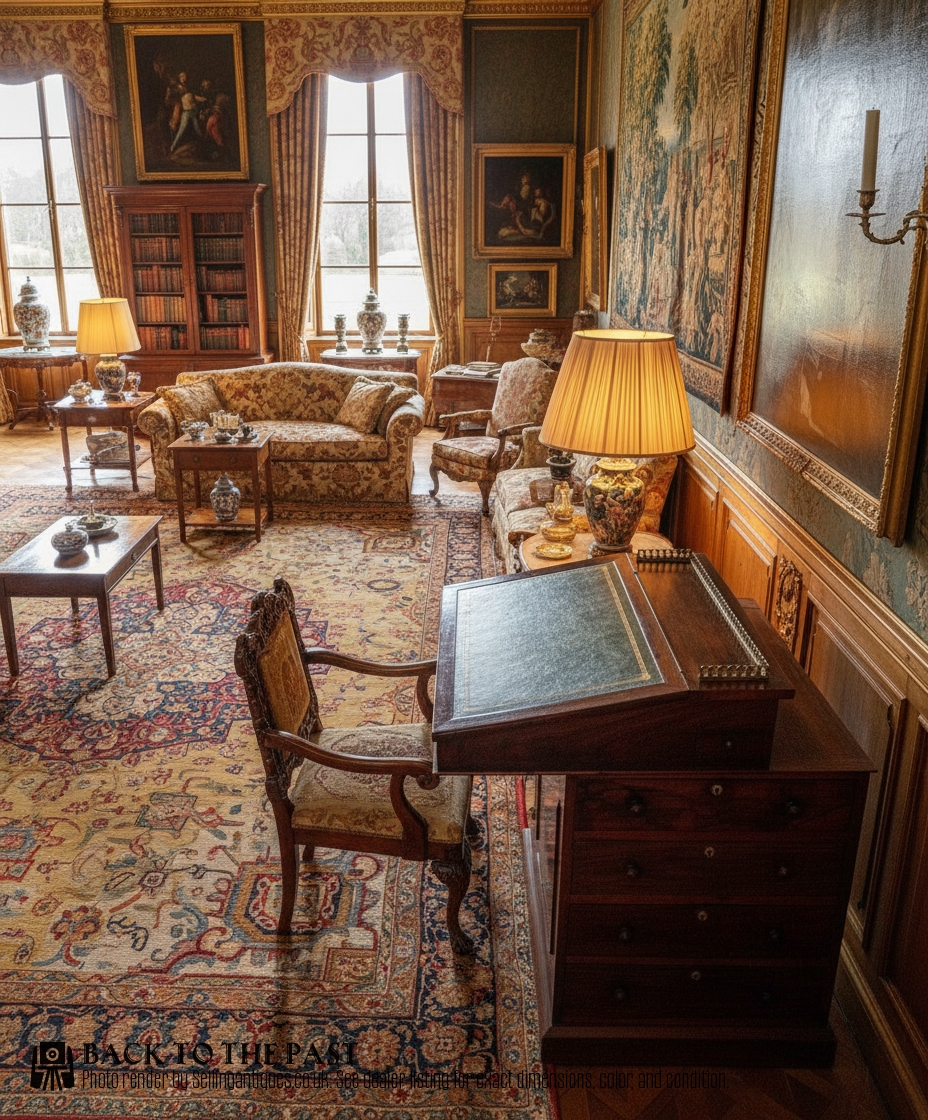
A dark rosewood desk encompasses writing tables, library tables, and compact davenport styles originating from the Georgian, Regency, William IV, and Victorian periods. Buyers search for these pieces to add deep wood tones and historical character to a room.
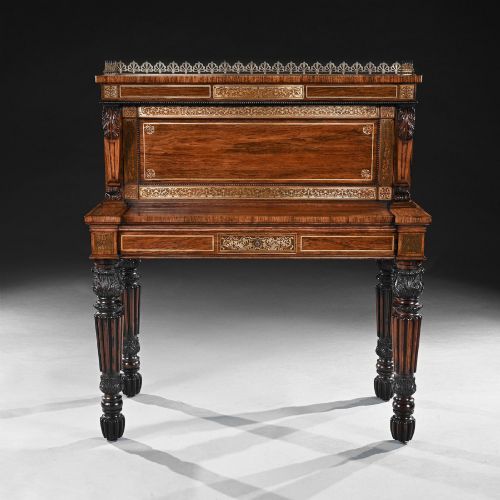
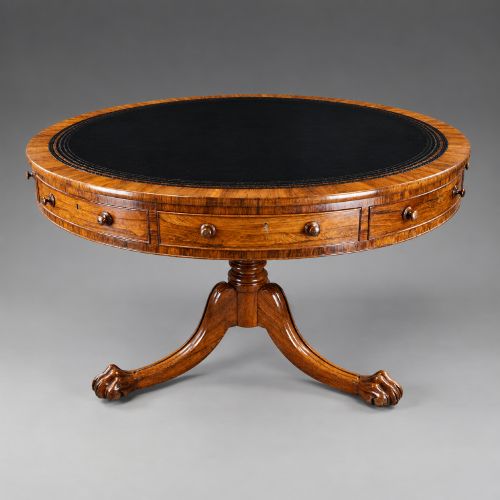
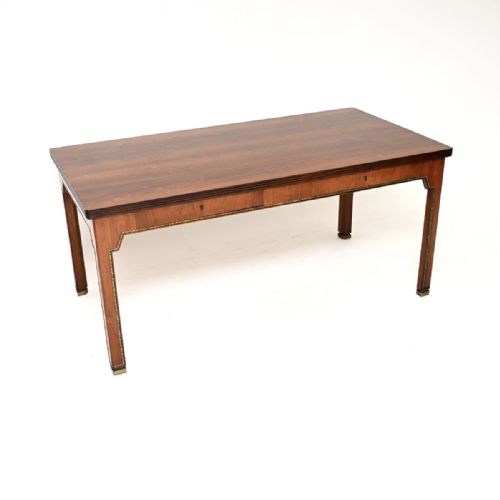
The most common examples encountered on this page date from the nineteenth century, reflecting periods such as Regency and Victorian design. These often feature freestanding formats, brass inlays, or leather writing surfaces suited to traditional interiors.
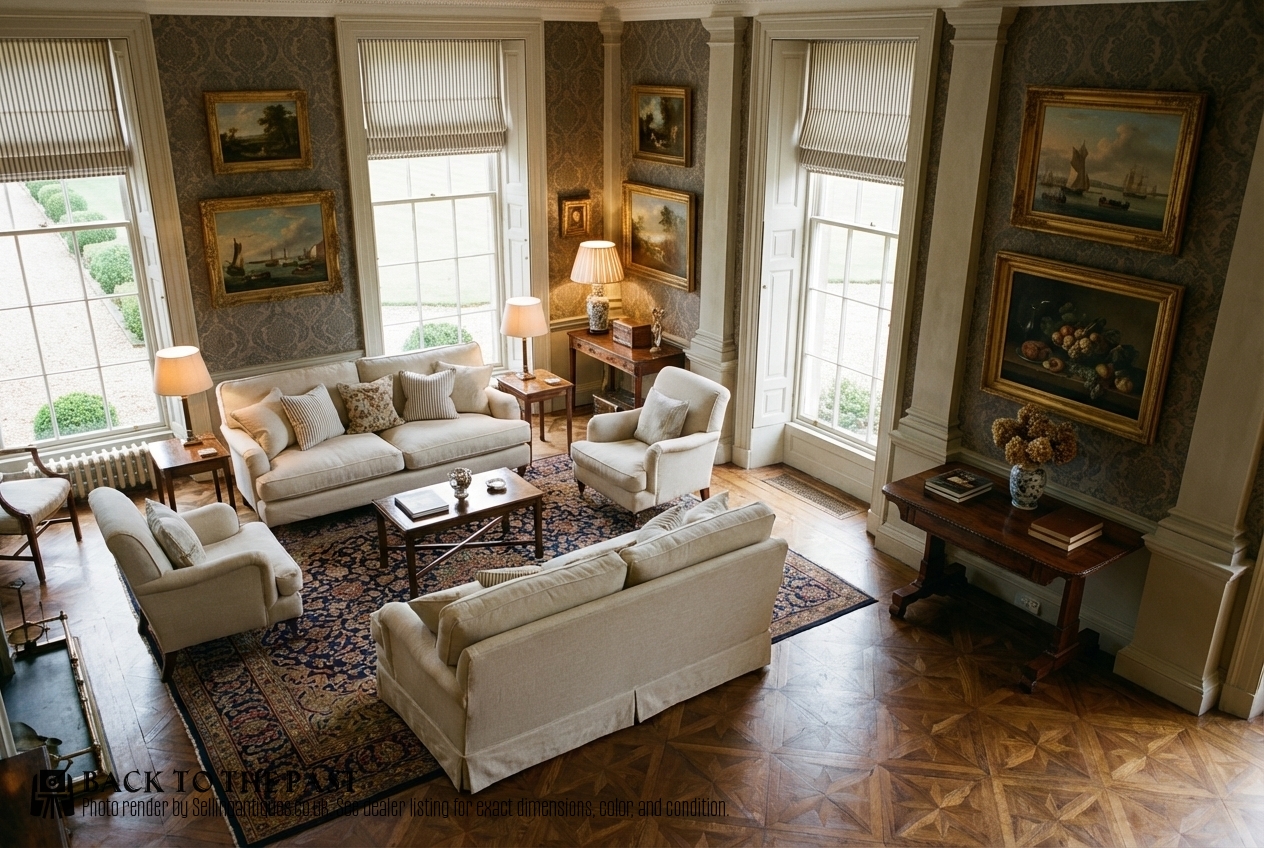
Materials and Technique
Construction relies heavily on dense tropical hardwoods combined with secondary timbers, finished with polished veneers that highlight the dark grain. Workshops utilised brass for inlay and mounts, alongside fitted leather panels for writing surfaces.
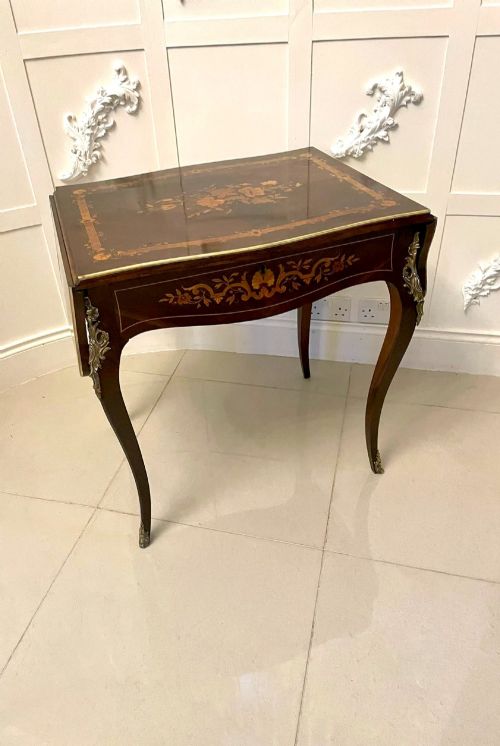
Cabinetmakers employed techniques such as marquetry, brass stringing, and turned pillar supports to build structural rigidity and decorative depth. Drawers are typically dovetailed by hand, reflecting period joinery standards.
Dark Rosewood Desk Retail Price Guide 2026
Typical asking prices for dark rosewood desk among the pieces listed under this phrase on Sellingantiques today, from the lower quarter to the upper quarter. They describe what is for sale here now, not the wider market.
Several items include working keys, ensuring desks can still be locked against prying eyes.
Judging Quality
The distinction between ordinary and superior pieces lies in the crispness of the carved details, the precision of brass inlays, and the depth of the timber's natural figure. Finely made examples display balanced proportions and original hardware rather than later replacements.
Condition of the polished surface and the integrity of the underlying structure heavily influence the standing of an item. Pieces retaining their original leather inserts and working locks demonstrate superior preservation.
Gillows Oxford Street Workshop·Mein of Kelso·Maison Krieger·Barber and North of York
The Dark Rosewood Desk Glossary
- Davenport
- A small compact desk featuring a sloping writing lid above a pedestal of drawers. This form became popular during the nineteenth century for domestic correspondence.
- Marquetry
- Decorative patterns formed by fitting together thin veneers of various woods and other materials onto a carcase. It requires precise hand-cutting to achieve intricate floral or geometric designs.
- Ormolu
- Gilded bronze mounts applied to furniture for decorative accent during the eighteenth and nineteenth centuries. The finish provides a bright metallic contrast against dark timber.
- Sofa Table
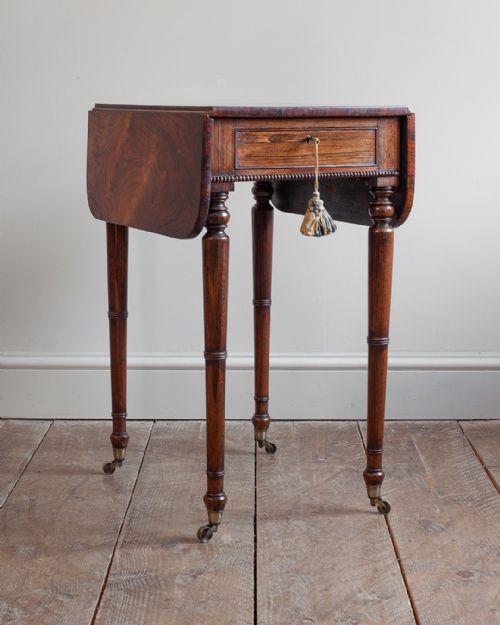
- A rectangular freestanding table traditionally placed in front of a sofa, featuring drop leaves on either side. These pieces often include small drawers beneath the top.
Dark Rosewood Desk: Frequently Asked Questions
How do I care for a rosewood surface?
Keep the wood away from direct sunlight and radiators to prevent the timber from drying out or splitting. Apply a suitable microcrystalline wax occasionally to maintain the sheen.
Avoid using modern liquid polishes containing silicone, which can build up and dull the historic finish over time. A soft, dry cloth is best for routine dusting.
Are these desks suitable for daily laptop use?
Many nineteenth-century writing tables provide adequate surface depth for modern laptops and paperwork. However, verify the kneehole height before purchase to ensure comfortable seating.
Leather writing inserts require some care if used directly as a mouse pad, so consider placing a protective blotter on the surface during heavy work.
What is the difference between a library table and a writing table?
Library tables are typically designed to be freestanding in the centre of a room, featuring finished backs and drawers accessible from one or both sides. They were intended for sorting papers and holding large volumes.
Writing tables are generally lighter in proportion, often incorporating specific drawer layouts for stationery and writing implements rather than general book storage.
How can I tell a Regency desk from a Victorian one?
Regency pieces often display classical influences with clean architectural lines, brass stringing, and rosewood crossbanding. The forms tend to echo ancient Greek or Roman proportions.
Victorian furniture frequently exhibits heavier carving, darker finishes, and eclectic revival styles such as Gothic or Renaissance motifs, reflecting mid-nineteenth-century tastes.