

Regency Mahogany Centre Table
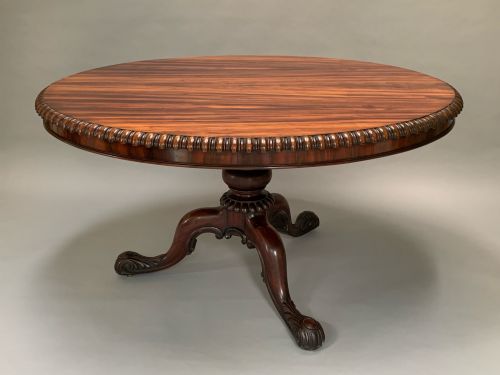
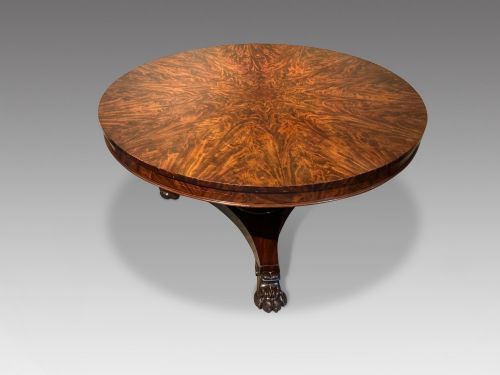
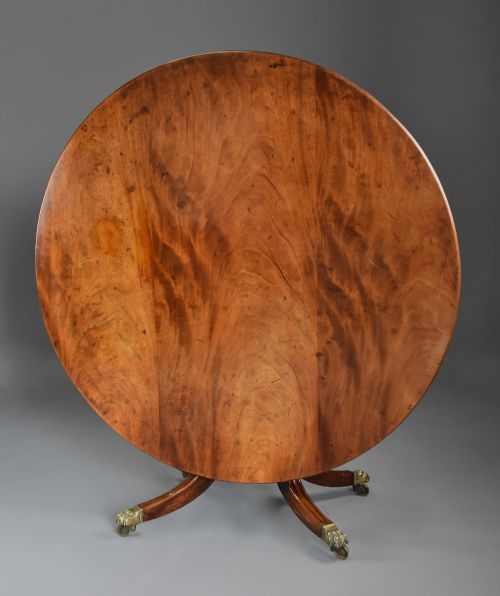
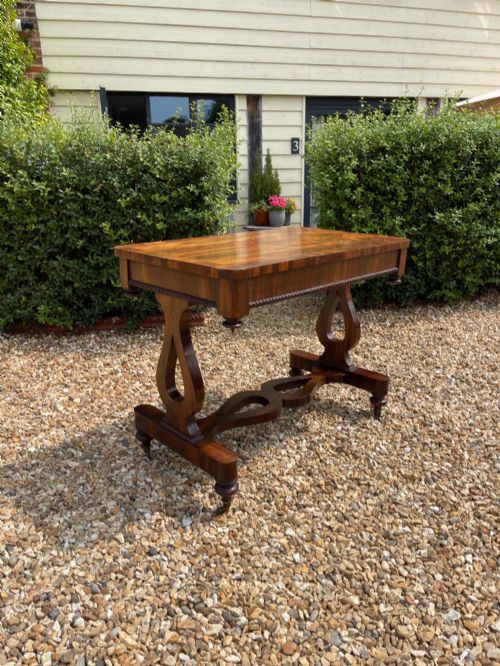
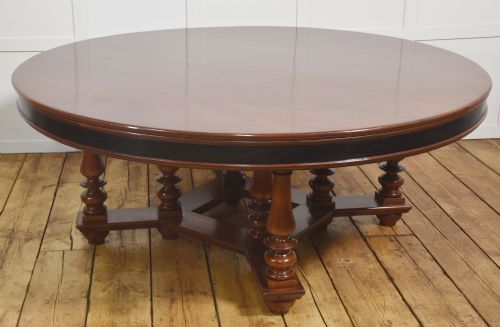
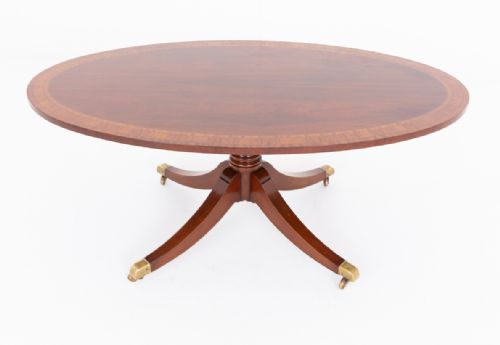
A regency mahogany centre table anchors a grand room with its deep timber and balanced pedestal form.

Regency Mahogany Centre Table
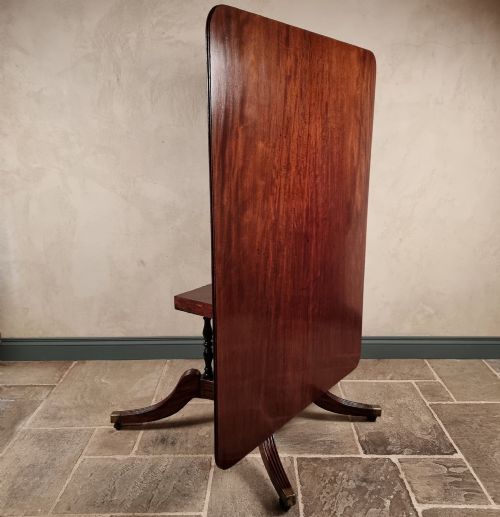
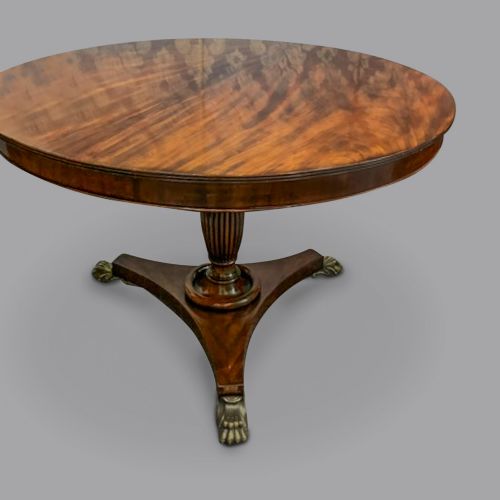
A regency mahogany centre table stands free in a room rather than against a wall, designed to be viewed from all sides. These pieces date principally from the Regency, George III, and William IV periods, alongside the nineteenth century.
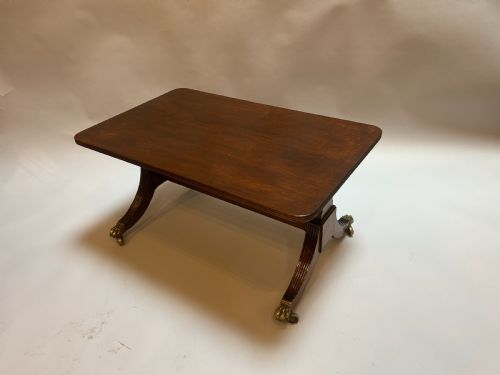
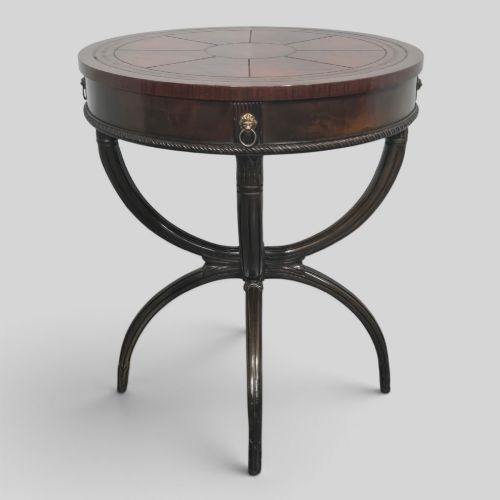
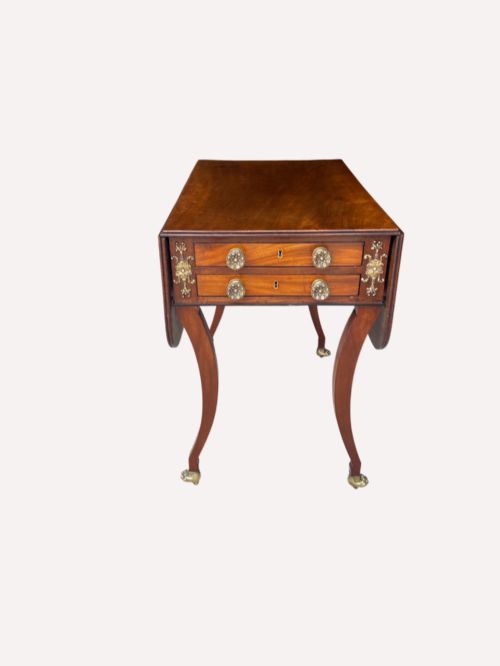
The circular breakfast table and the pedestal dining table dominate the forms, accompanied by drum tables, sofa tables, and library tables. Single-piece timber tops and tilt-top mechanisms appear frequently across the selection.
Makers and designers of the period such as Gillows, George Smith, and William Trotter influenced these freestanding tables, which bridge late Georgian restraint and nineteenth-century exuberance.

Materials and Construction
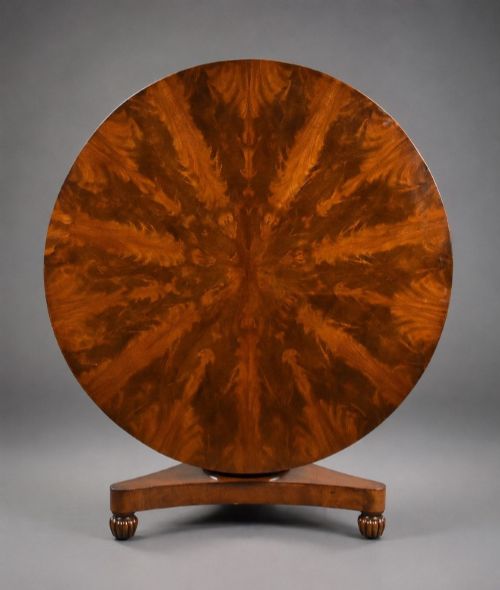
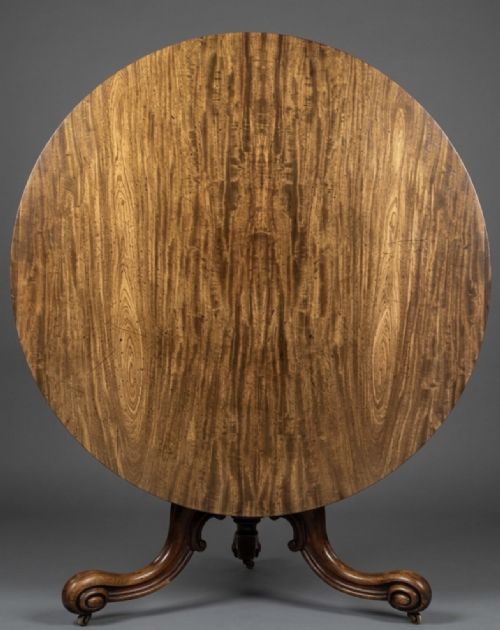
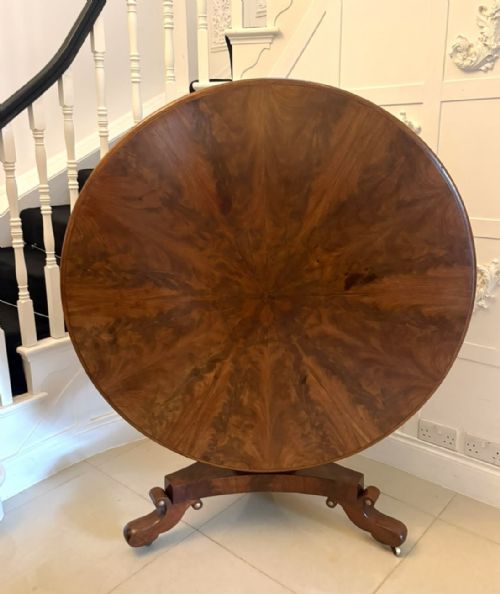
Makers utilised solid mahogany and rich veneers including flame mahogany, plum pudding mahogany, and figured mahogany, sometimes contrasted with rosewood, coromandel, or maple borders. Timber selection defined the visual weight of the top.
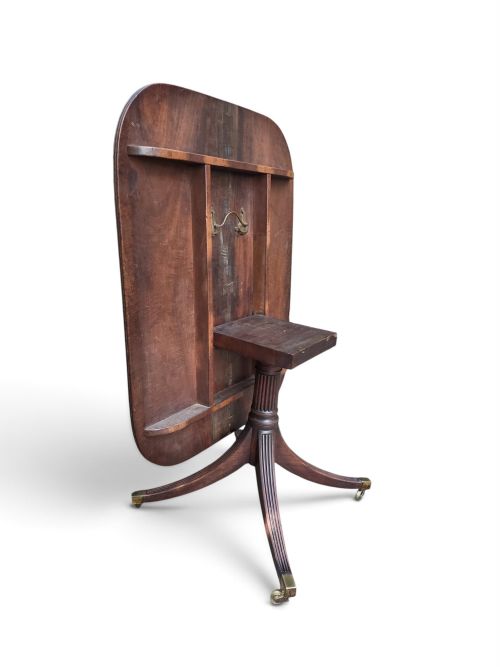
Brass mounts, stringing, and ormolu decoration embellish pedestals and friezes, while occasional marble inserts provide a durable writing or lamp surface. Tilt-top mechanisms required precise joinery to allow heavy circular tops to pivot and lock flat.
Retail Price Guide 2026
Typical UK retail prices for regency mahogany centre table, calculated from the Sellingantiques database of over a million retail prices indexed since 2003. This retail price guide relies exclusively on Sellingantiques data; no external sources or auction records are used, so the figures do not describe the wider market.
Listings feature mahogany, flame mahogany, rosewood, and brass, spanning the Regency, Georgian, and nineteenth-century periods.
Judging Quality
The distinction between standard production and top-tier workshop output lies in the selection of timber figure, such as richly marked flame or plum pudding mahogany, and the crispness of carved pedestals and paw feet. Superior tables display seamless book-matching on large circular tops.
Structural integrity of the central pillar and the weight distribution of the platform base separate robust dining tables from lighter occasional pieces. Finer examples integrate thoughtful details like precise brass inlay or secondary timbers of exceptional grade.
Gillows·George Smith·William Trotter
The Regency Mahogany Centre Table Glossary
- Centre table
- A freestanding table designed to sit in the middle of a room rather than against a wall. These pieces are finished on all sides.
- Breakfast table
- A tilt-top circular table originating in the Georgian and Regency periods for morning meals or general use. The tilting top allowed the table to be stored against a wall when not in use.
- Drum table
- A circular library table with a deep frieze containing drawers, mounted on a central pillar and tripod or platform base. They often feature inset leather writing surfaces.
- Flame mahogany
- A veneer cut from the branch junction of the mahogany tree, producing a distinctive flickering flame pattern. Cabinet makers reserved this timber for prominent table tops and drawer fronts.
- Tilt-top
- A hinged table top mechanism that allows the surface to rotate into a vertical position. This clever engineering saved floor space in period drawing rooms.
Frequently Asked Questions
How were these tables originally used?
These tables served multiple functions in grand domestic interiors, acting as breakfast tables, library desks, or central display surfaces for lamps and books.
Because they stand without wall support, they allowed people to gather round from any angle in the principal reception rooms.
Can I use a tilt-top table every day?
A tilt-top table functions reliably for daily dining or display provided the brass catch and block beneath the top remain secure.
Dropping the top back down should be done with care to protect the hinge mechanism and the stability of the central pillar.
How do I tell a Regency table from a later copy?
Genuine Regency examples show period construction methods in the secondary timbers, hand-cut screws, and patinated mahogany surfaces developed over two centuries.
Later Victorian revival pieces often feature heavier proportions, machine-cut components, and brighter, uniform factory finishes.
What is the difference between a centre table and a dining table?
Centre tables are typically smaller, round, or occasional forms designed to anchor a room's decor, though many circular Regency examples served dual purposes for informal dining.
Large dining versions often incorporated extending leaves, whereas centre tables remained fixed in size and freestanding.