
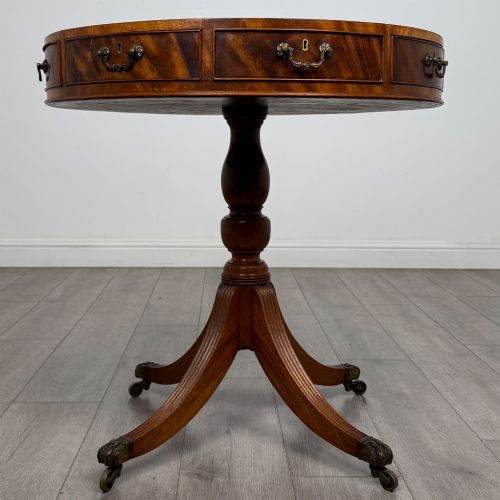
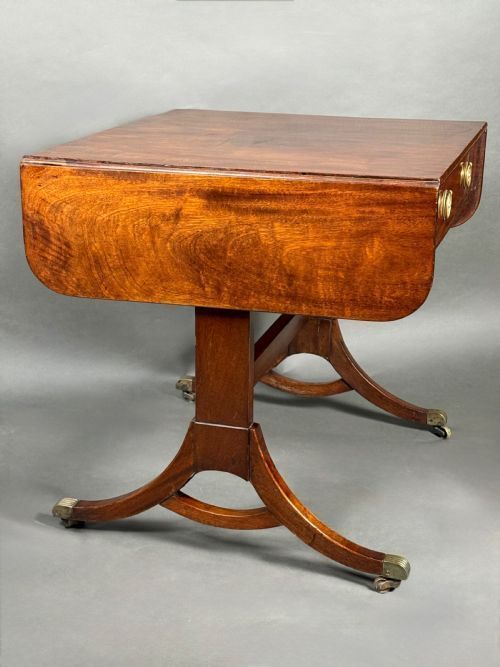
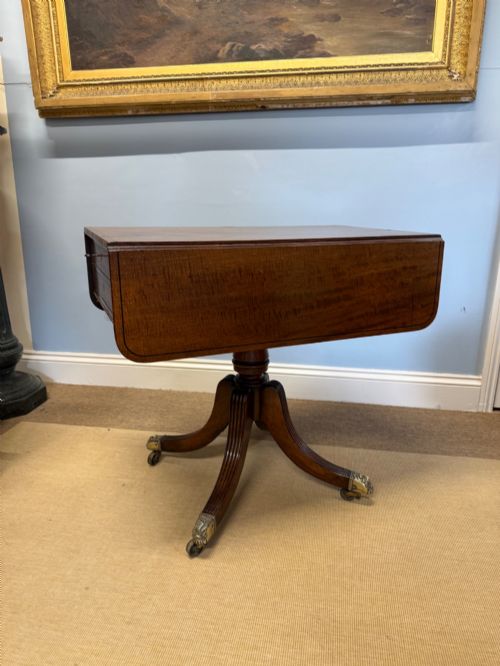
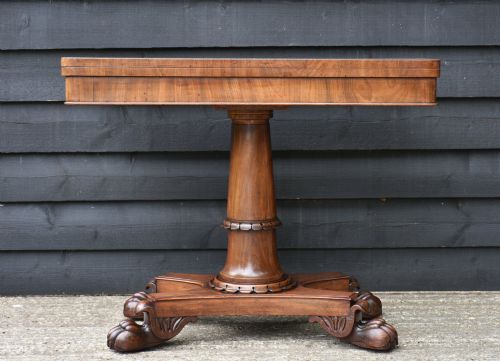
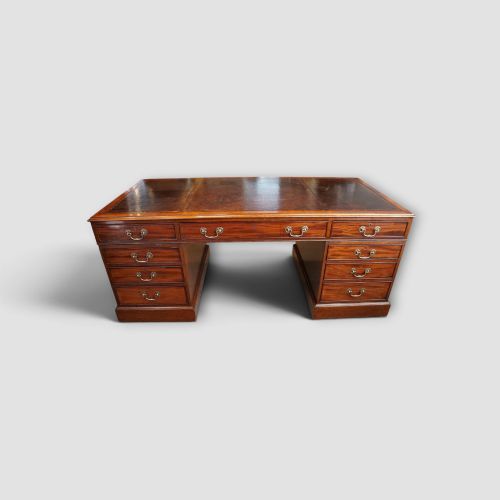
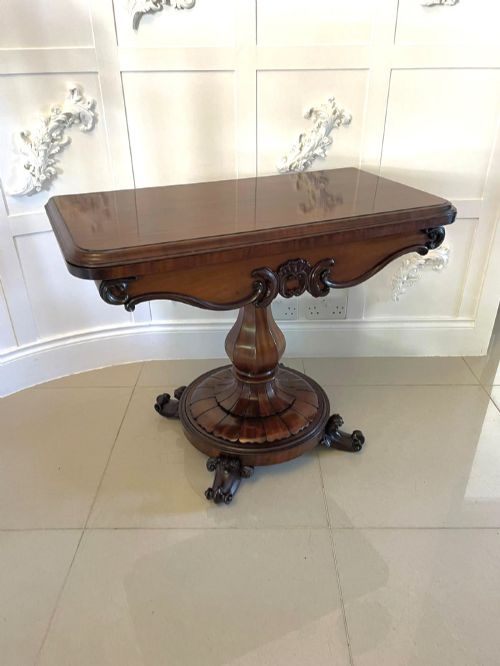
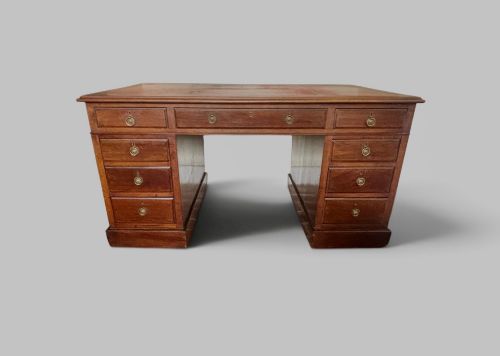

Brown Mahogany Pedestal Table
A brown mahogany pedestal table brings warmth and dependable weight to a room, formed through generations of cabinet-making skill.
Brown Mahogany Pedestal Table
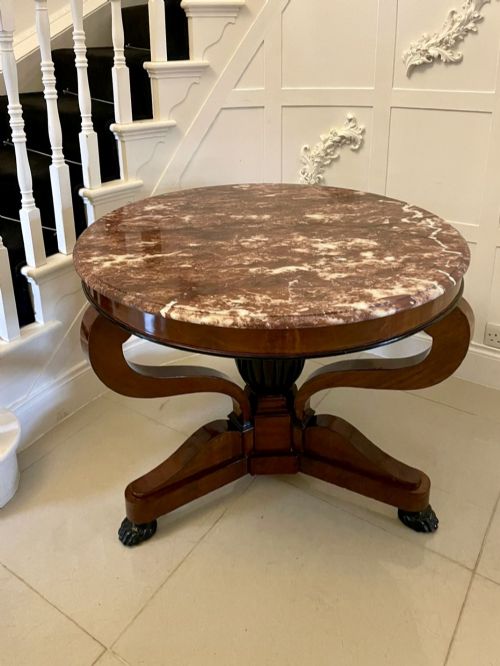
A brown mahogany pedestal table unites a central column support with rich timber surfaces, appearing across dining rooms, libraries, and parlours. These items emerge from periods spanning the Georgian, Regency, William IV, and Victorian eras, alongside Edwardian interpretations.
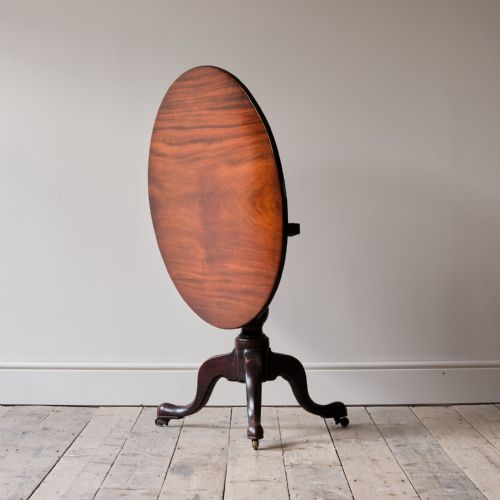
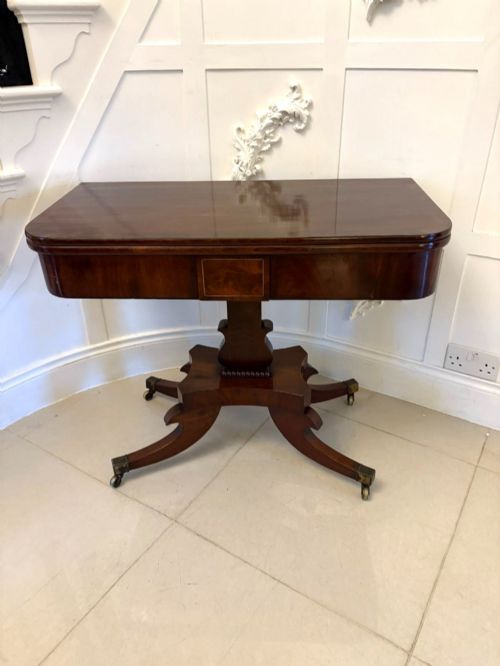
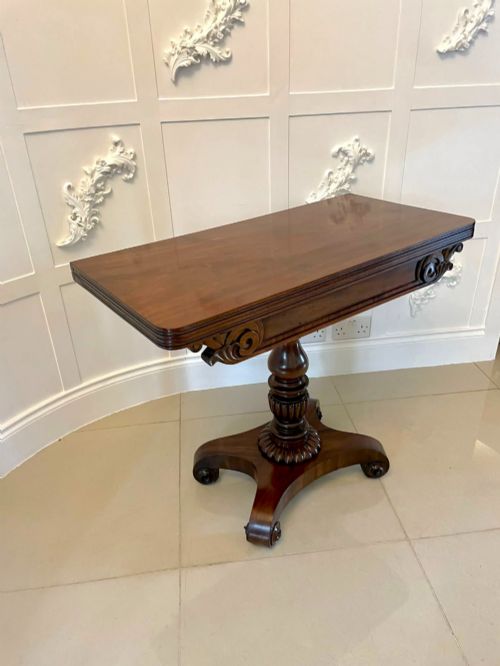
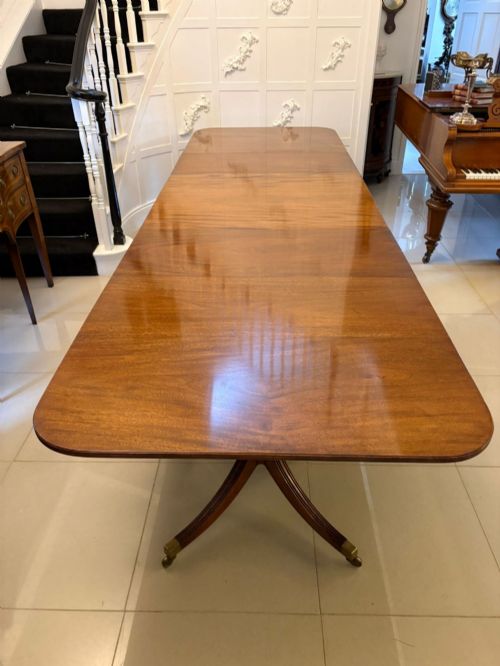
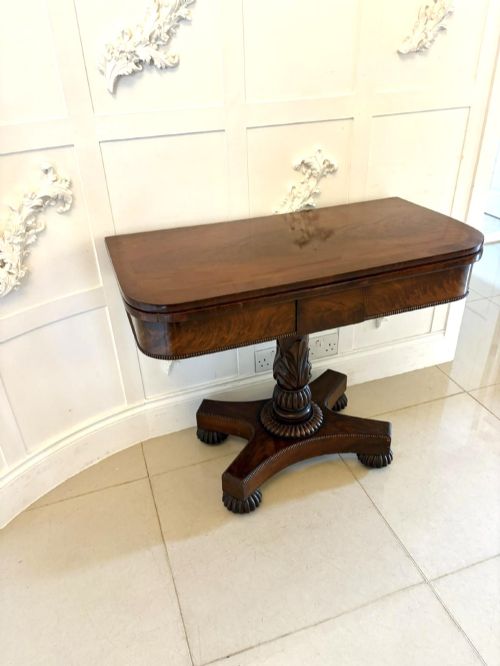
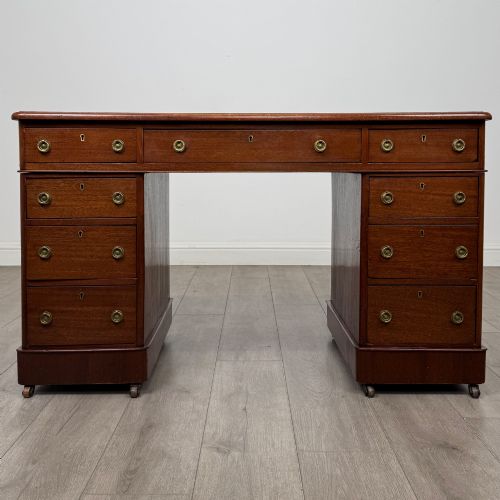
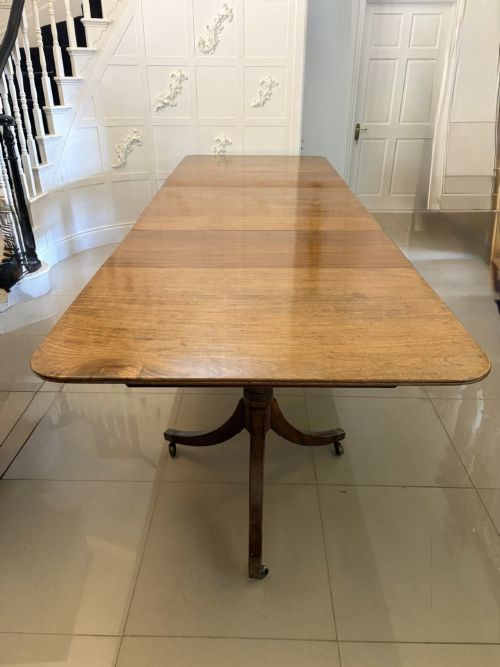
Forms range widely on this page from expansive multi-pillar extending dining tables down to compact tilt-top occasional tables, wine tables, and drum tables. Desks and card tables also utilise pedestal supports, providing stable central legs for writing and gaming.
Makers fashioned these pieces primarily for practical domestic utility, whether to seat large dining parties or to rest a lamp beside a chair. The central column design allowed maximum legroom around the perimeter while maintaining a solid footprint.
Materials and construction methods
Cabinet-makers relied heavily on solid mahogany and figured mahogany veneers, often selecting flame mahogany for tabletops to highlight swirling grain patterns. Secondary timbers provided internal framing, whilst brass inlays, castors, and leather inserts added functional detail.
Pillar supports required sturdy joinery, connecting central columns to weighted tripod or quadruped feet, frequently fitted with brass toes. Tilt-top mechanisms utilised pivoted wooden blocks and brass catches to allow surfaces to store flat against walls when not in use.
Brown Mahogany Pedestal Table Retail Price Guide 2026
Typical asking prices for brown mahogany pedestal table among the pieces listed under this phrase on Sellingantiques today, from the lower quarter to the upper quarter. They describe what is for sale here now, not the wider market.
Tilt-top tables often bear subtle alignment marks carved by makers underneath, ensuring the pivoted top settled true onto its pillar catch every time.
Distinctions in construction and timber grade
Quality rests significantly on the selection of the timber, where highly figured or flame mahogany veneers demonstrate superior material choice compared to plain stock. The crispness of carved details on pedestal bases and columns further separates standard utility pieces from finer commissions.
Structural integrity depends upon the original turning of the pillar and the tightness of joints where columns meet legs and tops. Tables retaining original brass castors, smooth-running tilt mechanisms, and untouched polished surfaces achieve higher regard among collectors.
Trollope and sons·Edwards and Roberts·Thomas Butler of London
The Brown Mahogany Pedestal Table Glossary
- Flame mahogany
- A veneer cut from the fork of the mahogany tree where branches join trunk, creating a distinct flickering, flame-like grain pattern. Cabinet-makers reserved this timber for prominent surfaces on high-status tables.
- Tilt-top table
- A small occasional or dining table featuring a hinged mechanism that allows the top to pivot to a vertical position. This design saved floor space in smaller rooms when the table was idle.
- Pillar table
- A table supported by one or more central columns rather than four corner legs. This construction style maximised seating capacity and clearance around the perimeter.
- Card table
- A folding table designed for gaming, featuring a top that opens out to reveal a baize or leather-lined playing surface. Many examples on this page utilise pedestal bases with swivel actions.
- Partners desk
- A large pedestal desk designed with drawers and cupboards on both sides to accommodate two people working face-to-face. These pieces frequently date from the Victorian era in Georgian styles.
Brown Mahogany Pedestal Table: Frequently Asked Questions
Can I use an extending pedestal table daily?
Extending pedestal tables function well for everyday dining, provided the mechanical runners and central support pillars remain secure and stable. Multi-pillar formats distribute weight evenly across the floor when extended.
Care should be taken when operating winding mechanisms or inserting leaves to avoid straining the central column joints. Using heat mats and coasters preserves the polished mahogany surface during meals.
What is a tilt-top table used for?
Tilt-top tables served historically as versatile occasional furniture that could be moved aside against a wall when floor space was needed. They functioned as tea tables, reading surfaces, or general bedside stands.
The pivoting mechanism allows the surface to lock flat for use or tilt upright for storage. Modern interiors utilise them similarly beside armchairs or in smaller reception spaces.
How should I care for mahogany furniture?
Mahogany surfaces respond best to regular dusting with a soft, dry cloth and occasional application of traditional beeswax to nourish the timber. Avoiding direct sunlight and extreme humidity prevents the wood from fading or splitting.
Spills should be wiped away immediately to protect the polished finish from water marks. Harsh chemical cleaners must be avoided in favour of mild, wax-based maintenance.