

French Empire Centre Table
A french empire centre table anchors a grand room with circular dignity and heavy classical presence.
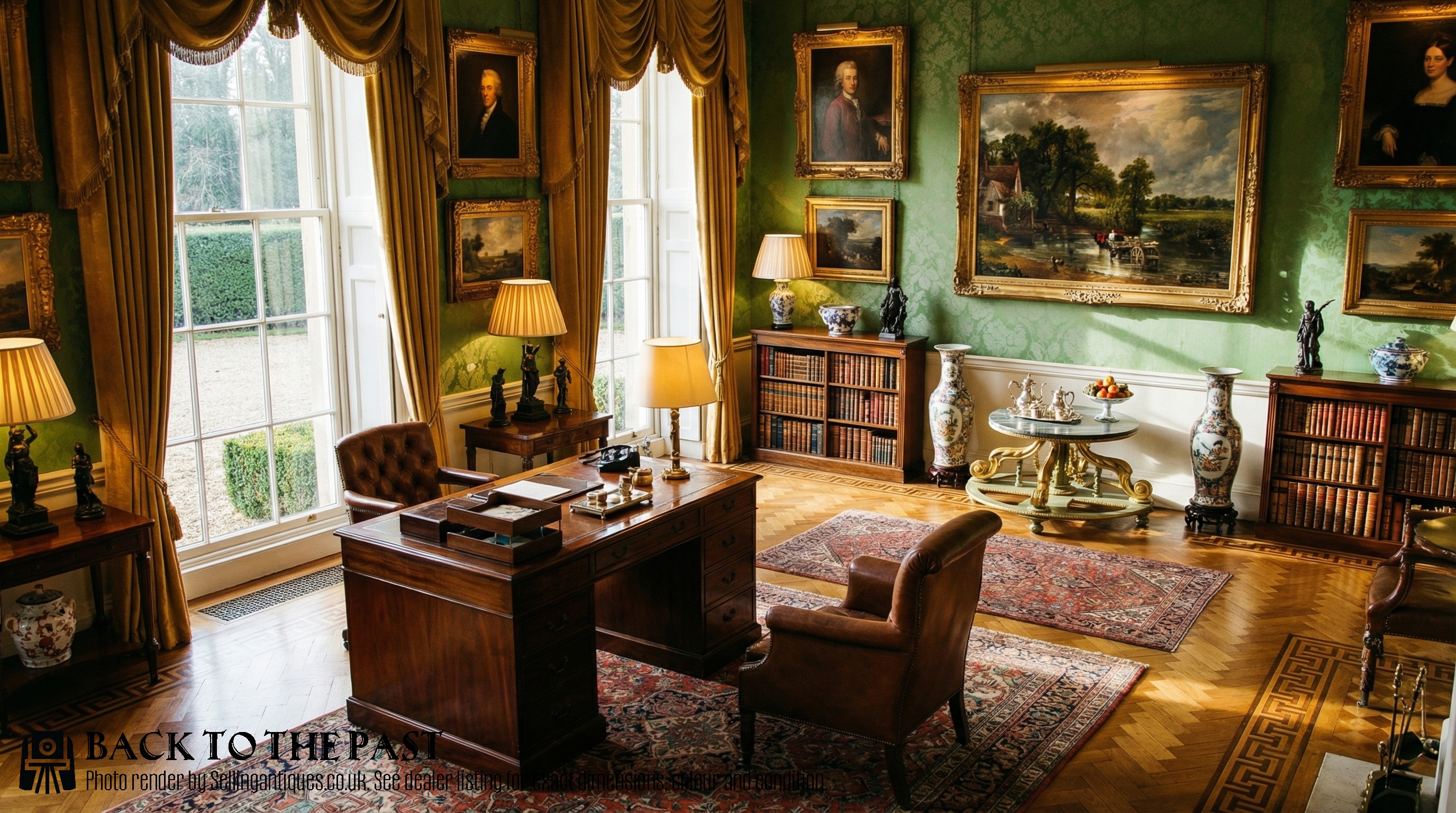
French Empire Centre Table
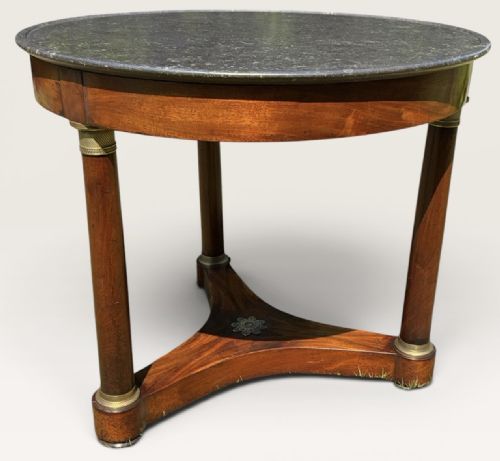
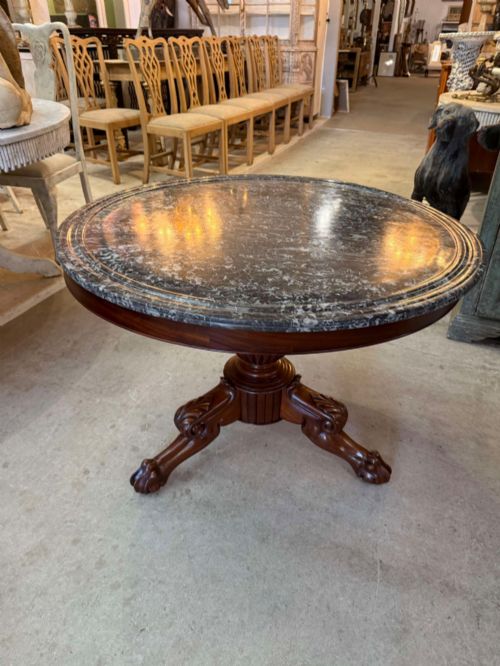
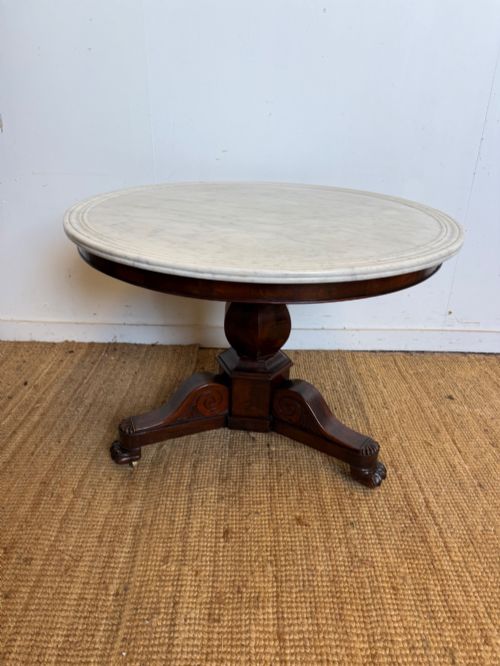
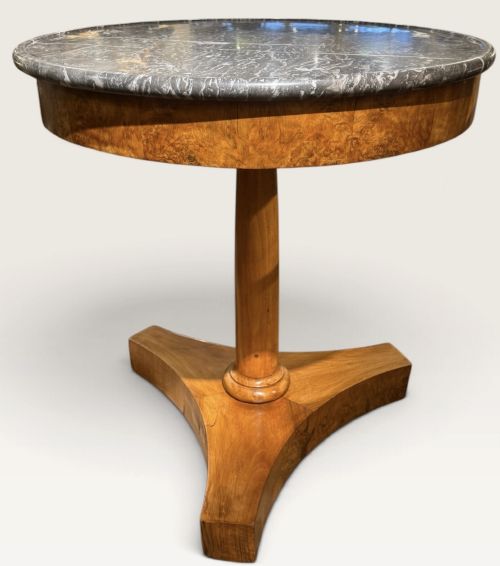
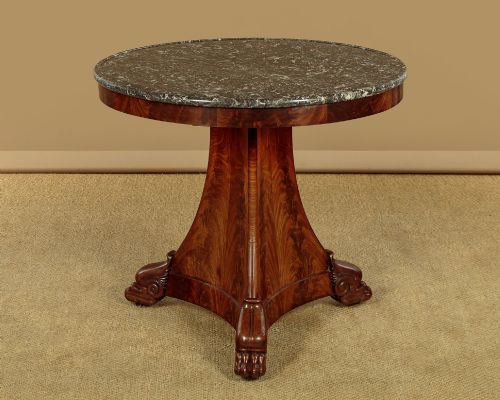
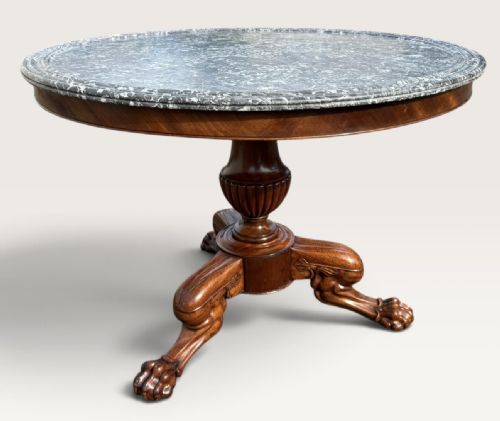
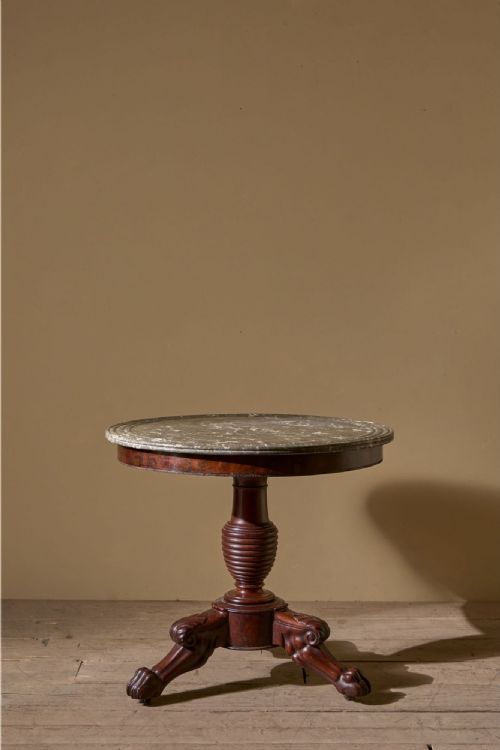
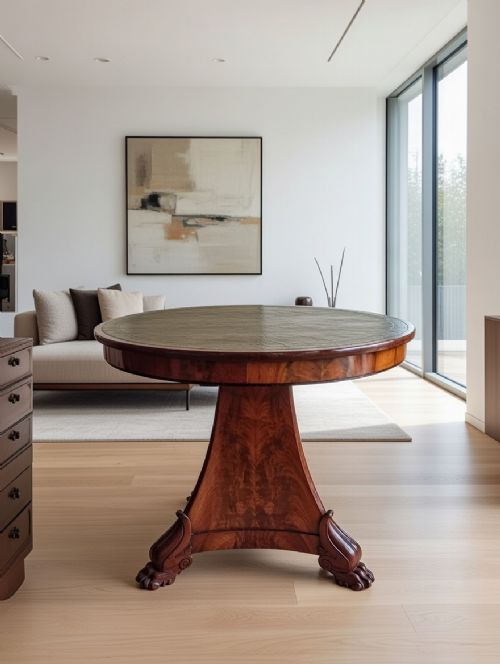
A french empire centre table typically takes the form of a round guéridon or occasional table designed to stand free in the middle of a room. The listings show these pieces appearing mainly in nineteenth-century contexts, alongside later revivals and related side tables.
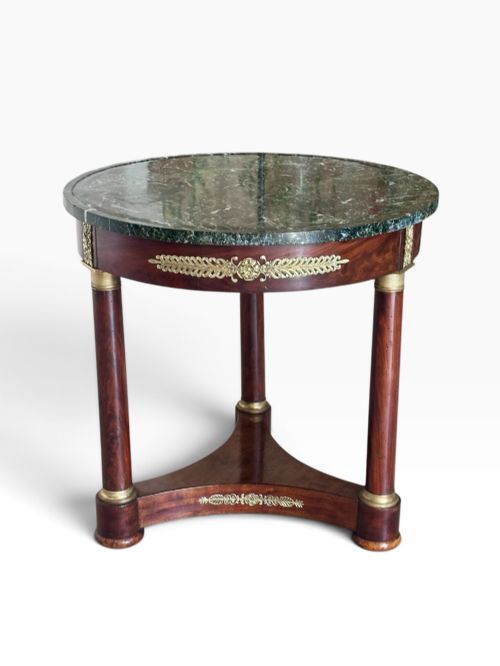
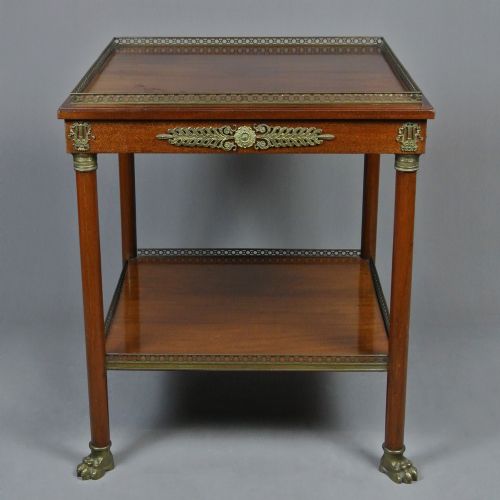
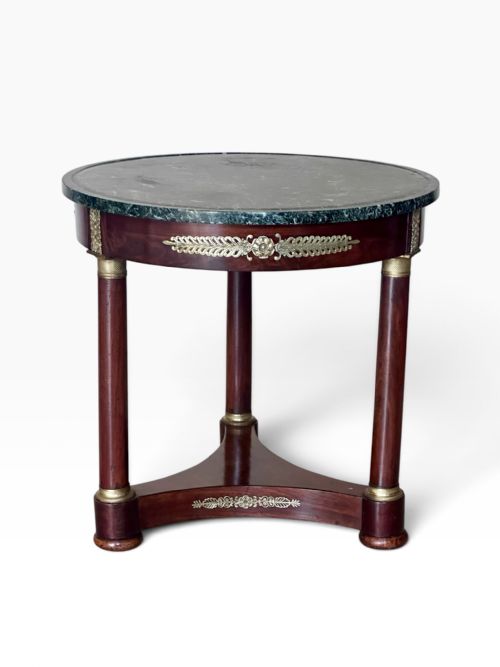
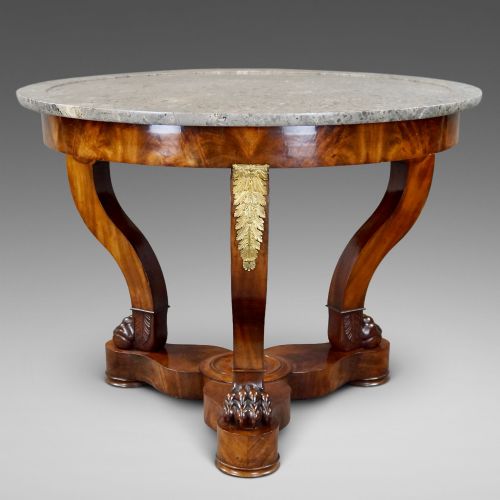
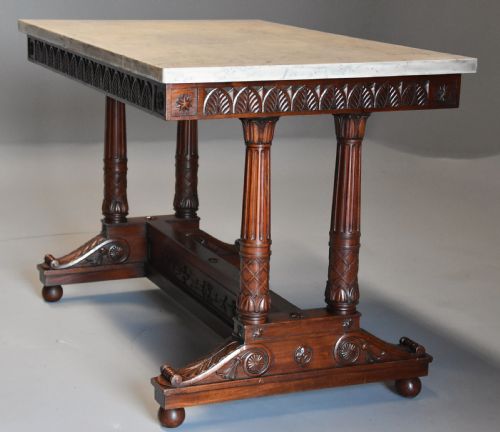
Makers produced these tables in mahogany, flame mahogany, and burr elm, frequently mounting them on central pedestals with heavy circular bases. Many examples incorporate inset marble tops in white or grey, while others feature leather surfaces or painted finishes.
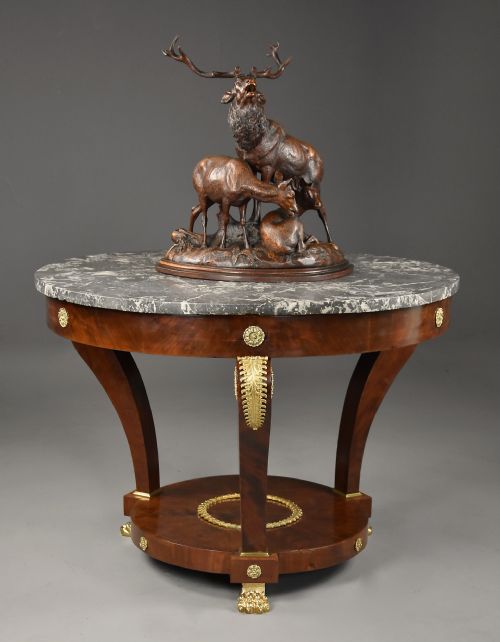
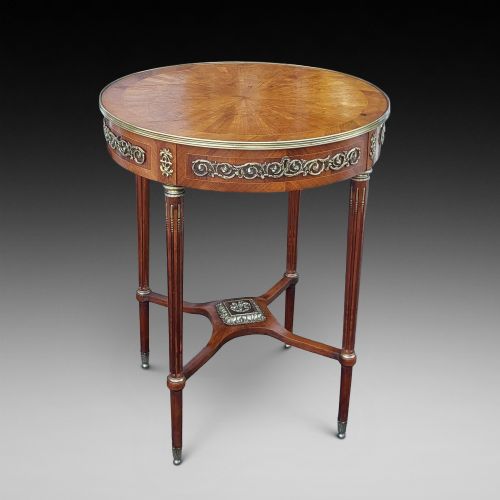
The decorative vocabulary draws heavily on neoclassical motifs, including brass mounts, ormolu details, swans, and rams' heads. Buyers encounter everything from standard parlour tables to unusually large centrepieces and related jardinieres.
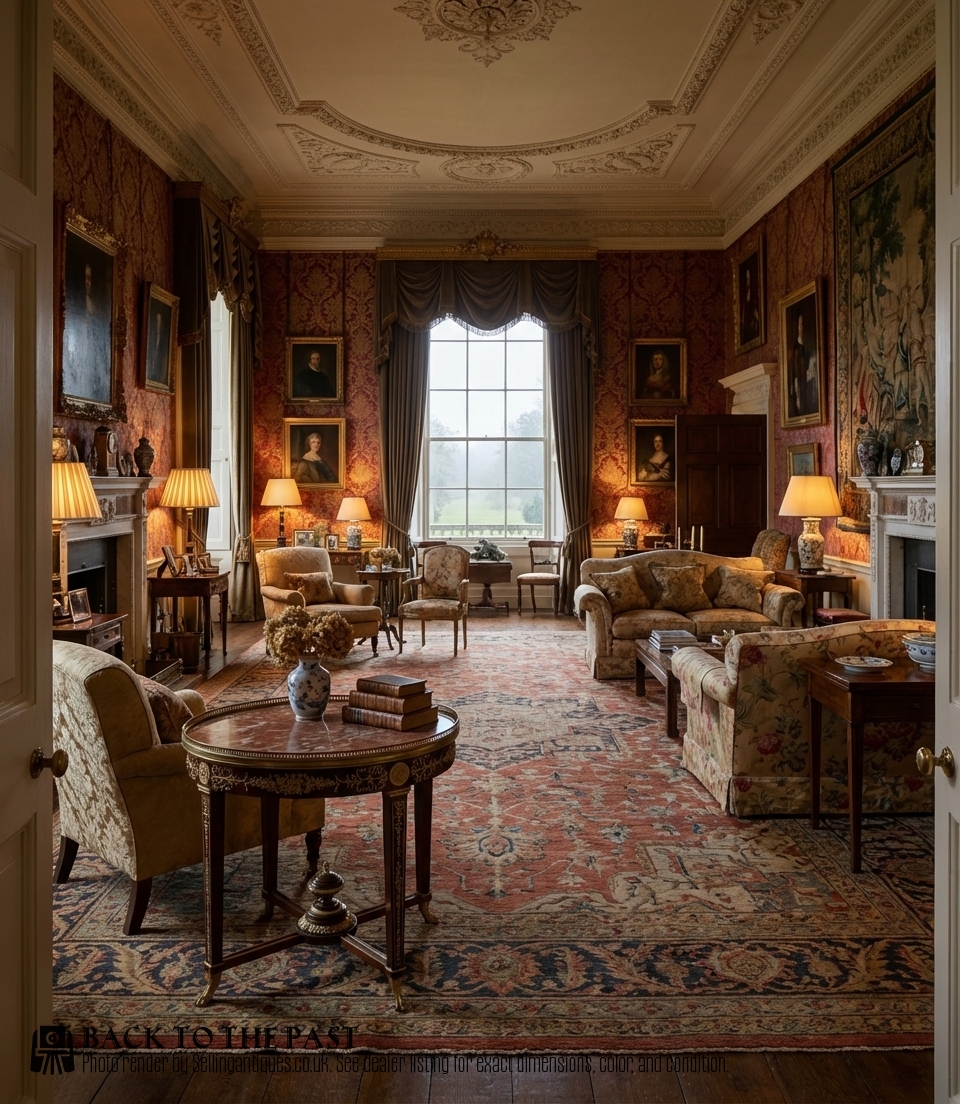
Materials and Construction
Cabinetmakers constructed the primary carcases using dense timbers such as mahogany, kingwood, and walnut, often selecting highly figured flame mahogany veneers for the main tabletop surfaces. These wooden structures support heavy inset slabs of grey or white marble that require precise rebated joints.
Gilt bronze, ormolu, and brass provide the characteristic metallic contrast against the dark timber, appearing as mounts, frieze appliqués, and pedestal collars. Cast animal motifs like swans and rams' heads punctuate the woodwork, secured with traditional mechanical fixings.
French Empire Centre Table Retail Price Guide 2026
Typical asking prices for french empire centre table among the pieces listed under this phrase on Sellingantiques today, from the lower quarter to the upper quarter. They describe what is for sale here now, not the wider market.
Several tables feature carved wooden swans gazing downward into the grain as if searching for a pond.
Craftsmanship and Proportion
Quality rests in the crispness of the cast brass or ormolu mounts and the selection of timber veneers on the top. Superior examples display seamless matching in flame mahogany and retain heavy, thick marble slabs with precise edge profiles.
Structural harmony defines the better pieces, where the diameter of the central pedestal balances the weight of the marble top. Inferior versions rely on coarse timber turning and poorly defined metalwork lacking sharp classical detail.
JACOB·Linke
The French Empire Centre Table Glossary
- Guéridon
- A small French table, typically round and supported by a single central pillar. These pieces often serve as centre tables in nineteenth-century salons.
- Ormolu
- Gilt bronze ornamentation applied to furniture mounts and details. The technique involves finishing metal with finely ground gold amalgam.
- Flame mahogany
- Timber veneer cut to display a flickering, feather-like grain pattern. Cabinetmakers prized this figure for prominent tabletops.
- Jardiniere
- A decorative stand or container intended for holding plants. These objects share materials and styling with period tables.
French Empire Centre Table: Frequently Asked Questions
Where should a centre table go?
These pieces stand in the middle of a room rather than against a wall, allowing access from all sides. They function as display surfaces for lamps, books, or decorative objects.
Position the table where its circular footprint and central pedestal receive adequate floor space to be fully appreciated.
What is a guéridon table?
A guéridon is a traditional French round table supported by a single central column and a heavy base. They were originally used for holding lights or serving drinks.
Today, collectors use them as prominent centre tables in entrance halls and drawing rooms.
How do I care for marble tops?
Marble surfaces require regular dusting with a soft cloth and immediate wiping of liquid spills to prevent staining. Avoid acidic cleaners that etch the polished stone.
Applying a specialist stone wax protects the porous surface over years of daily use.
Are these tables solid mahogany?
Most examples utilise dense mahogany or secondary timbers as a carcase, covered with fine veneers on the visible surfaces. Flame mahogany veneer provides the distinctive figured patterns across the tabletops.
Solid timber was typically reserved for structural columns, pedestals, and moulded edges.