



Triform Base Centre Table
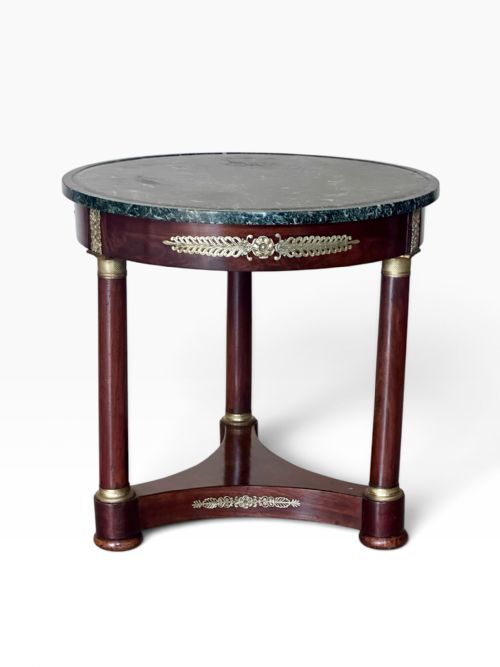
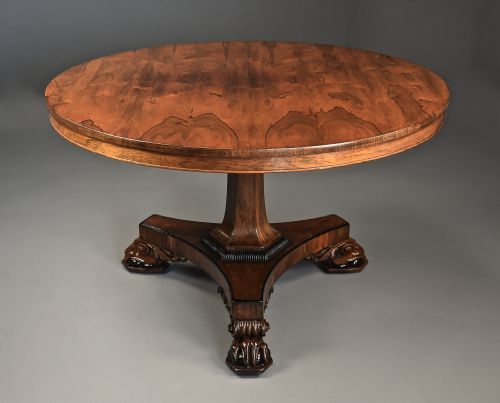
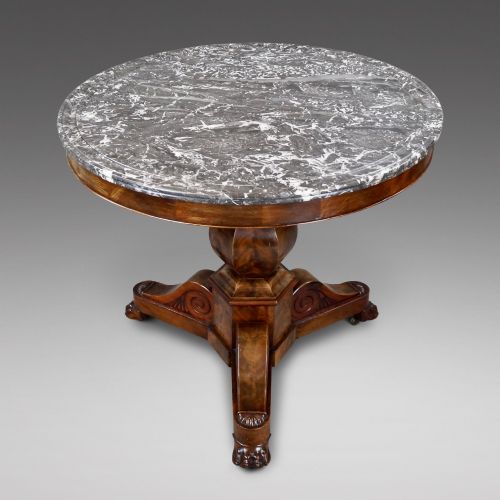
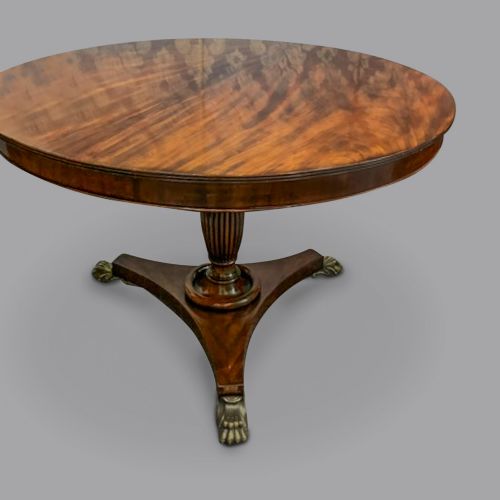
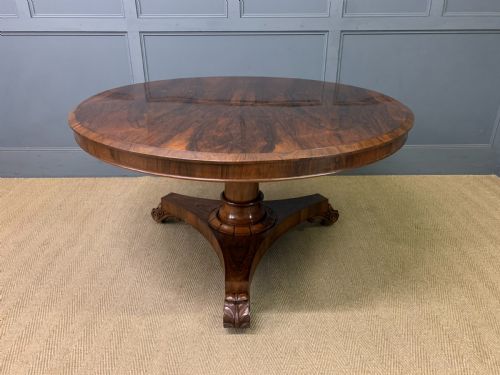
A triform base centre table commands the middle of a room with its distinct three-sided pillar support and circular top.

Triform Base Centre Table
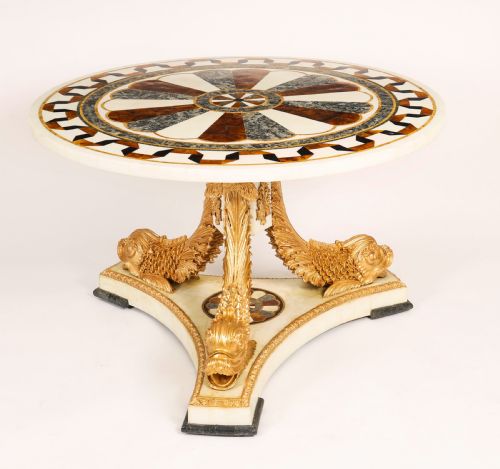
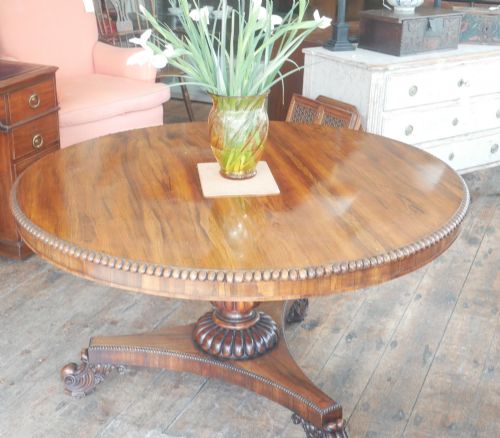
A triform base centre table serves as a principal freestanding focal point in a room, designed to be viewed from all sides rather than pushed against a wall. The form relies on a central pedestal anchored by a three-sided or triangular footprint, frequently resting on scroll feet, paw feet, or carved animal supports.
Most examples encountered here date from the nineteenth century, spanning the Regency, William IV, and Victorian periods. These pieces appear in forms ranging from large breakfast and dining tables to smaller occasional tables, gueridons, and miniature furniture.
Origin points stretch across English, French, and Scottish workshops, utilising circular tops in timber or inset marble. The three-way symmetry provides both steady structural balance and a strong visual anchor for the centre of a floor.
How they were made
Cabinetmakers built these tables using dense timbers such as mahogany, rosewood, burr elm, and gonçalo alves, frequently applied as rich veneers over solid pine or oak carcases. French polish finishes brought out the deep grain patterns of flame mahogany and figured rosewood.
Pedestals often incorporated carved elements, parcel gilt highlights, or brass mounts, while heavier versions utilised tilt-top mechanisms for storage convenience. Tops set with white or multi-coloured marble slabs required robust sub-frames to support the dead weight of the stone.
Triform Base Centre Table Retail Price Guide 2026
Typical asking prices for triform base centre table among the pieces listed under this phrase on Sellingantiques today, from the lower quarter to the upper quarter. They describe what is for sale here now, not the wider market.
Miniature triform tables appear alongside full-sized ones, created by apprentices to demonstrate mastery before joining the guild.
What varies in quality
The distinction between ordinary and exceptional work rests on the choice of timber veneers, the crispness of the pedestal carving, and the stability of the triform junction. Superior pieces display book-matched grain across wide circular tops and substantial, well-proportioned pillar supports rather than thin surface laminates.
Attribution to known makers or documented workshops elevates a piece, as seen in labeled or attributed examples by makers like Gillows or James Winter. Structural integrity in the central pillar and the three-way base determines longevity, as these joints bear considerable load and leverage.
Gillows·Walker-Lancaster·James Winter
The Triform Base Centre Table Glossary
- Triform base
- A three-sided pedestal support that diverges at the floor into three distinct feet or corners, offering steady equilibrium for a heavy central column.
- Gueridon
- A small French freestanding circular table supported by a central pillar, popular throughout the nineteenth century.
- Tilt-top mechanism
- A hinged block beneath the tabletop allowing the surface to fold vertical when not in use, common on breakfast and loo tables.
- Parcel gilt
- Woodwork decorated with thin applications of gold leaf restricted to specific carved details, highlights, or mouldings.
- Specimen marble
- A mosaic top composed of multiple geometric or figurative fragments of different coloured marbles assembled into a decorative pattern.
Triform Base Centre Table: Frequently Asked Questions
Where should a triform base centre table go?
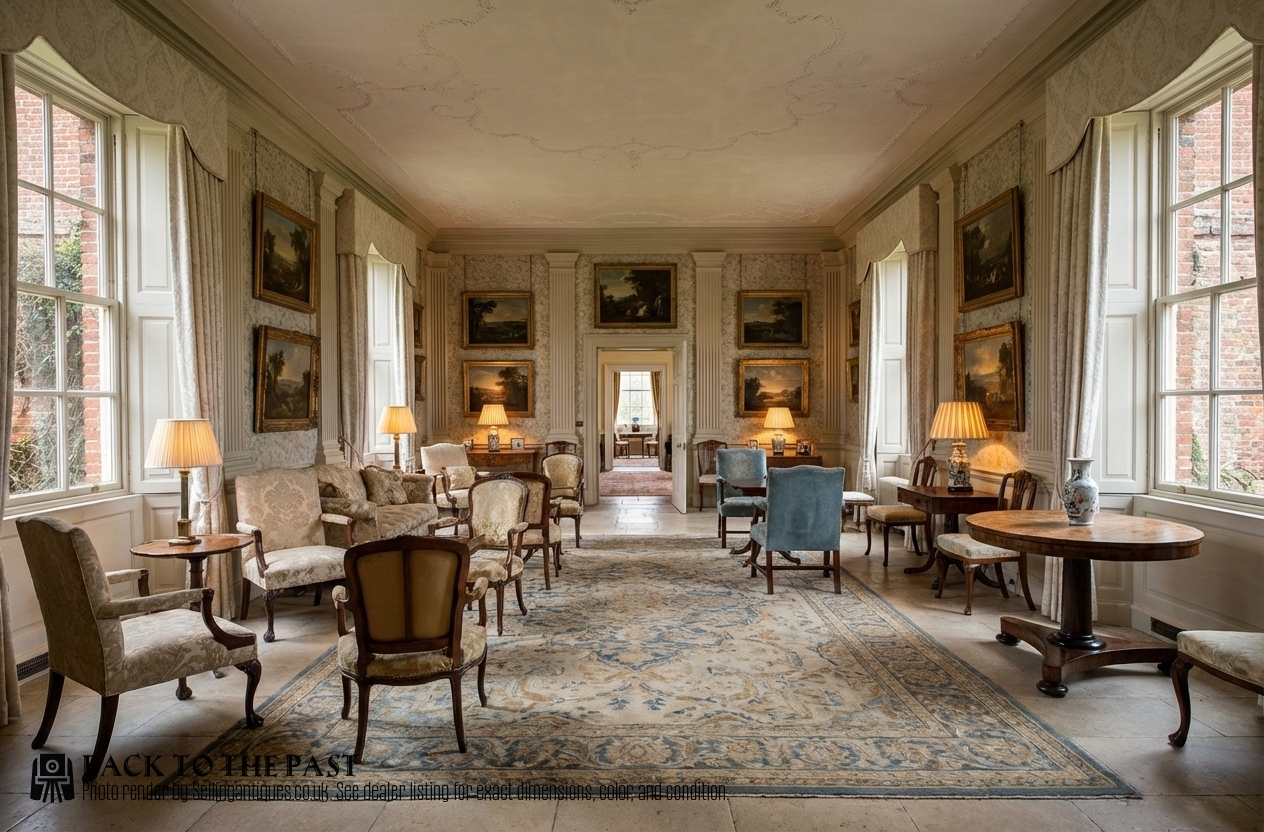
This table belongs in the middle of a room where the three-sided base and circular top remain visible from every angle. It functions effectively as a library table, a breakfast table, or an occasional piece.
Because the design is freestanding, ensure there is enough clearance around the perimeter to walk comfortably past the projecting feet and pedestal.
How do I care for a rosewood or mahogany top?
Maintain timber surfaces by dusting with a soft, dry cloth and avoiding direct sunlight that can fade figured veneers. Use coasters beneath glasses and felt pads under objects to protect the French polish.
Apply high-quality beeswax sparingly when the wood appears dry, rubbing it thoroughly into the grain to preserve the warm lustre.
What is the difference between a breakfast table and a centre table?
Breakfast tables traditionally featured a tilt-top mechanism so servants could store the large circular surface against a wall when dining was finished. Centre tables remained fixed in position as permanent display pieces.
Over time, the terms often overlapped as makers applied similar triform pedestals and circular tops to both functional categories.