


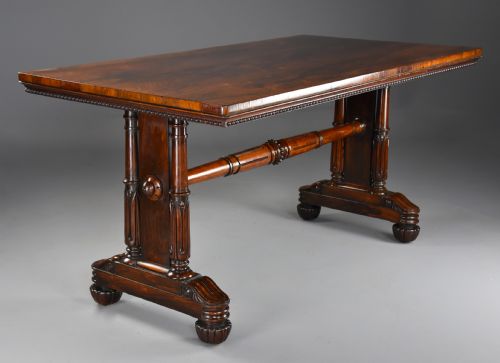
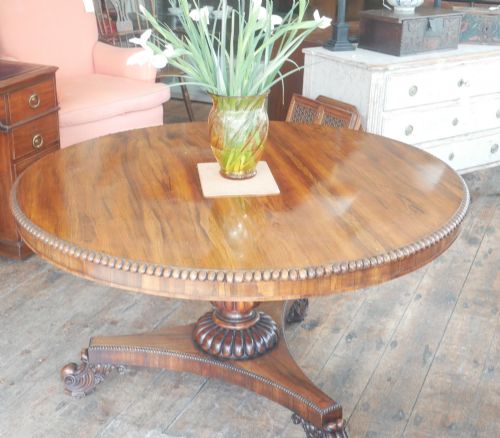
Regency Rosewood Centre Table
When you search for a regency rosewood centre table, you are looking at nineteenth-century craftsmanship designed to anchor a principal room with rich timber and architectural presence.
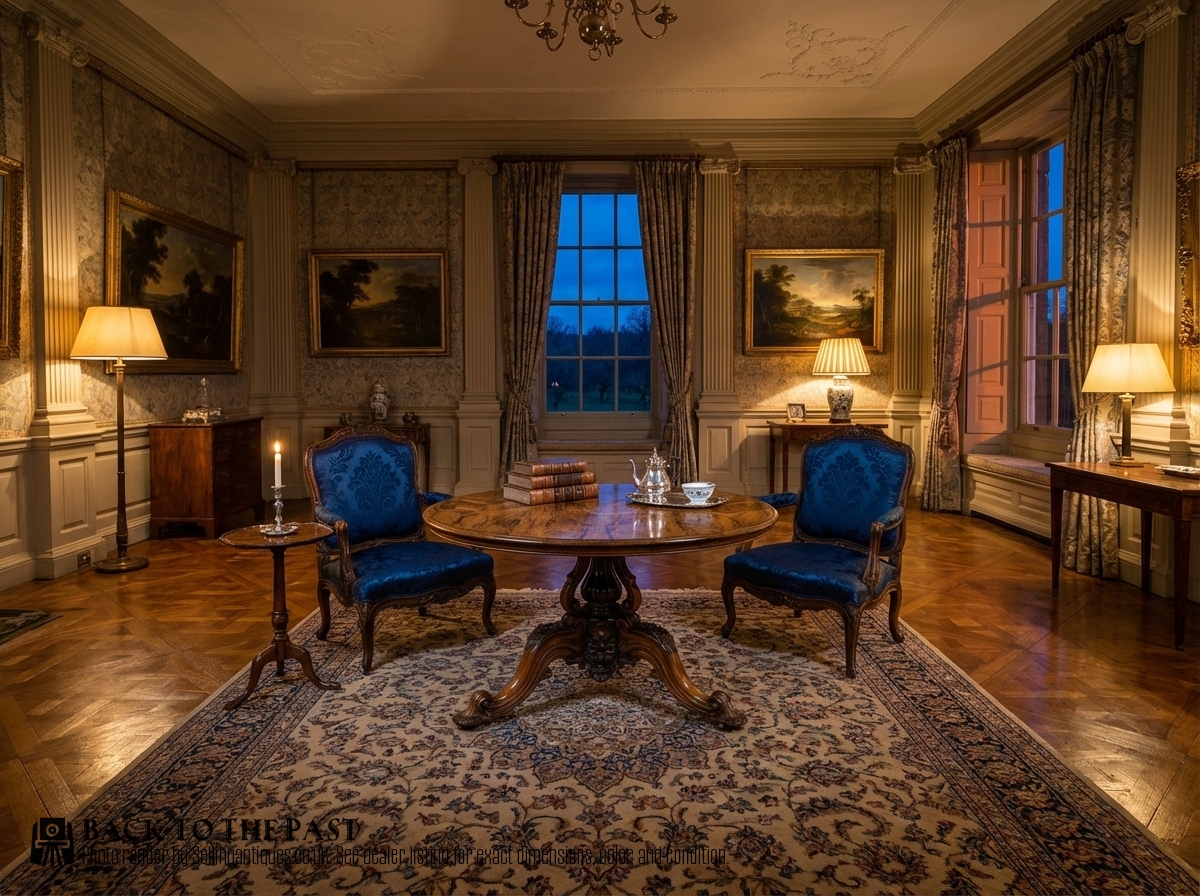
Regency Rosewood Centre Table
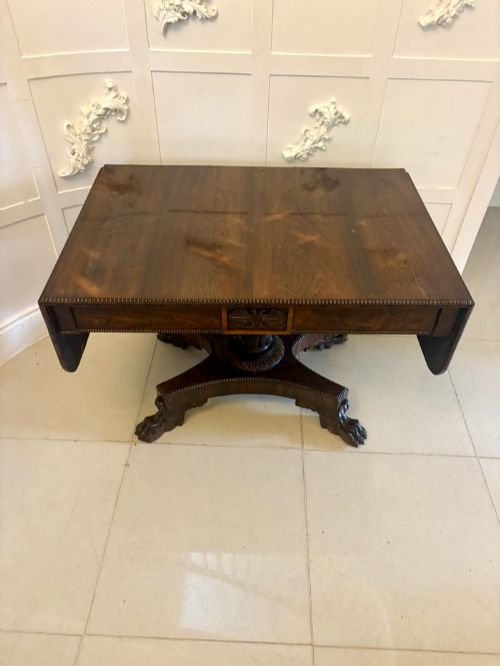
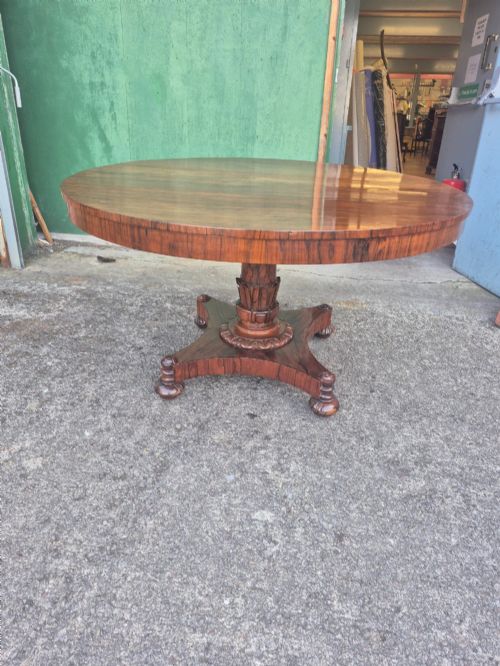
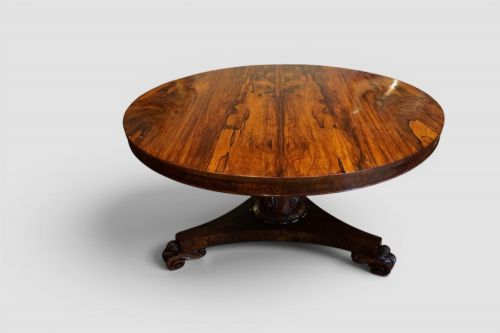
A regency rosewood centre table stands free in a room, designed to be viewed from all sides rather than pushed against a wall. The examples on this page predominantly span the nineteenth century, including the Regency, George IV, and William IV periods, alongside later nineteenth-century interpretations.
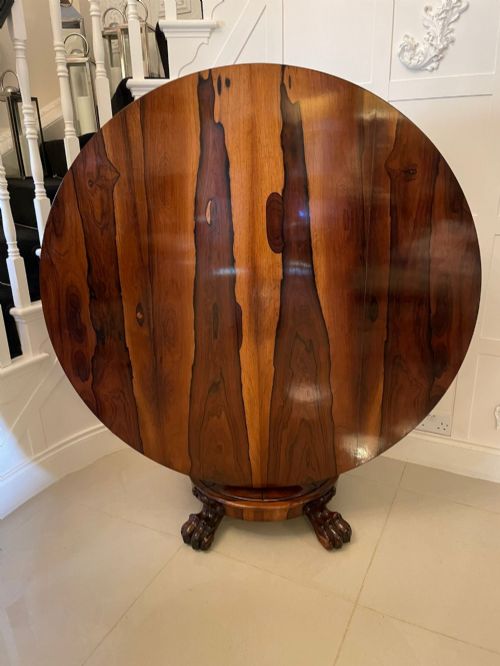
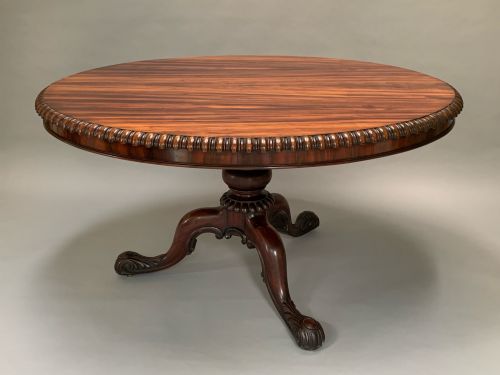
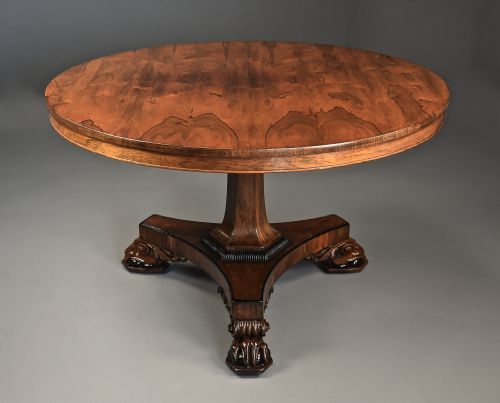
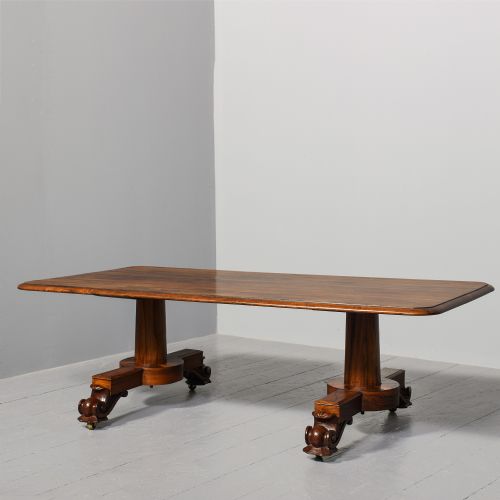
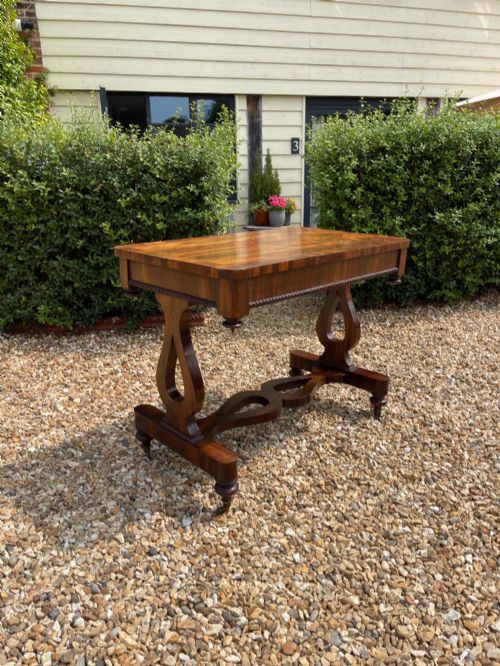
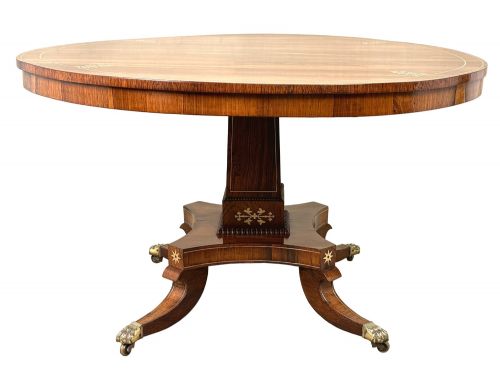
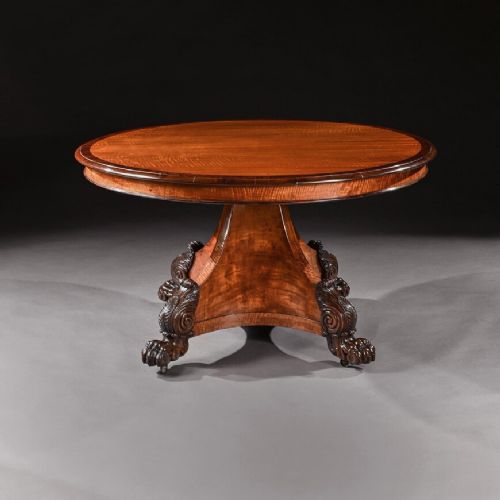
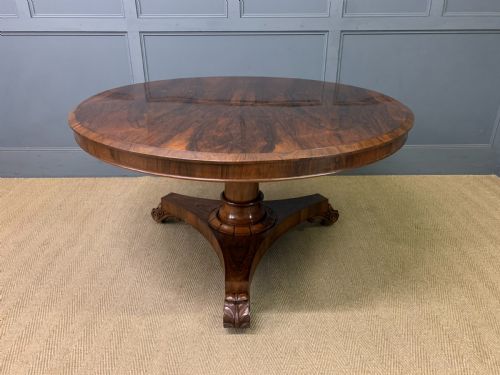
The silhouettes range from circular breakfast and dining tables on central pedestal bases to rectangular library tables, sofa tables, and writing desks. Circular pedestal variants often feature triform or platform bases with brass castors, while larger library and sofa tables incorporate frieze drawers and sturdy columnar supports.
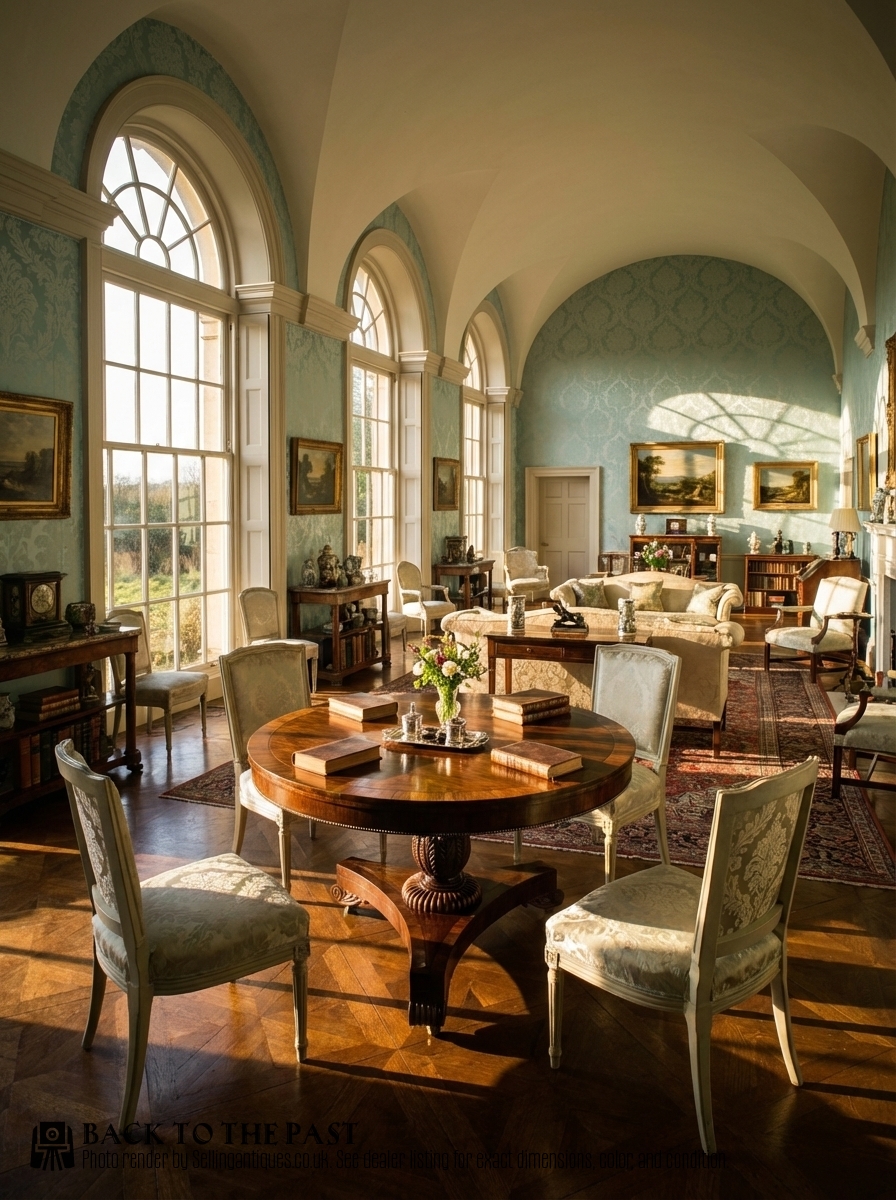
Materials and Construction
Cabinet makers utilised dense, figured rosewood veneers applied over stable secondary timbers such as mahogany or oak to achieve rich, dark grain patterns. Brass inlay, parcel gilding, and brass stringing frequently accent the friezes and table tops, catching the ambient light of a period interior.
Pedestal tables employ solid timber columns and robust internal framing to support heavy tilt-top mechanisms or fixed circular tops. Secondary woods like pine and mahogany form the drawer linings and internal structural bracing, ensuring structural longevity.
Regency Rosewood Centre Table Retail Price Guide 2026
Typical asking prices for regency rosewood centre table among the pieces listed under this phrase on Sellingantiques today, from the lower quarter to the upper quarter. They describe what is for sale here now, not the wider market.
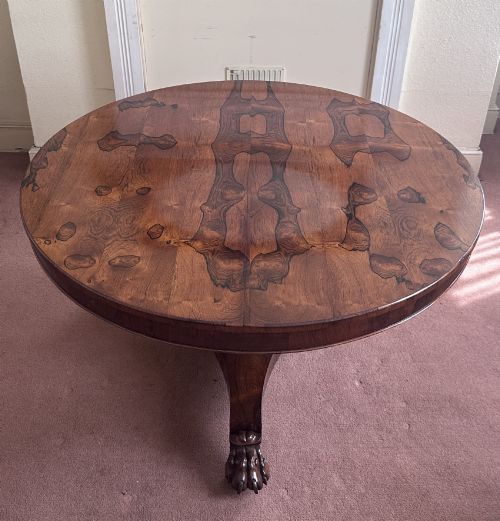
Listings feature pieces spanning the nineteenth century, including Regency, George IV, William IV, and Victorian periods, constructed from rosewood, mahogany, and goncalo alves.
Indicators of Quality
The standard of a regency rosewood centre table rests upon the choice of timber and the precision of the veneer matching. Master cabinet makers selected prime cuts with deep figuring and book-matched the grain symmetrically across the surface.
Execution of decorative details such as brass inlay, cast bronze feet, and carved pedestal mounts separates standard production pieces from workshop masterpieces. Fine integration of drawers and smooth operation of tilt mechanisms further evidence superior joinery.
Gillows·Wilkinsons of Ludgate Hill·Peters of Genoa·Louis le Gaigneur
The Regency Rosewood Centre Table Glossary
- Centre table
- A freestanding table finished on all sides, intended to occupy the middle of a room rather than sit against a wall.
- Tilt-top
- A hinged table top that pivots to a vertical position, allowing the piece to be stored compactly against a wall when not in use.
- Frieze
- The horizontal band situated directly beneath the table top, frequently fitted with drawers or decorated with brass inlay.
- Triform base
- A three-sided pedestal platform supporting the central column of a round table.
- Goncalo Alves
- A dense, highly figured exotic hardwood occasionally utilised in place of standard rosewood during the period.
Regency Rosewood Centre Table: Frequently Asked Questions
What is a centre table used for?
These pieces served as prominent display surfaces in large reception rooms, holding decorative lamps, books, and objects of curiosity. In domestic settings, they doubled as dining or writing tables.
Because they are finished on every side, they function naturally away from walls, dividing large spaces into distinct conversation areas.
How do I identify a William IV table?
William IV examples generally display heavier proportions, robust scrolling pedestals, and bolder carved details than earlier Regency designs. The timber selection remains predominantly rosewood, often paired with substantial platform bases.
Carving during this era tends toward heavier acanthus leaves and architectural scrolls rather than delicate classical reeding.
Can I use these tables for dining?
Many circular breakfast and dining variants provide adequate clearance and stable pedestal support for daily meals. Tilt-top mechanisms allow the surface to be cleared and folded away when space is required.
Larger library and sofa tables suit occasional dining, though fixed pedestal models offer the greatest structural stability for seating.
How should I care for rosewood surfaces?
Rosewood benefits from regular dusting with a soft, dry cloth and protection from direct sunlight and excessive heat sources. Maintaining stable indoor humidity prevents timber shrinkage and veneer separation.
Occasional application of appropriate wax feeds the grain and preserves the depth of the nineteenth-century polish without building up residue.