


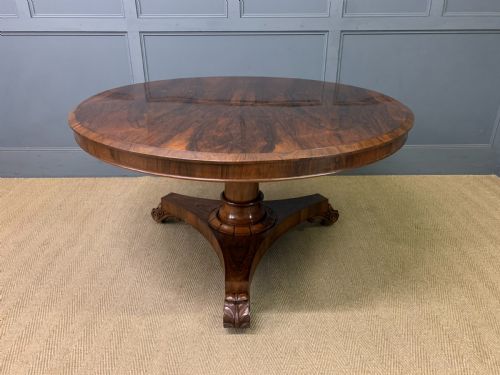
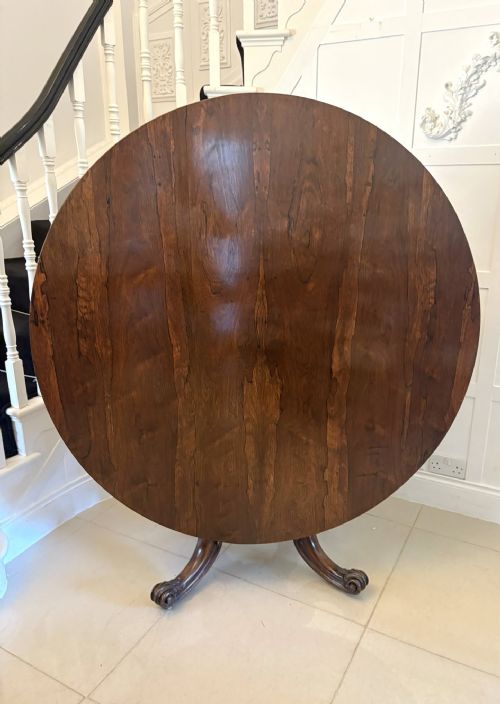
Circular Rosewood Dining Table
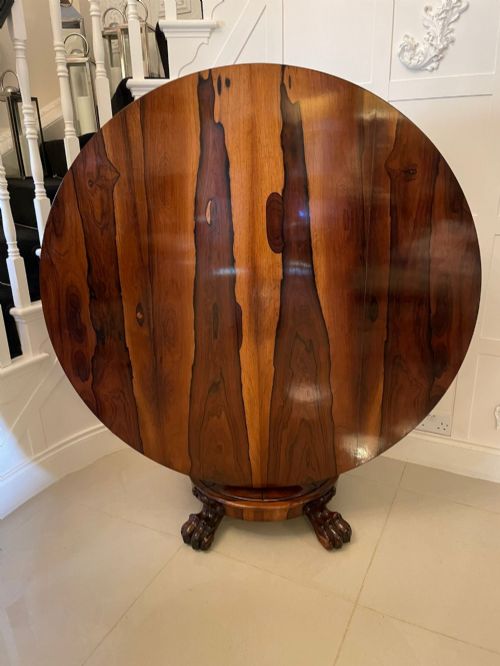
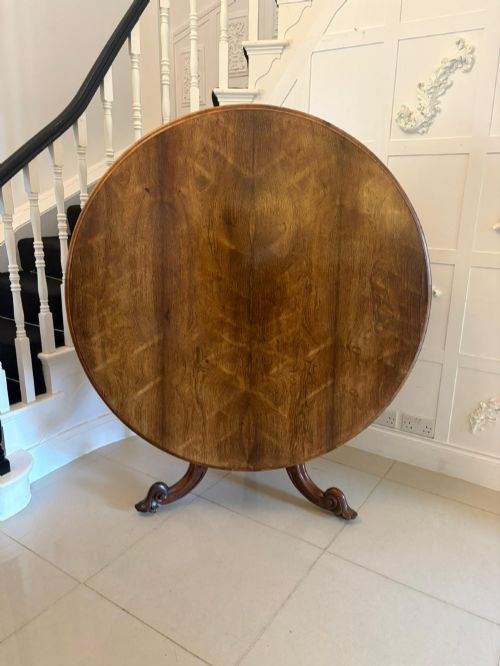
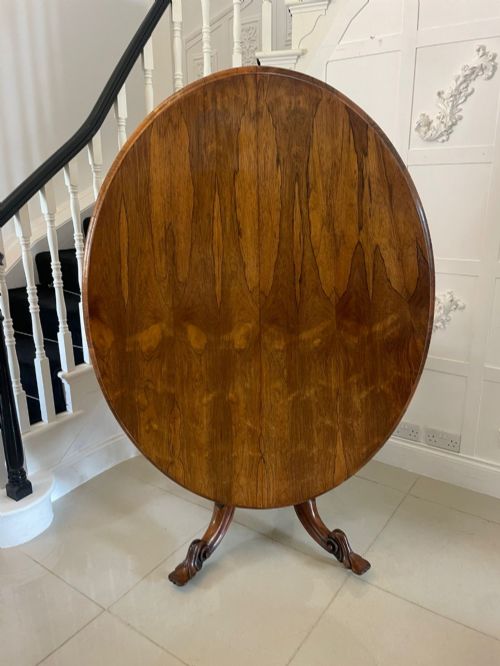
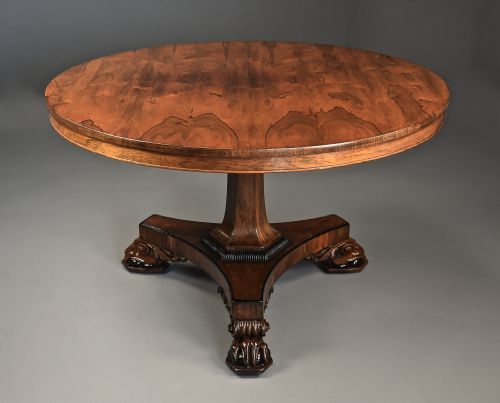
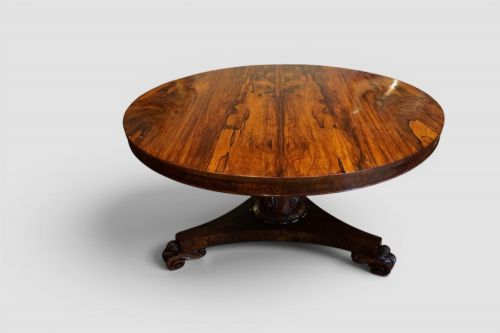
A circular rosewood dining table brings deep grain and centred balance to a room, drawing people together around a single pedestal.
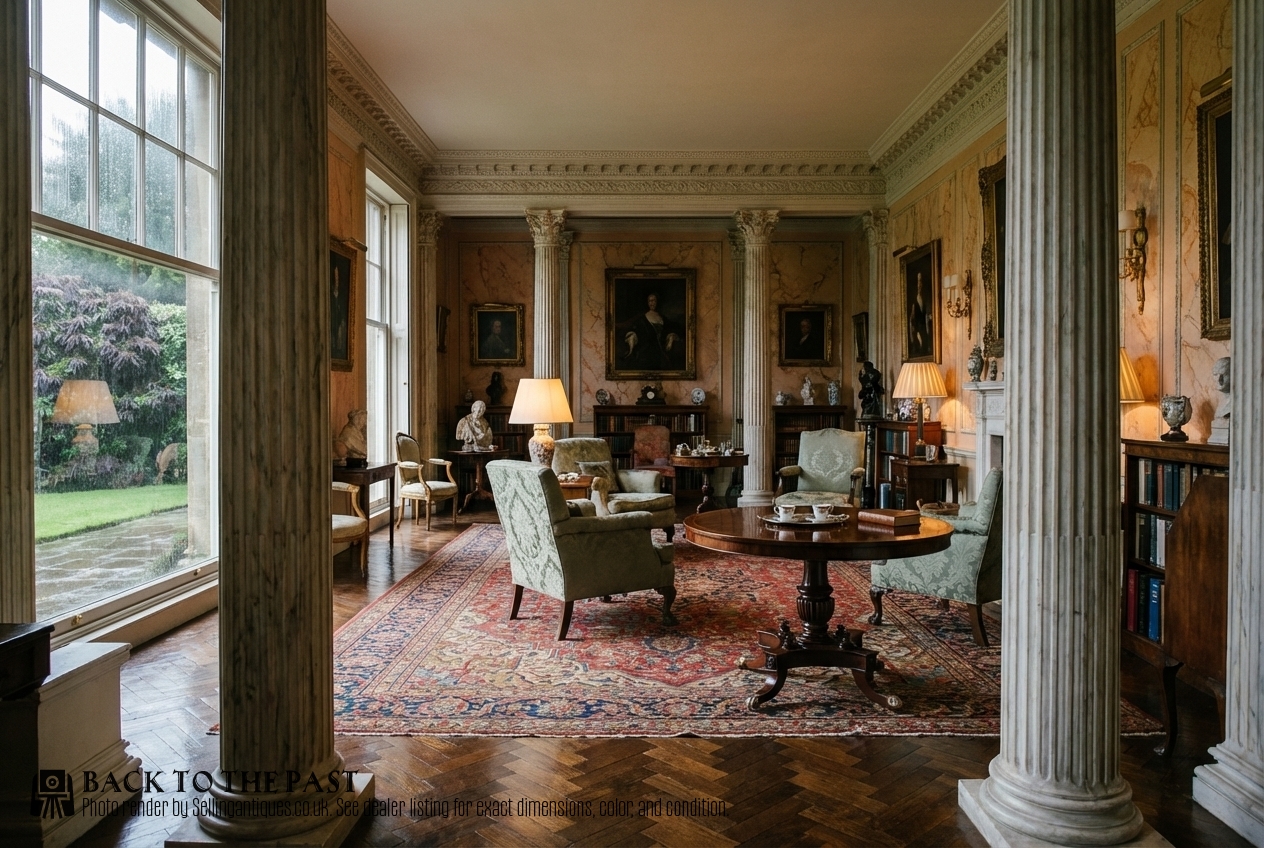
The circular rosewood dining table
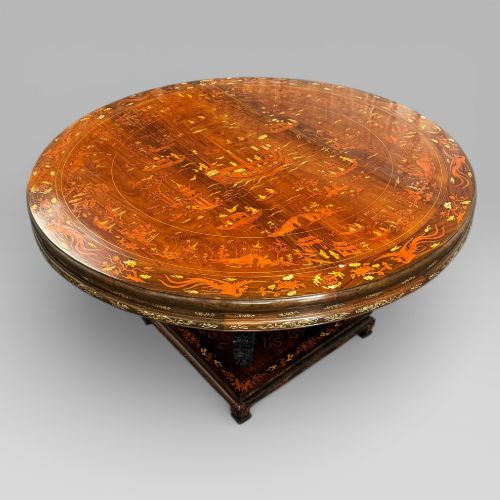
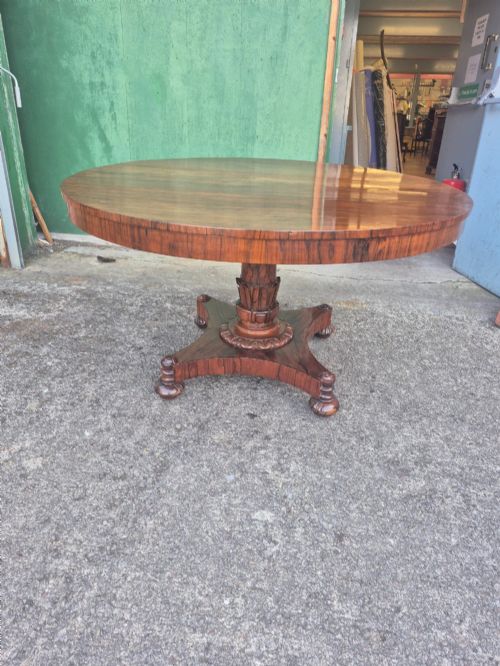
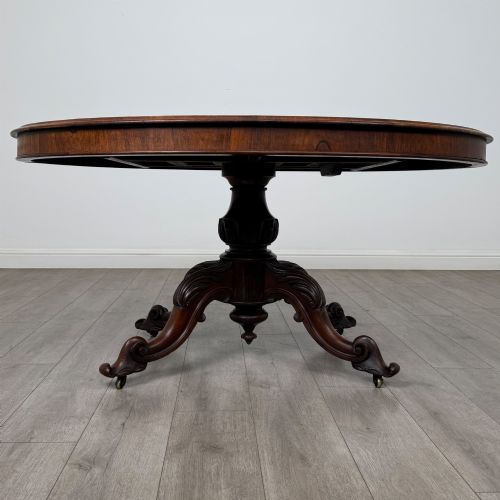
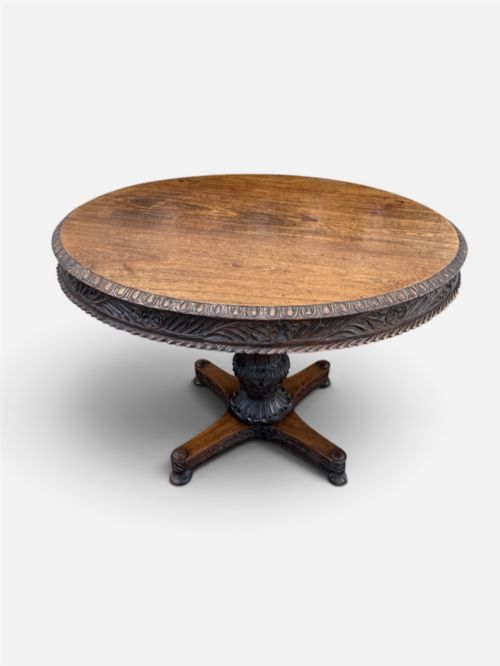
A circular rosewood dining table is a statement piece of nineteenth-century furniture designed around a central pedestal base. When searching this phrase, buyers encounter examples spanning the Regency, William IV, and Victorian periods, often described interchangeably as centre tables, breakfast tables, or loo tables.
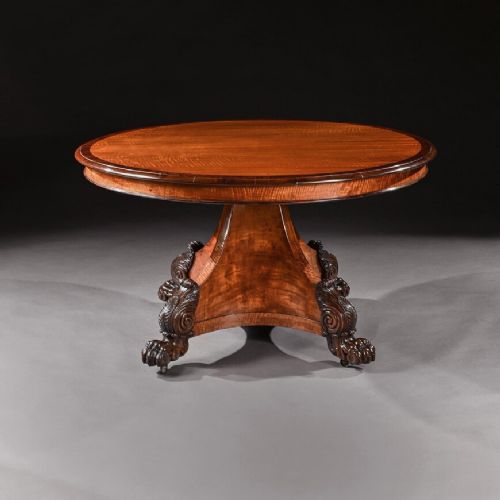
The most common versions met on this page date from the William IV and Victorian eras, frequently featuring tilt-top mechanisms for storage or heavy pillar supports resting on triangular or circular platforms. French and English origins appear in the record, showing subtle shifts in carving and proportion.
These pieces function equally well as grand hall centrepieces or intimate dining furniture, seating several guests comfortably around a continuous circular edge.
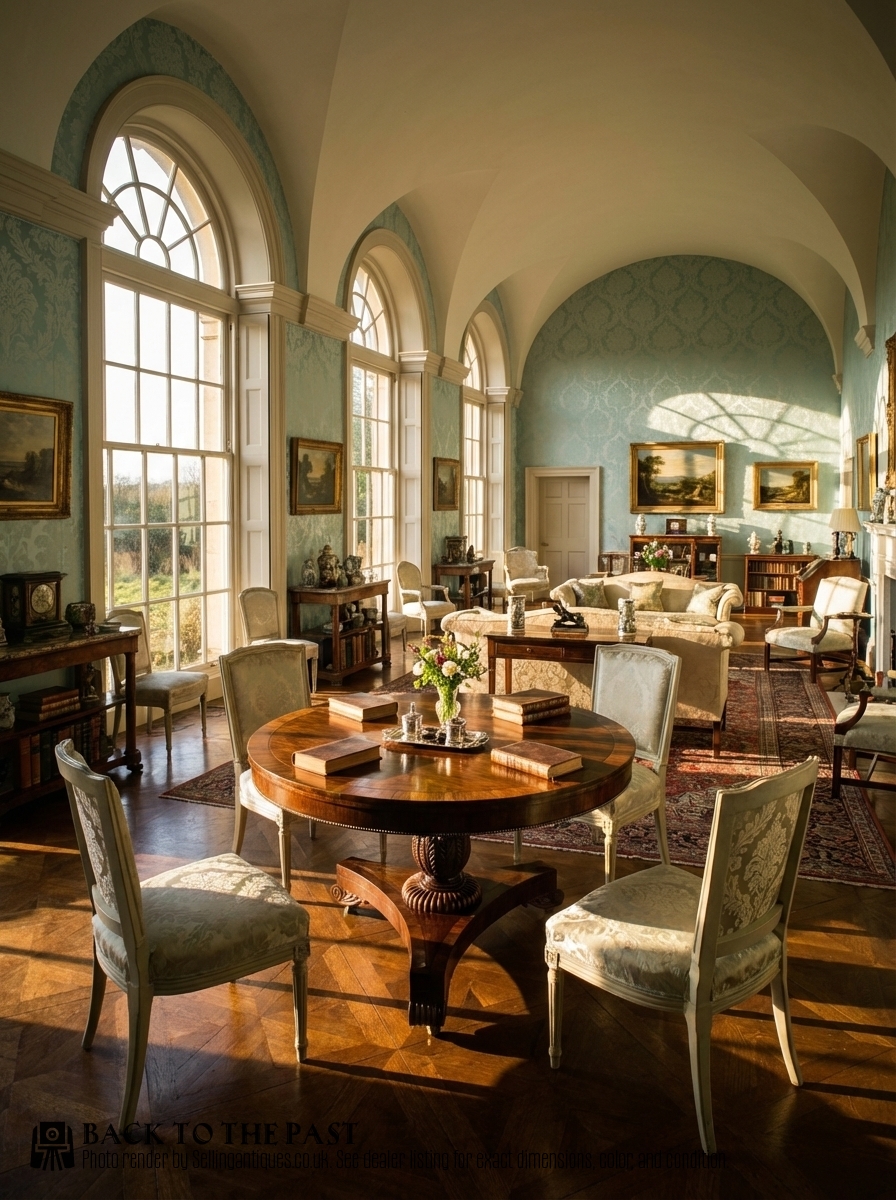
Construction and materials
Cabinet makers utilised dense, richly figured rosewood veneers laid over sturdy secondary timbers, sometimes enhanced by decorative crossbanding to frame the circular top. Brass fittings, including castors concealed beneath platform bases, appear frequently on Regency and William IV examples.
Tilt-top mechanisms required robust iron latches and pivoting wooden blocks beneath the surface, allowing the heavy top to lock securely in a vertical or horizontal position.
Retail Price Guide 2026
Typical UK retail prices for circular rosewood dining table, calculated from the Sellingantiques database of over a million retail prices indexed since 2003. This retail price guide relies exclusively on Sellingantiques data; no external sources or auction records are used, so the figures do not describe the wider market.
Tables tilt upright so smoothly that nineteenth-century guests could quietly vanish the furniture when the card game finished.
Judging quality
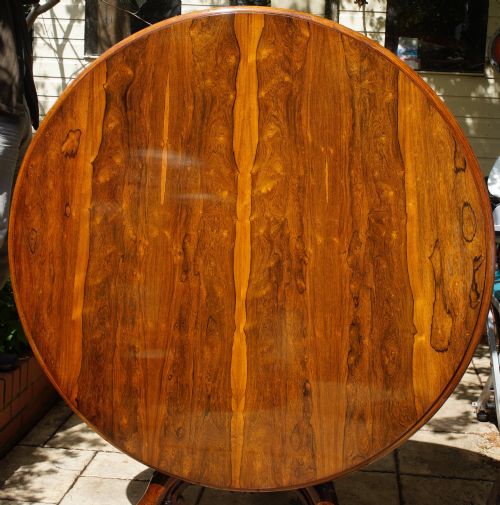
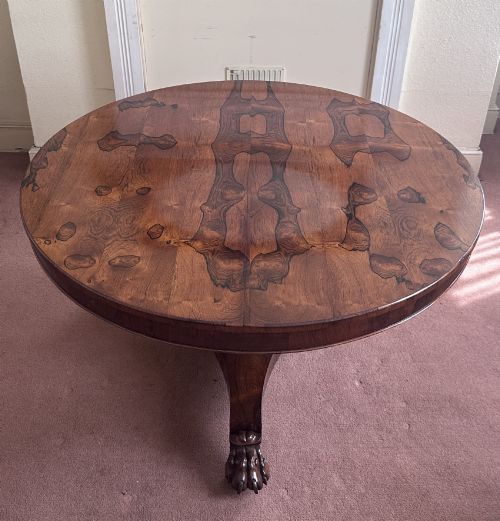
The visual impact depends largely on the natural grain configuration of the timber, with highly figured, symmetrical rosewood veneers marking the upper tier of craftsmanship. Carved decoration on the pedestal and base separates standard utility pieces from richly embellished examples attributed to influential cabinet makers like George Smith.
Structural integrity in the central pillar and the alignment of the tilt-top mechanism dictate how firmly the table stands over decades of daily use.
George Smith
The Circular Rosewood Dining Table Glossary
- Rosewood
- A heavy, dark timber prized for its dramatic grain patterns and deep natural colour. It takes a high polish.
- Tilt-top
- A hinged tabletop mechanism that allows the surface to tilt upright when not in use. This clever design saves space in smaller rooms.
- Crossbanding
- A border of veneer laid around the perimeter of the tabletop with the grain running perpendicular to the centre. It creates a neat, finished frame.
- Centre table
- A freestanding table finished on all sides, designed to stand in the middle of a room rather than against a wall.
- Loo table
- A large nineteenth-century circular table originally used for card games such as loo. They often feature tilt mechanisms.
Frequently Asked Questions
How do I use a tilt-top table?
Release the brass catch underneath the top to tilt the surface vertically against the central pillar. This allows the table to stand compactly against a wall when floor space is needed.
Lower the top back into its horizontal position and secure the latch before placing any items on the surface.
How many people can sit at these tables?
Most circular tables comfortably seat four to six diners, depending on the diameter of the top and the spread of the pedestal base. The absence of corner legs allows chairs to tuck in neatly all the way around.
Larger nineteenth-century examples provide generous knee clearance and ample surface area for formal dining.
How do I tell Regency from Victorian tables?
Regency pieces lean towards restrained classical lines, often featuring brass inlay, rosewood crossbanding, and subtle reeding on the pedestal. Victorian examples frequently display heavier, more exuberant carved details and bolder proportions on the central pillar.
Both periods share the use of richly figured rosewood, but the overall silhouette reveals the shift in design preference over the decades.
Where should I place a centre table?
A centre table belongs in the middle of a room where its figured rosewood top can be appreciated from every angle. It serves as an impressive focal point in an entrance hall or a principal reception room.
Ensure there is enough clear floor space to walk entirely around the piece and pull out chairs easily.