



Brass Marquetry Table
A brass marquetry table brings together polished timber and detailed metalwork to anchor a room with period character.
Brass Marquetry Table
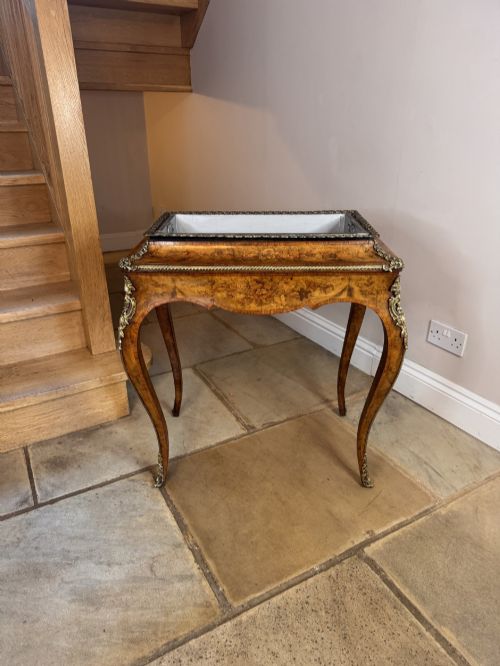
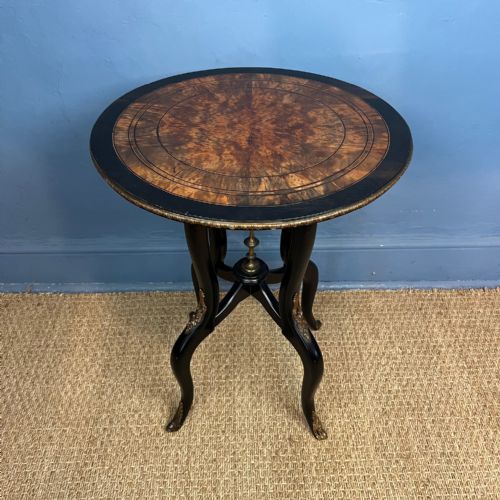
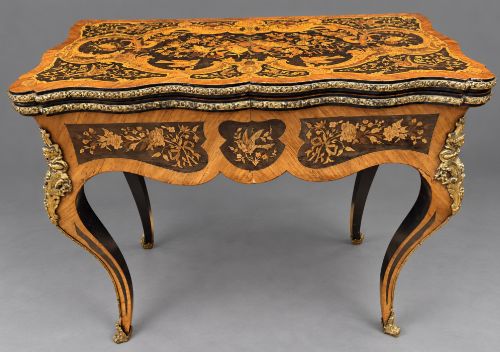
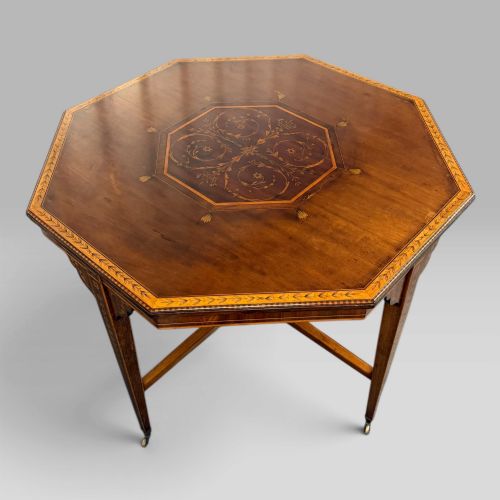
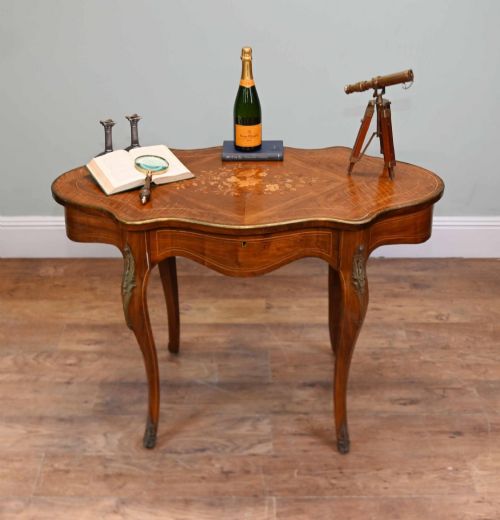
A brass marquetry table combines intricate metal inlays with rich cabinet timbers to create a functional surface with distinct visual depth. The search phrase covers forms ranging from compact occasional tables and bedside cabinets to large centre tables and writing desks. Examples span the nineteenth century and the early twentieth century, showing both English cabinet-making and French workshop traditions.
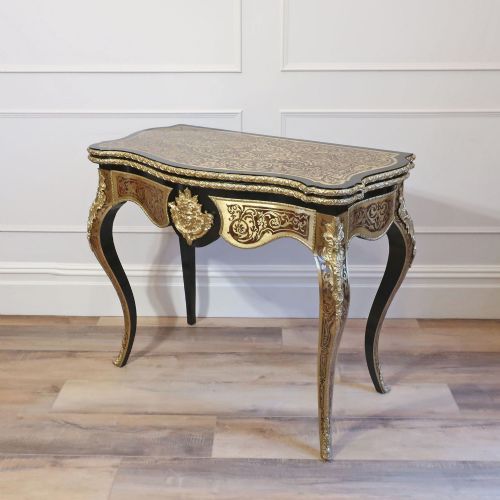
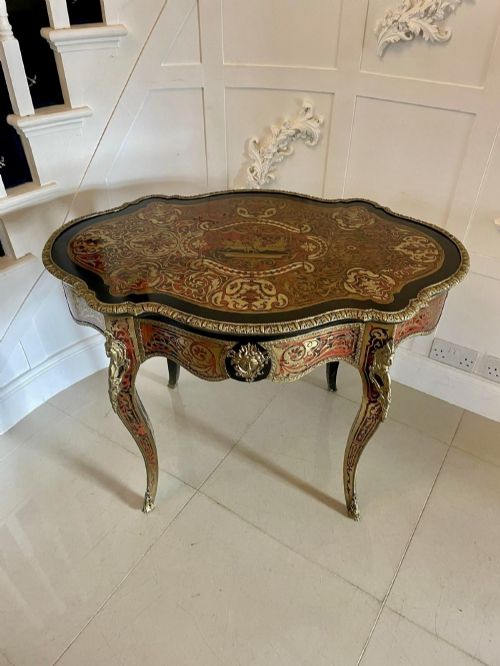
Buyers most frequently encounter nineteenth-century French designs alongside Victorian English pieces on this page. These commonly take the shape of centre tables, side tables, and card tables featuring contrasting wood veneers and metallic detailing. Stylistic influences lean heavily toward Louis XV, Louis XVI, and Regency revivals.
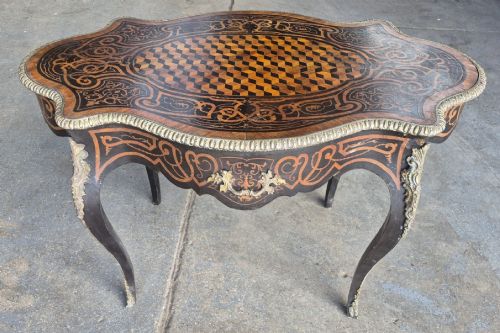
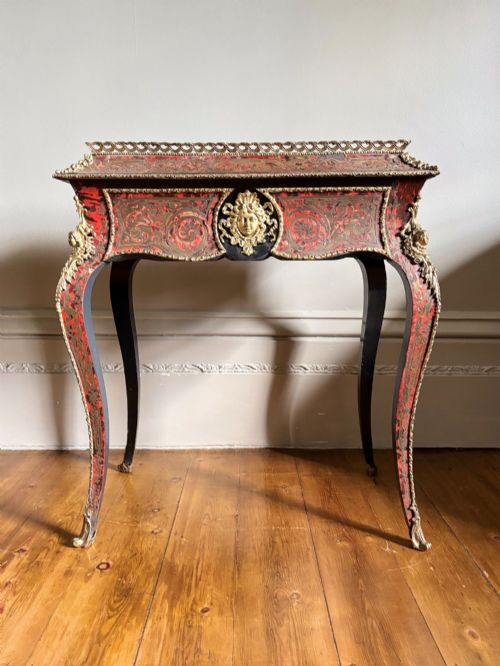
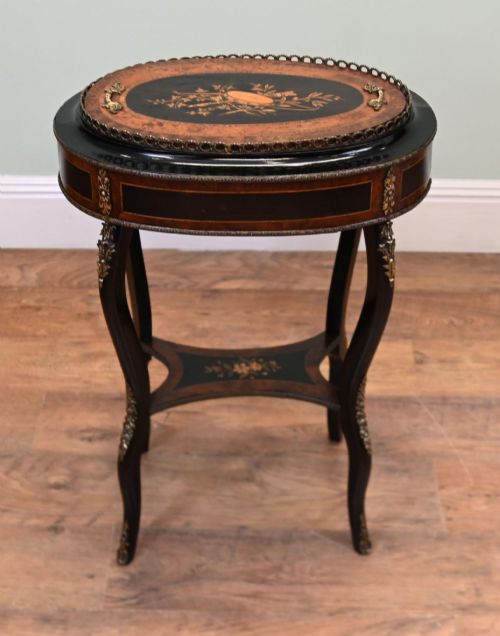
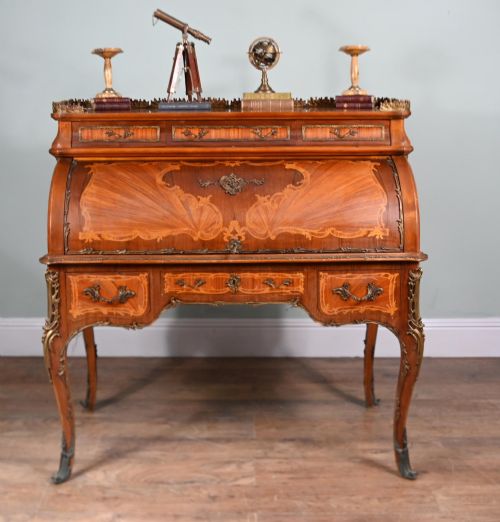
The integration of brass varies from fine stringing lines to elaborate Boulle work patterns set against dark grounds. Structural variations include freestanding desks, two-tier étagères, and coffee tables adapted from earlier forms. Each piece reflects the prevailing interior tastes of its period of manufacture.
How they were made
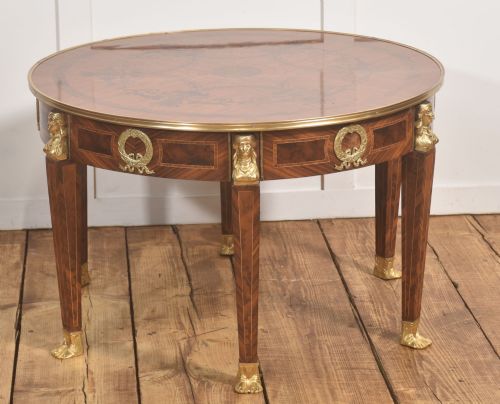
Cabinet-makers built these tables using solid carcases of mahogany, walnut, or oak, layered with decorative veneers of rosewood, kingwood, or ebonised wood. Artisans cut delicate patterns into the timber surface to receive thin ribbons and motifs of brass. Ormolu mounts and cast brass galleries often edge the tops or frame the legs to complete the composition.
Techniques such as Boulle work involved sawing interlocking sheets of brass and tortoiseshell or dark wood together, producing matched positive and negative designs. Marquetry cutters assembled pictorial or geometric panels by hand before pressing them into the recessed timber beds. Final finishing relied on hand-applied polish to accentuate the grain and the metallic shimmer.
Brass Marquetry Table Retail Price Guide 2026
Typical asking prices for brass marquetry table among the pieces listed under this phrase on Sellingantiques today, from the lower quarter to the upper quarter. They describe what is for sale here now, not the wider market.
Listings feature mahogany, rosewood, walnut, and kingwood timbers combined with brass across nineteenth and early twentieth-century forms.
What varies in quality
Quality rests on the precision of the brass cutting and how tightly the metal sits flush within the surrounding wood veneer. Superior examples display microscopic joinery lines and crisp engraving on the metal surfaces, whereas lesser pieces show wider filler gaps around the inlay. The choice of underlying timber also dictates standard, with dense exotic woods like kingwood and rosewood appearing on finer productions.
The crispness of cast ormolu mounts and the integrity of the structural framing separate standard pieces from the best workshop output. Workshops recorded in the evidence demonstrate meticulous attention to internal drawer linings and secondary woods. A balanced proportion between the timber ground and the brass decoration marks the height of the maker's skill.
Maple & Co.·Gillows Oxford Street Workshop·George Bullock·Edwards & Roberts·François Linke
The Brass Marquetry Table Glossary
- Marquetry
- A decorative technique where pieces of veneer are assembled to form pictorial or geometric patterns on a wooden surface. It differs from parquetry through its use of curved and pictorial motifs rather than strict repeating geometric grids.
- Boulle work
- An elaborate form of marquetry developed in France utilising brass and tortoiseshell inlaid together in contrasting patterns. This method creates a brilliant reflective surface popular in luxury nineteenth-century furniture.
- Ormolu
- Gilt bronze mounts applied to furniture edges, feet, and corners for both structural protection and ornament. The finish provides a bright golden accent against dark cabinet woods.
- Étagère
- A set of open display shelves supported by slender columns or legs, frequently designed for the drawing room. These tiers often feature mirrored backs or inlaid tops.
- Bijouterie table
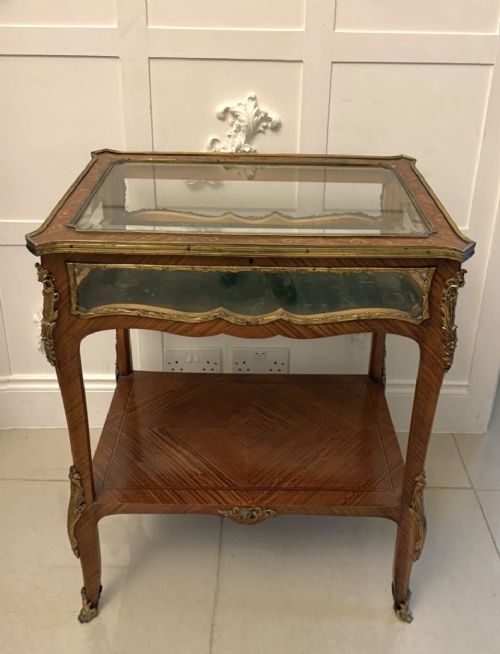
- A glass-topped display table intended for showing small collections of valuables and personal ornaments. The interior lined compartments keep delicate items secure.
Brass Marquetry Table: Frequently Asked Questions
What is a brass marquetry table?
A brass marquetry table is an antique surface decorated with inlaid metal patterns set directly into wood veneer. These tables serve as functional desks, display pieces, or centre tables.
They reflect European and English design movements from the nineteenth and early twentieth centuries. The combination of polished metal and dark timber creates a striking focal point in domestic interiors.
How do I care for the brass inlay?
Maintenance requires dry dusting with a soft cloth to prevent particulate accumulation around the metal joints. Avoid aggressive metal polishes that can seep into the surrounding timber veneer.
Maintaining a stable room temperature protects the wood from expanding or contracting. This stability prevents the brass inlays from lifting out of their recessed channels.
Are these tables suitable for daily use?
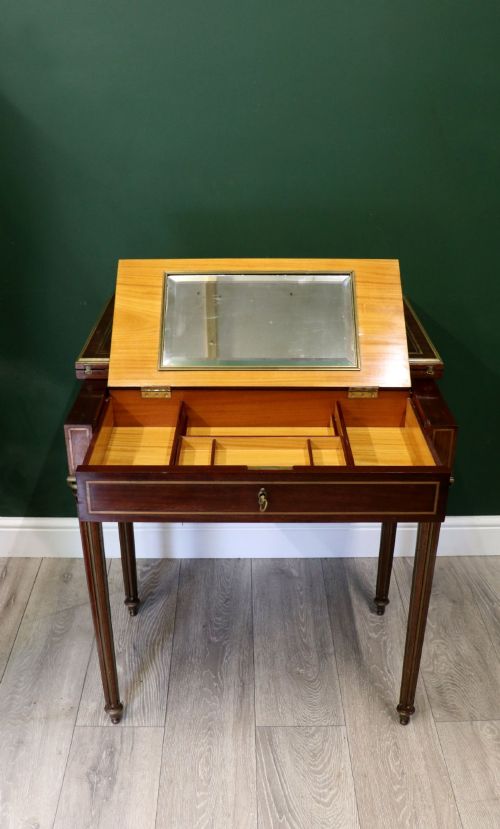
Many examples function well for daily tasks, particularly writing desks and sturdy centre tables. Care should be taken with glass-topped bijouterie and delicate étagères.
Using coasters and protective mats preserves the polished wooden surfaces and delicate metal edges. Placing them away from direct sunlight protects the sensitive wood veneers from fading.
How can I tell French from English pieces?
French tables often feature pronounced ormolu mounts, ebonised grounds, and Boulle work details associated with Louis styles. English equivalents frequently display Sheraton or Regency influences with clean mahogany or rosewood grains.
Construction methods and secondary woods inside drawers also point toward specific regional workshops. Examining the internal timber provides clear clues to the country of origin.