
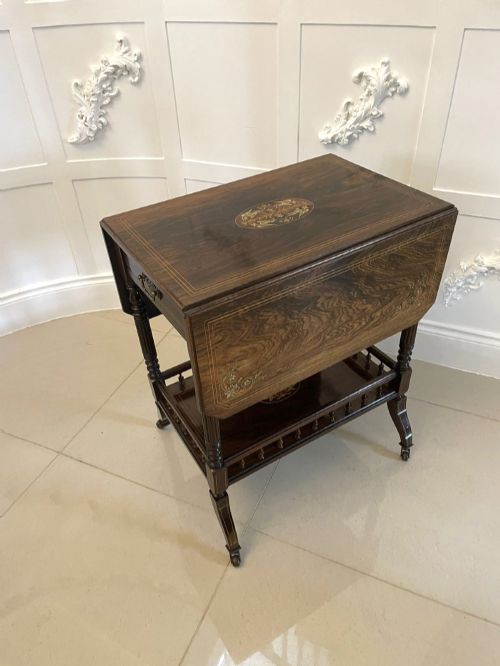
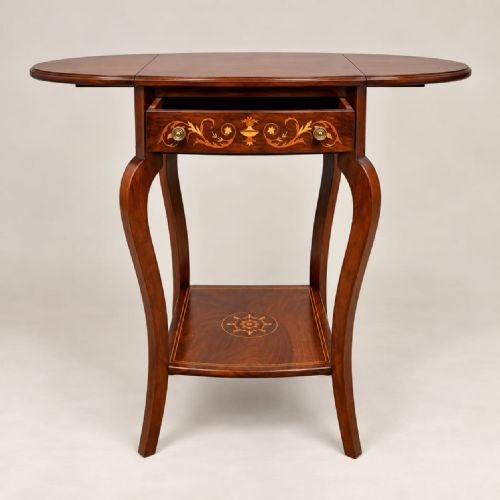


Antique Drop Leaf
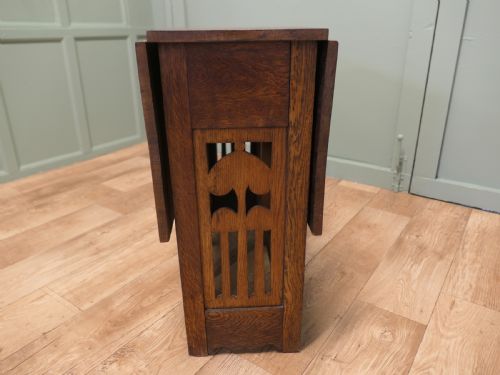
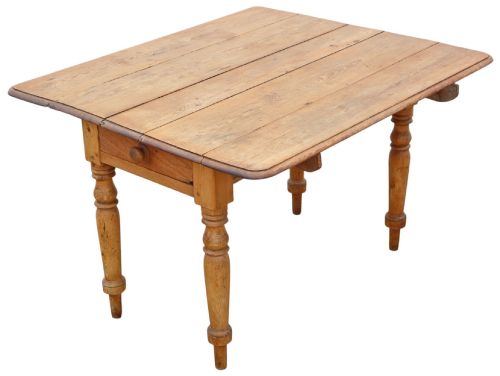
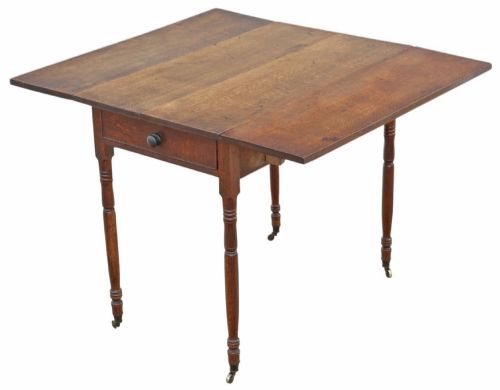
When searching for an antique drop leaf, buyers encounter versatile folding tables in mahogany, oak, and walnut that save space whilst offering generous surface areas.
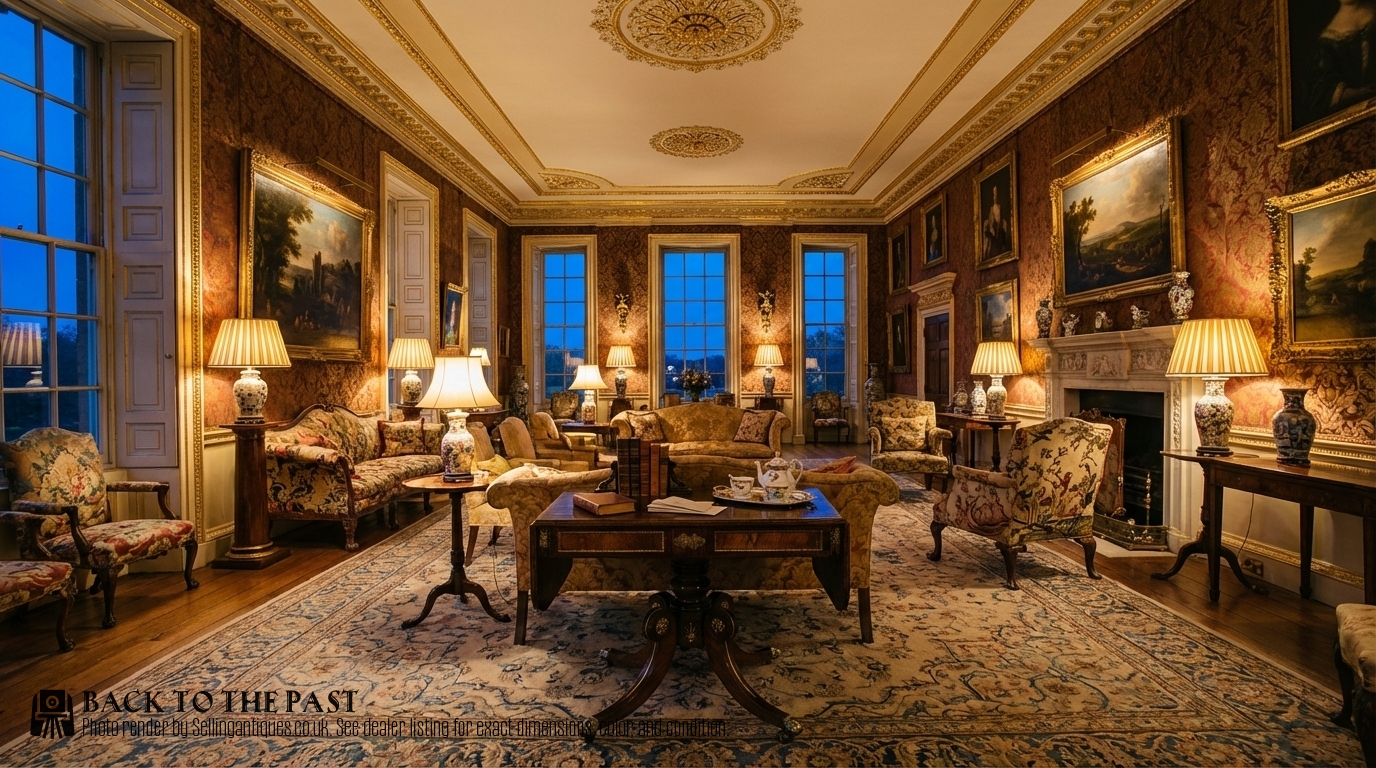
Antique Drop Leaf
When searching for an antique drop leaf table, a buyer typically encounters versatile timber furnishings designed with hinged flaps that fold down to save space or lift up to seat guests. The forms range from compact occasional and Pembroke tables to substantial dining and gateleg variants spanning the Georgian, Victorian, and Edwardian eras.
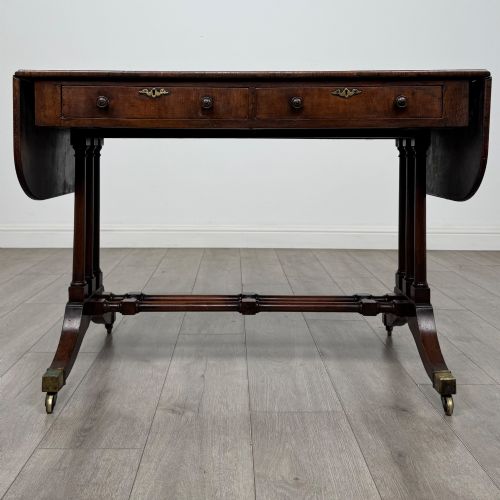
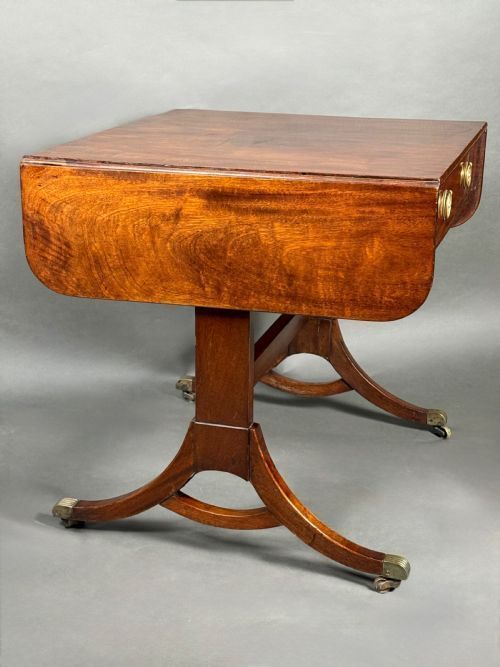
Oak and mahogany versions dominate the selections, appearing in domestic contexts such as kitchens, parlours, and dining rooms. Examples span simple 18th-century gatelegs to more refined Regency sofa tables and Victorian Sutherland tables featuring scissor actions.
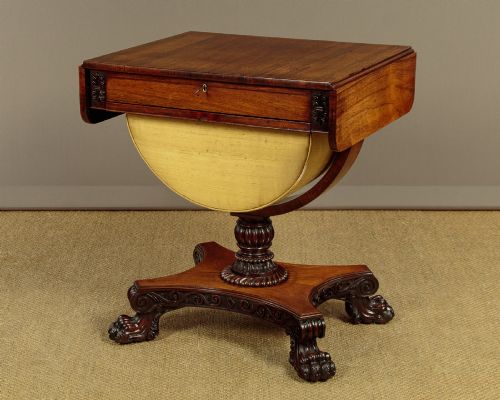
Buyers also encounter specialised forms including sewing tables, tea trolleys, and dumb waiters incorporating folding leaves. These pieces combine practical folding mechanics with period aesthetics, utilising timbers like rosewood, walnut, and satinwood.
How they were made
Cabinet makers utilised solid and veneered hardwoods, constructing frames in mahogany, oak, walnut, and rosewood, often accented with boxwood, satinwood, and kingswood inlay. Table tops and leaves were hinged to folding or swinging legs, gatelegs, or rule joints that supported the dropped flaps when raised.
Turned supports appear frequently, ranging from barley twist and bobbin legs on oak gateleg tables to slender spider legs and pillar bases on later Victorian and Edwardian occasional pieces. Structural framing relied on traditional joinery to support the operational stress placed upon the folding leaves.
Listings feature timbers including oak, mahogany, walnut, rosewood, and satinwood across periods from the 18th century to the Edwardian era.
What varies in quality
The choice of timber and figuring separates standard utility items from finer parlour pieces, with figured mahogany, burr walnut, and flame veneers indicating higher status manufacture. The crispness of carved details, such as barley twists or edge mouldings, reflects the maker's skill.
The integrity of the hinge mechanism and the stability of the folding flaps when extended determine functional excellence. Superior examples maintain flush joints between the leaves and the main top whether folded or raised.
The Antique Drop Leaf Glossary
- Gateleg table
- A table with hinged leaves supported by one or more legs that swing outward like a gate. This design provides sturdy underpinnings for large dining surfaces.
- Pembroke table
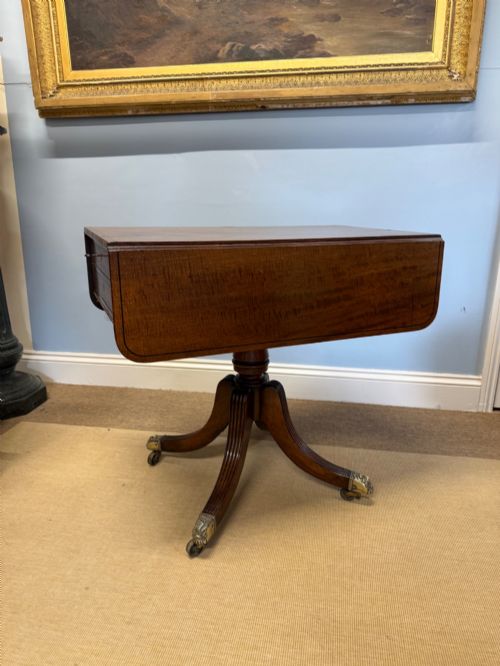
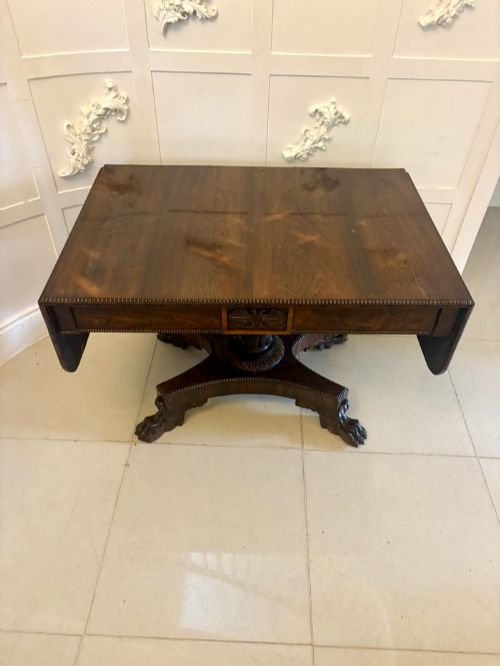
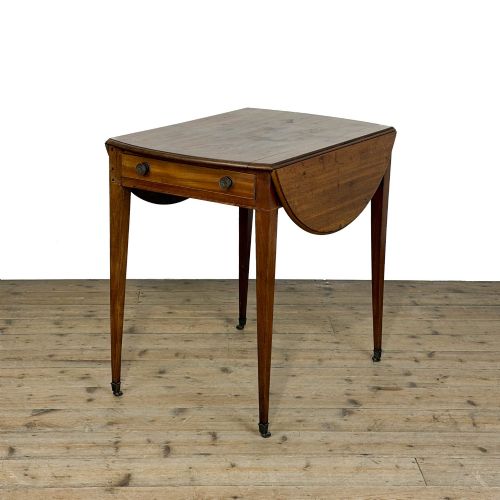
- A small rectangular table featuring two folding flaps on opposite sides and usually a single drawer. It originated in the 18th century as a versatile breakfast or occasional table.
- Sutherland table
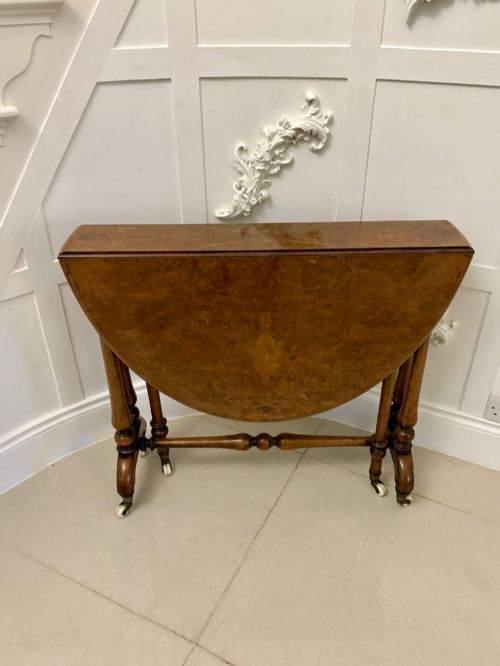
- A narrow table with exceptionally slender drop leaves that fold down almost vertically. They feature a distinctive swinging leg action to support the wide leaves.
- Rule joint
- A moulding joint connecting a drop leaf to a table top that conceals the gap and hinge mechanism. It creates a neat continuous line when the leaf is raised.
- Flame mahogany
- A veneer cut from the fork of a mahogany tree that produces a striking feather-like flame pattern. It appears on high-status Regency and Georgian cabinet furniture.
Antique Drop Leaf: Frequently Asked Questions
How do you use a drop leaf table in a small space?
Drop leaf tables function efficiently in compact rooms by keeping both flaps folded down against the wall to act as a side or console table. When dining or working space is required, the hinged leaves lift upward and lock into position via swing legs or brackets.
This adaptability allowed historic households to maximise floor area without sacrificing surface utility. Owners simply lower the leaves when the room needs to remain open.
What is the difference between a gateleg and a Pembroke table?
Gateleg tables feature hinged leaves supported by legs that pivot outward from the central frame like a gate. This construction provides robust support beneath the entire extended leaf area.
Pembroke tables typically have smaller, narrower drop flaps supported by hinged wooden brackets rather than swinging legs. They also frequently incorporate small drawers beneath the surface for storage.
How can you tell a Georgian drop leaf from a Victorian one?
Georgian pieces often display simpler architectural lines, using solid oak or figured mahogany with subtle stringing or inlay. The proportions and timber selection reflect 18th-century tastes for restrained elegance.
Victorian examples frequently introduce richer veneers like burr walnut and rosewood, alongside more elaborate mechanics such as Sutherland actions or barley twist turnings. They span a wider variety of domestic roles including tea trolleys and occasional tables.
Where were drop leaf tables placed in historic homes?
These tables served multiple rooms depending on their size, appearing in kitchens as food preparation surfaces and in dining rooms for expanding meal seating. Smaller Pembroke and occasional versions stood in parlours and bedrooms for writing or sewing.
Their mobility meant staff could easily move them where extra surface area was needed during social gatherings. They adapted readily to changing domestic demands throughout the day.