


Rosewood Drop Leaf
When you handle a rosewood drop leaf, you hold a versatile piece of furniture built to expand or fold away with quiet elegance.
Rosewood Drop Leaf
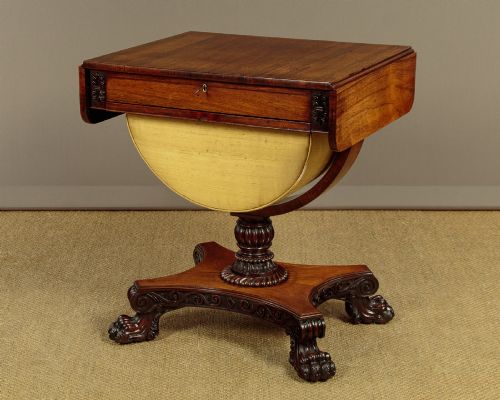
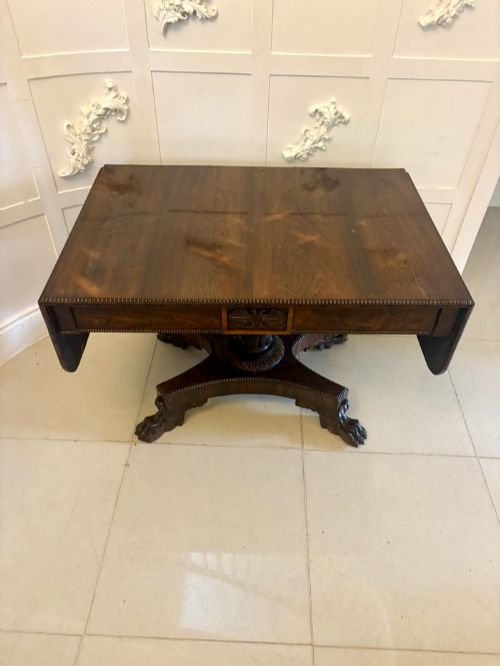
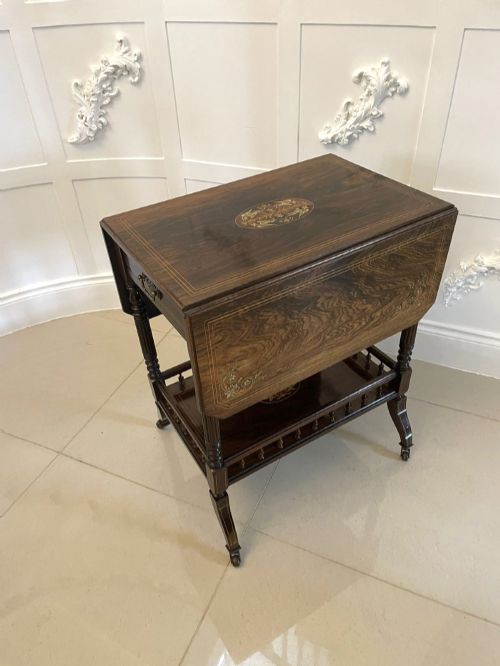
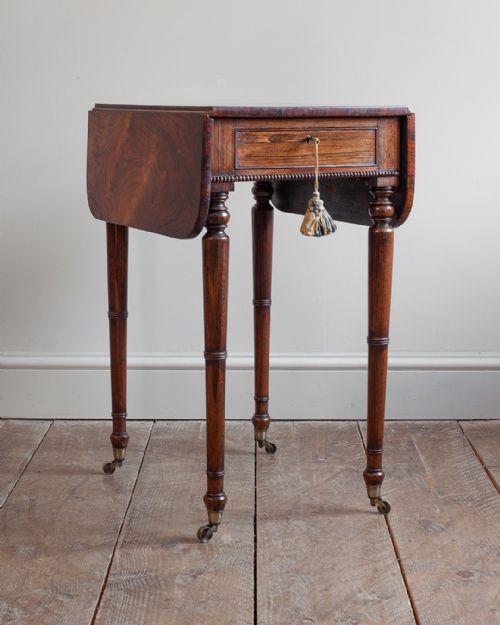
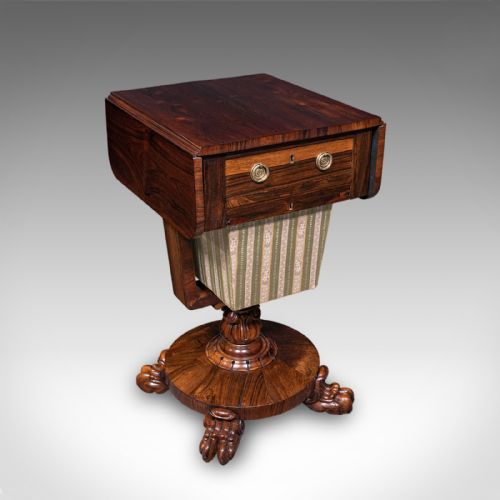
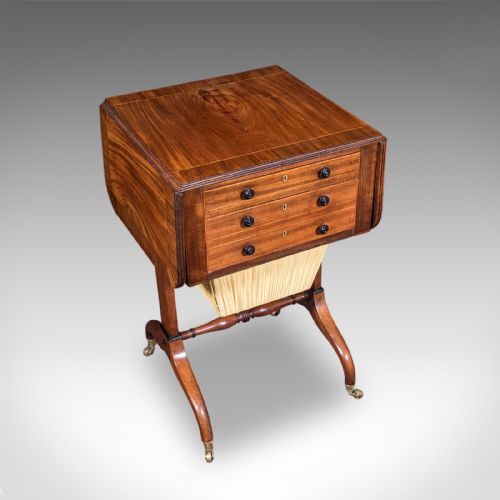
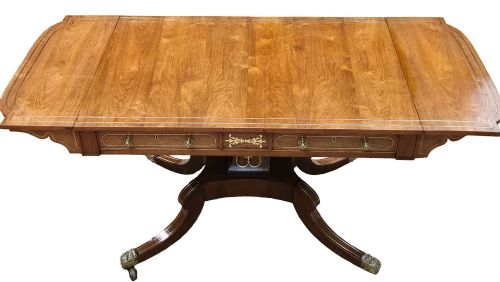
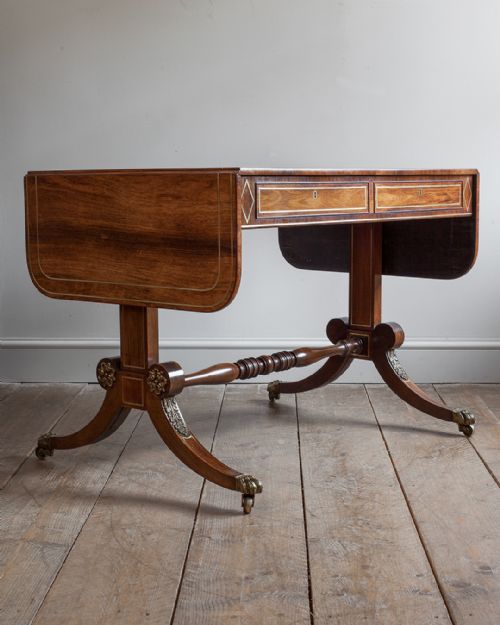
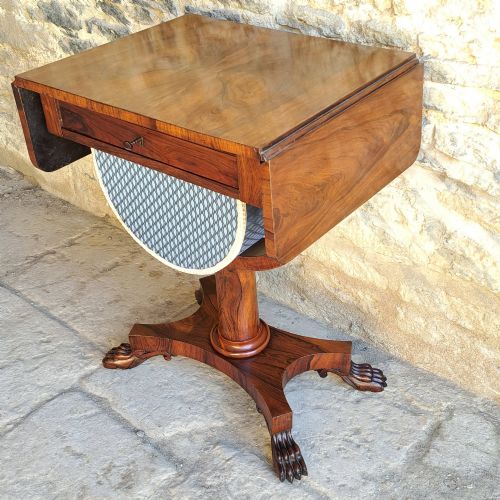
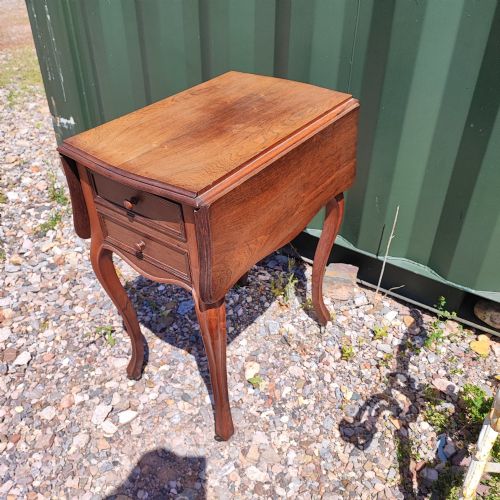
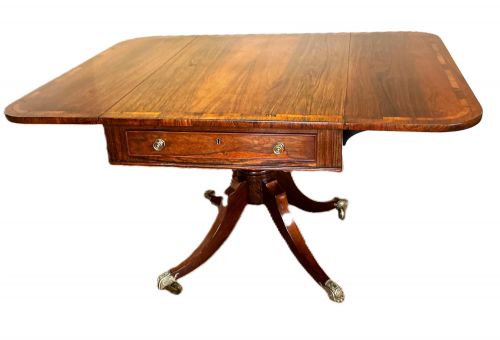
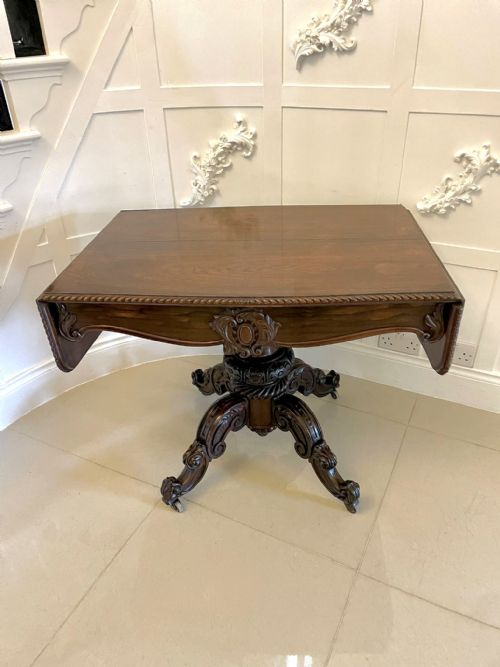
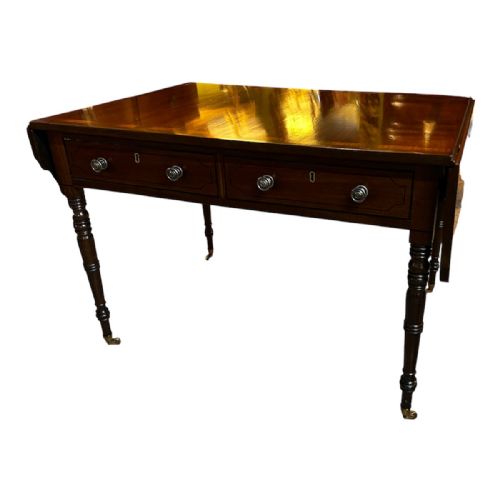
A rosewood drop leaf table combines a central fixed top with hinged flaps that drop down at the sides. These tables appear in many forms across this page, most commonly as sofa tables, occasional tables, work tables, and games tables.
The pieces span several periods, with Regency and Victorian examples appearing most frequently alongside Edwardian and Georgian specimens. Makers adapted the form for specific tasks, from needlework and writing to tea serving and general parlour use.
Many examples utilise freestanding designs intended to sit centrally in a room rather than flat against a wall. The folding flaps allow the furniture footprint to alter rapidly depending on the immediate needs of the interior.
How they were made
Joiners built the foundational carcases using sturdy secondary timbers, applying rich rosewood veneers to visible surfaces to showcase deep grain patterns and varied colour tones. Crossbanding in contrasting timbers such as satinwood, mahogany, or boxwood often frames the primary tops.
Brass mountings, gilt details, and inlaid cut brass work frequently decorate the panels and frieze drawers. Fabric, silk, and leather inserts appear on specialised surfaces like writing slides and sewing compartments.
Drop leaves rely on hinged brackets, fly legs, or swing actions to support the extended flaps safely. Pedestal bases, pillar supports, and delicate tripod legs distribute the weight evenly beneath the central top.
Listings feature periods spanning from Georgian and Regency through to Victorian and Edwardian, utilising rosewood, mahogany, and brass.
What varies in quality
The standard of timber selection and veneer matching defines the initial visual impression. Pieces exhibiting continuous grain alignment and carefully planned crossbanding separate higher workshop output from simpler production.
Hardware integration and internal execution dictate operational longevity. Subtly fitted frieze drawers, robust hinge mechanisms, and cleanly cast brass mounts indicate careful attention during construction.
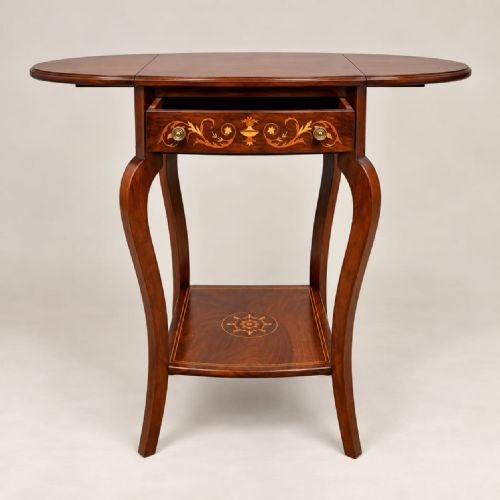
Decorative elaboration alters the character of individual items, ranging from restrained Regency brass lines to detailed Victorian marquetry and floral inlay. The crispness of carved wooden elements and the precision of inlaid motifs determine the refinement of the finished piece.
James Mein, Kelso·Gillow·Gillows of Lancaster·Druce & Co. London
The Rosewood Drop Leaf Glossary
- Drop leaf
- A table featuring hinged flaps that raise to enlarge the surface area or lower to save space. This mechanism defines the primary functionality of the furniture listed here.
- Sofa table
- A rectangular occasional table traditionally designed to stand directly in front of a sofa. These versions usually incorporate drop leaves and twin pillar supports.
- Crossbanding
- A border of veneer laid around the perimeter of a table top with the grain running perpendicular to the centre. This technique frames the primary timber surface.
- Marquetry
- Decorative patterns formed by fitting small pieces of veneer into a prepared background. Floral motifs and geometric designs often appear executed in contrasting woods.
- Pembroke table
- A small rectangular table featuring two hinged drop leaves and typically one or two small drawers. The design originated in the eighteenth century and persisted through the Regency era.
Rosewood Drop Leaf: Frequently Asked Questions
What is a rosewood drop leaf table used for?
These tables served multiple domestic purposes depending on their specific form. Sewing and work tables contained internal compartments for textiles, whilst sofa tables accommodated writing and reading materials.
Drop leaves enabled the furniture to remain compact against a wall or beside seating until extra surface area became necessary. Occasional and lamp tables provided portable display surfaces within the principal reception rooms of a house.
How do I identify a Regency rosewood drop leaf?
Regency pieces often display classical proportions with clean architectural lines, brass stringing, and pillar supports resting on platform bases. The timber utilised in this period typically exhibits strong grain contrast and deep reddish-brown tones.
Secondary details such as gilt brass mounts and turned pedestals help distinguish these earlier examples from later Victorian or Edwardian interpretations.
Where should I place a drop leaf table in my home?
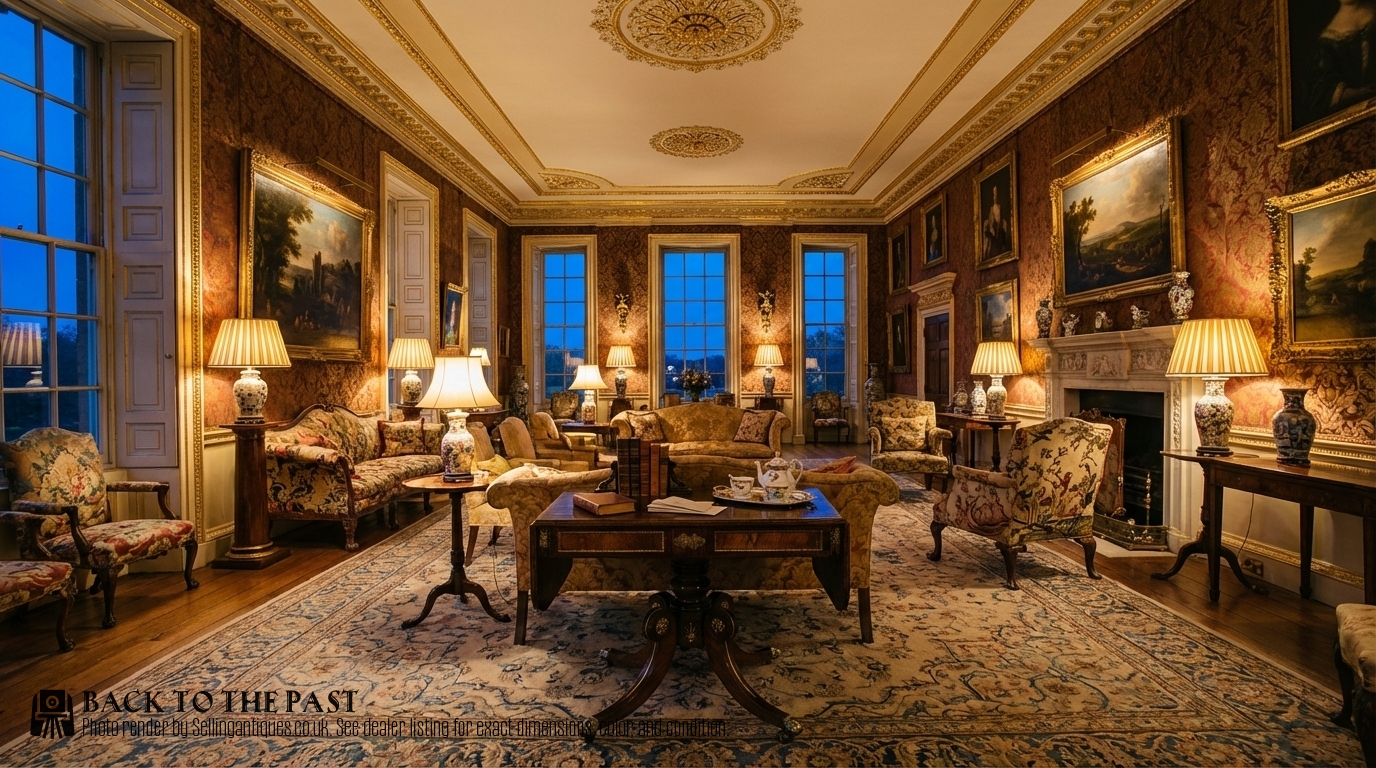
A sofa table sits naturally behind a low sofa or freestanding in the middle of a room to display decorative objects or lamps. Occasional and side tables fit easily into smaller corners or beside armchairs where surface space is limited.
Keeping the leaves dropped maintains a narrow footprint in tight corridors or beside walls, whilst raising both flaps creates a functional tabletop for serving tea or placing books.
How do Victorian models differ from earlier pieces?
Victorian examples frequently introduce heavier carving, intricate marquetry, and tripod bases alongside traditional pedestal forms. Workshops of this era embraced varied revival styles including French Rococo influences.
Whilst Regency makers favoured restrained brass inlay and strict geometry, Victorian iterations often leaned toward decorative floral ornamentation and multi-wood inlay techniques.