
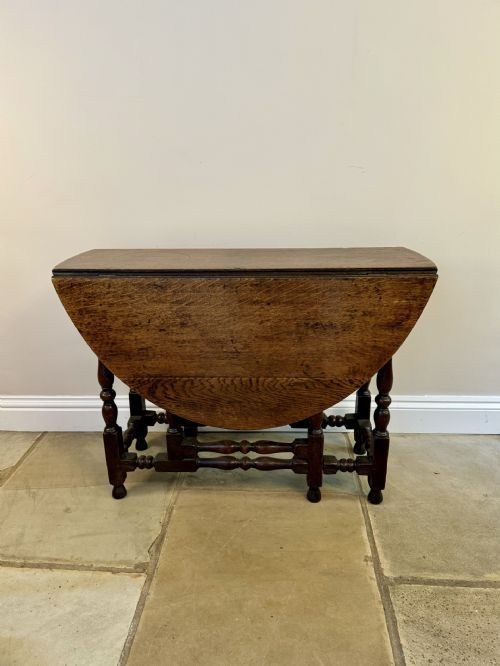
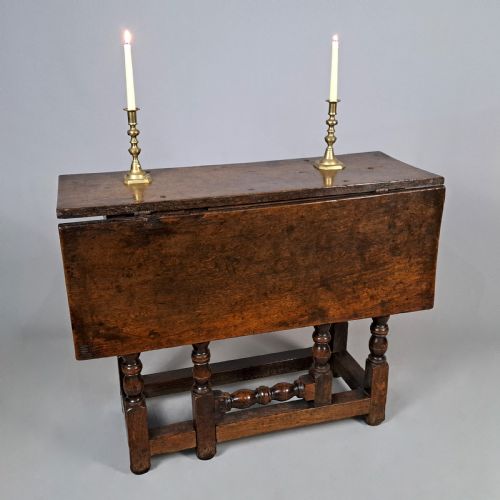


Country Oak Gateleg
Country oak gateleg tables provide versatile dining and surface space through folding leaves supported by pivoting legs.
Country Oak Gateleg
A country oak gateleg table is a form of drop-leaf furniture designed to expand for dining and fold down for storage against a wall. The pieces appearing most frequently span the seventeenth and eighteenth centuries, with occasional revival examples from the twentieth century.
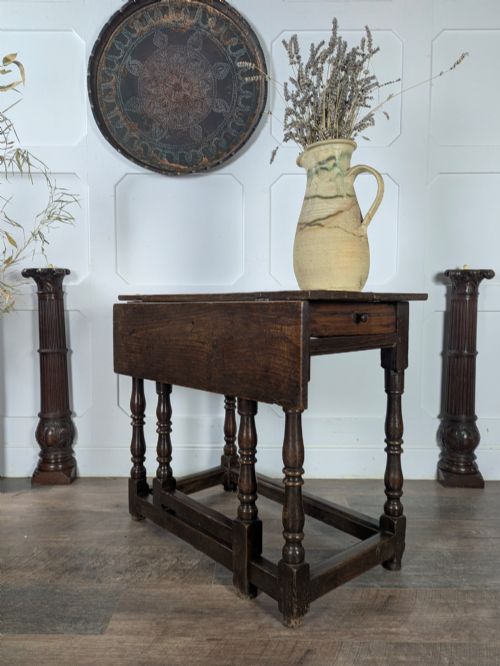
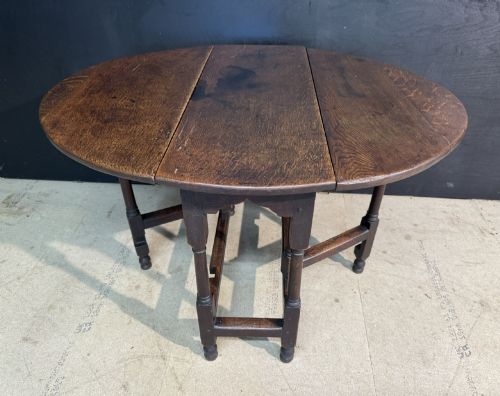
Makers constructed these tables primarily for domestic utility in rural settings, resulting in forms ranging from small side tables to large oval dining tables seating up to ten people. The design relies on hinged flaps and swinging legs that pull out to support the extended leaves.
How they were made
Craftsmen built these tables using solid native hardwoods, predominantly oak supplemented by secondary timbers such as ash, elm, and fruitwood for framing and internal components. Boards were joined using traditional pegged mortise and tenon construction to ensure structural rigidity under the movement of the folding leaves.
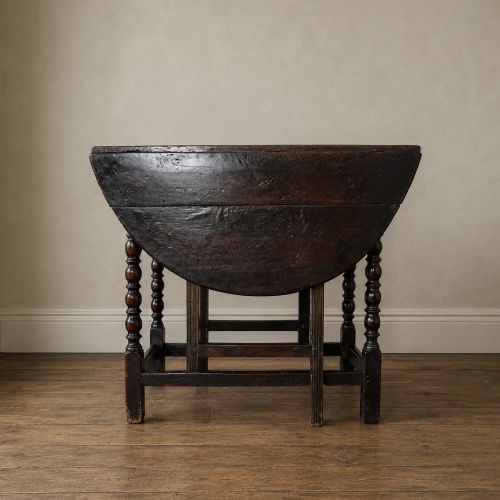
Hardware consists of hand-forged iron hinges and occasionally brass fittings that secure the pivoting gateleg frames. Turning lathes shaped the upright posts and stretcher bases into baluster or spool forms characteristic of the period.
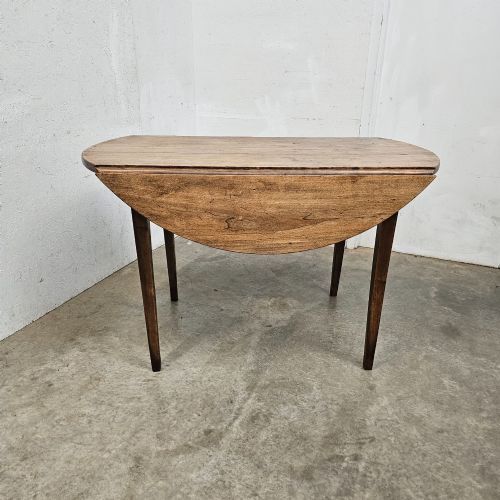
Listings feature oak tables spanning the seventeenth, eighteenth, and early twentieth centuries alongside occasional French provincial examples.
What varies in quality
Quality in these pieces depends on the selection of timber and the integrity of the original construction rather than decorative ornamentation. Tables retaining their early surface patination and unreplaced timber framing sit at the higher end of the range.
Proportion and scale also dictate desirability, with smaller side versions and large multi-seat dining formats commanding distinct attention from buyers. Alterations to the base stretchers or replacement hinges differentiate standard utilitarian examples from superior survivals.
The Country Oak Gateleg Glossary
- Gateleg table
- A table with fixed centre leaves and hinged flaps supported by legs that swing outward like a gate. This mechanism allows the surface area to be doubled when open.
- Drop leaf
- A hinged section of a table top that can be lowered when not in use. It provides flexibility in room layout and space saving.
- Baluster
- A moulded shaft or post supporting the table top, often shaped on a lathe. Early examples feature vase or ring-turned profiles.
- Patina
- The surface sheen and colour developed on wood over centuries through age, use, and polishing. It serves as an indicator of early finish.
- Stretcher
- A horizontal timber connecting the legs of a table to provide structural stability. They often sit low to the floor in seventeenth-century designs.
Country Oak Gateleg: Frequently Asked Questions
How do I seat people comfortably?
The swinging leg frame creates specific clearance zones underneath the leaves, so check the placement of the base stretchers relative to chair positions before seating guests.
Larger oval formats designed for multiple diners distribute the leg supports to maximise knee room when the leaves are fully extended.
Can I use a gateleg daily?
These tables served as heavy-duty working surfaces for centuries and handle everyday dining and writing tasks without issue when placed on even flooring.
Protect the surface from excessive moisture and heat by using coasters and placemats to preserve the underlying timber and polish.
How do I date an oak table?
Examination of the joining techniques, such as hand-cut pegs and the tool marks left on the underside of the plank top, reveals the period of manufacture.
Turned leg profiles and the type of secondary woods used in the frame provide further chronological markers matching historical styles.
Where did country gatelegs originate?
English and French rural workshops produced these tables to furnish farmhouses and provincial homes where flexible living spaces were necessary.
Local carpenters utilised regionally available hardwoods like oak and fruitwood to build sturdy furniture suited to domestic routines.