

Dark Oak Gateleg
Dark oak gateleg tables provide versatile dining surfaces supported by hinged legs, combining historical timber with practical folding leaves.
Dark Oak Gateleg
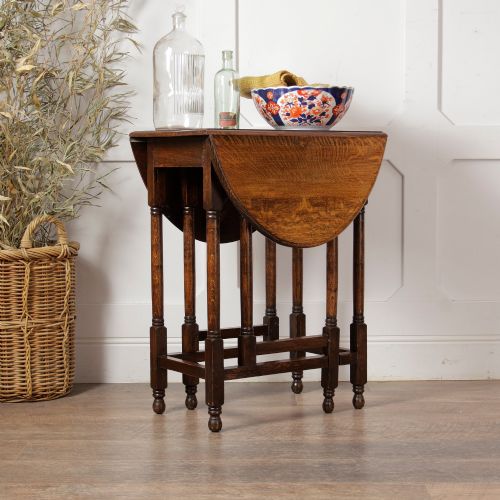
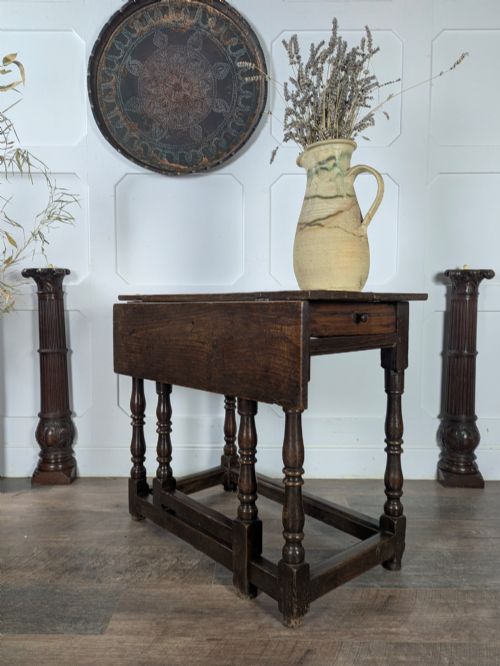
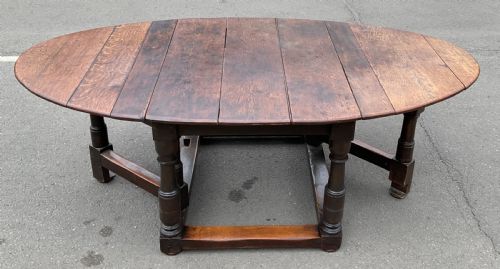
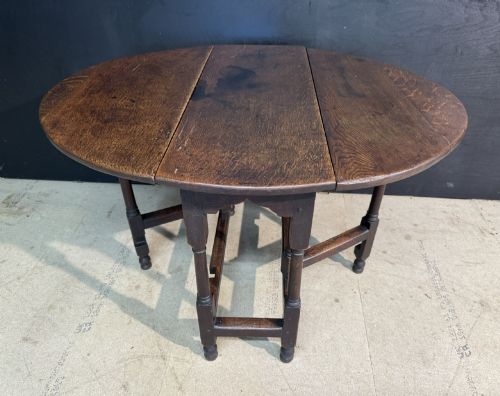
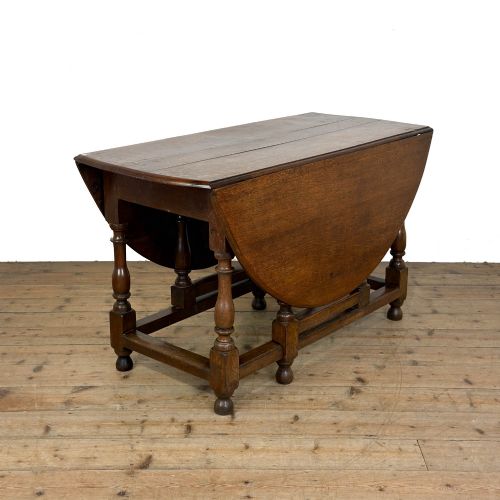
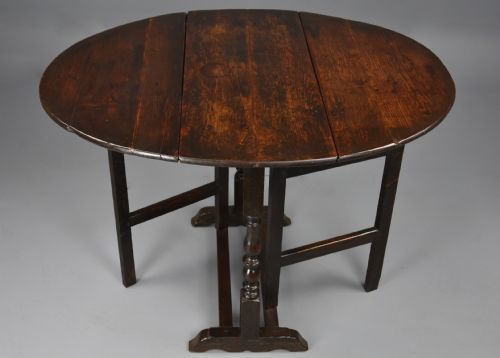
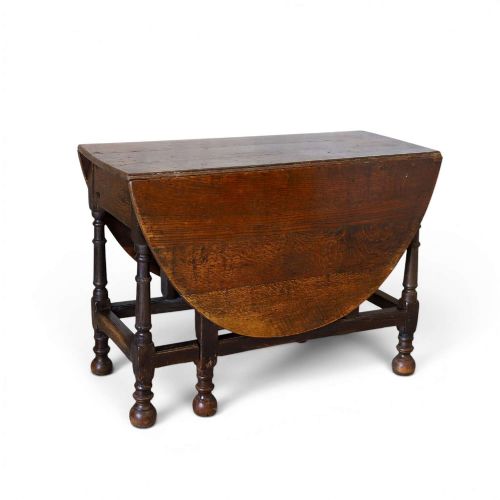
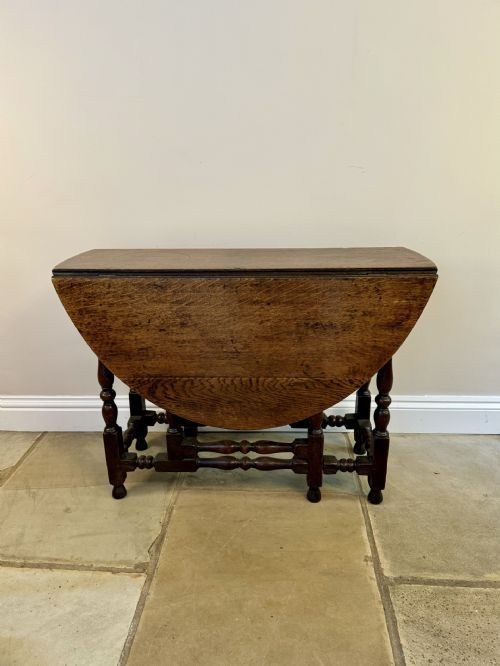
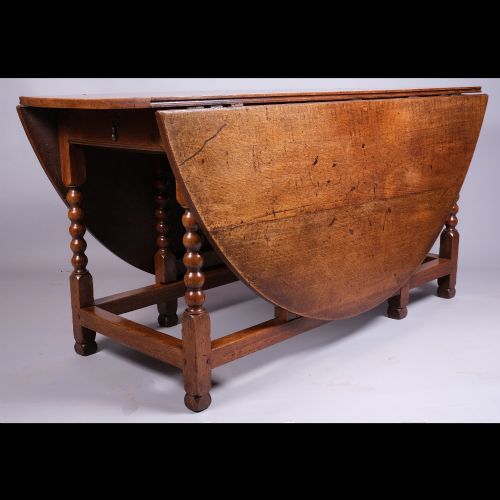
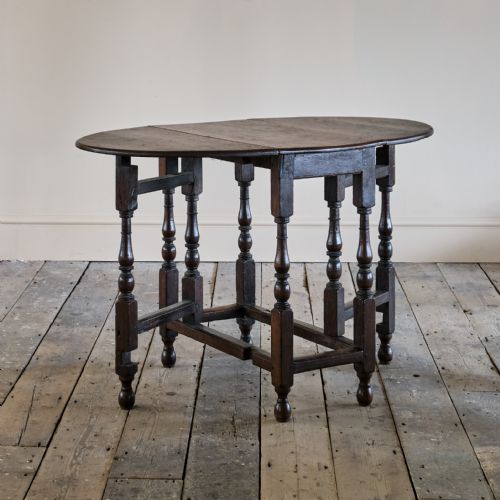
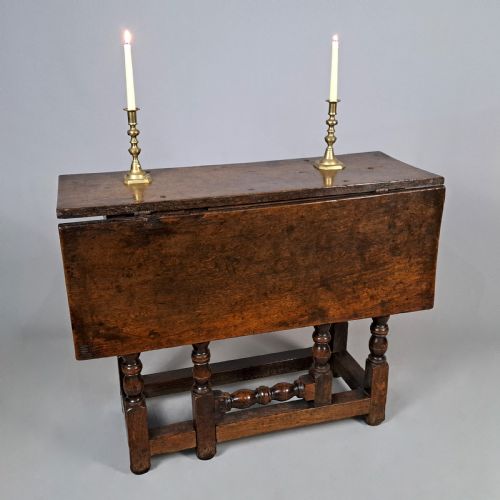
Dark oak gateleg furniture encompasses folding tables designed for dining, side use, or occasional placement within domestic spaces. Buyers encountering this phrase will find pieces ranging from compact side tables to large six-seater dining formats.
The material palette centres on solid oak timbers, often displaying deep patination built up over centuries of use and polish. Occasional variants incorporate secondary woods such as ash alongside the primary oak construction.
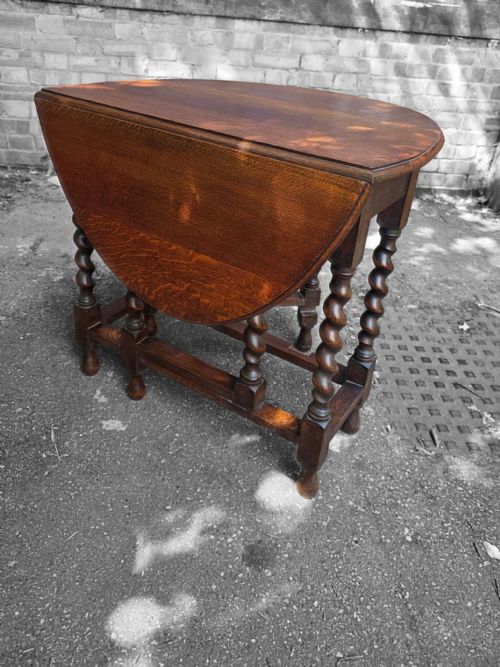
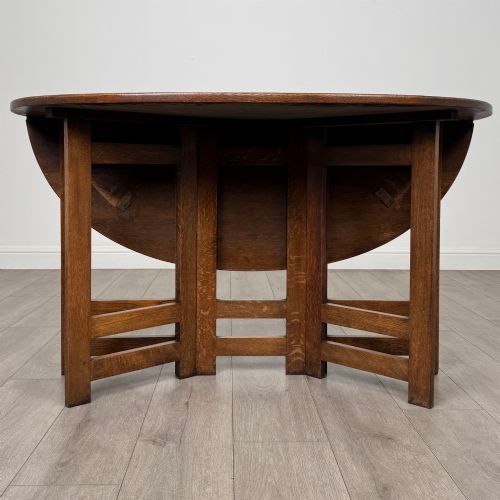
Historical examples span the seventeenth century through the Georgian era, alongside later revival iterations produced during the Edwardian period and the early twentieth century. These later interpretations frequently replicate the proportions and turning styles of earlier periods.
Factors determining quality
Quality separates through the integrity of the original timber surface and the crispness of the turned leg details. Superior examples retain their original hinges and display an undisturbed, warm patina across the plank top.
Proportion and scale also dictate distinction, with smaller, versatile formats or large six-seater dining tables commanding attention for their balanced construction. The presence of untouched surfaces and minimal timber replacement elevates the standing of an individual piece.
Listings feature periods spanning the seventeenth century through the 1930s, constructed predominantly in solid oak with occasional ash and walnut.
The Dark Oak Gateleg Glossary
- Gateleg table
- A table with hinged leaves supported by one or more swinging legs that move outward like a gate. This mechanism allows the surface area to expand or contract according to domestic requirements.
- Bobbin turning
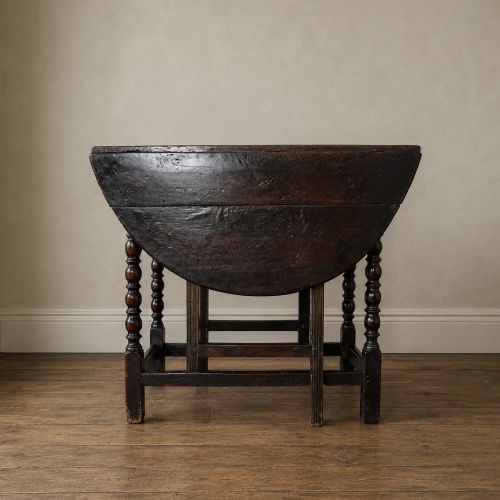
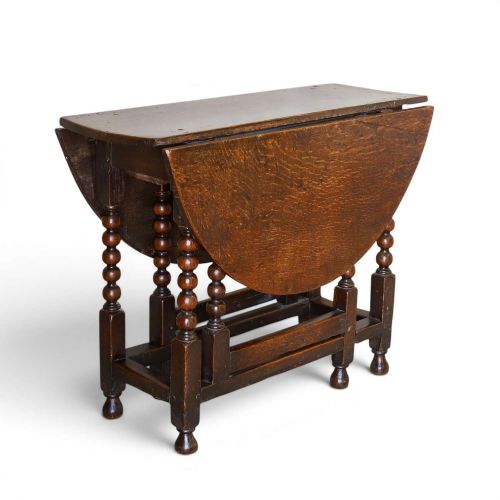
- A form of lathe turning that produces a series of rounded, spool-like shapes along the length of a furniture leg or stretcher. It appears frequently on seventeenth-century English seating and table supports.
- Barley twist
- A spiral turning technique resembling a twisted rope, carved into wooden table legs and uprights. This decorative profile gained popularity during the seventeenth century and saw extensive revival periods later.
- Patina
- The surface sheen and colour developed by wood over years of handling, waxing, and exposure to light. A desirable patination indicates age and continuous domestic use.
- Drop leaf
- A hinged section of a table top that folds down when not in use. These leaves allow large dining surfaces to reduce into compact footprints for smaller rooms.
Dark Oak Gateleg: Frequently Asked Questions
How do I identify a seventeenth century gateleg table?
Seventeenth-century examples typically display pegged frame joints, hand-split oak plank tops, and heavy turned elements such as bobbin or baluster profiles. The timber often shows deep natural patination and tool marks from original hand working.
Examination of the underside and hinge mechanisms reveals hand-forged iron work rather than modern steel screws. Later revival pieces from the twentieth century imitate these forms but lack the authentic wear patterns and construction irregularities of the period.
Are dark oak gateleg tables suitable for daily dining?
These tables function effectively for everyday meals because their folding leaves allow users to adjust the surface area to room constraints. Smaller side formats suit breakfast use, while larger six-seater dining versions accommodate family gatherings.
Care involves using heat mats and avoiding excess moisture on the antique timber surface to protect the historic finish. Regular polishing with appropriate wax maintains the dark oak colour and guards against drying.
What is the difference between an original and a revival piece?
Original pieces date from the seventeenth, eighteenth, or early nineteenth centuries, bearing the structural wear and timber shrinkage characteristic of genuine age. Revival pieces originate from later periods like the Edwardian era or the 1920s, copying historical styles using machinery-assisted methods.
Distinguishing between them relies on assessing the colour, tool marks, and construction techniques visible within the framework and hinges. Both offer functional utility, but historical examples carry distinct period provenance.
How should I care for an antique oak finish?
Maintaining an antique oak finish requires periodic application of traditional beeswax to nourish the wood and preserve the natural patination. Avoid placing tables near direct heat sources or strong sunlight, which can dry out the timber and cause splitting.
Cleaning should involve only a soft, dry cloth to remove dust without introducing moisture that might harm old joints. Gentle upkeep ensures the surface retains its historical depth and character over time.