


Solid Oak Gateleg
Solid oak gateleg tables offer clever space-saving folding leaves combined with the rugged honesty of seventeenth-century and later English cabinetry.
Solid Oak Gateleg
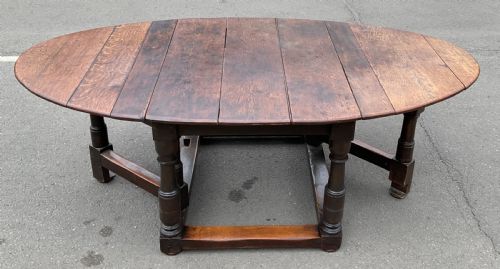
When you search for solid oak gateleg, you are looking at sturdy drop-leaf tables designed to expand for dining and fold down against a wall when floor space is at a premium. The selection spans robust seventeenth-century originals, eighteenth-century country examples, and later revivals from the Arts and Crafts and twentieth-century periods.
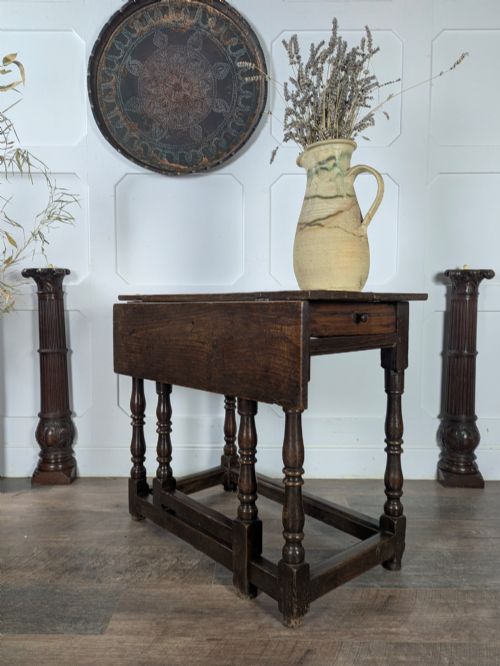
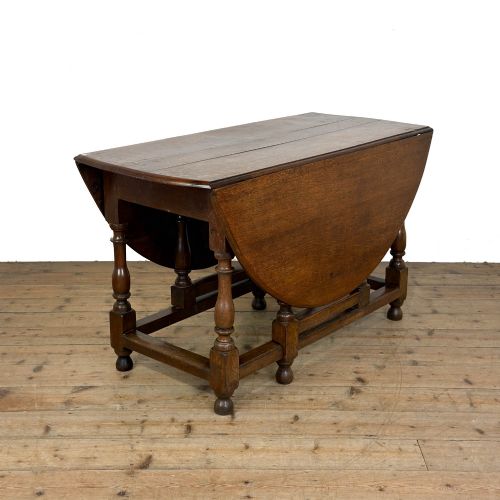
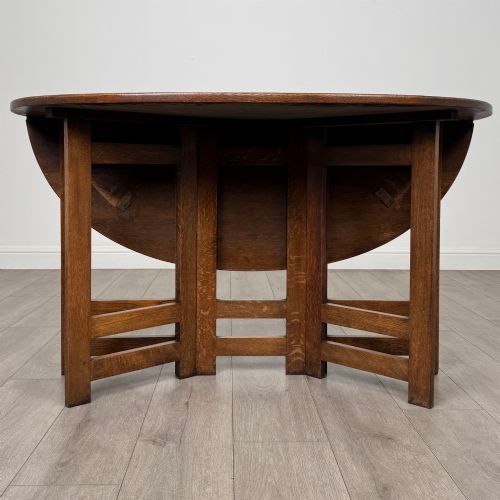
The most common form you will meet on this page is the large dining table, though smaller side tables, coffee tables, and compact occasional pieces also appear regularly. These tables utilise hinged flaps supported by pivoting swing legs, creating a sturdy frame when open and a slim profile when closed.
Construction and materials
These tables are constructed primarily from solid oak, sometimes combined with ash elements, relying on dense native hardwoods to support the heavy drop leaves and frequent folding action. Joinery is traditionally pegged and tenoned, ensuring the frame remains rigid under daily use.
Metal components are kept minimal, restricted to functional brass or iron hinges and fixings that allow the pivoting gate legs to swing smoothly. Surface finishes rely on natural wax or polish applied directly to the timber grain rather than heavy veneers.
Some seventeenth-century ancestors of these tables spent their lives holding ale tankards before ever seeing a dining room.
Distinguishing quality
Quality in these tables rests primarily in the timber selection and the integrity of the pivoting gate mechanism. Early examples show superior hand-planed boards and refined turning on the legs, such as bobbin or bobbin-turned details, compared to plainer later interpretations.
The weight and thickness of the top boards and the tightness of the hinge joints determine how steadily the leaves drop and lock into place. Pieces retaining their original untouched timber surfaces command greater interest from collectors than heavily restored examples.
Heal's
The Solid Oak Gateleg Glossary
- Gateleg table
- A table with hinged leaves supported by one or more legs that swing out like a gate. This clever design allows the surface area to triple in size when fully extended.
- Drop leaf
- A hinged section of table top that folds down when not in use. It requires strong supporting legs to bear weight safely.
- Bobbin turned
- A style of furniture leg shaped on a lathe to resemble a string of beads or bobbins. This decorative turning is frequently found on seventeenth-century and Victorian iterations.
- Refectory
- A long dining table style adapted in later periods to incorporate folding leaves. It provides substantial seating capacity for dining rooms.
Solid Oak Gateleg: Frequently Asked Questions
How do I seat guests comfortably around a gateleg table?
Extend both leaves fully and check the position of the swing legs to ensure they provide adequate clearance for chairs and knees. Positioning the swing gate securely beneath the leaf prevents wobbling when guests lean on the edge.
Smaller side tables can be pulled out from walls and opened partially to create impromptu writing desks or serving stations during larger gatherings.
Can I use a solid oak gateleg table every day?
These tables are built from durable native hardwoods specifically designed for daily domestic utility, making them practical for modern kitchens and dining rooms. The robust timber handles regular folding and unfolding without losing structural integrity.
Protect the surface from heat and moisture using placemats, and apply occasional wax to maintain the natural finish against everyday wear.
How do I tell a seventeenth-century table from a later revival?
Early seventeenth-century examples exhibit hand-carved details, pegged mortise and tenon joints, and deep patination acquired through centuries of use. Tool marks and timber shrinkage offer reliable clues to genuine age.
Later Arts and Crafts or twentieth-century interpretations often feature cleaner machine-cut timber and lighter surface treatments while retaining the traditional folding mechanism.
Where should I place a small gateleg table at home?
Compact side tables and coffee tables fit well in hallways, living rooms, or tight corners where surface space is needed only intermittently. Dropping the leaves creates a narrow profile that tucks neatly against any wall.
Opening just one leaf transforms the piece into a functional desk or display surface for lamps and books.