

Brass Inlaid Rosewood Table
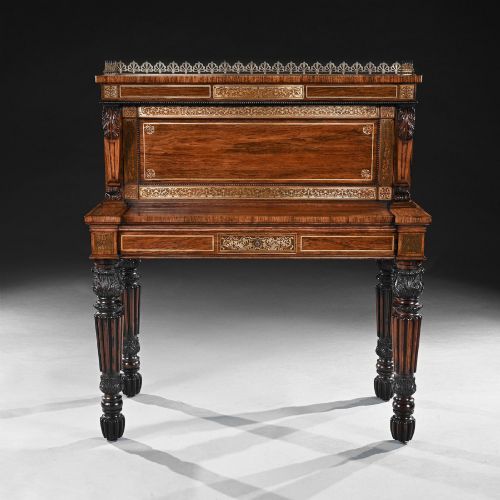
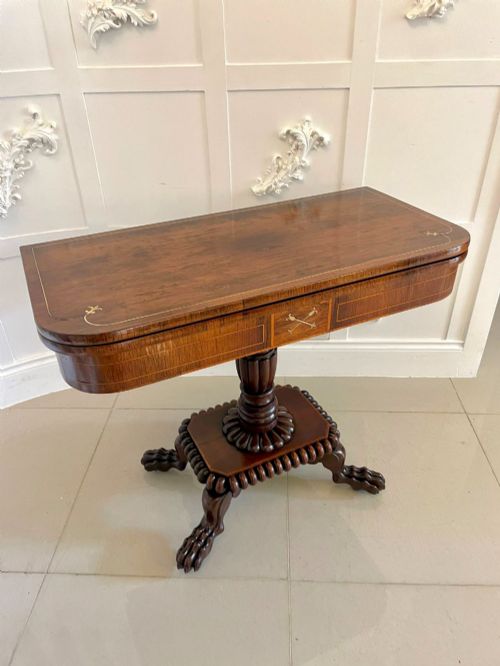
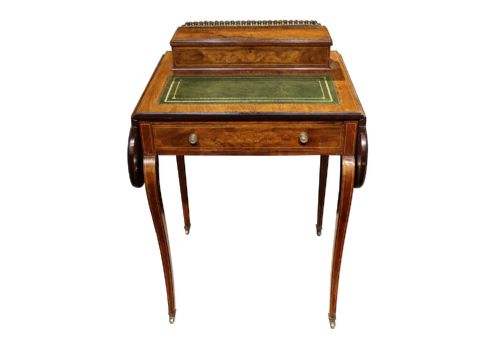
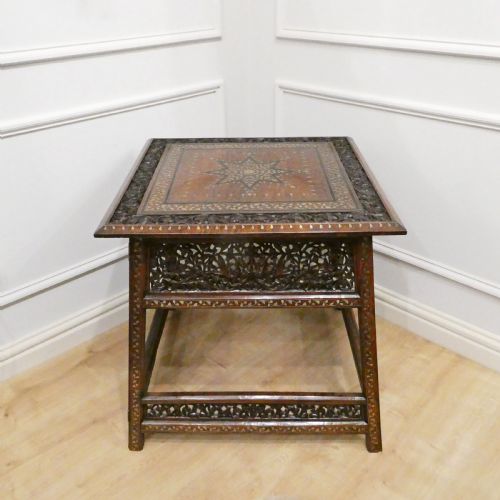
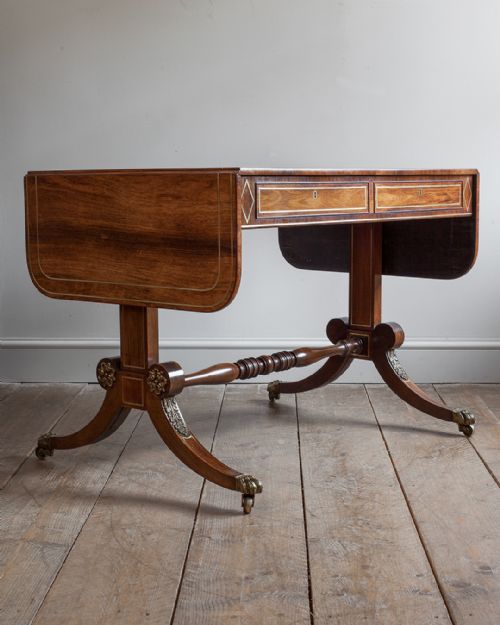
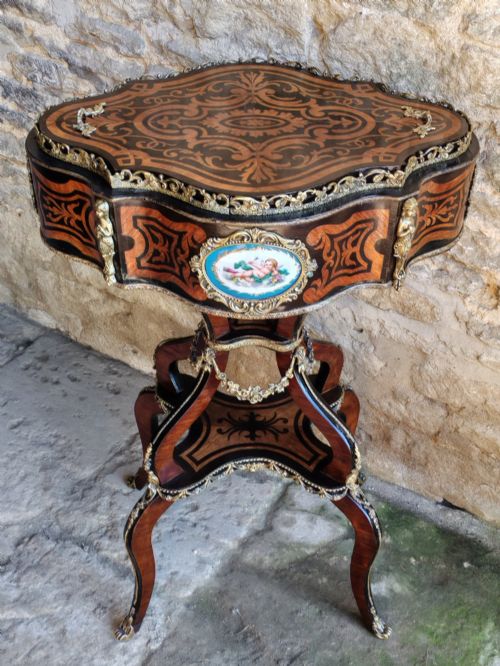
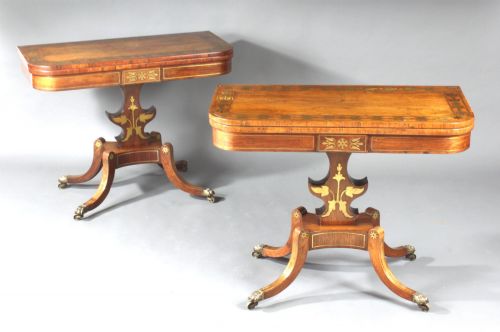
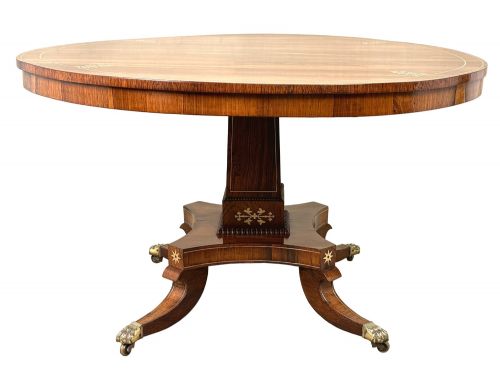
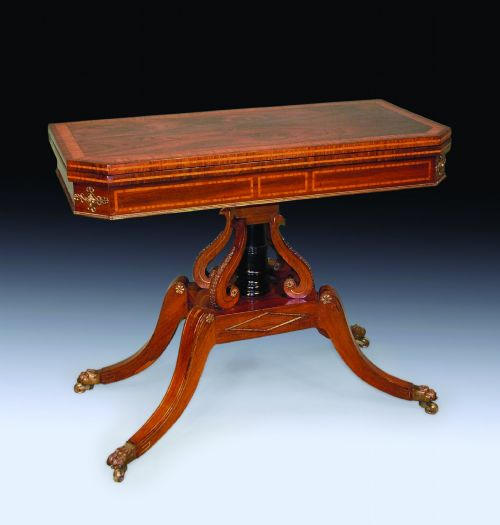
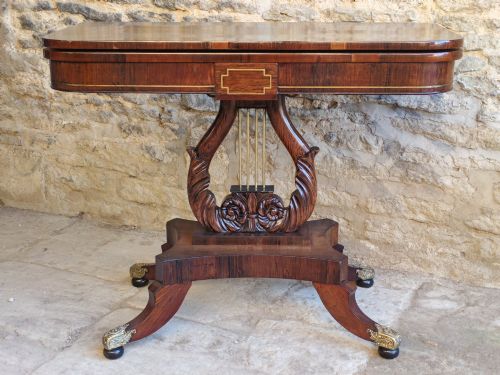
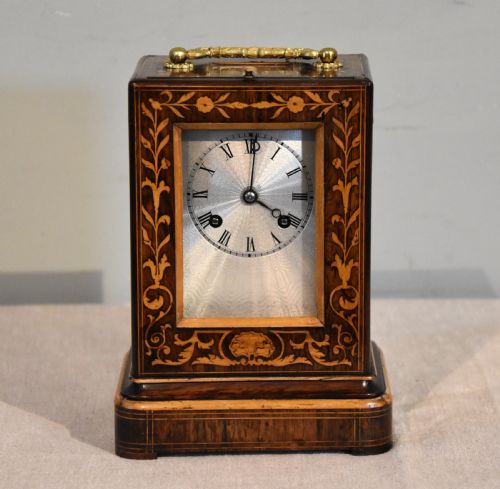
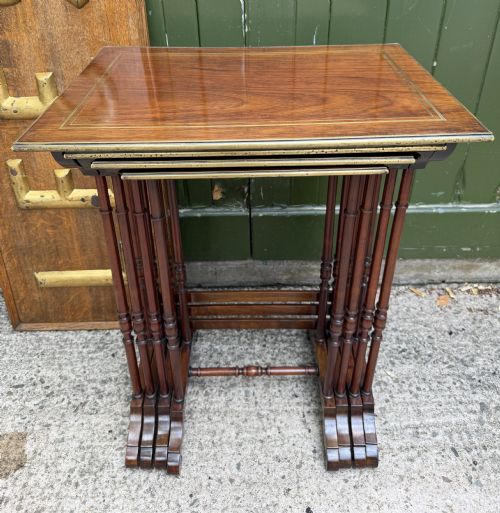
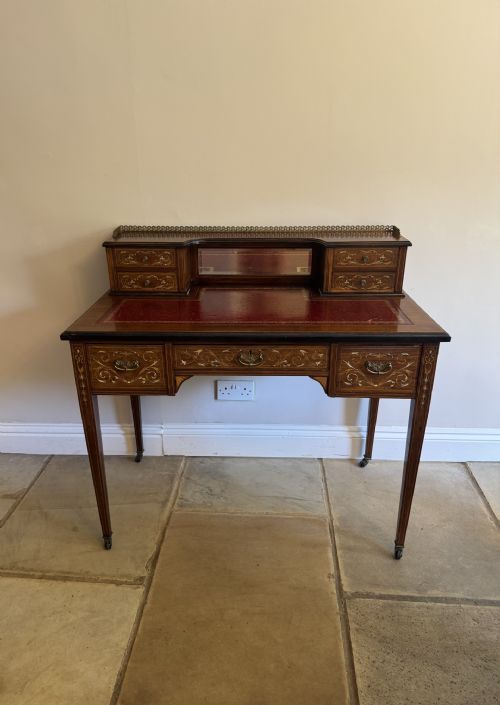
A brass inlaid rosewood table brings bright metal work against dark timber, offering a formal surface for a drawing room.
Forms and periods
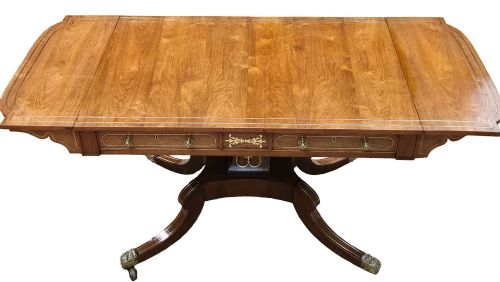
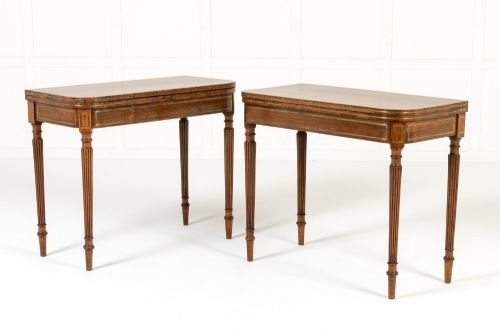
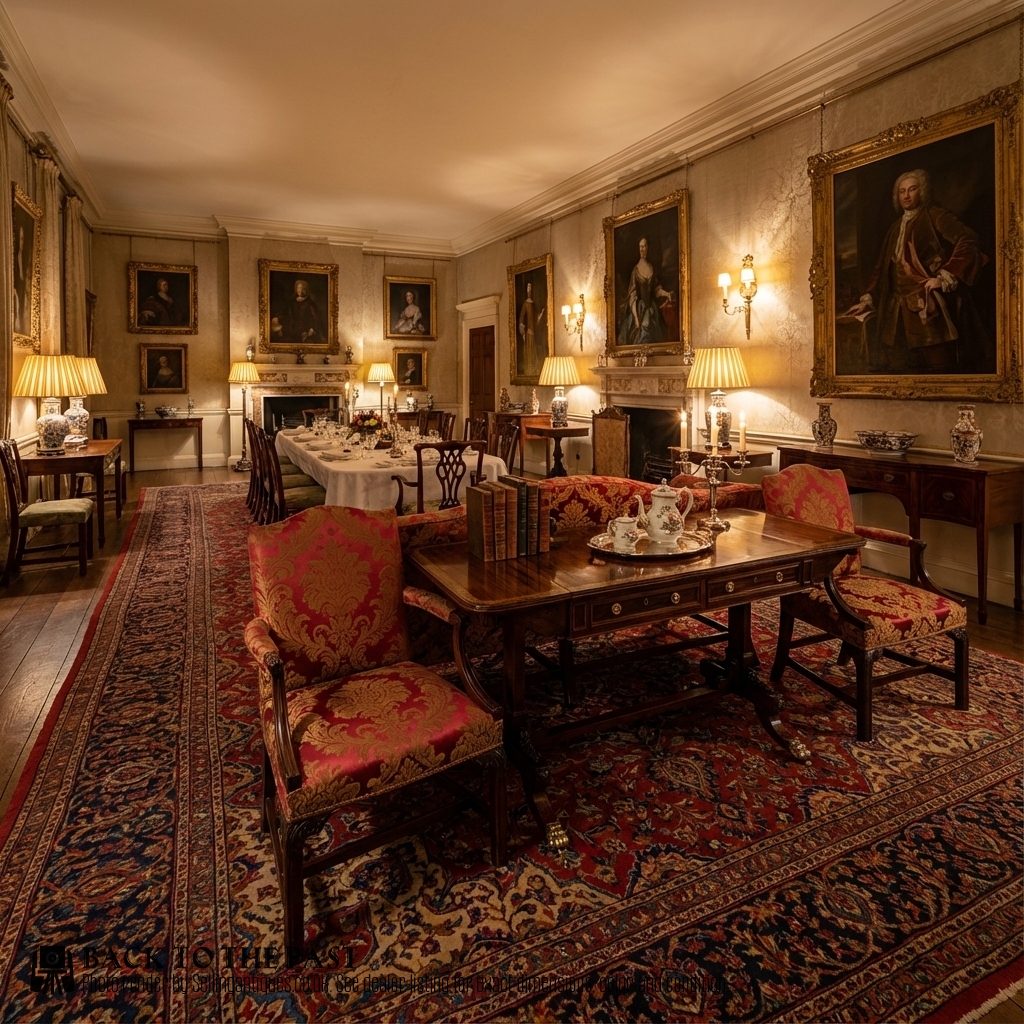
A brass inlaid rosewood table most commonly appears from the Regency period, shaped into centre tables, sofa tables, and card tables designed for formal reception rooms. These pieces rely on the contrast between dark exotic timber and gleaming metal stringing to catch candlelight.
The selection ranges from small circular centre tables and occasional tables to larger games, writing, and dining formats. Sofa tables and card tables with drop leaves or folding tops remain the standard variations encountered in this furniture.
Most surviving examples sit firmly within the nineteenth century, particularly the Regency era and the year 1800, though occasional late nineteenth-century interpretations also appear.
Distinctions in craftsmanship
The standard of a brass inlaid rosewood table rests on the crispness of the brass cutting and how securely the metal sits flush within the timber grain. Finer examples display meticulous geometric alignment and harmonious figure in the rosewood veneers.
The presence of secondary timbers, delicate satinwood crossbanding, and substantial carved details separate ambitious cabinet work from simpler utilitarian production.
Retail Price Guide 2026
Typical UK retail prices for brass inlaid rosewood table, calculated from the Sellingantiques database of over a million retail prices indexed since 2003. This retail price guide relies exclusively on Sellingantiques data; no external sources or auction records are used, so the figures do not describe the wider market.
Some sewing tables hide tiny compartments originally intended for ivory spools and secret gossip notes.
George Smith·Collinson and Lock·George Bullock·Gillow Lancaster
The Brass Inlaid Rosewood Table Glossary
- Rosewood
- A dense, dark timber featuring prominent black grain patterns used extensively for high-end nineteenth-century cabinet work. It provides a rich contrast against bright metal inlays.
- Crossbanding
- A border of veneer laid with the grain running perpendicular to the main surface. This technique frames the top of a table with a contrasting band of wood.
- Satinwood
- A pale, lustrous timber utilised for contrasting borders and stringing details on Regency furniture. It brightens the overall palette of darker woods.
- Centre Table
- A freestanding table designed to be viewed from all sides rather than pushed against a wall. These occupy the middle of a room.
- Sofa Table
- A rectangular library or work table traditionally placed in front of or beside a sofa, often featuring drop leaves and pedestal supports.
Frequently Asked Questions
What is a brass inlaid rosewood table used for?
These tables served various domestic functions in nineteenth-century drawing rooms and libraries, acting as surfaces for writing, sewing, playing cards, or displaying decorative objects.
Today, they function well as central display pieces, sofa-side surfaces, or occasional tables in traditional and contemporary interiors alike.
How do I identify a Regency period table?
Regency pieces typically feature classical architectural proportions, dark rosewood veneers, and precise brass line or marquetry inlay reflecting early nineteenth-century design tastes.
Examining the construction methods underneath and the specific style of the brass work helps confirm the period of manufacture.
Are these tables sturdy enough for daily use?
While built from durable hardwoods like rosewood, antique tables require sensible care to protect their delicate brass inlays and veneered surfaces from moisture and heavy impacts.
Using coasters and placing them away from direct heat sources ensures the timber and metal remain stable over time.