
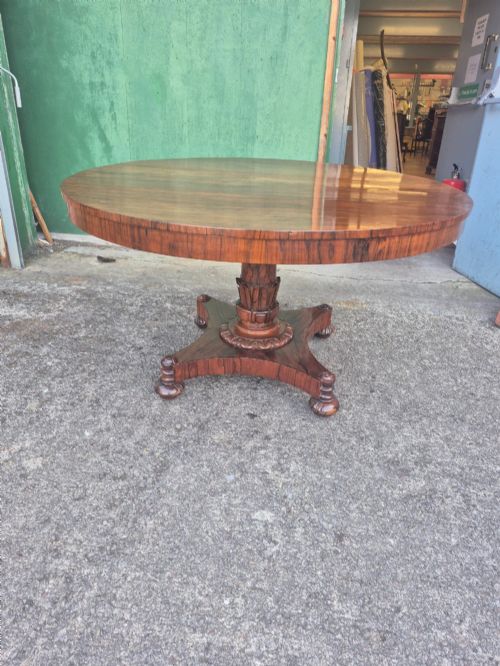
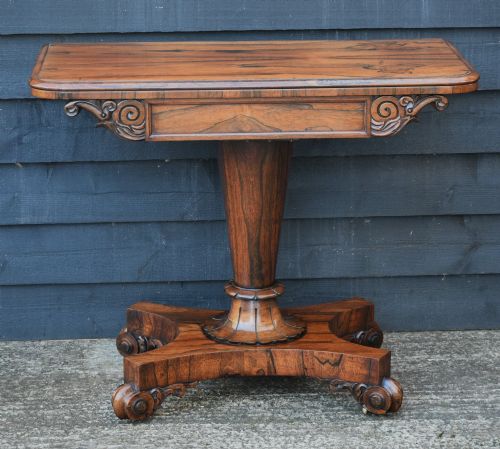
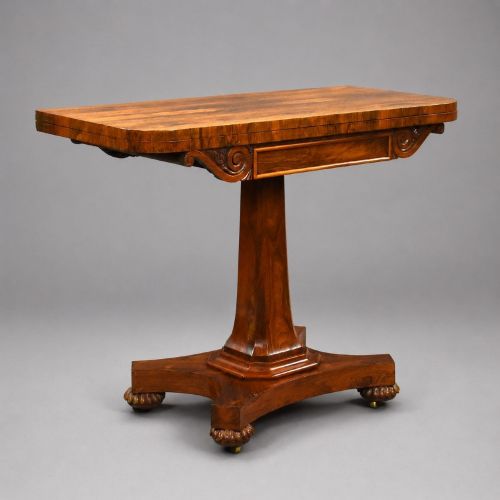
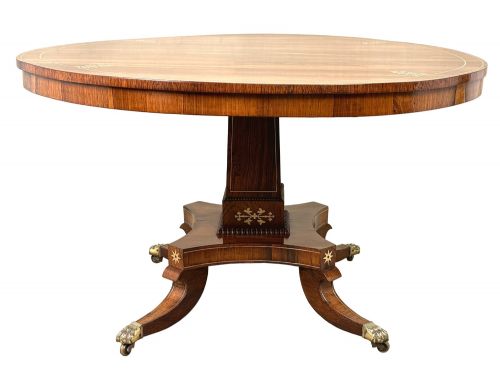

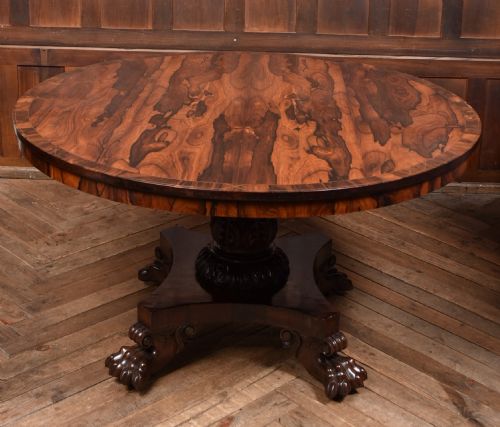


Quadform Base Table
A quadform base table is a sturdy pedestal-supported piece designed for gathering, playing, or dining.
Quadform Base Table
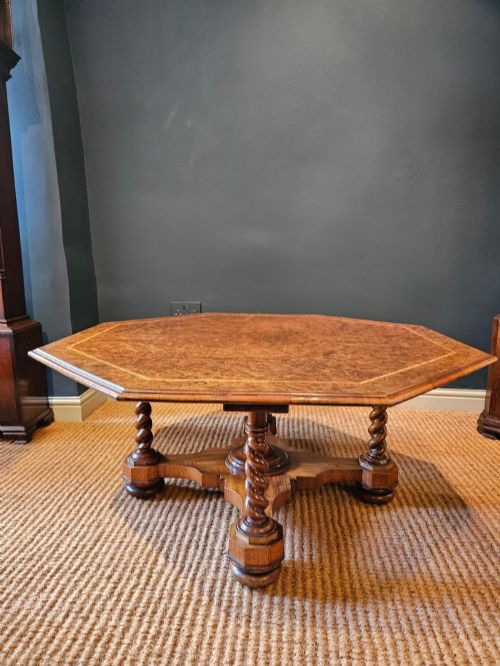
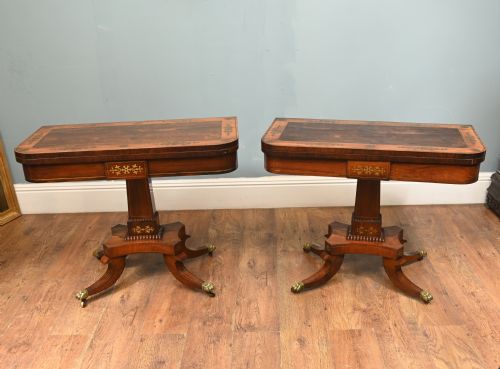
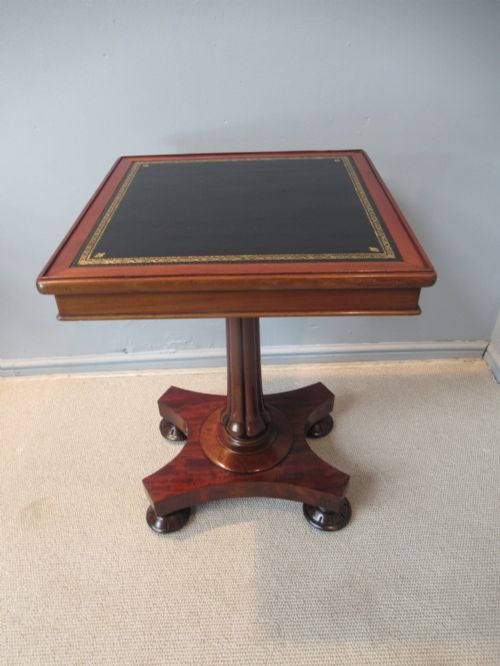
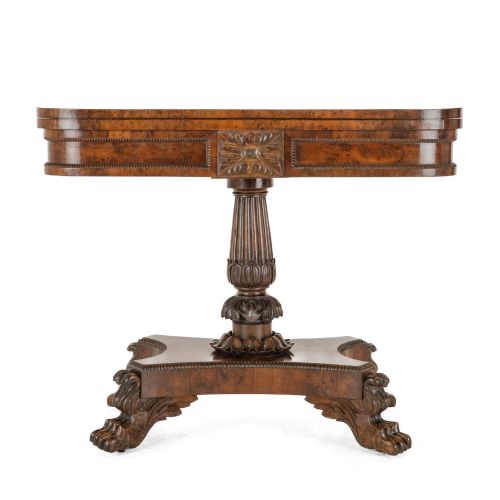
When you search for a quadform base table, you are looking at substantial freestanding furniture built across the Georgian, Regency, William IV, and Victorian periods. These pieces include card tables, breakfast tables, centre tables, and tea tables supported by solid central pedestals or four-sided configurations.
The versions you are most likely to meet on this page date predominantly from the nineteenth century and feature rich timbers such as rosewood, mahogany, and burr walnut. Many adapt to multiple uses through fold-over tops, tilt mechanisms, or clever internal compartments.
Origins range from formal English workshops to Scottish cabinet makers, displaying styles from neo-classical Regency restraint to ornate Victorian carving. They serve equally as functional furniture and sculptural centrepieces in a room.
Materials and construction
Cabinet makers utilised dense hardwoods including rosewood, mahogany, and walnut as structural and visual foundations, often applying dramatic veneers to display deep grain patterns. Boxwood stringing, brass inlay, and leather inserts frequently accent the primary timbers.
Pedestal supports rely on heavy internal framing to distribute weight stably beneath multi-legged or platform bases. Tilt-top mechanisms and folding leaves demand precise hinge work and interlocking catches to ensure flat, level surfaces when opened.
Quadform Base Table Retail Price Guide 2026
Typical asking prices for quadform base table among the pieces listed under this phrase on Sellingantiques today, from the lower quarter to the upper quarter. They describe what is for sale here now, not the wider market.
Some card tables hide secret gaming wells beneath the fold-over top, ready for hidden counters.
Judging construction and finish
The finest examples show careful selection of figured timbers that match symmetrically across table tops and folding leaves. Superior pieces maintain crispness in carved details and precise alignment in brass or boxwood inlay.
Stability at the central joint separates standard production from exceptional craftsmanship. A well-made quadform base remains firm and level, with pivoting mechanisms that operate smoothly without sagging.
William Trotter
The Quadform Base Table Glossary
- Quadform base
- A central support structure resting on four directional points or feet. This configuration provides solid weight distribution for heavy timber table tops.
- Fold-over top
- A hinged table surface that doubles in area when opened out. It is commonly found on card and tea tables of the nineteenth century.
- Tilt-top
- A mechanism allowing the table top to pivot vertically for storage against a wall. This ingenious design saved valuable floor space in period rooms.
- Card table
- A specialist furniture form designed for gaming, frequently lined with baize or leather. Folding tops conceal gaming wells or storage compartments beneath.
- Pedestal table
- A standalone piece supported by a single central pillar rather than four corner legs. This design maximises legroom around the perimeter.
Quadform Base Table: Frequently Asked Questions
What is a quadform base table used for?
These versatile pieces served multiple functions in nineteenth-century homes, acting as dining surfaces, breakfast tables, or studies for reading and writing.
Fold-over variants specifically accommodated evening card games and social gatherings, storing flat against walls when not in active use.
How do I date a Regency table?
Regency pieces often display clean neo-classical lines, brass inlay, and dark rosewood timbers characteristic of the early nineteenth century.
Comparing structural joinery and leg configurations against documented pieces helps narrow down the exact decade of manufacture.
How do I care for rosewood and mahogany?
Protect antique timbers from direct sunlight and sudden temperature changes to prevent veneer cracking and fading.
Apply a traditional wax polish sparingly and buff with a soft cloth to maintain the natural lustre of the wood.
What is the difference between a breakfast and a centre table?
Breakfast tables typically feature tilt mechanisms for easy storage and heavy pedestal bases designed for morning dining.
Centre tables remain fixed in place as decorative focal points in the middle of a room, often used for lamps or display.