
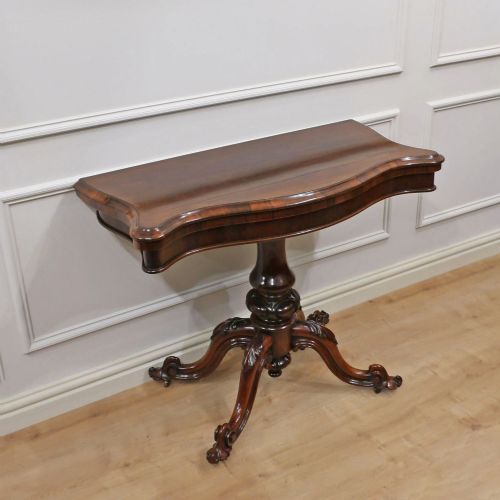

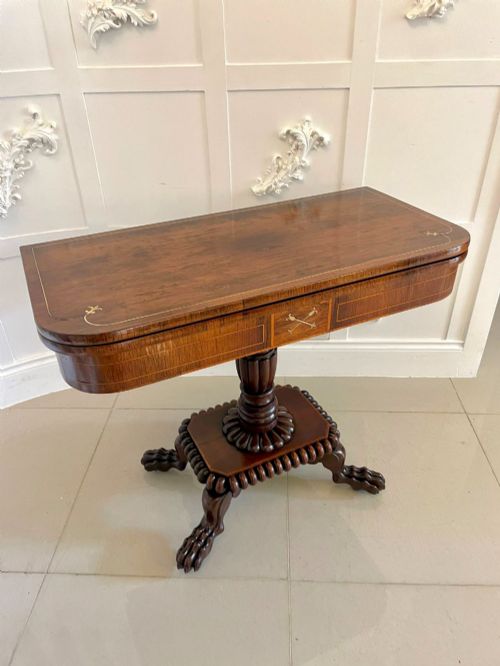
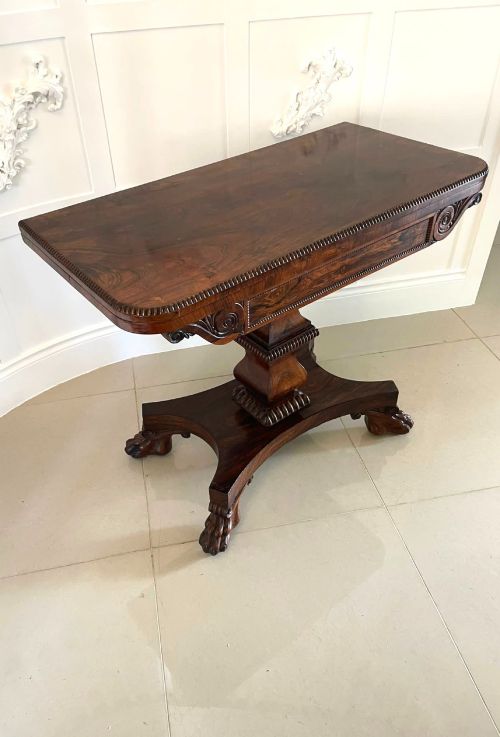
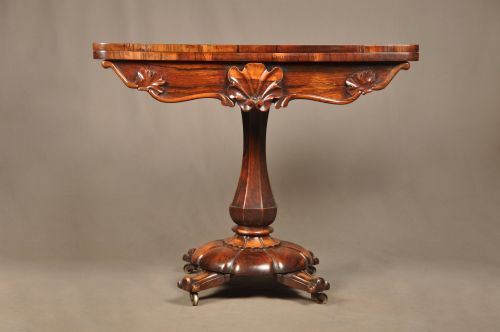
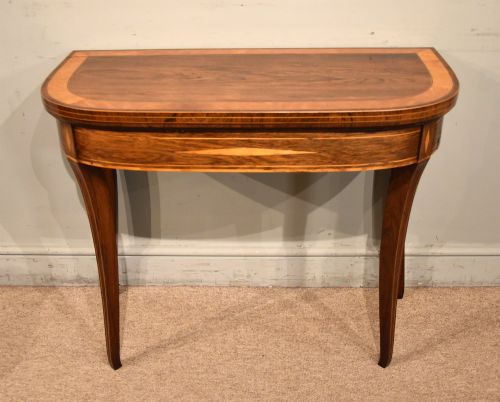
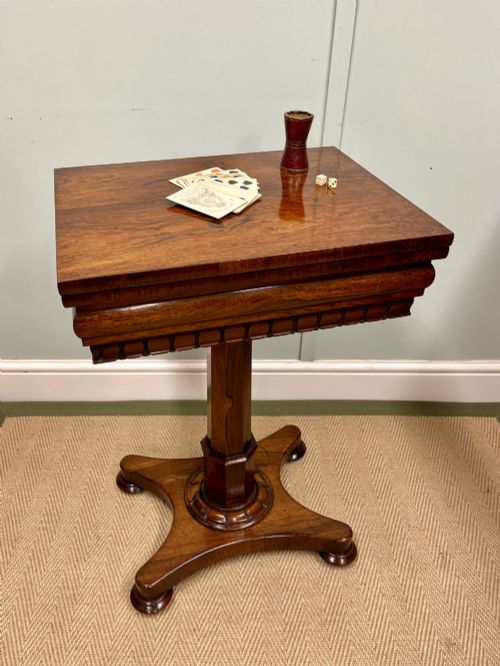
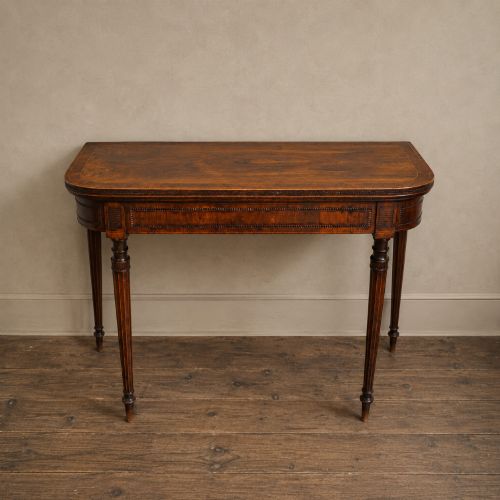
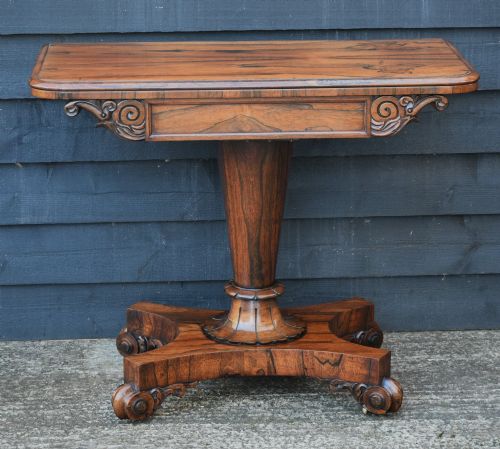
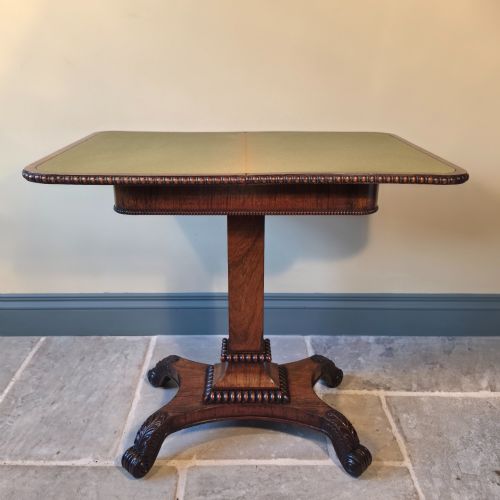
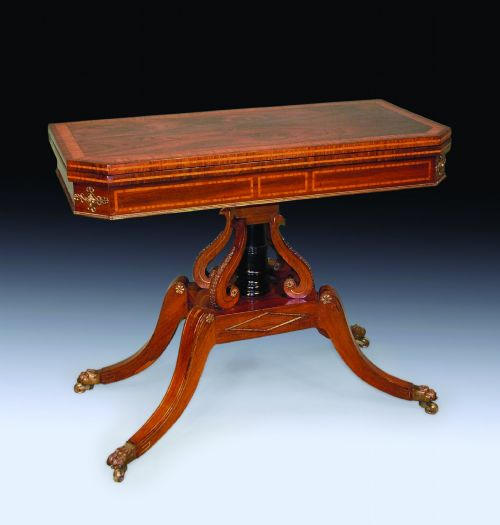
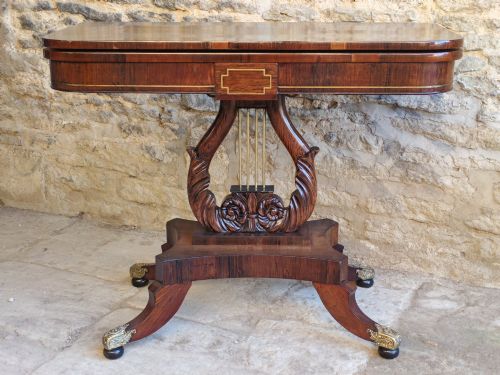
Rosewood Fold Over Table
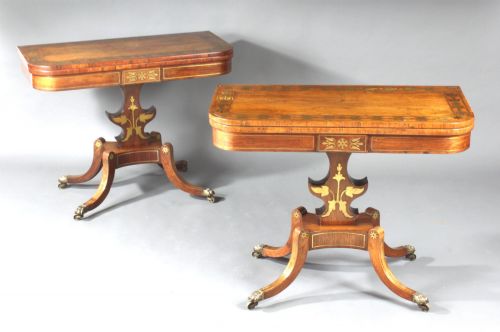
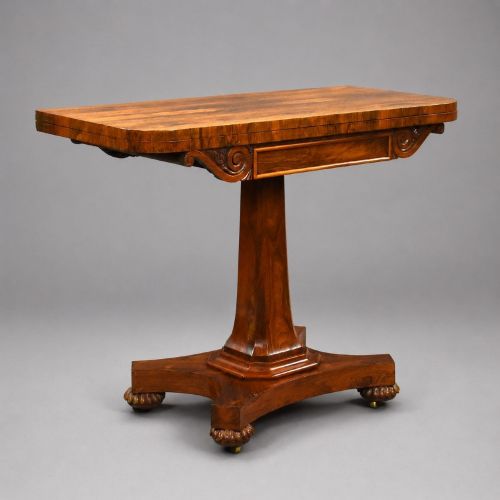
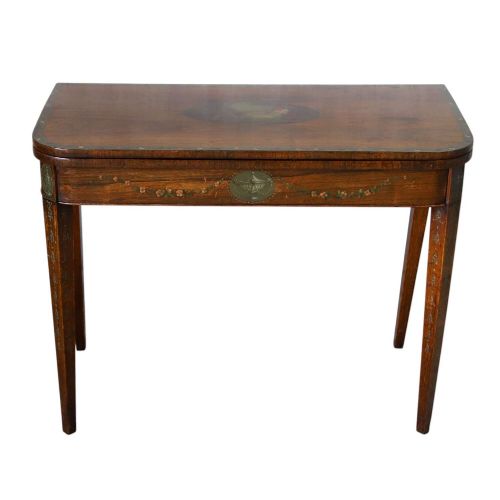
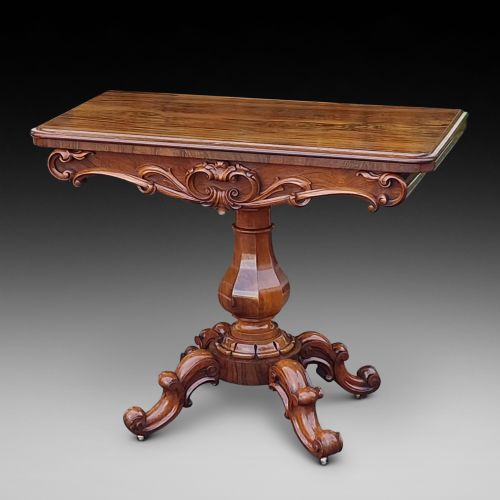
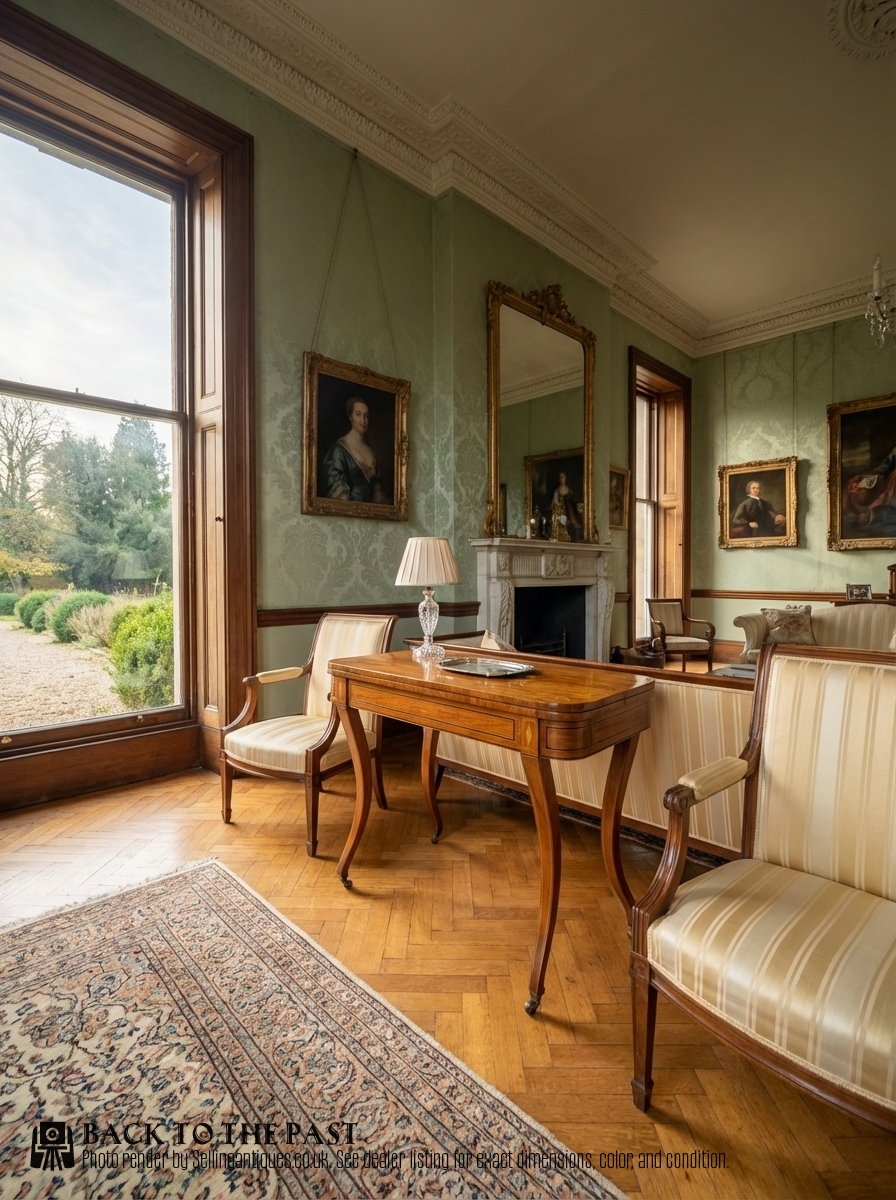
When you examine a rosewood fold over table, you meet a versatile piece of nineteenth-century ingenuity designed to serve as a console, tea service centre or gaming board.
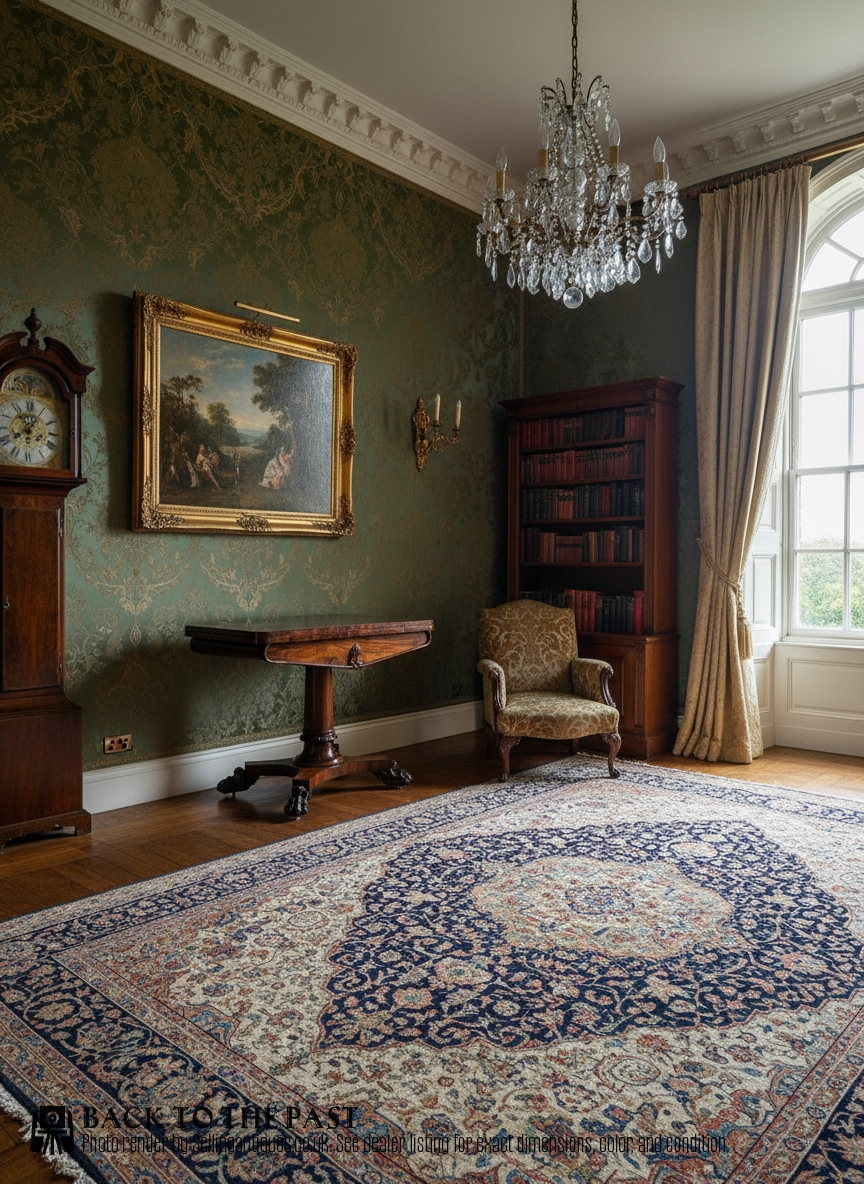
Rosewood Fold Over Table
A rosewood fold over table appears most frequently from the Regency, William IV and Victorian periods, though earlier Georgian examples also emerge in the archive. These dual-purpose items function as compact side or console surfaces when closed, then open on hinges to reveal a larger top supported by a rotating or pivoting mechanism.
The primary forms you encounter are card tables, games tables and tea tables. Card and games variants often retain their original interior lined with baize for playing cards, while tea tables prioritize a polished timber surface for evening hospitality.

Evaluating craftsmanship and execution
The distinction between standard production and top-tier pieces rests on the precision of the cabinetwork and the choice of materials. Superior examples display deeply figured rosewood veneers that align symmetrically across the fold, paired with finely cast brass inlay or gilt mounts rather than plain timber edges.
Proportion and stability dictate overall merit, particularly in the construction of the pedestal and the smooth operation of the pivoting top. Workshops known for high output, such as Gillows, achieve sharper carving details on scroll feet and pedestals compared to anonymous regional makers.
Rosewood Fold Over Table Retail Price Guide 2026
Typical asking prices for rosewood fold over table among the pieces listed under this phrase on Sellingantiques today, from the lower quarter to the upper quarter. They describe what is for sale here now, not the wider market.
Listings feature extensive examples from the Regency and Victorian periods, utilising rosewood, satinwood, brass and baize in card and tea table formats.
George Bullock·Gillows of Lancaster·William Trotter
The Rosewood Fold Over Table Glossary
- Crossbanding
- A decorative border of veneer laid perpendicular to the main grain of the table top. This technique frames the primary rosewood panel with contrasting timbers like satinwood or burr yew.
- Baize
- A coarse woollen felt material used to line the interior of card and games tables. It provides a soft, durable surface for playing cards during evening entertainment.
- Ormolu
- Gilded bronze ornamentation applied to the woodwork of elite tables. It adds metallic contrast to the dark rosewood surfaces.
- Console
- A table designed to stand against a wall, often functioning as a decorative side piece when the top remains folded.
- Pedestal
- A central vertical support column rising from a platform base or feet, replacing traditional four-legged table designs during the Regency and Victorian eras.
Rosewood Fold Over Table: Frequently Asked Questions
What is a rosewood fold over table used for?
These pieces served multiple domestic functions in nineteenth-century drawing rooms and parlours. Closed, they operated as side or console tables against a wall.
Opened, the hinged top doubled the surface area to accommodate tea services or card games with integrated baize playing surfaces.
How do I tell a card table from a tea table?
Card tables generally feature a lined interior of green or red baize designed to cushion the placement of playing cards and counters. They frequently include small internal wells for holding coins or game markers.
Tea tables present a polished wooden surface across both interior leaves, intended to display porcelain and silver during evening entertaining.
Which periods are these tables from?
The majority of pieces date from the Regency, William IV and Victorian eras, spanning the early to mid-nineteenth century. Earlier examples trace back to the Georgian period.
Stylistic shifts move from classical brass inlay and scroll pedestals under Regency influence toward heavier carved proportions in the Victorian era.
How do I care for antique rosewood?
Protect the polished timber surfaces by keeping the table away from direct sunlight and strong heat sources. This prevents the rosewood veneer from drying out or splitting.
Maintain the finish by dusting gently with a dry cloth and avoiding modern liquid polishes or silicone cleaners.