
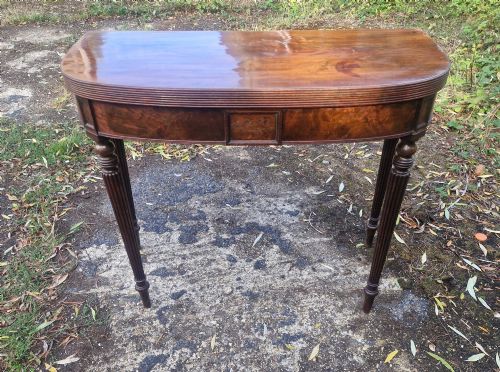
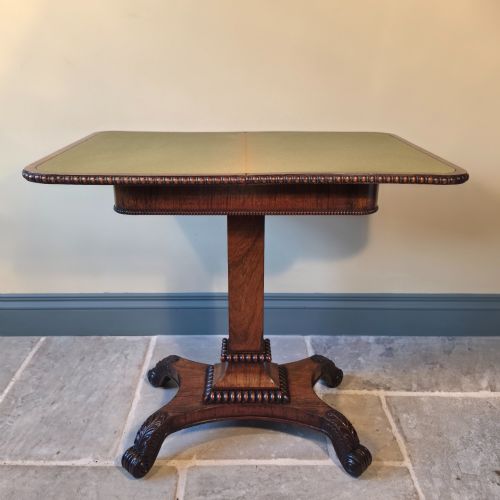


Gillows Card Table
A gillows card table brings together precise Lancaster cabinet-making, rich rosewood and mahogany, and clever folding tops designed for nineteenth-century drawing rooms.
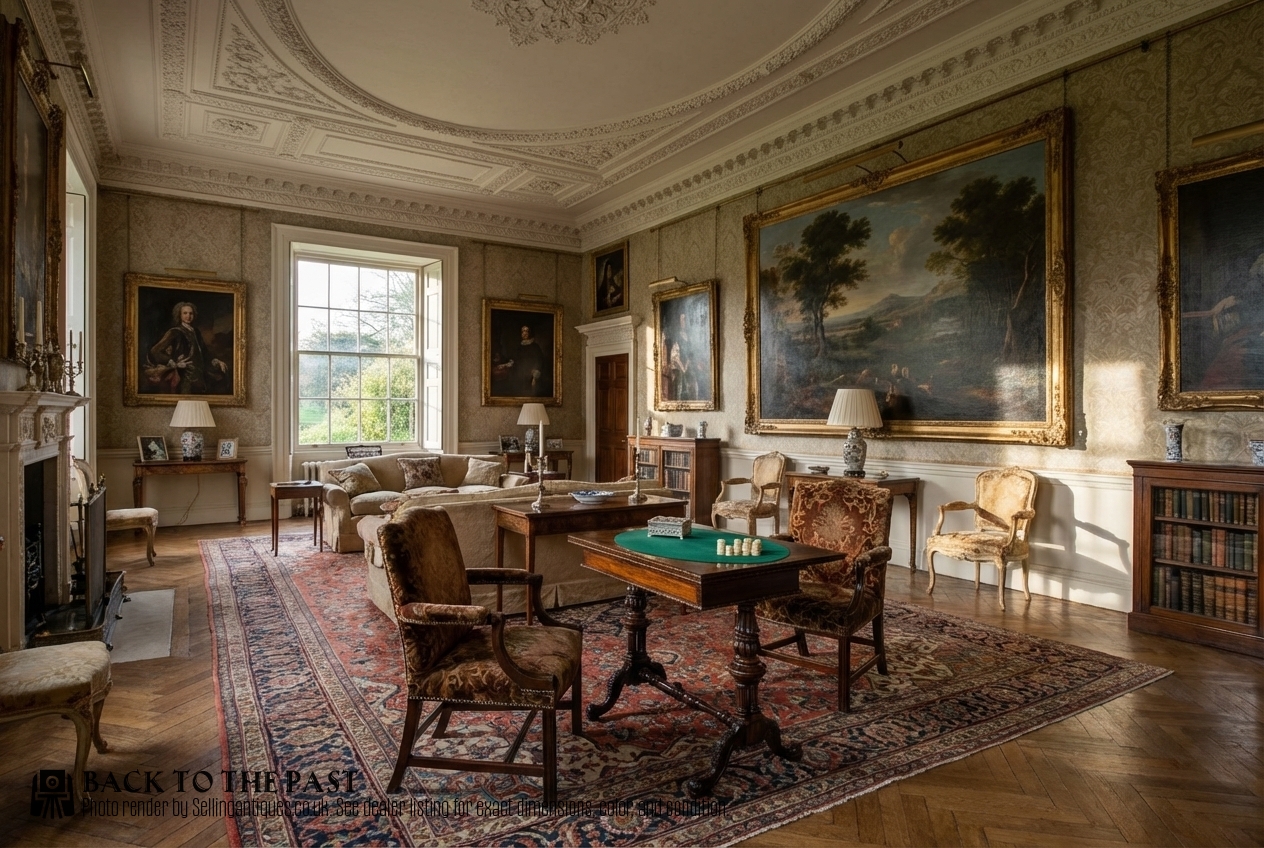
Gillows Card Table
A gillows card table is a hinged, fold-over piece designed for games and social gatherings, appearing most frequently from the Regency and William IV periods in mahogany, rosewood, and burr walnut.
Buyers encounter these tables in various forms, including dedicated card and games tables, tea tables, and occasional pieces bearing the distinctive hallmarks of the Lancaster and London workshops.
The evidence shows examples ranging from early nineteenth-century mahogany and rosewood constructions to later Victorian interpretations in walnut and oak.
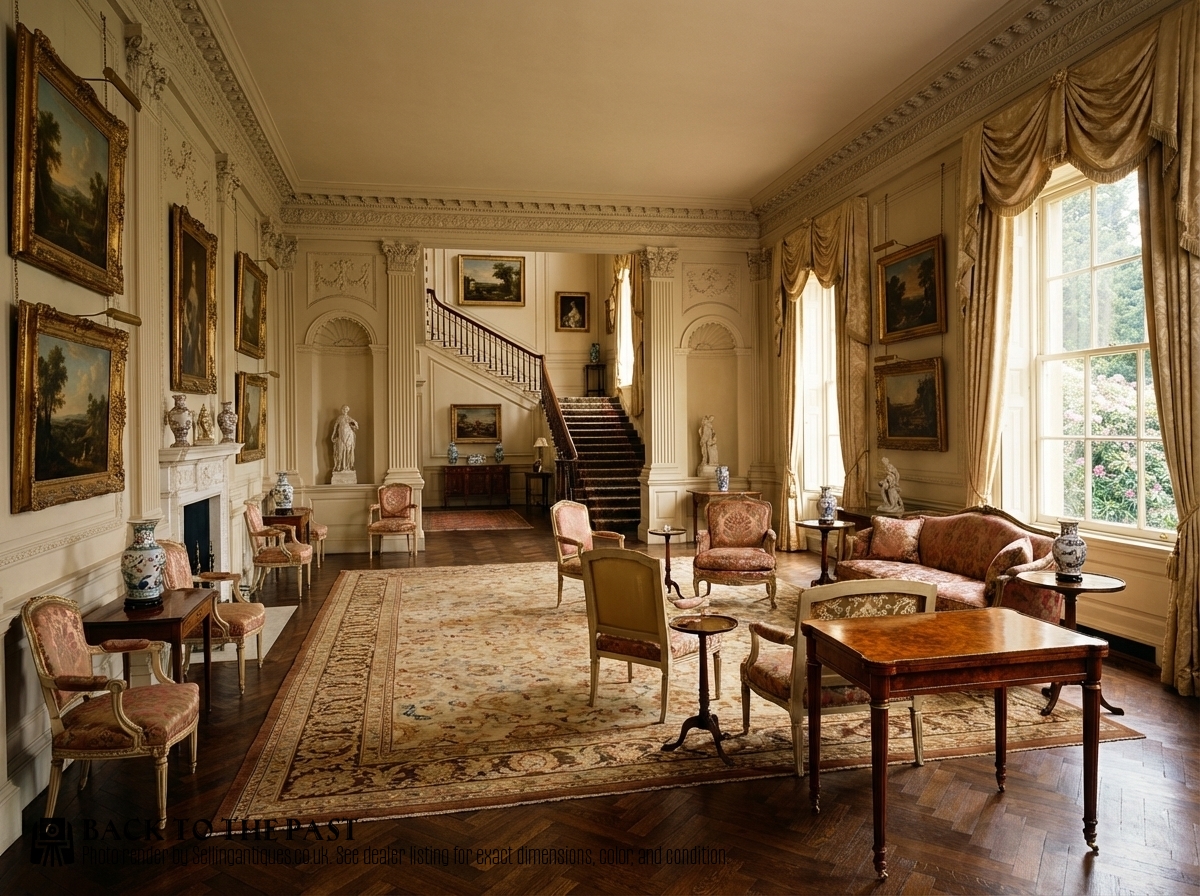
Materials and construction
Cabinet-makers relied heavily on dense timbers like mahogany and rosewood, frequently incorporating exotic veneers such as Goncalo Alves, satinwood, and burr walnut across the surfaces.
Metal detailing played a key role in embellishing the design, with brass inlay and gilt-bronze mounts appearing alongside traditional baize-lined playing surfaces inside the fold-over tops.
Gillows Card Table Retail Price Guide 2026
Typical asking prices for gillows card table among the pieces listed under this phrase on Sellingantiques today, from the lower quarter to the upper quarter. They describe what is for sale here now, not the wider market.
The documented pieces span the Regency, William IV, and Victorian periods, utilising rosewood, mahogany, burr walnut, and Goncalo Alves.
Distinctions in quality
Quality rests in the crispness of the timber figuring, the weight of the rosewood or mahogany, and the presence of documented stamps or recognised design characteristics from the Lancaster firm.
Superior examples display refined brass inlay, intricate marquetry, and precise joinery on the folding mechanism, separating fully attributed pieces from generalized regional interpretations.
Gillows of Lancaster·Gillow
The Gillows Card Table Glossary
- Fold-over top
- A hinged table surface that opens to double its size, revealing a baize-lined interior for card games. This mechanism forms the defining characteristic of the category.
- Goncalo Alves
- A dense, highly figured tropical hardwood with distinct dark brown striping, utilised on select Regency gaming tables. It provides a striking alternative to standard rosewood.
- Baize
- A coarse woolen fabric used to line the playing surface of card and games tables. It offers a soft texture that protects counters and playing cards.
- Marquetry
- Decorative patterns formed by inserting pieces of contrasting veneer into a wood foundation. This technique appears on elaborate Victorian examples.
- Reeded legs
- Cylindrical supports carved with parallel convex mouldings running vertically. They frequently appear on early nineteenth-century mahogany and rosewood formats.
Gillows Card Table: Frequently Asked Questions
What is a gillows card table used for?
These pieces served as multi-functional furniture in nineteenth-century drawing rooms, functioning primarily as side tables or console tables when closed against a wall.
When guests arrived, the hinged top folded open to create a stable surface for card games, writing, or social entertainment.
How do I identify a Gillows stamp?
Workshop pieces sometimes carry an impressed signature directly into the wood framing, usually reading the firm's name near the drawer edges or under the rails.
Many genuine examples lack an ink stamp or physical signature, requiring stylistic attribution based on leg turning, timber choice, and cabinet-making structure.
What woods were used for these tables?
Mahogany dominated the earlier Georgian and Regency periods, prized for its strength and deep red tones during the initial decades of production.
Rosewood and burr walnut became prominent as fashion shifted toward heavily figured exotic veneers and rich dark surfaces in the nineteenth century.
How do I care for a rosewood card table?
Keep the wood away from direct sunlight and heat sources to prevent the rosewood veneers and delicate brass inlay from drying out or cracking.
Dust regularly with a dry cloth and maintain stable indoor humidity to protect the antique polish and the internal folding hinges.