




Gillows Rosewood Table
When you search for a gillows rosewood table, you are looking at nineteenth-century craftsmanship that combined fine timbers with functional elegance for domestic spaces.
Gillows Rosewood Table
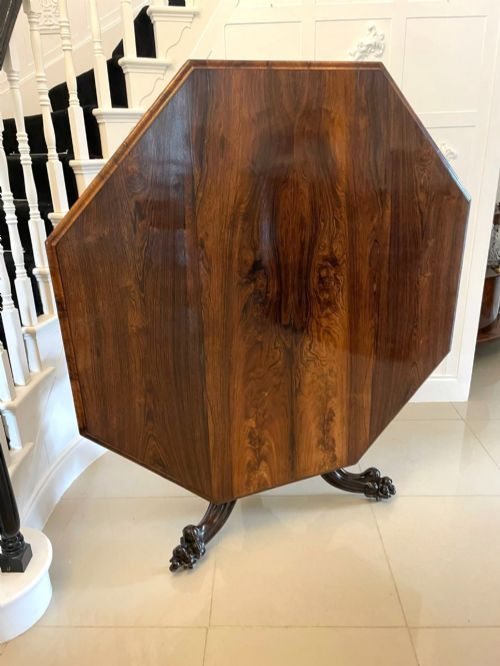
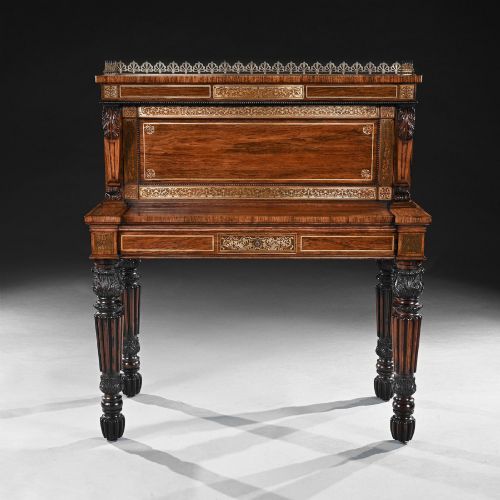
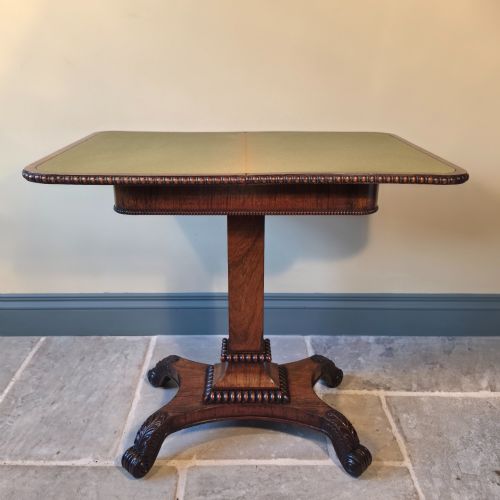
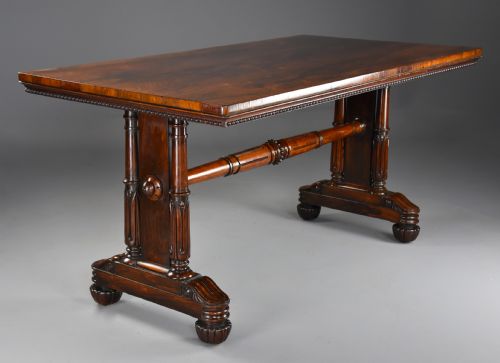
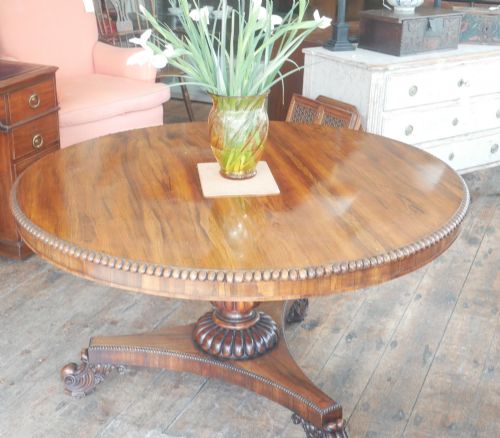
A gillows rosewood table encompasses a variety of domestic forms produced during the nineteenth century, ranging from card and games tables to large library and centre tables. These pieces reflect the output associated with the prominent Lancaster and London workshops, often appearing in Regency, William IV, and early Victorian styles.
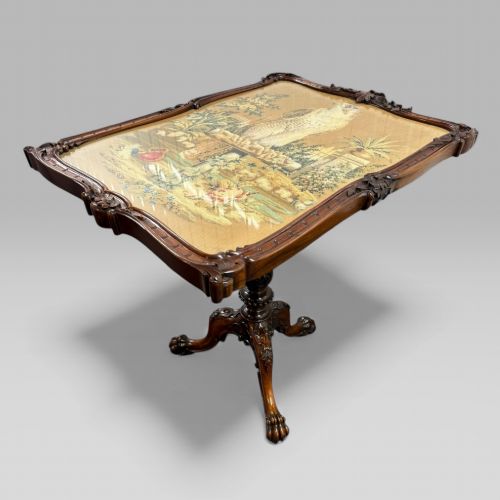
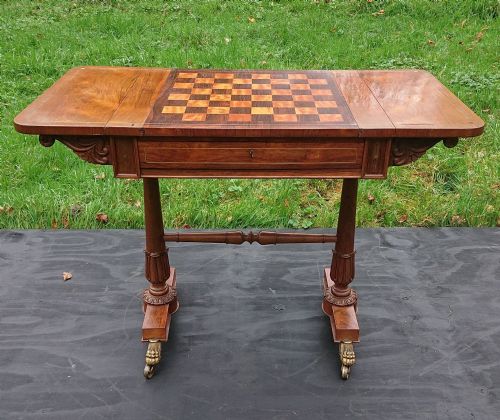
Buyers will encounter multiple functional variants on this page, including work tables fitted for sewing, writing tables with leather or fabric inserts, and occasional tripod tables. The selection demonstrates how these furniture makers adapted rosewood to suit different rooms within period homes.
Attributions range from documented pieces bearing stamps to works attributed based on characteristic design traits and proportions. The presence of secondary woods such as mahogany or albuera wood alongside rosewood further helps identify the origin of these tables.
How they were made
Makers constructed these tables using dense tropical hardwoods, predominantly rosewood, selected for its rich grain and deep colour. Secondary timbers like mahogany provided structural stability for frames and drawer linings.
Decorative techniques recorded in the evidence include brass inlay, parcel gilt highlights, and finely carved pedestal bases. Joinery methods such as tilt-top mechanisms and drop-leaf hinges allowed functional versatility in furniture like card tables and work tables.
Listings feature rosewood combined with brass, mahogany, and leather across nineteenth-century styles.
What varies in quality
The degree of refinement in carving and the selection of figured rosewood veneer distinguish finer examples from standard production. Tables featuring intricate brass inlay, complex mechanism fittings, or documented workshop stamps typically represent a higher tier of execution.
Proportion and structural integrity also separate pieces within the range, as well-balanced proportions on library and centre tables indicate careful design. The integration of specialised components like removable chess boards or fitted sewing compartments demonstrates the ambition of the original workshop.
Gillows of Lancaster·Gillows of Lancaster and London·John Mclean
The Gillows Rosewood Table Glossary
- Rosewood
- A dense, dark timber featuring pronounced dark grain figuring, widely utilised for high-end nineteenth-century cabinet making. It polishes to a deep lustre that enhances the visual weight of large library and centre tables.
- Centre table
- A freestanding table designed to be viewed from all sides, placed in the middle of a room rather than against a wall. These forms often served multifunction purposes such as dining, reading, or display.
- Card table
- A folding table with a hinged top that opens to reveal a surface lined with baize or leather for gaming. They frequently incorporate clever pivoting mechanisms to support the opened top.
- Quartetto tables
- A nested set of four small tables designed to slide one beneath another when not in use. They became popular during the Regency period for serving tea or holding small objects.
- Albuera wood
- An alternative timber recorded alongside rosewood in specific nineteenth-century workshop pieces. It possesses distinctive grain characteristics utilised by cabinet makers of the period.
Gillows Rosewood Table: Frequently Asked Questions
How do I identify a Gillows table?
Look for distinctive construction methods, characteristic Regency or William IV styling, and occasional stamps on the timber or drawer frames. Many pieces are attributed based on close similarities to documented works from the Lancaster and London workshops.
Attributions also rely on specific hardware patterns, timber selection such as figured rosewood, and refined carving details that match known pieces produced by the firm.
What is a rosewood work table used for?
A rosewood work table was originally designed for sewing, needlework, and light writing tasks within nineteenth-century drawing rooms. They usually feature internal compartments, small drawers, and hanging fabric bags beneath the top.
Today, these versatile small tables function well as lamp tables or bedside surfaces while retaining their historical compartments and drop-leaf designs.
How do I tell Regency from Victorian tables?
Regency tables, dating from the early nineteenth century, typically exhibit restrained classical proportions, brass inlay, and saber legs. They reflect the influence of ancient Greek and Roman design.
Victorian tables from later in the century tend to feature heavier carving, more robust proportions, and different pedestal configurations while continuing to utilise dark rosewood timbers.
Where should I place a centre table?
A centre table is designed to sit freestanding in the middle of a room rather than pushed against a wall. This allows the piece to be appreciated from all angles, displaying its finished rosewood back and detailed pedestal.
In modern interiors, they work effectively in larger hallways, libraries, or living spaces where they can serve as a focal point for lamps or decorative objects.