20,567  PAGES BROWSED TODAY PAGES TODAY 99 ANTIQUES UPLOADED TODAYNEW ARRIVALS
99 ITEMS ADDED TODAY
Sort Order
Items Per Page
Browse Categories
Sort order
Relevant Links
Items per page
ID #SA1221373
FOR SALE
£7,500
Email
Save
Antique William IV Gillows Carved Rosewood Tilt Top Tripod Table Fire Screen
Knight Fine Antiques and Collectables
for sale €8,775     $9,525
£7,500
Knight Fine Antiques and Collectables

Knight Fine Antiques and Collectables

Sellingantiques Verified Since Aug 2024
View Dealers Stock Page
Id #SA1221373
PDF SHARE
SAVE

Antique William IV Gillows Carved Rosewood Tilt Top Tripod Table Fire Screen

19th century
Description

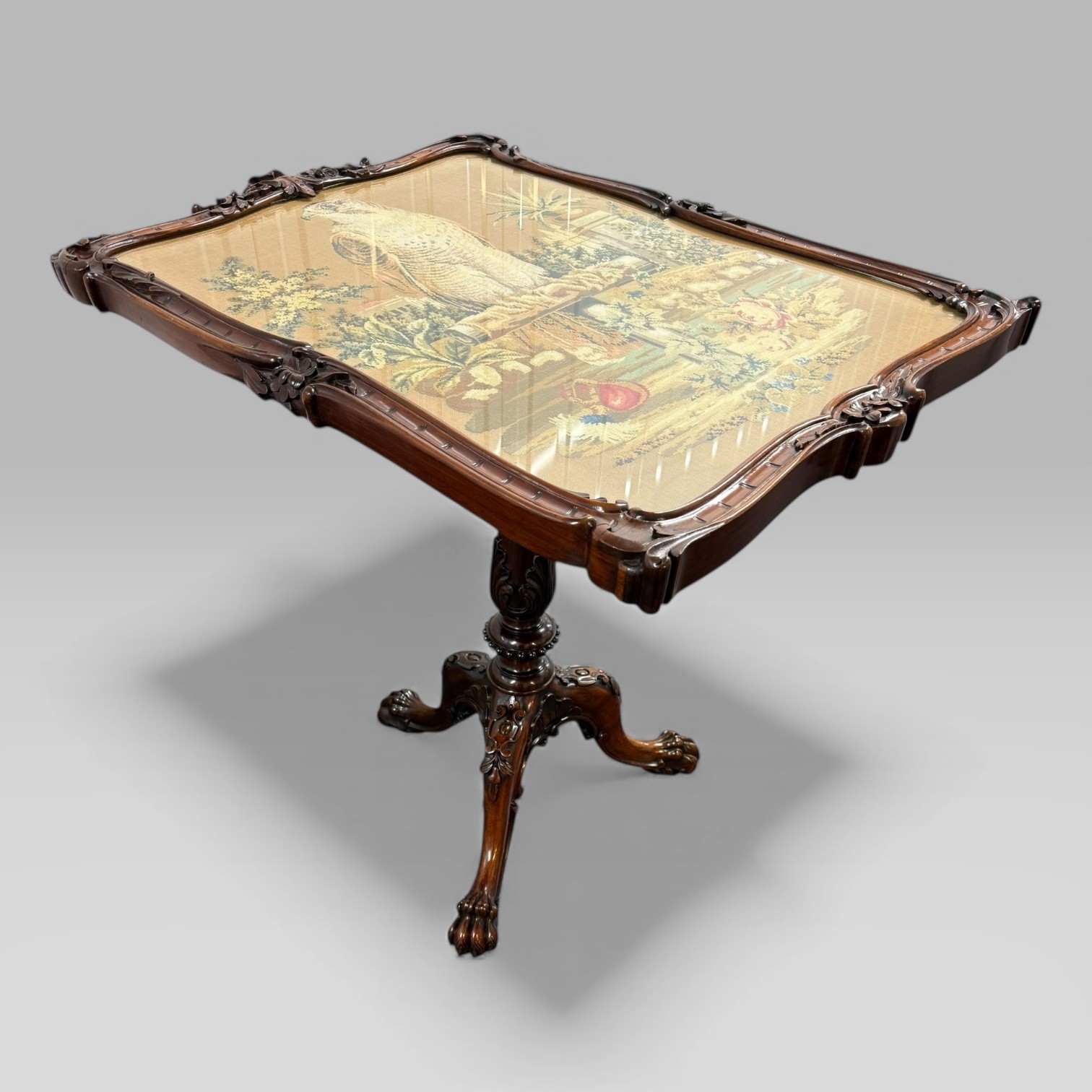
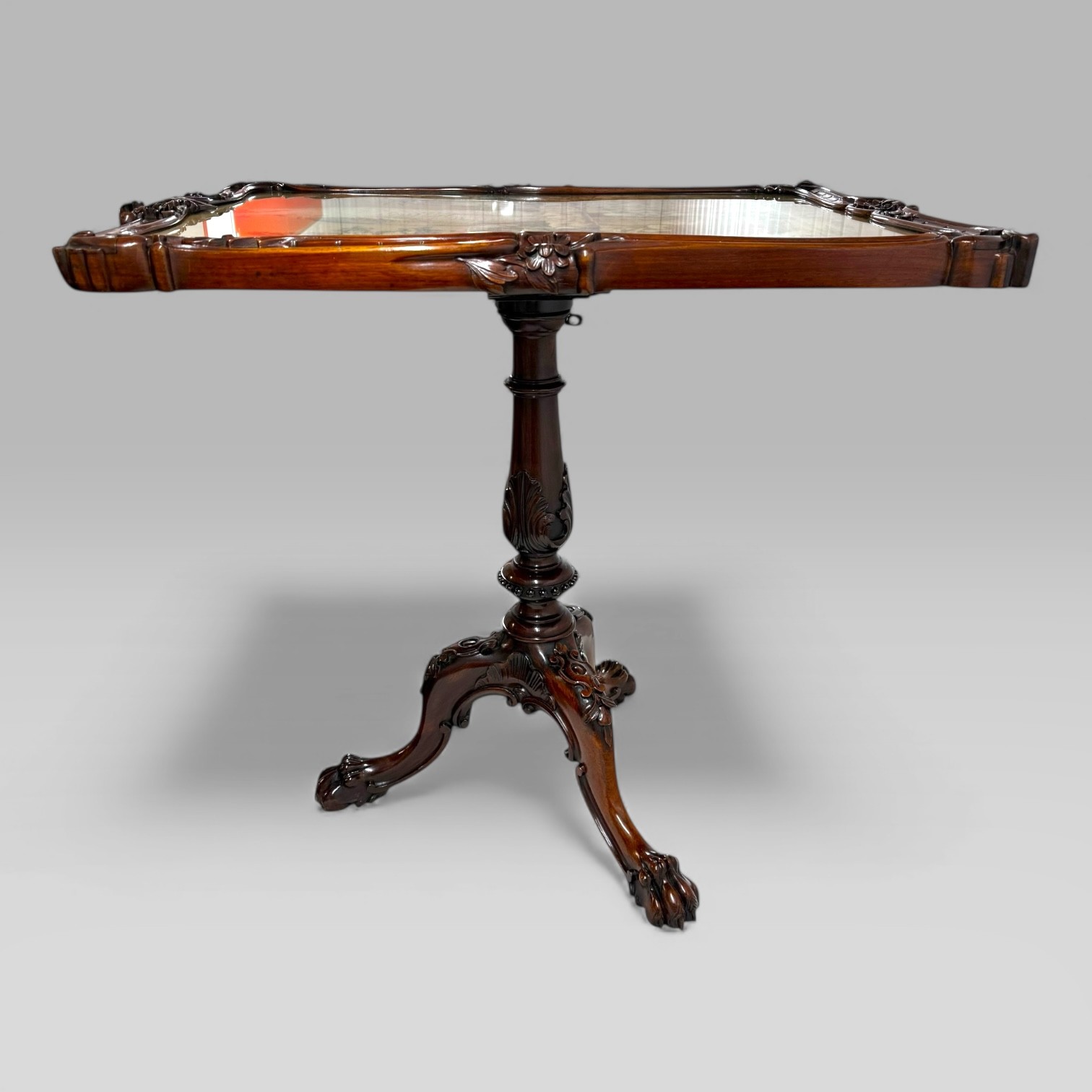
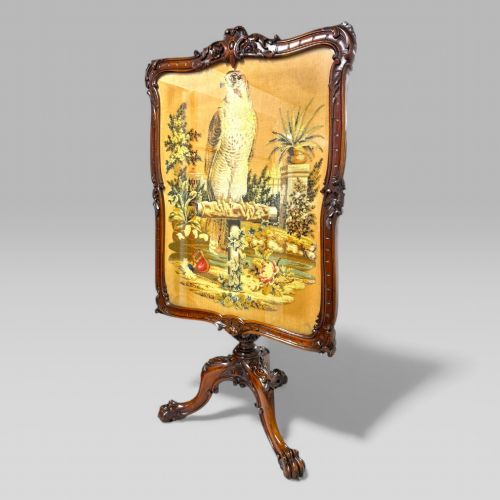
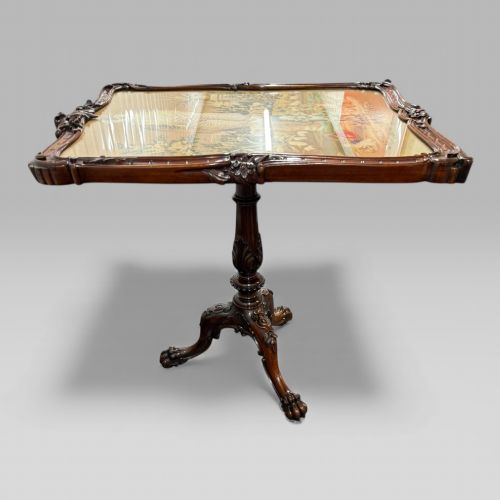
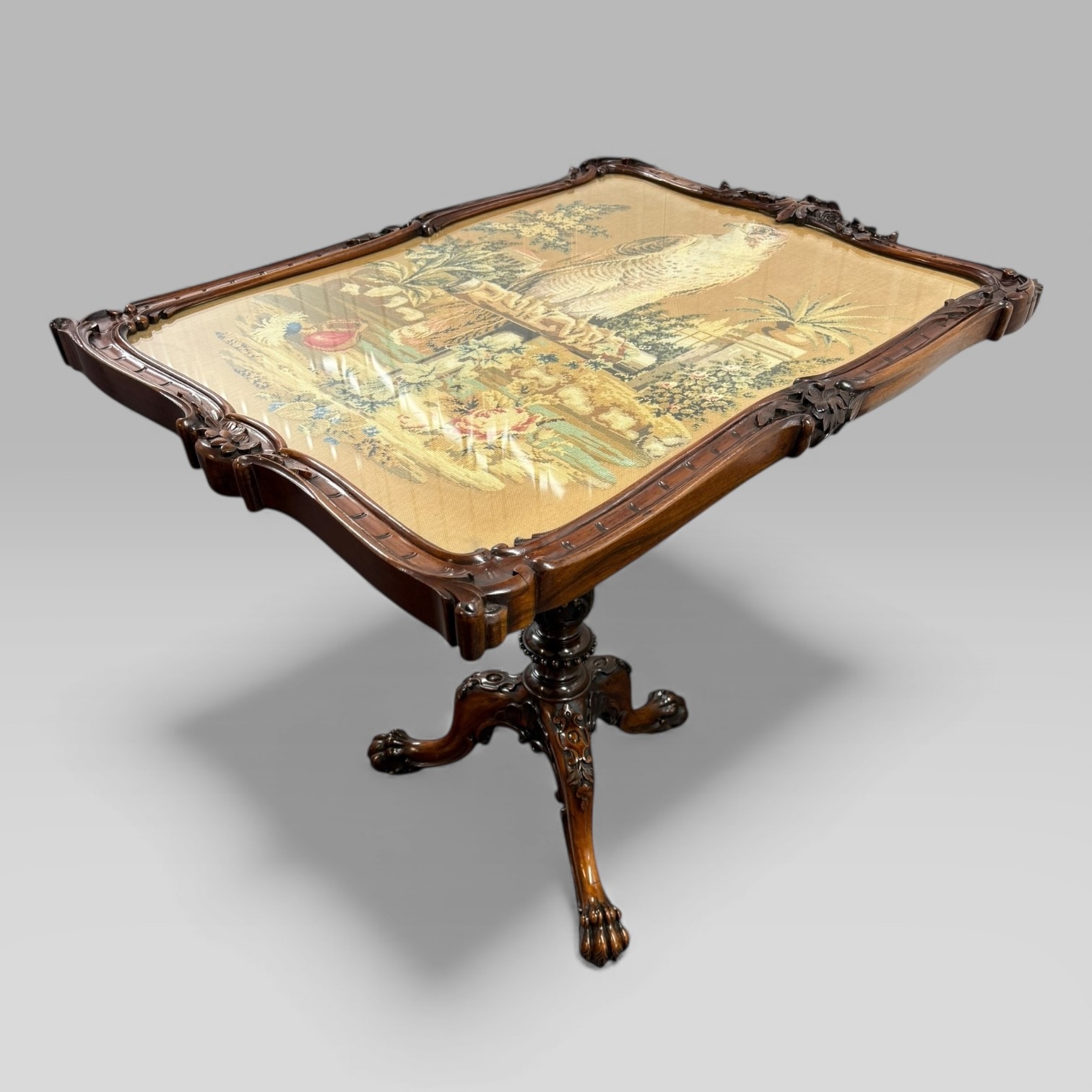
Made by one of Britain’s most esteemed cabinet-making firms, this is a fine English William IV (1830–1837) rosewood carved tilt top table, executed in the manner of Gillows of Lancaster.

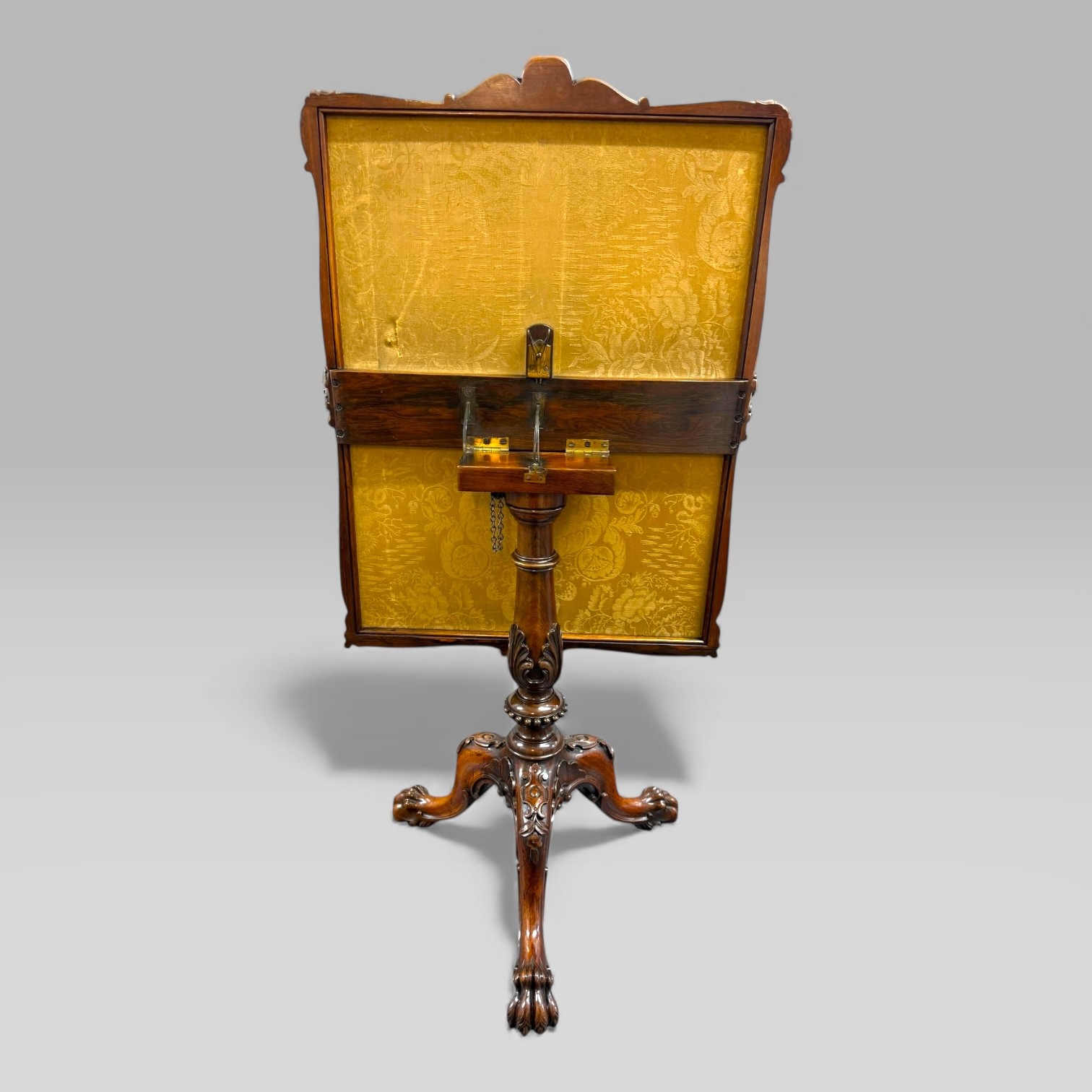
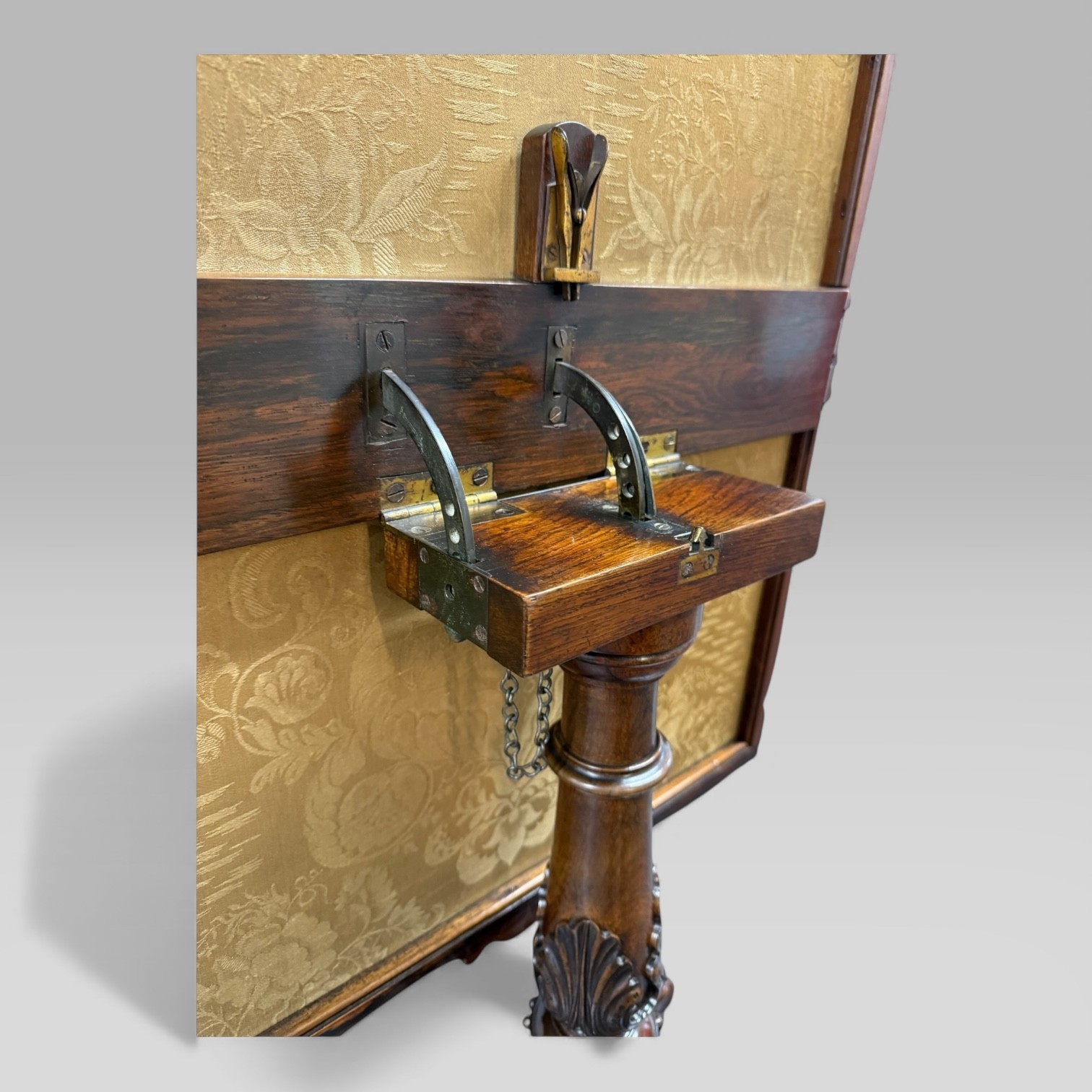
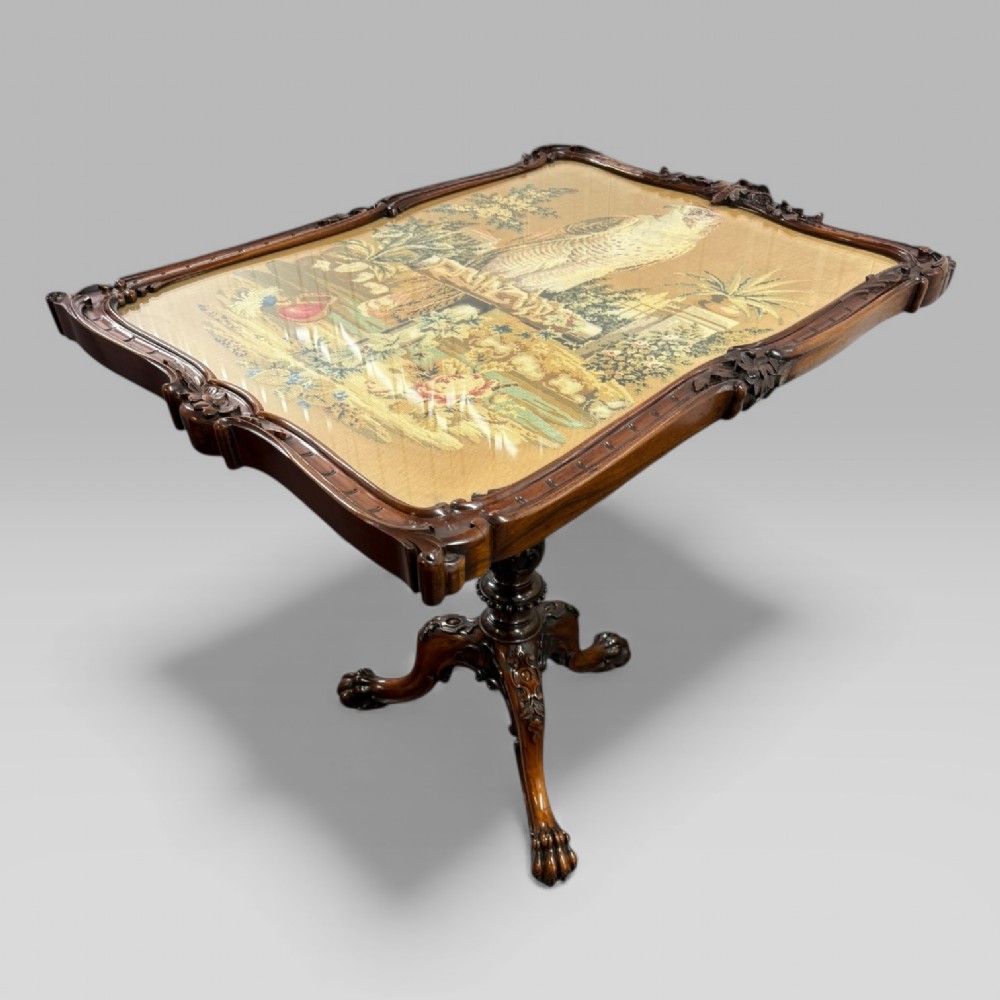
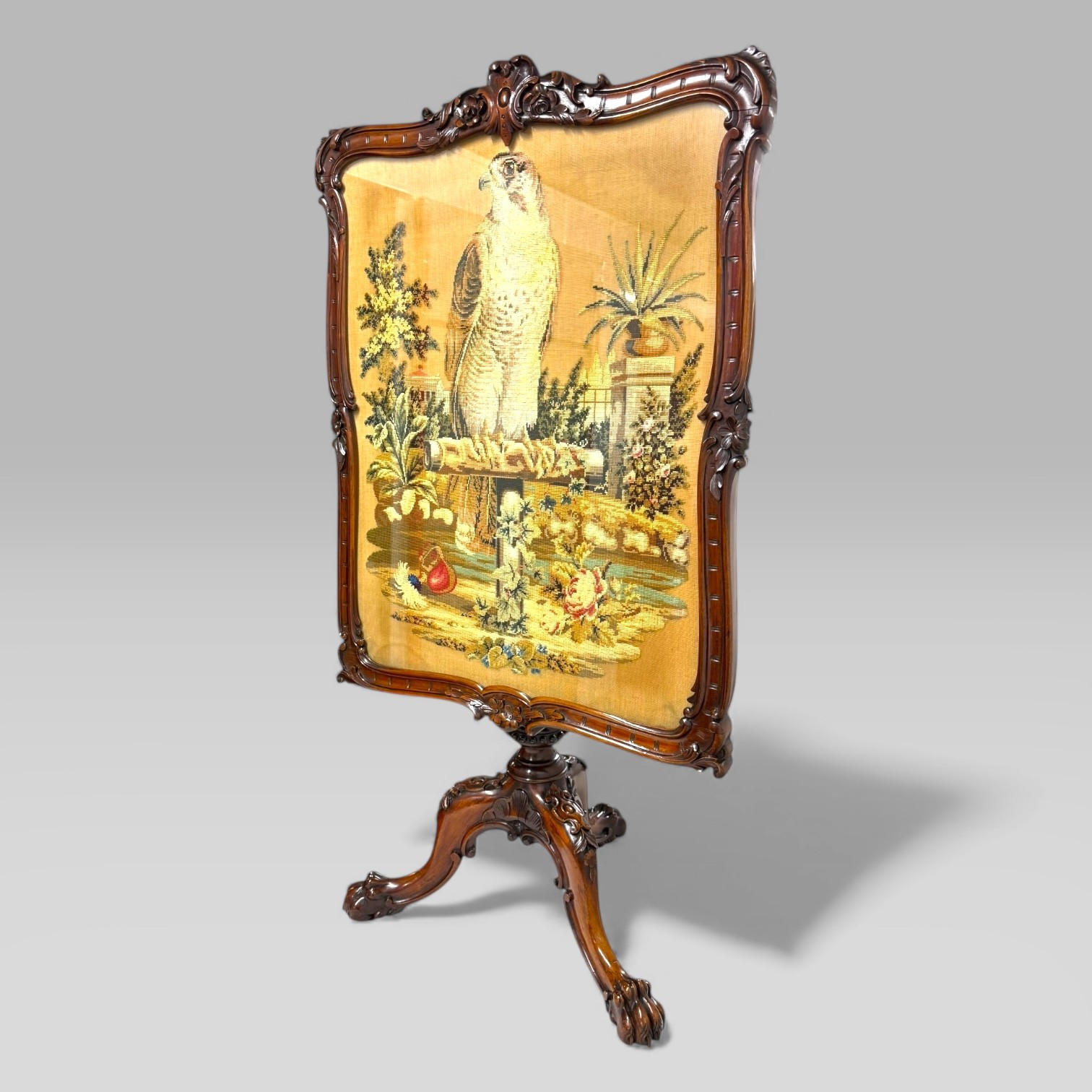
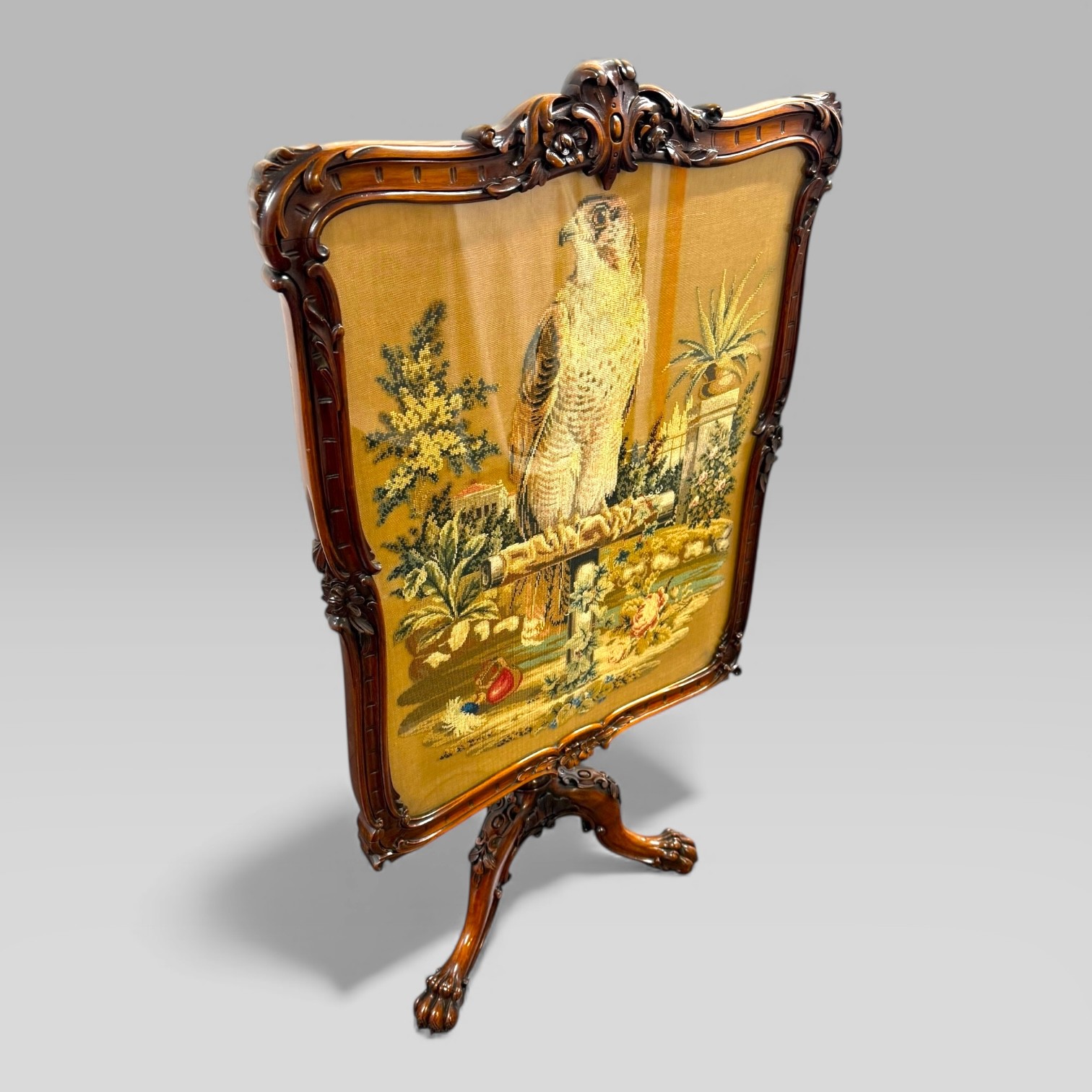
The piece is conceived primarily as a side table of superb quality, distinguished by a rectangular top framed with finely carved floral detail. At the centre lies a glass-protected panel enclosing a needlework scene of considerable charm. Ingeniously designed, the top can be tilted upright, allowing the table to serve as a fire screen when required. This dual function demonstrates the practical ingenuity and refined aesthetic characteristic of Gillows’ work.
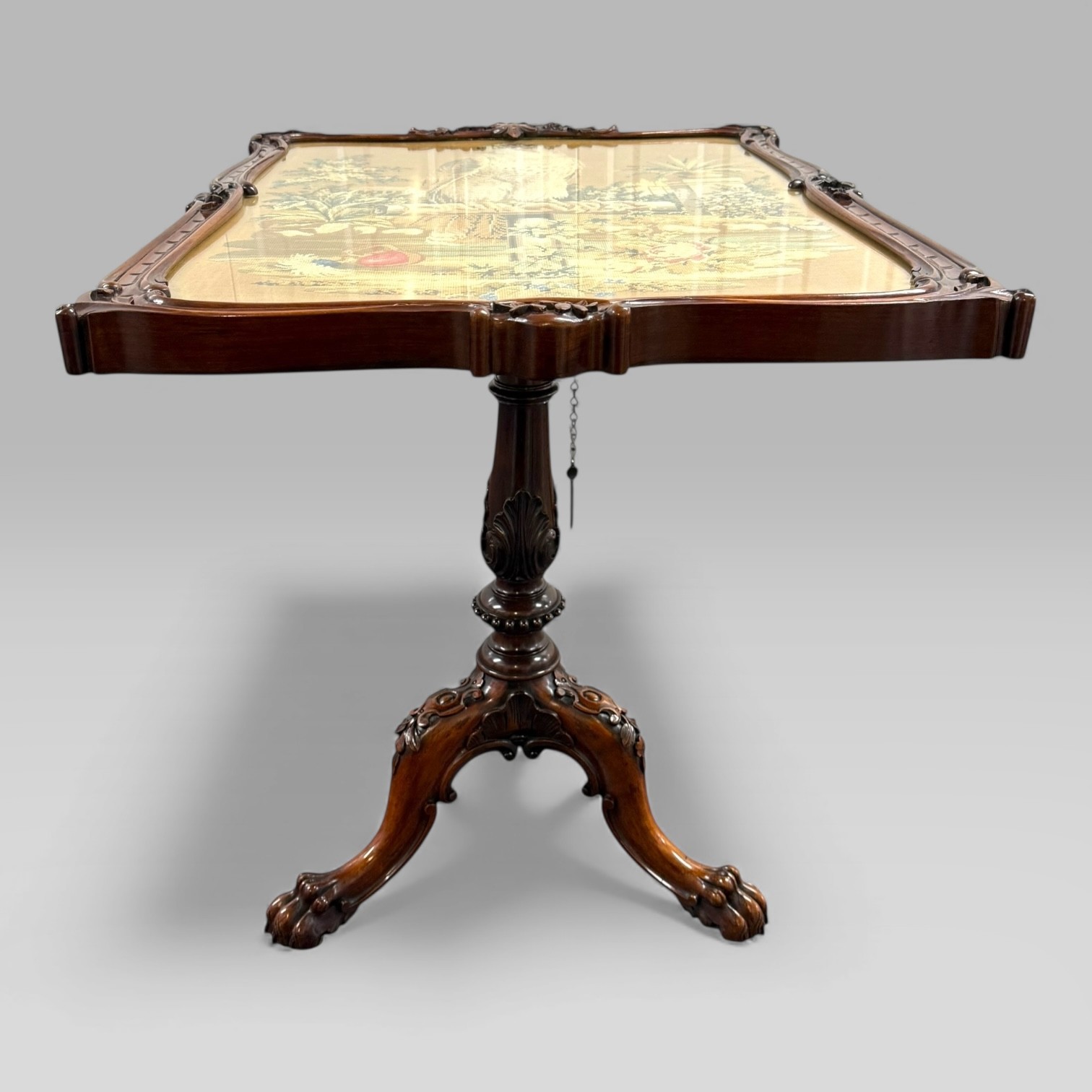
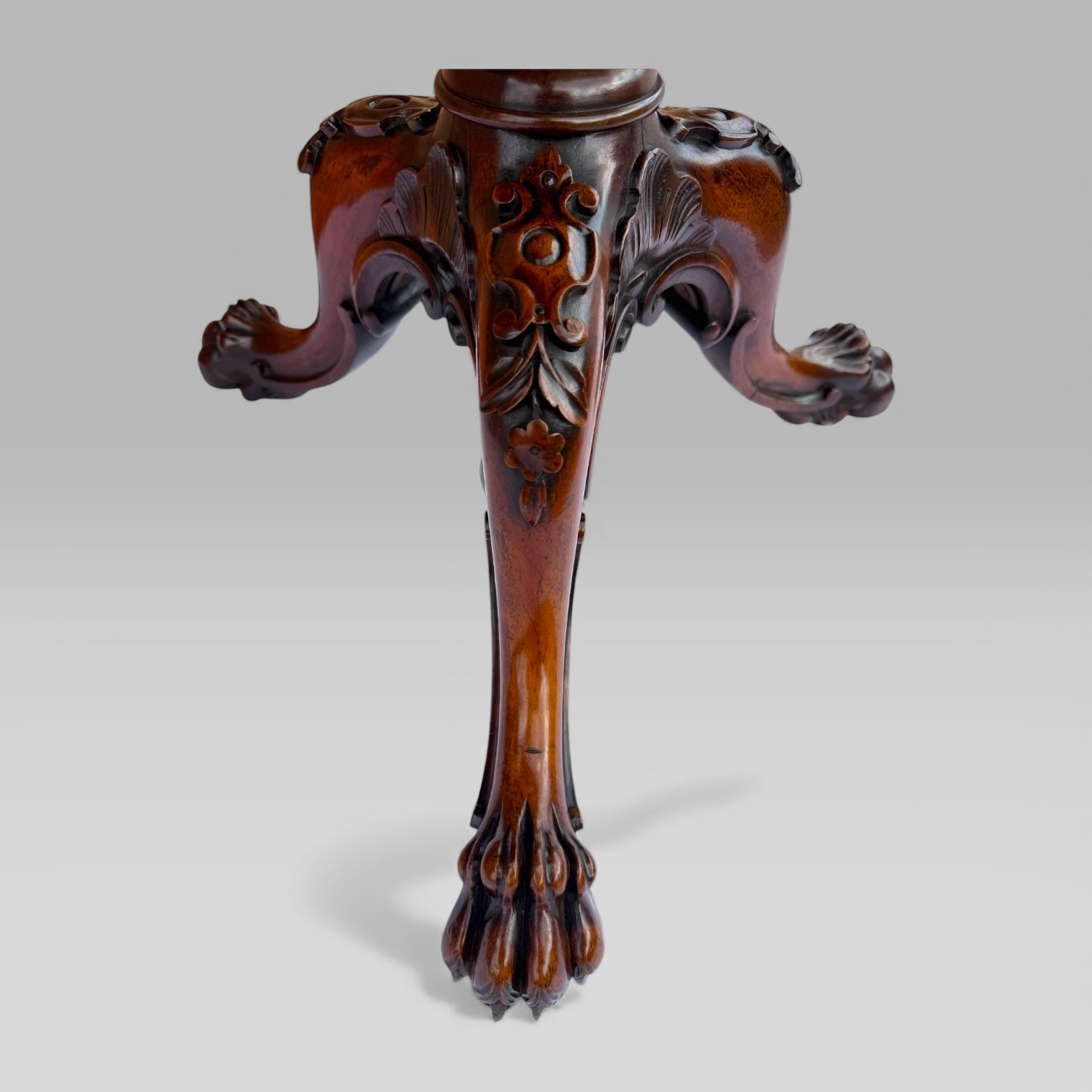
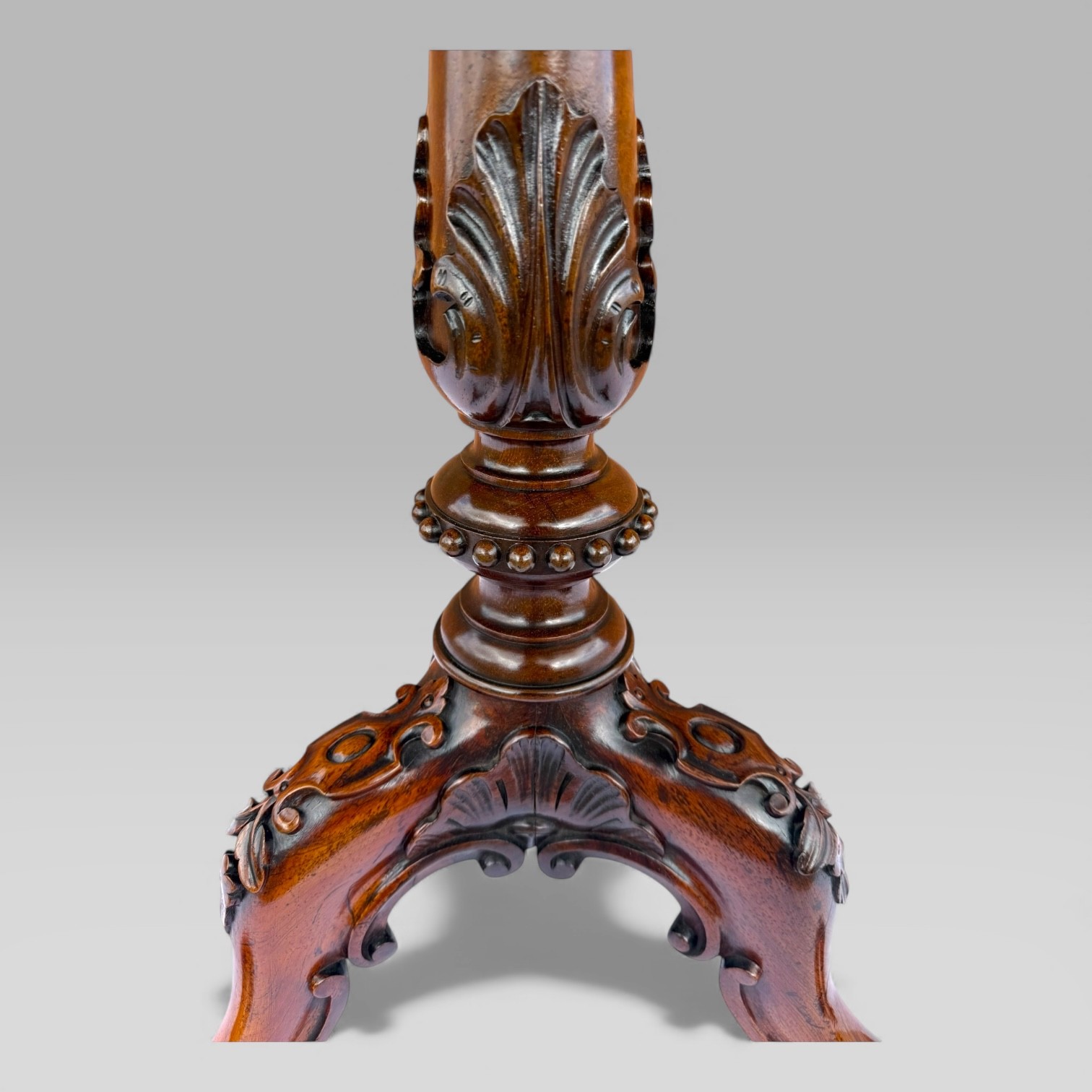
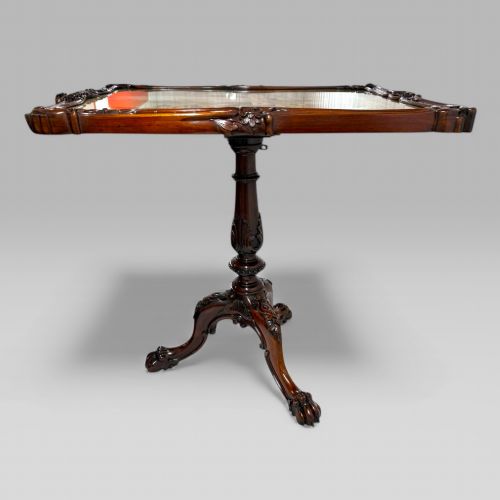
The tripod base is a particular highlight, exceptionally carved and terminating in well-defined paw feet, each set on the original “Cope’s Patent” brass casters—an innovation valued in the early 19th century for both durability and ease of movement. The overall execution of the carving, with its precision and depth, reflects the highest standards of Gillows’ workshop.
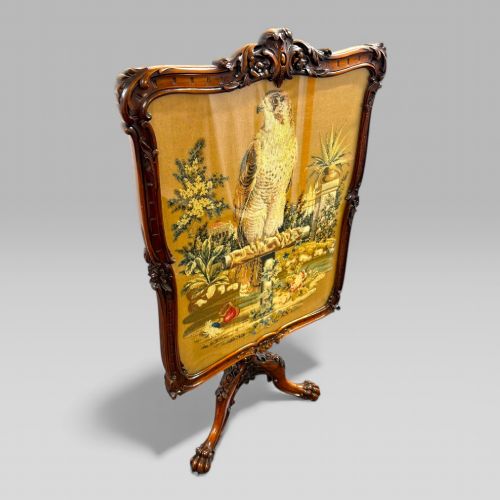
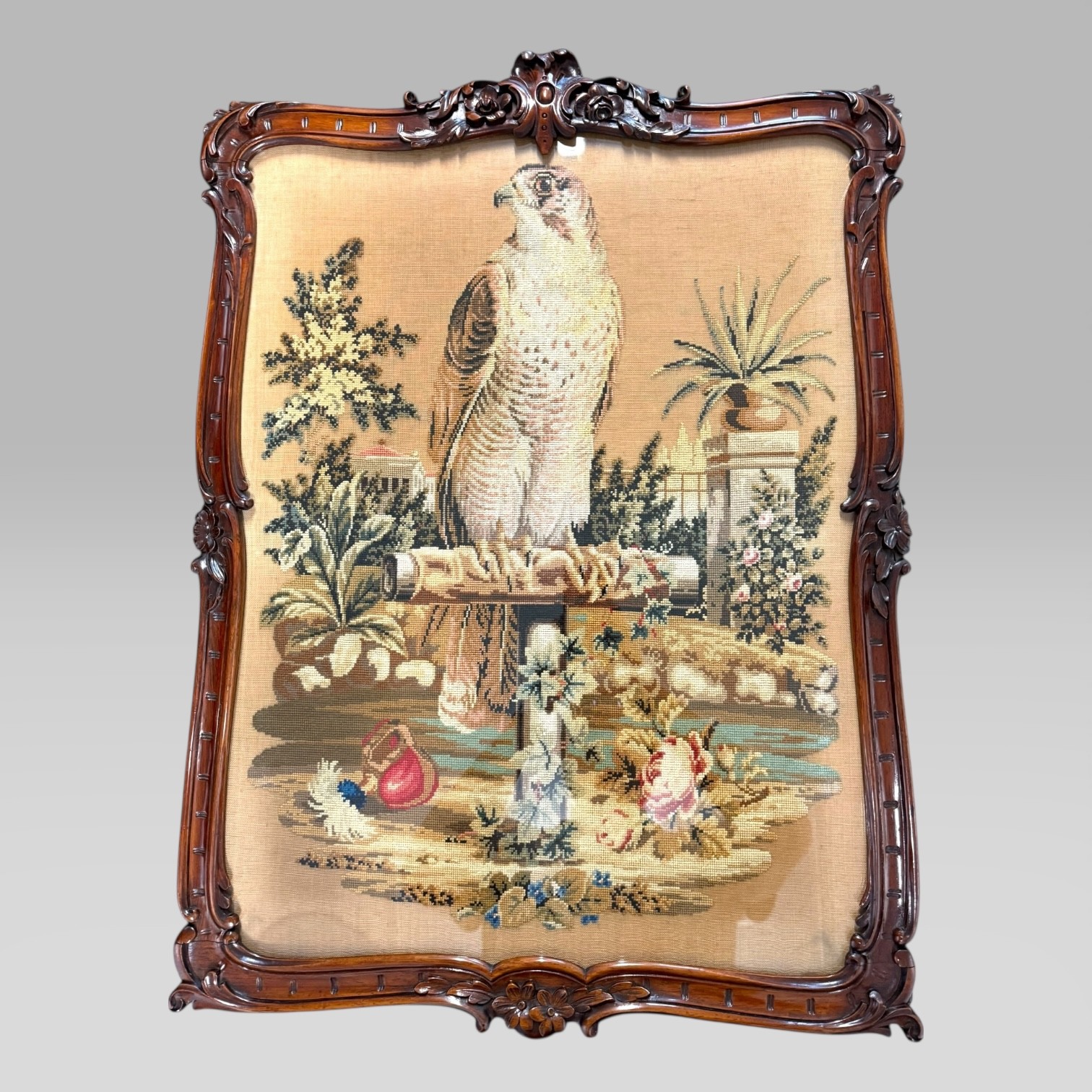
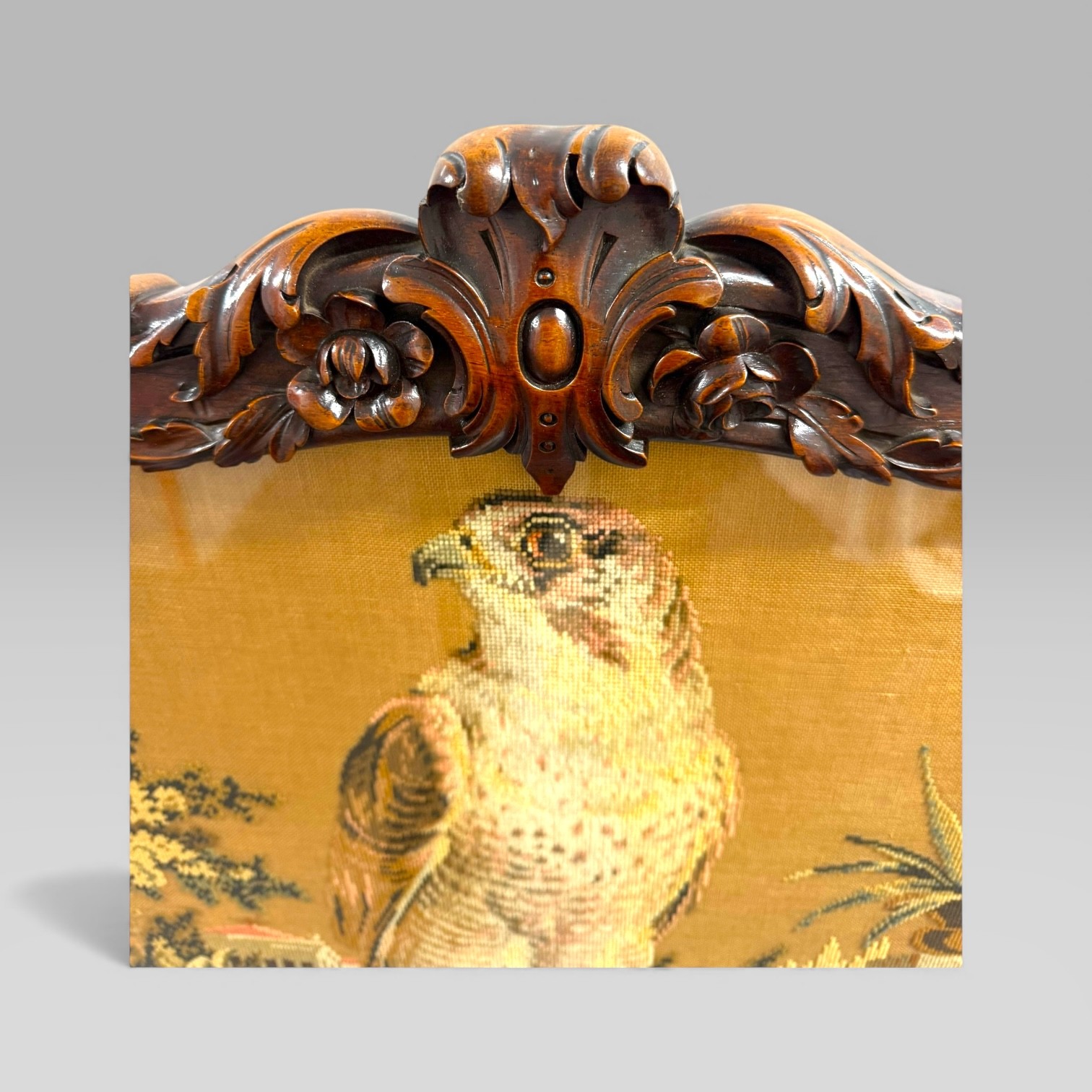
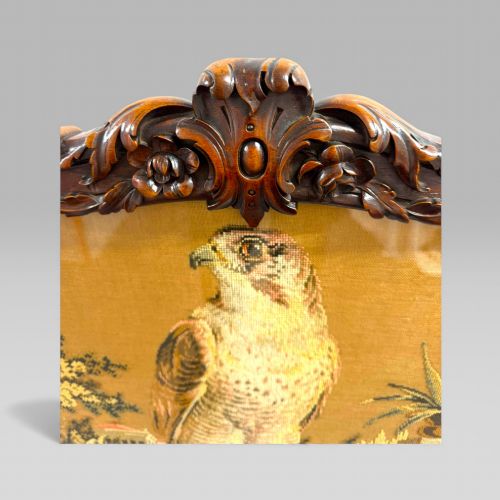
The needlework itself depicts a Persian-inspired hunting subject: a falcon standing proudly upon a perch, with Middle Eastern trees, a pond, and an architectural backdrop. In the foreground rests the falcon’s hood, a carefully observed detail that lends authenticity to the scene.
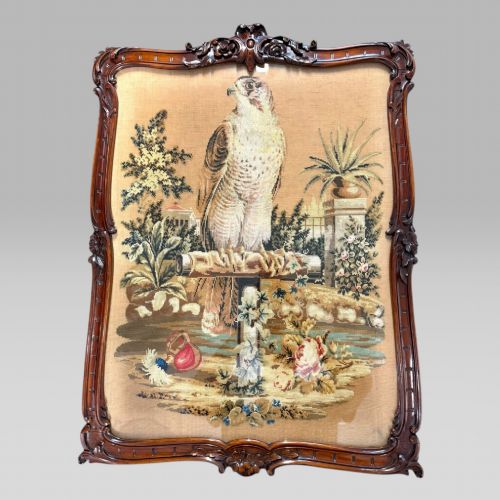
This rare survival, combining elegance, versatility, and quality of execution, stands as an unusual and distinguished example. Few comparable pieces are recorded, making it a highly desirable acquisition for the discerning collector.
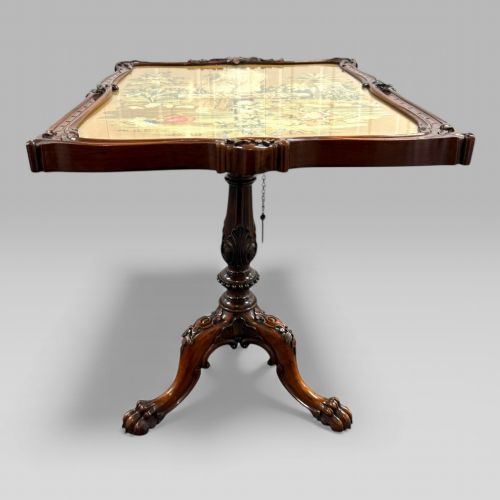
What is Needlework?

In the 18th and 19th centuries, embroidery was an essential part of female education, cultivating both dexterity and accomplishment. Girls produced decorative and pictorial panels, often worked with extraordinary patience and skill. Such needlework was sometimes incorporated into fine furniture, bringing a domestic, personal element to highly crafted objects. The example here demonstrates refinement and a clear artistic eye, harmonising with the quality of the table itself.
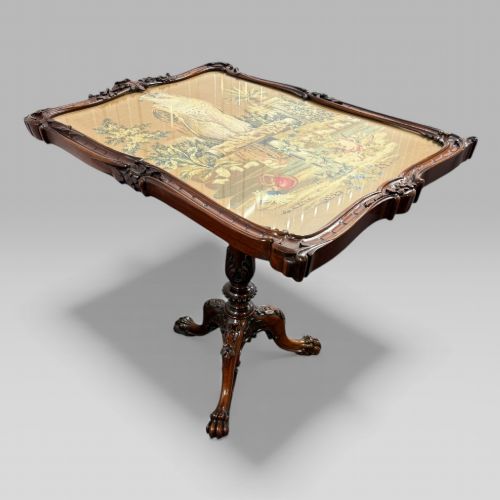
Provenance

A card accompanies the piece, noting that the needlework was executed by a schoolgirl in 1843. Embroidery of this kind was frequently undertaken in schoolrooms at the time and was occasionally used by cabinet makers to adorn furniture. While the base dates to the William IV period, the needlework was likely inset within a decade of its creation. Together they form a compelling narrative, uniting masterful cabinet-making with the artistry of domestic needlework.
Gillows of Lancaster

Established in the early 18th century, Gillows of Lancaster earned a reputation as one of Britain’s foremost cabinet-making firms. Renowned for their innovation, use of fine materials, and meticulous workmanship, they supplied commissions to many of the country’s grand houses. Their designs influenced the course of English furniture across the Georgian, Regency, and Victorian periods. Pieces in the manner of Gillows continue to be admired for their elegance, quality, and enduring appeal.
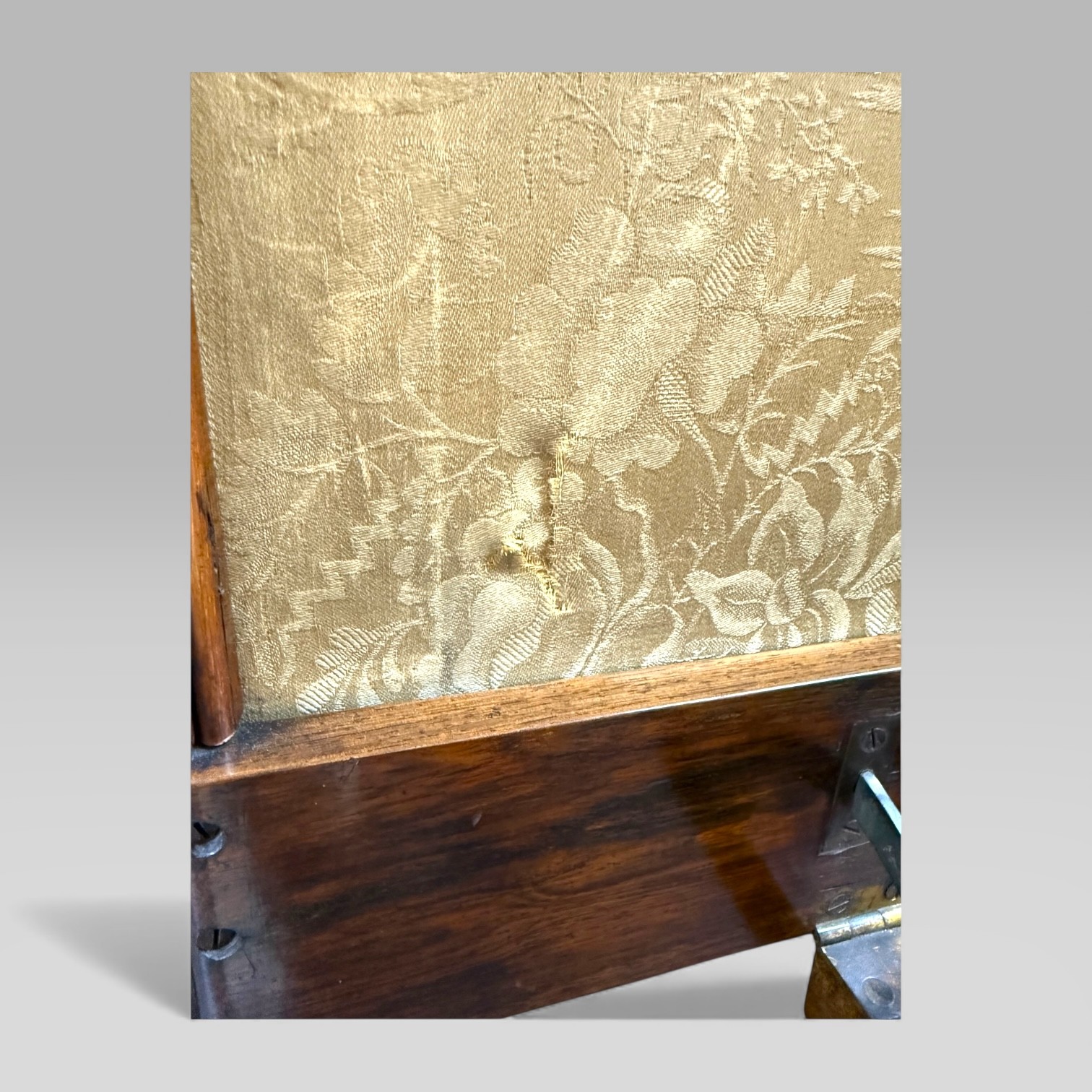
Condition: A superb condition 190 year old table. On the needlework there is a very slight tear to the reverse (shown in pictures), which does not affect the front scene.

Dimensions:

Table Height - 76.5 cm / 30.19 inches
Width - 60 cm / 23.62 inches

Length - 82.5 cm / 32.48 inches

Height (Fire screen Up) - 118.5 cm / 46.65 inches

Delivery

Free UK mainland delivery, between 7-14 days delivery time. International delivery available, please contact for a quote.

Physical Dimensions
Height
76.5cm (30.12")
Width
60cm (23.62")
Depth
82.5cm (32.48")
Declaration

Knight Fine Antiques and Collectables has dated this Rosewood Tilt Top Table to the 19th Century.

Reference Numbers
Sellingantiques Reference
SA1221373
Dealers Notes

Delivery:

Free UK mainland delivery (excluding Scottish islands and other UK islands).

International delivery available — please contact us or request a quote.

Description
Made by one of Britain’s most esteemed cabinet-making firms, this is a fine English William IV (1830–1837) rosewood carved tilt top table, executed in the manner of Gillows of Lancaster.
The piece is conceived primarily as a side table of superb quality, distinguished by a rectangular top framed with finely carved floral detail.
Knight Fine Antiques and Collectables

At the centre lies a glass-protected panel enclosing a needlework scene of considerable charm. Ingeniously designed, the top can be tilted upright, allowing the table to serve as a fire screen when required. This dual function demonstrates the practical ingenuity and refined aesthetic characteristic of Gillows’ work.

fig 1. A William IV rosewood tilt-top tripod table featuring a shaped, carved frame housing a glazed needlepoint panel above a carved column and splayed tripod legs.
fig 1. Antique William IV Gillows Carved Rosewood Tilt Top Tripod Table Fire Screen

The tripod base is a particular highlight, exceptionally carved and terminating in well-defined paw feet, each set on the original “Cope’s Patent” brass casters—an innovation valued in the early 19th century for both durability and ease of movement. The overall execution of the carving, with its precision and depth, reflects the highest standards of Gillows’ workshop.

fig 2. A William IV rosewood tilt-top tripod table featuring a shaped, carved frame housing a glazed needlepoint panel above a carved column and splayed tripod legs.
fig 2. Antique William IV Gillows Carved Rosewood Tilt Top Tripod Table Fire Screen

The needlework itself depicts a Persian-inspired hunting subject: a falcon standing proudly upon a perch, with Middle Eastern trees, a pond, and an architectural backdrop. In the foreground rests the falcon’s hood, a carefully observed detail that lends authenticity to the scene.

fig 3. A William IV rosewood tilt-top tripod table featuring a shaped, carved frame housing a glazed needlepoint panel above a carved column and splayed tripod legs.
fig 3. Antique William IV Gillows Carved Rosewood Tilt Top Tripod Table Fire Screen

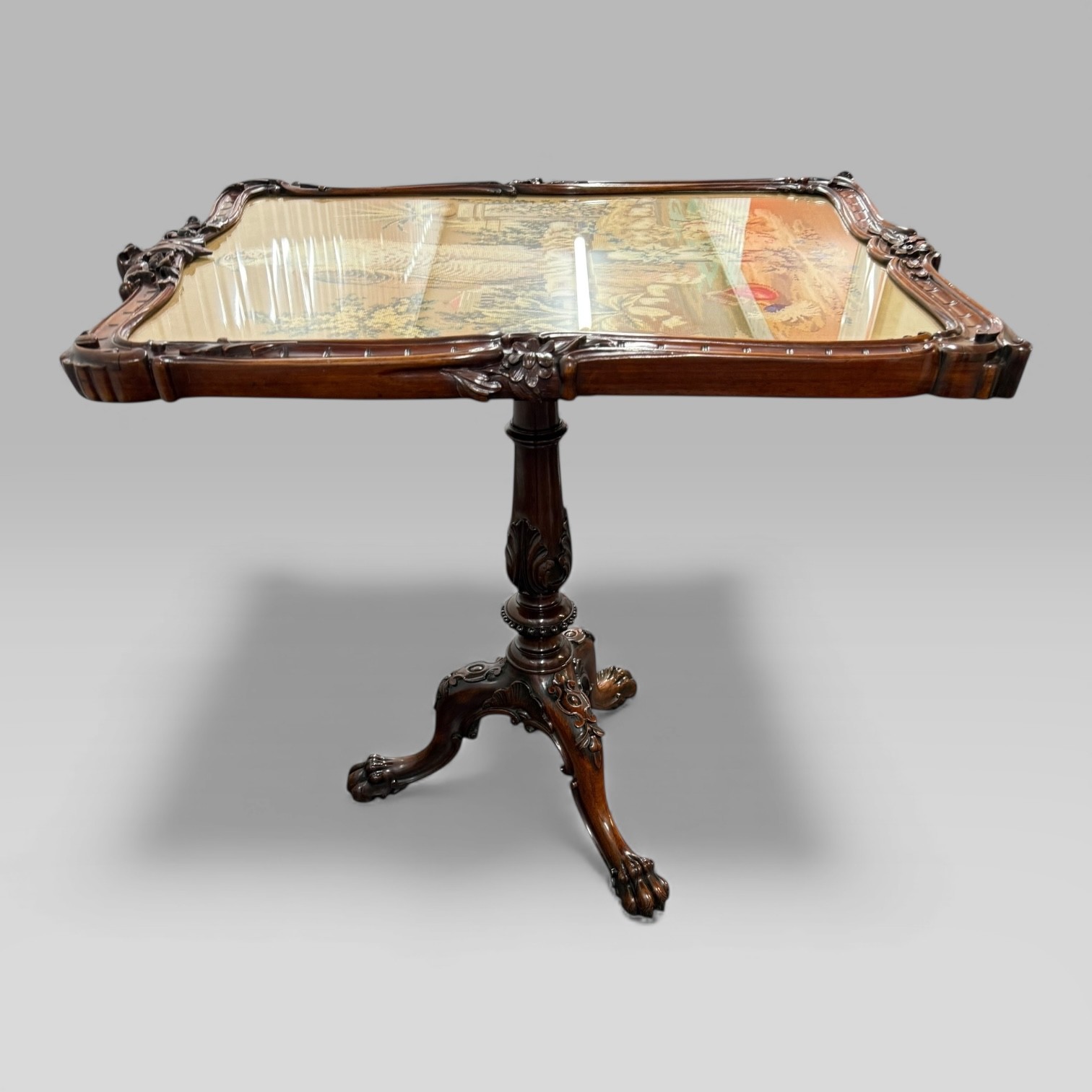
This rare survival, combining elegance, versatility, and quality of execution, stands as an unusual and distinguished example. Few comparable pieces are recorded, making it a highly desirable acquisition for the discerning collector.

fig 4. A William IV rosewood tilt-top tripod table featuring a shaped, carved frame housing a glazed needlepoint panel above a carved column and splayed tripod legs.
fig 4. Antique William IV Gillows Carved Rosewood Tilt Top Tripod Table Fire Screen

What is Needlework?

In the 18th and 19th centuries, embroidery was an essential part of female education, cultivating both dexterity and accomplishment. Girls produced decorative and pictorial panels, often worked with extraordinary patience and skill. Such needlework was sometimes incorporated into fine furniture, bringing a domestic, personal element to highly crafted objects. The example here demonstrates refinement and a clear artistic eye, harmonising with the quality of the table itself.

fig 5. A William IV rosewood tilt-top tripod table featuring a shaped, carved frame housing a glazed needlepoint panel above a carved column and splayed tripod legs.
fig 5. Antique William IV Gillows Carved Rosewood Tilt Top Tripod Table Fire Screen

Provenance

A card accompanies the piece, noting that the needlework was executed by a schoolgirl in 1843. Embroidery of this kind was frequently undertaken in schoolrooms at the time and was occasionally used by cabinet makers to adorn furniture. While the base dates to the William IV period, the needlework was likely inset within a decade of its creation. Together they form a compelling narrative, uniting masterful cabinet-making with the artistry of domestic needlework.

fig 6. A William IV rosewood tilt-top tripod table featuring a shaped, carved frame housing a glazed needlepoint panel above a carved column and splayed tripod legs.
fig 6. Antique William IV Gillows Carved Rosewood Tilt Top Tripod Table Fire Screen

Gillows of Lancaster

Established in the early 18th century, Gillows of Lancaster earned a reputation as one of Britain’s foremost cabinet-making firms. Renowned for their innovation, use of fine materials, and meticulous workmanship, they supplied commissions to many of the country’s grand houses. Their designs influenced the course of English furniture across the Georgian, Regency, and Victorian periods. Pieces in the manner of Gillows continue to be admired for their elegance, quality, and enduring appeal.

fig 7. A William IV rosewood tilt-top tripod table featuring a shaped, carved frame housing a glazed needlepoint panel above a carved column and splayed tripod legs.
fig 7. Antique William IV Gillows Carved Rosewood Tilt Top Tripod Table Fire Screen

Condition: A superb condition 190 year old table. On the needlework there is a very slight tear to the reverse (shown in pictures), which does not affect the front scene.

Dimensions:

Table Height - 76.5 cm / 30.19 inches

fig 8. A William IV rosewood tilt-top tripod table featuring a shaped, carved frame housing a glazed needlepoint panel above a carved column and splayed tripod legs.
fig 8. Antique William IV Gillows Carved Rosewood Tilt Top Tripod Table Fire Screen

Width - 60 cm / 23.62 inches

Length - 82.5 cm / 32.48 inches

Height (Fire screen Up) - 118.5 cm / 46.65 inches

Delivery

Free UK mainland delivery, between 7-14 days delivery time. International delivery available, please contact for a quote.

Height
76.5cm (30.12")
Width
60cm (23.62")
Depth
82.5cm (32.48")
Date of Manufacture

Knight Fine Antiques and Collectables has dated this Rosewood Tilt Top Table to the 19th Century.

Reference Numbers
Sellingantiques Ref
SA1221373
Knight Fine Antiques and Collectables
Sellingantiques verified Since Aug 2024
Dealer Profile

You can view the stock and full dealer information on the Knight Fine Antiques and Collectables Profile Page
PDF SHARE
SAVE
A William IV rosewood tilt-top tripod table featuring a shaped, carved frame housing a glazed needlepoint panel above a carved column and splayed tripod legs.
1 / 14
Archive I A William IV rosewood tilt-top tripod table featuring a shaped, carved frame housing a glazed needlepoint panel above a carved column and splayed tripod legs.

Antique William IV Gillows Carved Rosewood Tilt Top Tripod Table Fire Screen
Archive II A William IV rosewood tilt-top tripod table featuring a shaped, carved frame housing a glazed needlepoint panel above a carved column and splayed tripod legs. View II
Archive III A William IV rosewood tilt-top tripod table featuring a shaped, carved frame housing a glazed needlepoint panel above a carved column and splayed tripod legs. View III
Archive IV A William IV rosewood tilt-top tripod table featuring a shaped, carved frame housing a glazed needlepoint panel above a carved column and splayed tripod legs. View IV
Archive V A William IV rosewood tilt-top tripod table featuring a shaped, carved frame housing a glazed needlepoint panel above a carved column and splayed tripod legs. View V
Archive VI A William IV rosewood tilt-top tripod table featuring a shaped, carved frame housing a glazed needlepoint panel above a carved column and splayed tripod legs. View VI
Archive VII A William IV rosewood tilt-top tripod table featuring a shaped, carved frame housing a glazed needlepoint panel above a carved column and splayed tripod legs. View VII
Archive VIII A William IV rosewood tilt-top tripod table featuring a shaped, carved frame housing a glazed needlepoint panel above a carved column and splayed tripod legs. View VIII
Archive IX A William IV rosewood tilt-top tripod table featuring a shaped, carved frame housing a glazed needlepoint panel above a carved column and splayed tripod legs. View IX
Archive X A William IV rosewood tilt-top tripod table featuring a shaped, carved frame housing a glazed needlepoint panel above a carved column and splayed tripod legs. View X
Archive XI A William IV rosewood tilt-top tripod table featuring a shaped, carved frame housing a glazed needlepoint panel above a carved column and splayed tripod legs. View XI
Archive XII A William IV rosewood tilt-top tripod table featuring a shaped, carved frame housing a glazed needlepoint panel above a carved column and splayed tripod legs. View XII
Archive XIII A William IV rosewood tilt-top tripod table featuring a shaped, carved frame housing a glazed needlepoint panel above a carved column and splayed tripod legs. View XIII
Archive XIV A William IV rosewood tilt-top tripod table featuring a shaped, carved frame housing a glazed needlepoint panel above a carved column and splayed tripod legs. View XIV
Enlarged Archival View
Telephone 01553 601578
Location
West Norfolk
United Kingdom
Verified Since Aug 2024
Items For Sale 62
Items Sold 192
Knight Fine Antiques and Collectables
Verified Since Aug 2024
View Dealer Info
Location: West Norfolk, United Kingdom
Verified
Aug 2024
For Sale
62
Sold
192
A William IV rosewood tilt-top tripod table featuring a shaped, carved frame housing a glazed needlepoint panel above a carved column and splayed tripod legs.
Antique William IV Gillows Carved Rosewood Tilt Top Tripod Table Fire Screen
Ref: SA1221373
A William IV rosewood tilt-top tripod table featuring a shaped, carved frame housing a glazed needlepoint panel above a carved column and splayed tripod legs.
Detail View 1
Detail View 2
Detail View 3
Detail View 4
Detail View 5
Detail View 6
Detail View 7
Detail View 8
Detail View 9
Detail View 10
Detail View 11
Detail View 12
Detail View 13
Archival Detail
Every single antique dealer on our platform is individually approved by our internal team. We verify their professional trade history, ethical standards, and photographic quality to ensure a secure, high-standard buying environment. Upon joining, every dealer agrees to a strict 9-point code of conduct. While issues can occasionally arise, our dealers typically resolve them swiftly and directly with the buyer. In fact, since our founding in 2002, Sellingantiques has only had to step in to help resolve an issue on roughly five occasions—a true testament to the quality of our dealers and their dedication to your happiness.
Our dealers are highly experienced in packing and shipping fragile, high-value antiques. Because you are in direct contact with the dealer, you will be able to easily go through all available shipping and insurance options together to ensure your item arrives safely.
Antiques are the ultimate green purchase. By choosing historical pieces over newly manufactured goods, you completely eliminate the carbon footprint of modern mass production while preserving exceptional, timeless craftsmanship.

Originating in the 1830s during the reign of King William IV, these tables feature a hinged top on a central pedestal that tilts vertically to save space or display decorative top panels when not in use.

Cabinetmakers predominantly utilised solid and veneered rosewood or mahogany, paired with brass tilt catch mechanisms, turned central columns, and hand-carved tripod legs.

Authentic pieces exhibit period-correct joinery, heavy timber weight, original brass snap-latch mechanisms beneath the top, and hand-carved floral or acanthus motifs characteristic of the 1830s.

Position the table beside an armchair or within a fireplace alcove to function as an accent piece, either lowered flat for functionality or tilted upright to showcase the framed tapestry.

Keep the timber away from direct sunlight and heat sources to prevent wood movement, polish surfaces with natural beeswax, and ensure glazed textile inserts remain free from direct moisture.
items
Add keywords to the filter
Price
£100
£250000
Era
Movements
Material
Origin
Stock Location
Freshness
Online Payments
Categories