
Antique Pine
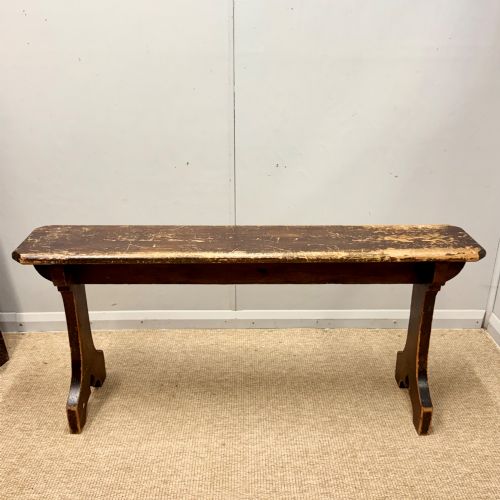
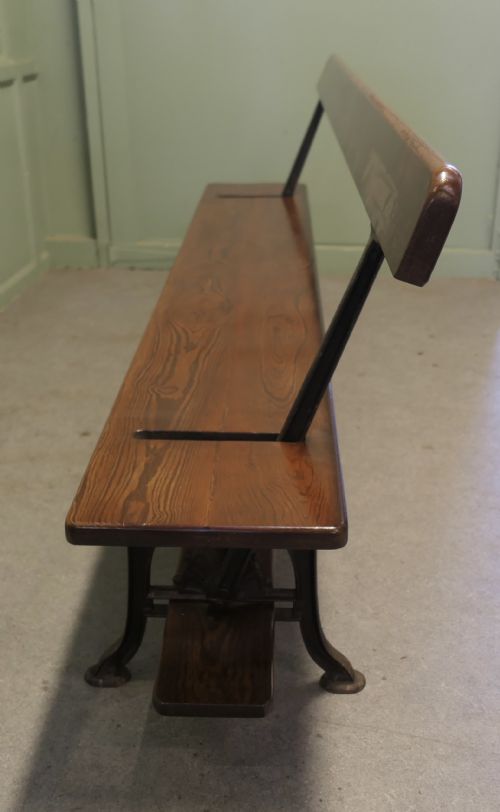
Softwood furniture built for everyday use, and on Sellingantiques that mostly means long seating: benches, settles and church pews in pine and pitch pine.
What Is Antique Pine?
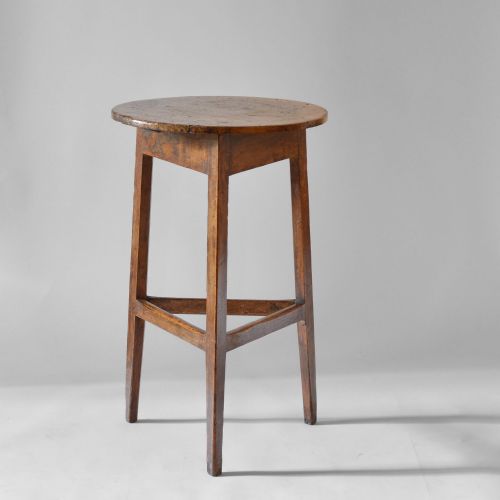
Pine and pitch pine were the everyday softwoods of British vernacular and institutional furniture, used where hardwood cost too much: kitchens, bedrooms, farmhouses and chapels. They were usually painted, grained or scrubbed rather than left bare. The category on Sellingantiques follows that history closely.
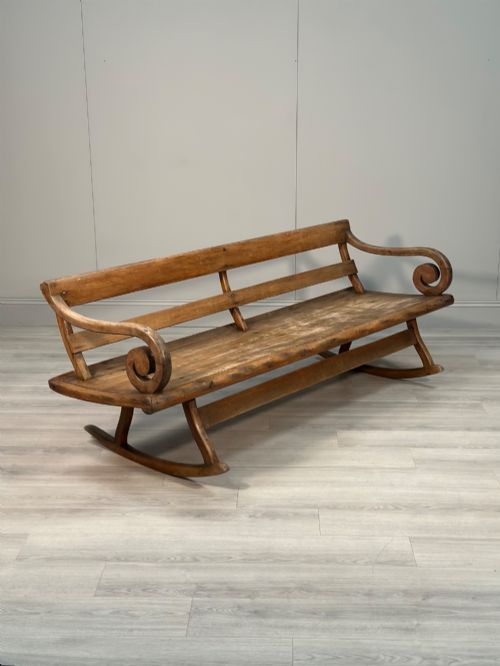
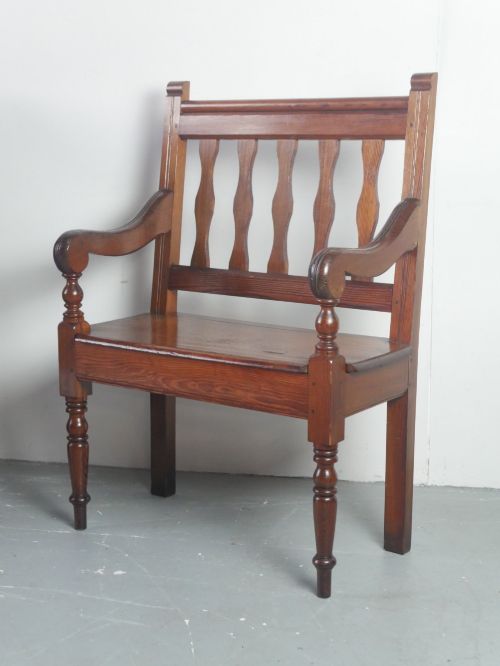
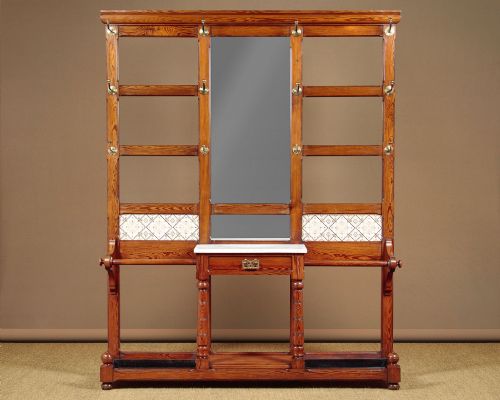
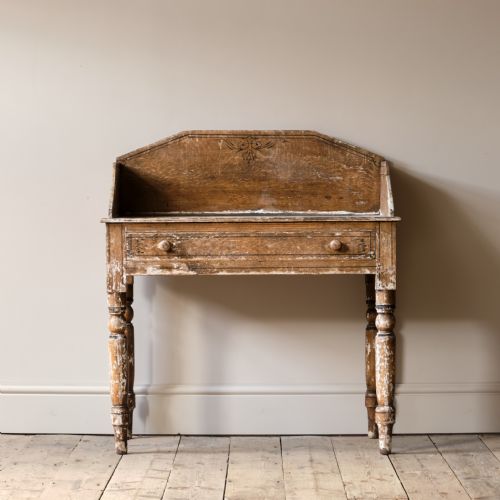
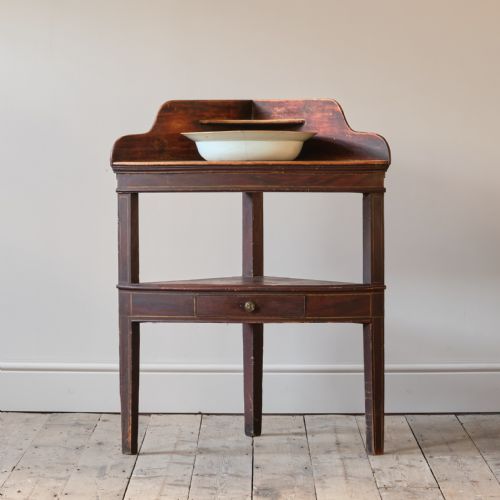
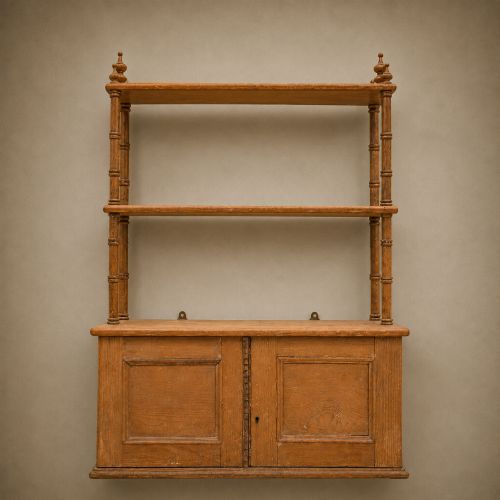
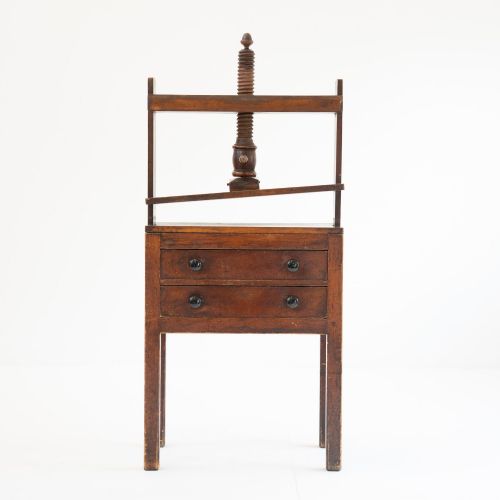
Seat furniture dominates. "Bench" appears in 232 of 737 titles, "settle" in 162 and "pew" in 146, with pitch pine named in 138. Behind the seating sits a run of washstands, wall racks and shelves, and then a scatter of country and utility pieces: plate and delft racks, whatnots, hall stands, chests of drawers, dressers, shop counters and workbenches.
Ecclesiastical seating is a branch in its own right, roughly a fifth to a quarter of listings. Church and chapel pews came onto the secondhand market as buildings were reordered or closed, and some still carry enamel or ceramic pew numbers, flip-over backs, brass umbrella holders or bible boxes. Lecterns, organist's benches and a pulpit turn up alongside them.
Dating is broad rather than precise. The dated field runs 1800 to 1930, but 222 listings say only "19th Century" and 153 only "Victorian". Where a decade is given it clusters around c.1880 to c.1920, which fits the pew and railway-bench material. Georgian and 18th-century pieces are a real but small minority, mostly settles, delft racks and painted country furniture.
Where The Range Splits
Surface does more work than anything else. Original paint and untouched finishes cluster in the upper part of the range, on Georgian and Regency painted settles, benches and shelves. Stripped, shabby-chic and ready-to-wax pieces sit at the lower end. Surface is described more often than form, with 118 titles saying painted against 19 waxed and fewer stripped or scrubbed.
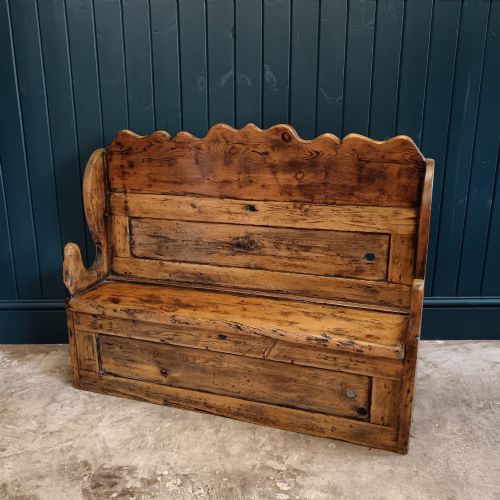
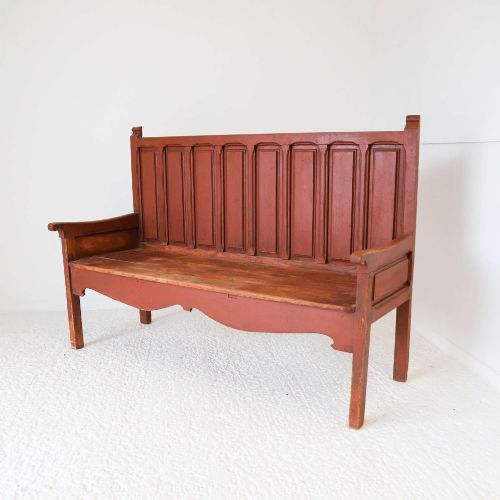
Form separates a plain seat from an architectural one. Settles with high backs, curved or barrel backs, wing backs, panelling or a bacon rack behind sit at the top. The plain pitch pine church pew repeats many times low down, and it is the commonest thing in the category. Age pulls the same way: the handful of 18th-century tavern settles, bacon settles, delft racks and lambing chairs concentrate at the top.
Scale and origin are the other two levers. Length and capacity are stated because they sell: ten-foot pews seating seven or eight, a pair of 3.1 metre benches, and 34 titles offering matched pairs. Named origin also lifts a piece, whether regional English and Welsh naming or Continental. Swedish, Austrian and Spanish pine sits consistently high; Hungarian benches, 28 of them, sit in the middle.
Retail Price Guide 2026
Typical UK retail prices for pine, calculated from the Sellingantiques database of over a million retail prices indexed since 2003. This retail price guide relies exclusively on Sellingantiques data; no external sources or auction records are used, so the figures do not describe the wider market.
Surface gets named more often than form on Sellingantiques: 118 pine titles say painted, against 19 waxed and a few stripped or scrubbed.
The Antique Pine Glossary
- Pitch pine
- Dense, resinous, strongly figured softwood used for much church, chapel and railway furniture. Named in 138 titles, and the default timber for pews.
- Settle
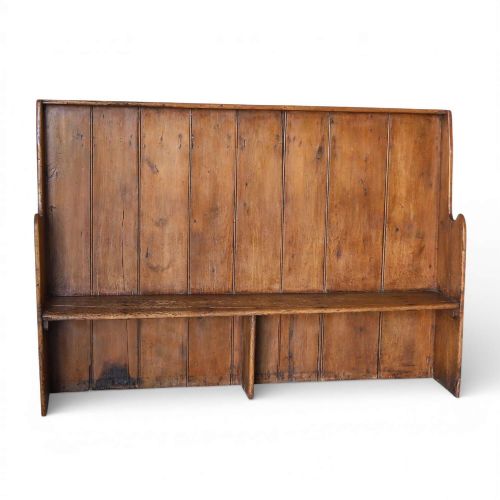
- High-backed bench with solid ends, often with a boxed seat. A box settle has a lift-up or hinged seat over a storage compartment, and 31 titles name one.
- Seater
- Capacity given instead of length, as 2, 3 or 4 seater. It appears in 34 titles and is more common in current stock than in the archive.
- Form
- The old kitchen and school word for a plain backless bench. You'll see it in titles as "bench form" and "school form".
- Flip-over back
- A back rail that swings over so either side of the bench can be faced. Found on railway, tram and chapel seating.
- Gallery back
- Raised rail or splashback at the rear of a washstand top, sometimes tiled or fitted with marble. Washstands run to 75 titles.
- Bacon settle
- Settle with a cupboard or rack built into the back, associated with farmhouse curing. Only a handful appear.
Frequently Asked Questions
What is the most common piece of antique pine?
A long English pine or pitch pine bench or pew seat of 19th-century date. Bench, settle and pew between them account for the bulk of the 737 titles.
After the seating, washstands are the next-largest group, then wall racks and shelves.
Why are there so many church pews for sale?
The 19th century brought a wave of church building and refitting, most of the seating made in pitch pine. As buildings were later reordered or closed, that seating reached the secondhand market.
On Sellingantiques, 146 titles name a pew, 72 a church and 20 a chapel. Some still carry enamel or ceramic pew numbers, brass umbrella holders or bible and prayer-book boxes.
Is antique pine usually stripped back to bare wood?
Not in this category. Painted appears in 118 titles and paint in another 21, against 19 for waxed and fewer still for stripped or scrubbed.
Original painted and untouched surfaces cluster in the upper part of the range. Stripped and refinished pieces sit lower down.
How old is most antique pine on the site?
The dated field runs 1800 to 1930, with 236 listings carrying a clean year. Most dating is broader: 222 listings say only "19th Century" and 153 only "Victorian".
Where a decade is given it tends to fall between c.1880 and c.1920, which matches the pew and railway-bench material.
Georgian and 18th-century pieces exist but are a small minority, mostly settles, delft racks and painted country furniture.
Does Continental pine turn up in this category?
More than you might expect. Twenty-eight titles are Hungarian and 15 Swedish, with Austrian, Spanish, Italian, Bohemian and Scandinavian pieces alongside.
Swedish and Spanish examples sit at the top of the range, Hungarian benches in the middle.
What sort of unusual pine pieces appear?
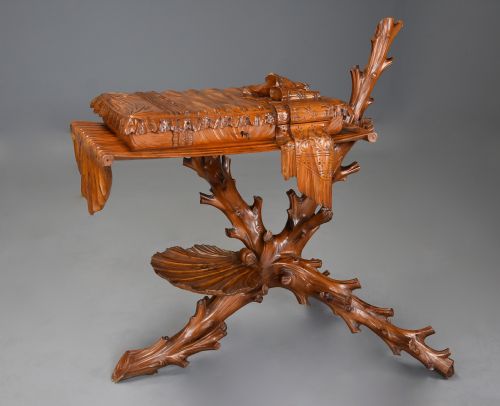
Beyond the seating, one-offs include a Swedish dug-out chair, a hooded lambing chair, a folk-art carved corner seat, a butcher's block, a saddle horse and a pine entrance vestibule screen.
Regional naming is a habit of the category too. Pembrokeshire, West Wales, North Wales, Cumbria, Somerset, Devon, Yorkshire, Norfolk and the West Country all appear attached to settles and benches.