
Antique Canterbury
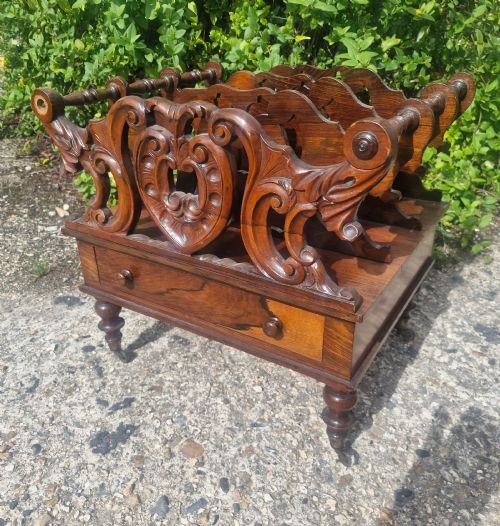
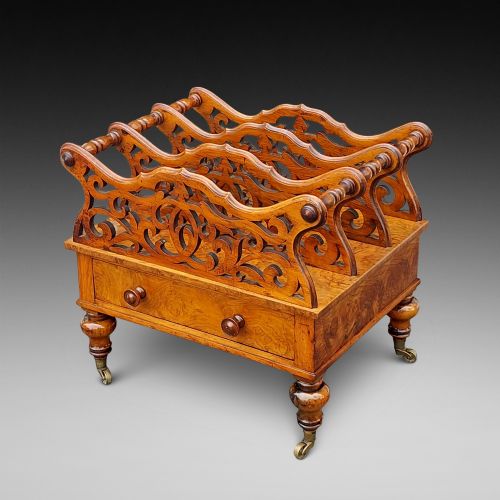
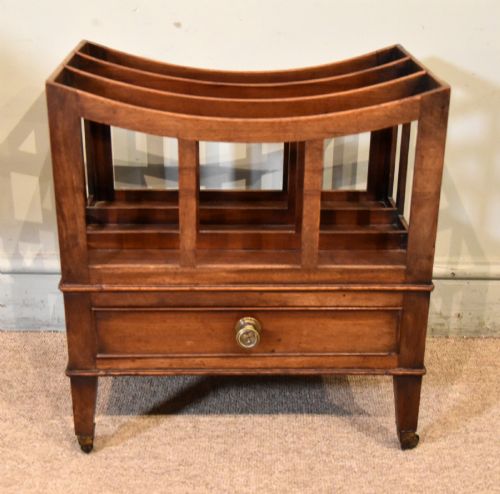
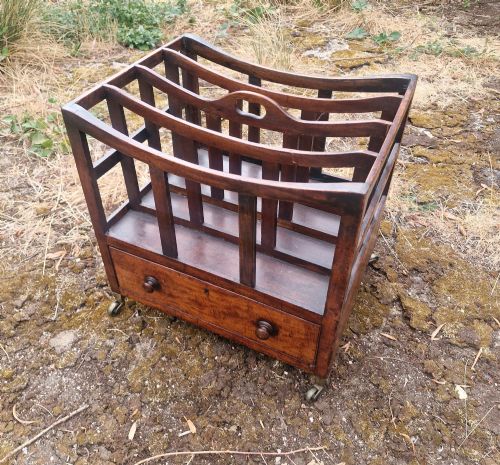
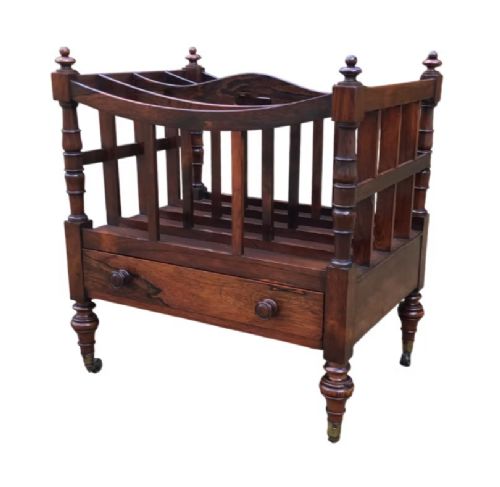
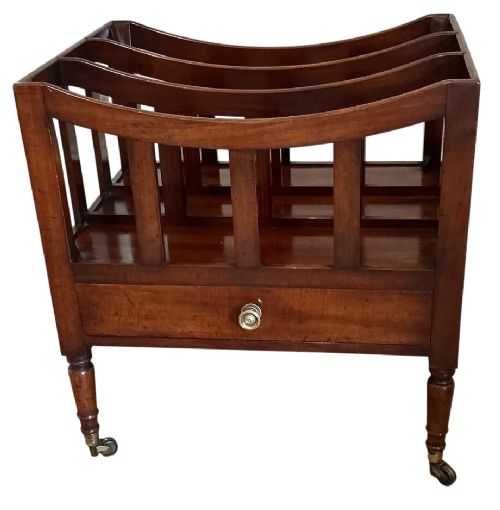
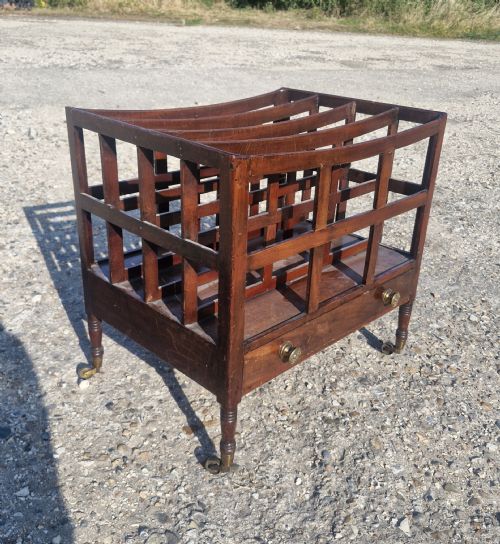
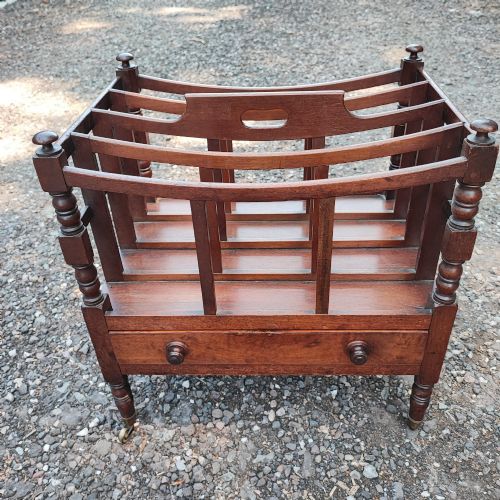
A canterbury is a low, open stand on legs, partitioned into divisions and often fitted with castors and a drawer, made to sit beside a chair or piano and hold sheet music, folios, newspapers or magazines.
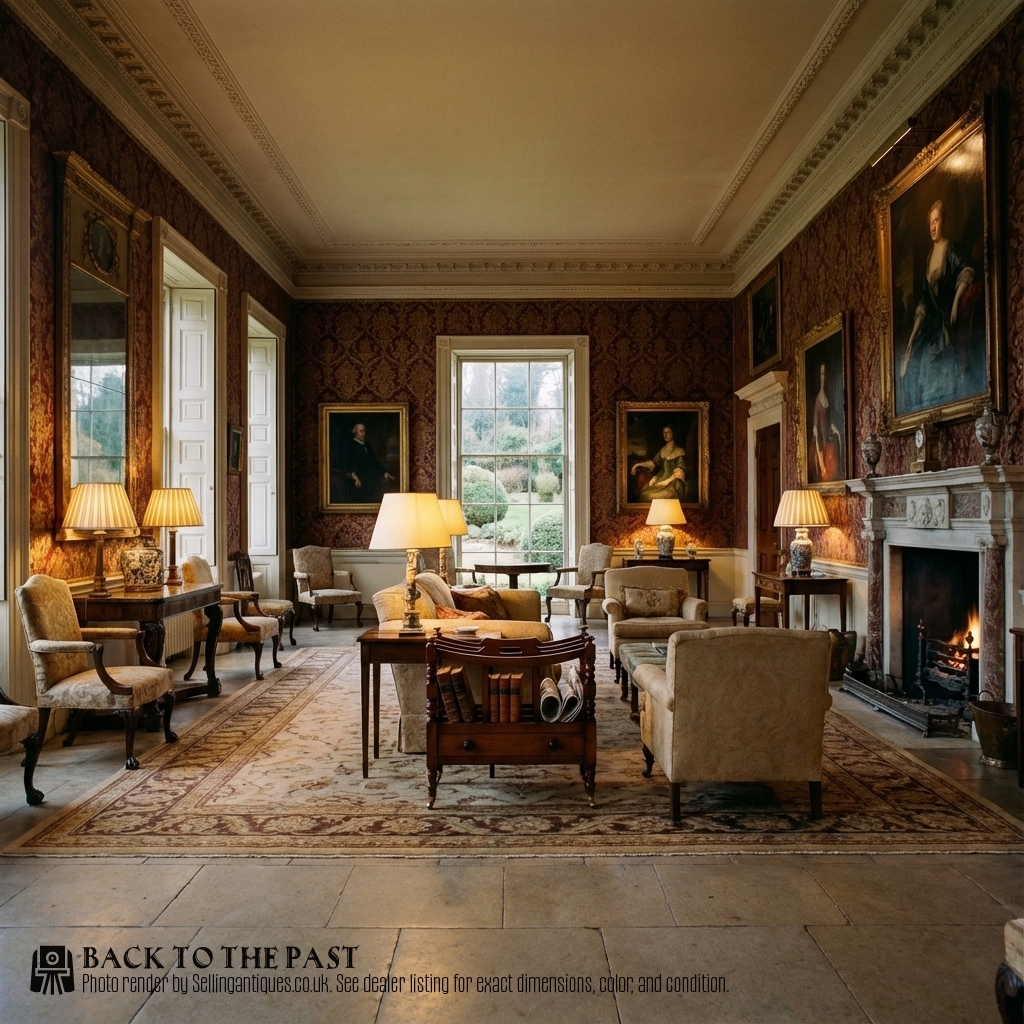
What Is A Canterbury?
The form came out of Britain in the late 18th century as a low partitioned stand for sheet music and folios. Through the 19th century the same thing was used for newspapers and magazines, which is why the two names travel together and why listings routinely say magazine rack, newspaper rack, music stand or whatnot.
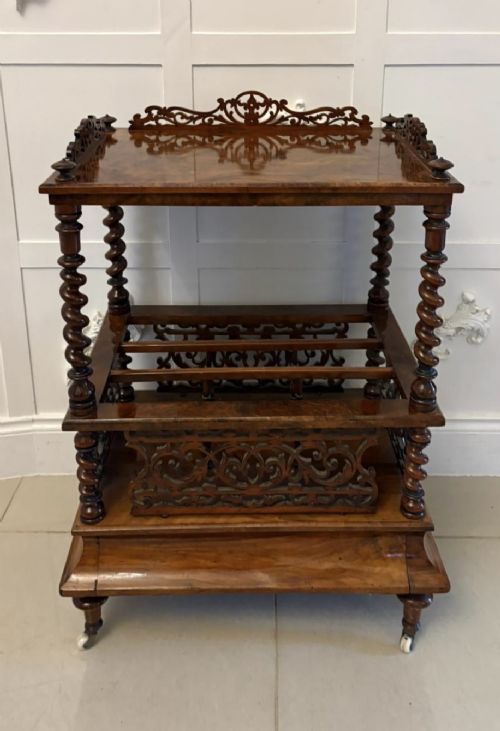
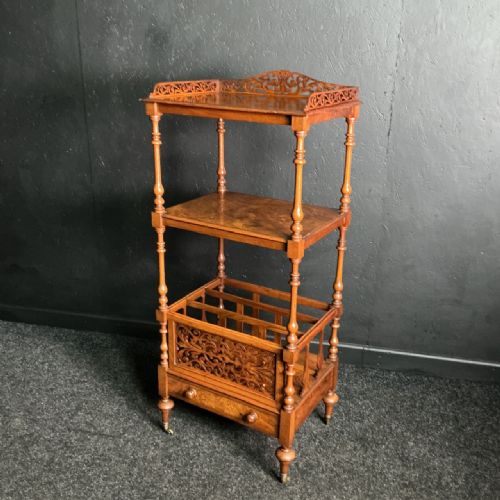
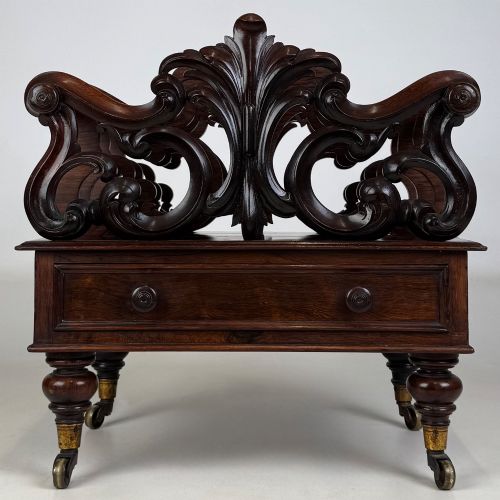
What you'll meet most is a British 19th-century piece in a figured hardwood. Victorian appears in 234 titles and Regency in 155; mahogany leads the timbers at 230, with walnut at 184 and rosewood at 150. Burr walnut, named in 105 titles, is the archive's signature surface, and whatnot is used interchangeably with canterbury in 56.
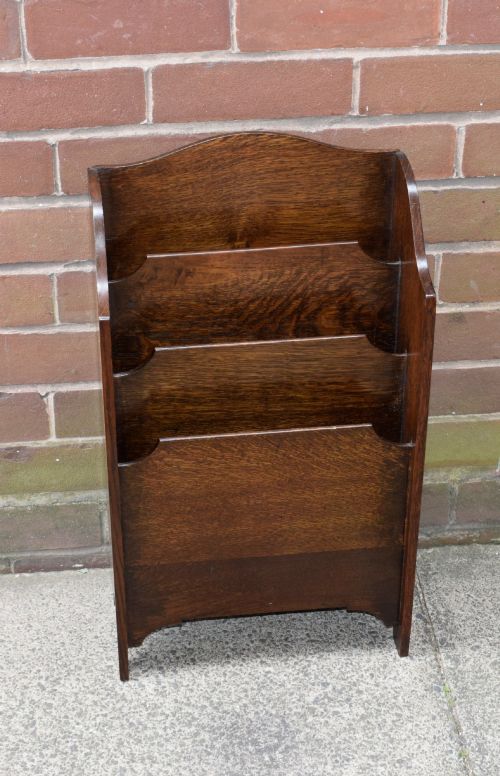
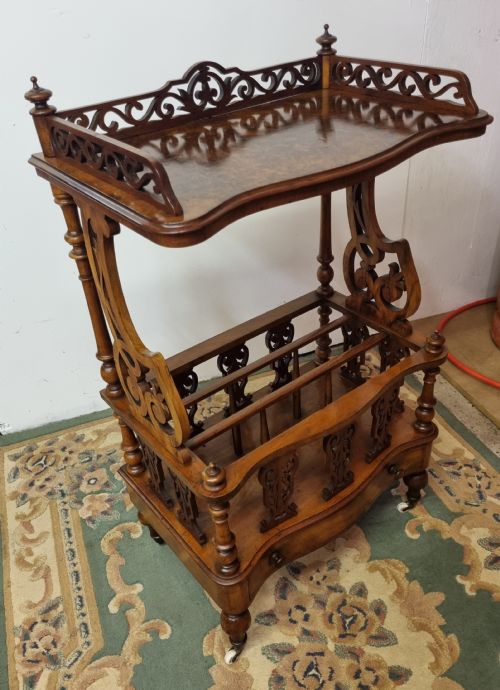
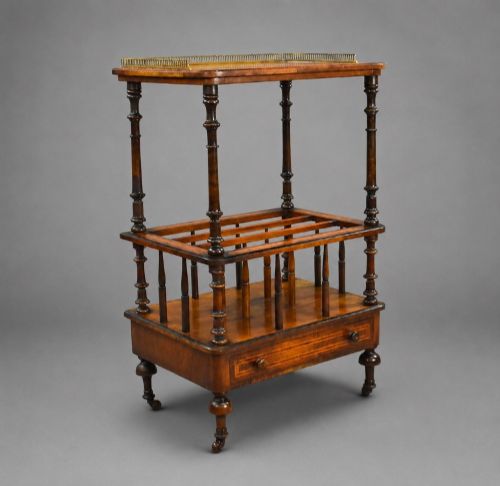
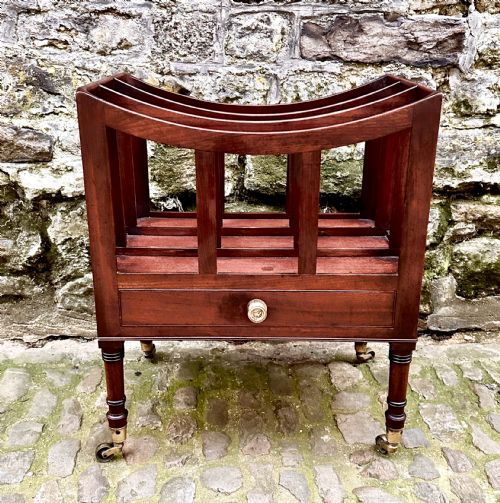
Three groups account for the bulk. Regency and Georgian mahogany and rosewood examples, with X-frame, boat-shaped and dishtop sub-forms and three, four or five divisions, run to roughly a third. Victorian burr and figured walnut pieces, often inlaid and sometimes oval or serpentine, make up about the same. A further fifth are catalogued first as magazine or newspaper racks and stands.
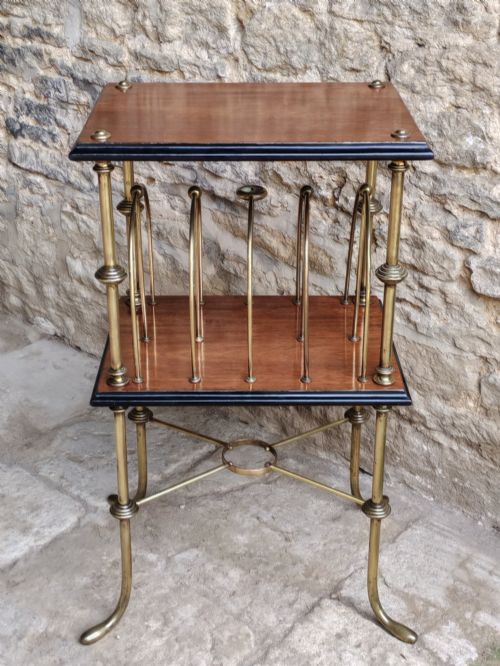
Beyond that sits a thinner tail: bamboo, lacquered and chinoiserie pieces, about thirteen titles including a hand-painted tiger bamboo table with magazine rack, plus oak and ebonised examples. Later still come Edwardian and interwar hybrids, canterburys built into coffee, lamp and cocktail tables, revolving and metamorphic stands. Around 73 are listed on Sellingantiques in a year, and 160 different dealers have handled one.
Where The Range Splits
Timber and figure do most of the sorting. Burr and figured walnut cluster in the upper half of the range, and the one-off exotics sit higher still: satinwood, amboyna, yew, bog oak, teak, maple, Cuban mahogany and a simulated coromandel each turn up once or twice, with the yew example near the very top. Plain mahogany, oak and bamboo sit at the bottom.
Decoration and form push in the same direction. Inlaid examples, 45 titles of them, sit above plain ones, and brass-inlaid, ebony-inlaid and marquetry pieces are among the highest-priced sampled. Scale matters too: oversized country house, double size, oval, serpentine and five-division examples reach the top, while titles saying small or simple Georgian sit low.
Two things then lift a piece within its own bracket. A named period attribution, Regency, George III, George IV, or a named design pattern, reads as a judgement worth paying for. So does stated original fitting and surface, with titles citing original castors, stamped castors and original finish with colour and patina.
Retail Price Guide 2026
Typical UK retail prices for canterbury, calculated from the Sellingantiques database of over a million retail prices indexed since 2003. This retail price guide relies exclusively on Sellingantiques data; no external sources or auction records are used, so the figures do not describe the wider market.
Canterburys have been listed on Sellingantiques since 2009, with over four hundred passing through since then.

The Antique Canterbury Glossary
- Canterbury
- A low partitioned stand on legs or castors, made for music, folios, papers or magazines beside a chair.
- Division
- One of the vertical compartments. Titles cite three, four and five division examples, and the higher counts sit towards the top of the range.
- Whatnot
- A tiered open stand, also written what-not or wot not. Used as a straight synonym for canterbury in 56 titles.
- Burr walnut
- Figured veneer cut from a burr growth on the tree. Named in 105 titles, more than any other single surface here.
- X frame
- Crossed-strut sides, named as a Regency and William IV variant. Boat shaped, bowed and dishtop describe curved outlines and appear alongside it.
- Freestanding
- Finished on all sides for use away from a wall. Fourteen titles say so, one of them inlaid on every face.
Frequently Asked Questions
Why are canterburys sold as magazine racks?
The form started as a music stand and was put to newspapers and magazines through the 19th century. Dealers title them accordingly.
Magazine appears in 127 titles, rack in 100 and magazine rack in 81. Magazine stand, newspaper and tidy fill out the rest, so the same object arrives under several headings.
What wood are most canterburys made from?
Mahogany leads with 230 titles, walnut follows at 184 and rosewood at 150. Burr walnut alone accounts for 105.
Oak and ebonised examples make a small showing, around ten and nine titles. One-off timbers such as satinwood, amboyna, yew, bog oak and Cuban mahogany appear once or twice each.
How reliable are the Regency and Georgian dates?
Read them as style-and-period judgements. Only 169 of 665 listings carry a clean year, and the rest are filed under broad labels, with 19th Century the commonest at 158.
The labels also mix. Georgian Regency turns up in ten titles, and pieces dated 18th Century sit next to ones called Regency, so the early end of the range blurs.
Do canterburys usually have a drawer?
A drawer beneath the divisions is a recurring feature across the archive, on Regency and Victorian examples alike.
Castors are the other common fitting. Titles cite brass castors, stamped castors and original castors, and stated original fittings sit higher in the range.
Are bamboo canterburys common?
No. Bamboo runs to about thirteen titles, taken together with lacquered, panelled, chinoiserie, Aesthetic and Moorish descriptions.
One of them is a hand-painted tiger bamboo table with a magazine rack. These sit among the lower-priced entries.
What unusual forms turn up?
Revolving canterburys, a metamorphic stand, X-frame and dishtop Regency models, and wine-bottle canterburys all appear.
Hybrids are the other oddity: coffee tables with a canterbury end, canterbury lamp tables, a cocktail service stand and a lectern-style reading table. The clean-dated pieces run 1800 to 1930, and these later combinations sit at the far end.