
Rosewood Furniture
Rosewood furniture brings dense grain, deep warmth and precise brass inlay into a room from the Regency and Victorian periods.
Rosewood Furniture
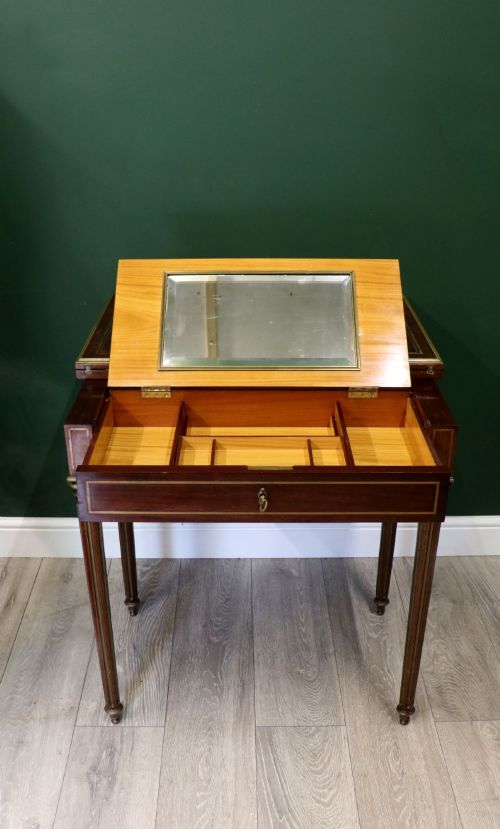
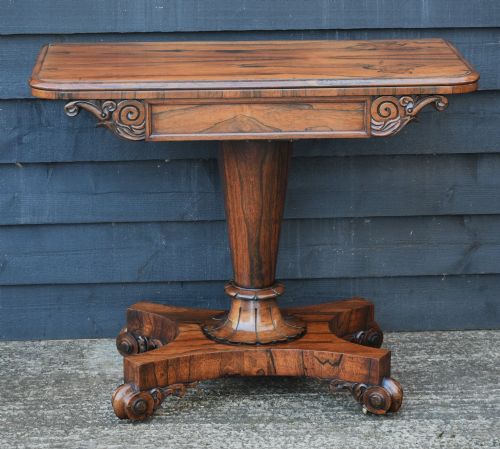
Rosewood furniture encompasses tables, cabinets and desks produced across the nineteenth century, including George III, Regency, Victorian and Edwardian examples. Buyers searching this phrase meet card tables, centre tables and chiffoniers most frequently.
Makers such as Gillows and George Bullock produced significant pieces in this category, alongside simpler vernacular items from the same decades.
How they were made
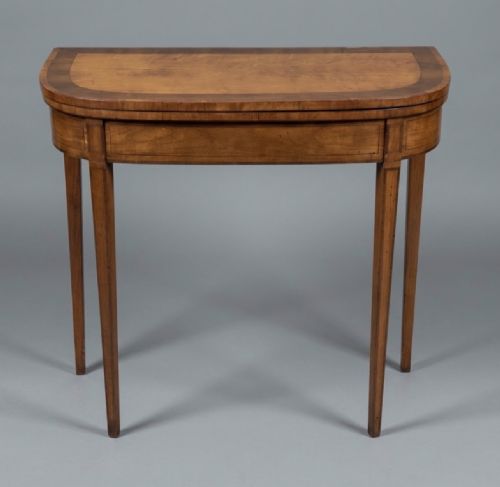
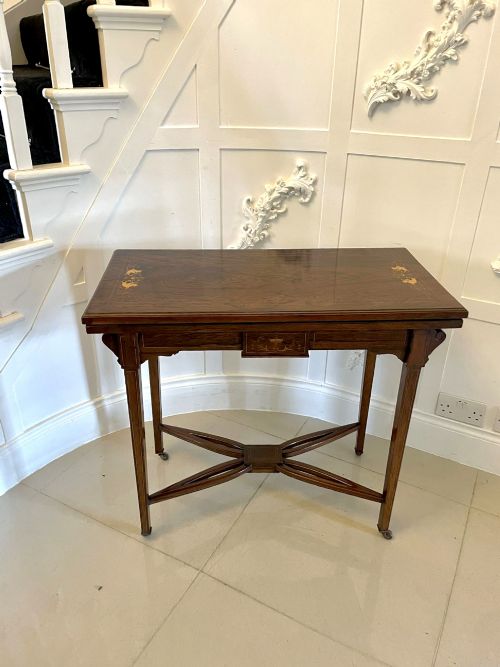
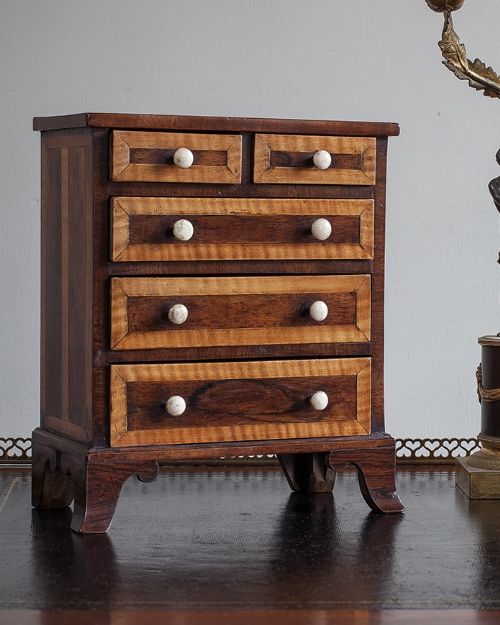
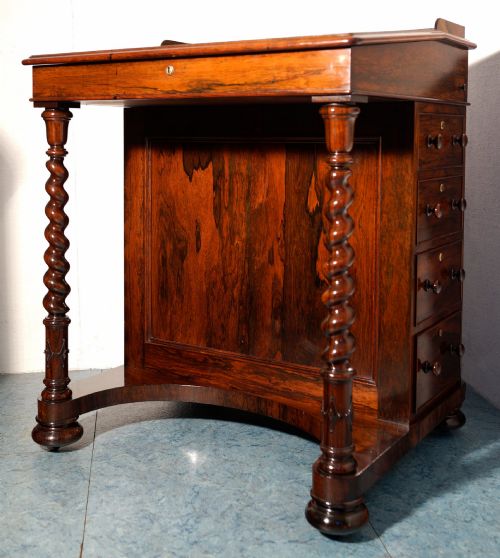
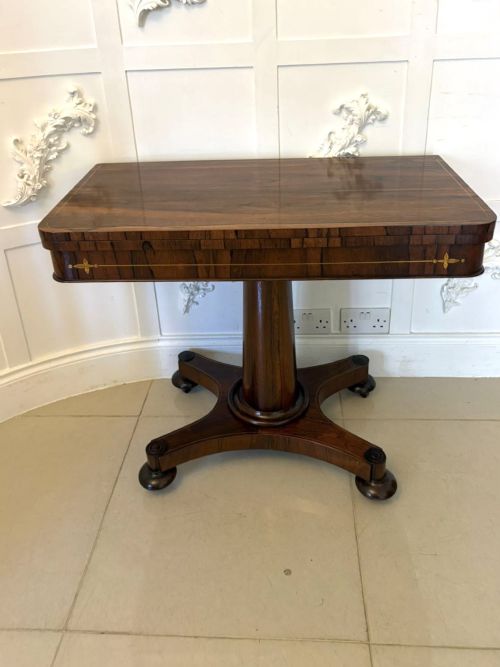
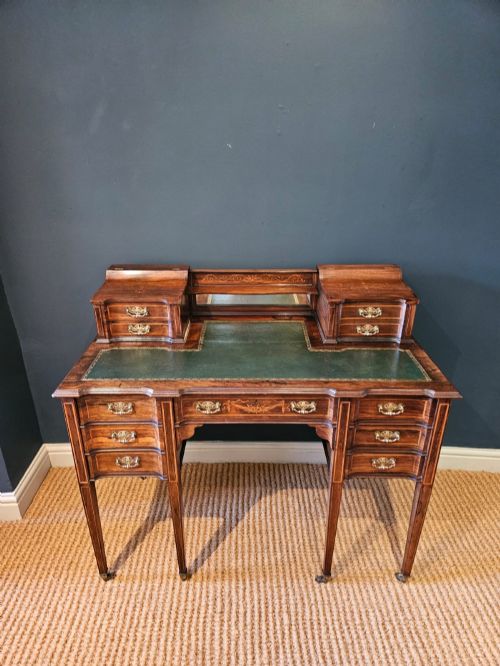
Makers utilised solid rosewood alongside veneered surfaces applied to secondary hardwoods, often pairing the dark timber with satinwood crossbanding or brass inlay. Brass stringing and marquetry define many Regency and Victorian card tables and writing desks.
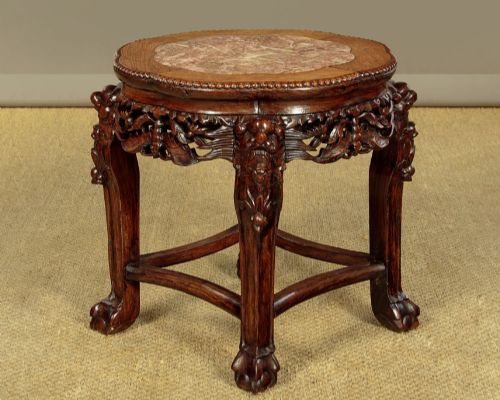
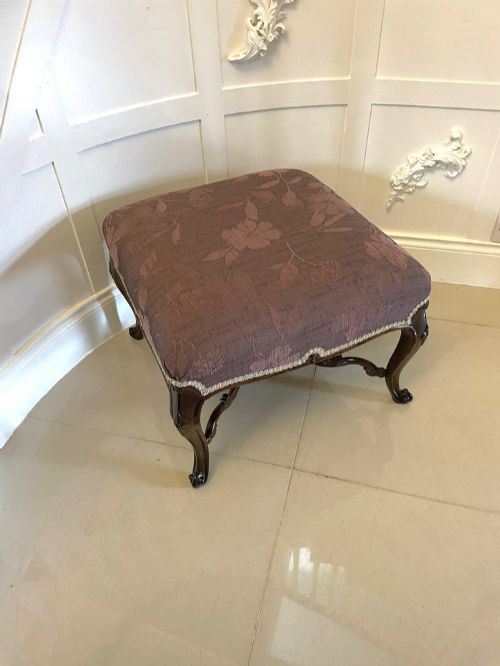
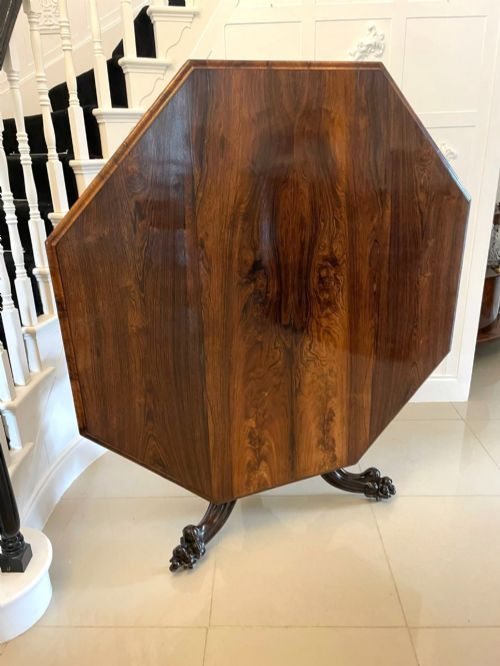
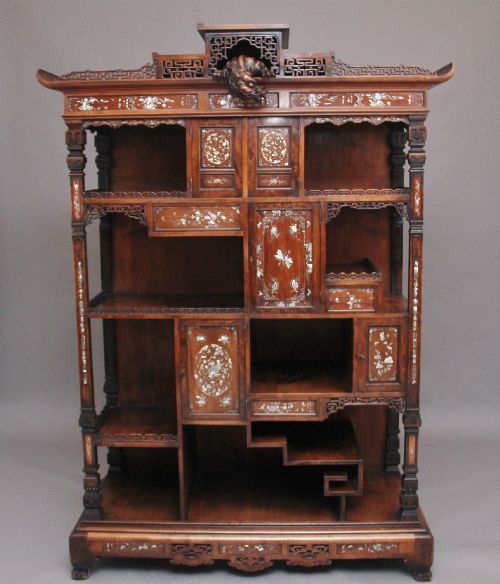
Carved structural elements appear on Victorian stools and centre tables, while French commodes and Japanese shodonas utilise specialised cabinet-making techniques from the nineteenth and early twentieth centuries. Marble tops also feature on select Chinese and French low tables.
Some nineteenth-century tables hide secret compartments beneath their card-playing surfaces for stray sovereigns.
What varies in quality
The sophistication of the timber figure and the precision of brass inlay separate standard production from exceptional works. Pieces attributed to documented makers exhibit sharper carving and more balanced proportions.
Construction methods, such as the execution of fold-over mechanisms on games tables and the stability of pivoting bookcase carcases, determine the standard of surviving examples.
Gillows·George Bullock·Francois Linke
The Rosewood Furniture Glossary
- Crossbanding
- A border of veneer laid with the grain running perpendicular to the central panel. This technique frames the top surface of card tables and desks.
- Card table
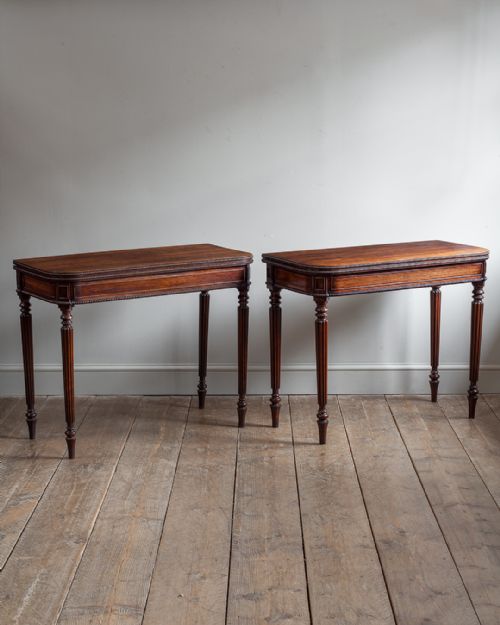
- A folding table designed for games, featuring a baize-lined interior surface. Many Regency and Victorian examples fold over on swivel hinges.
- Chiffonier
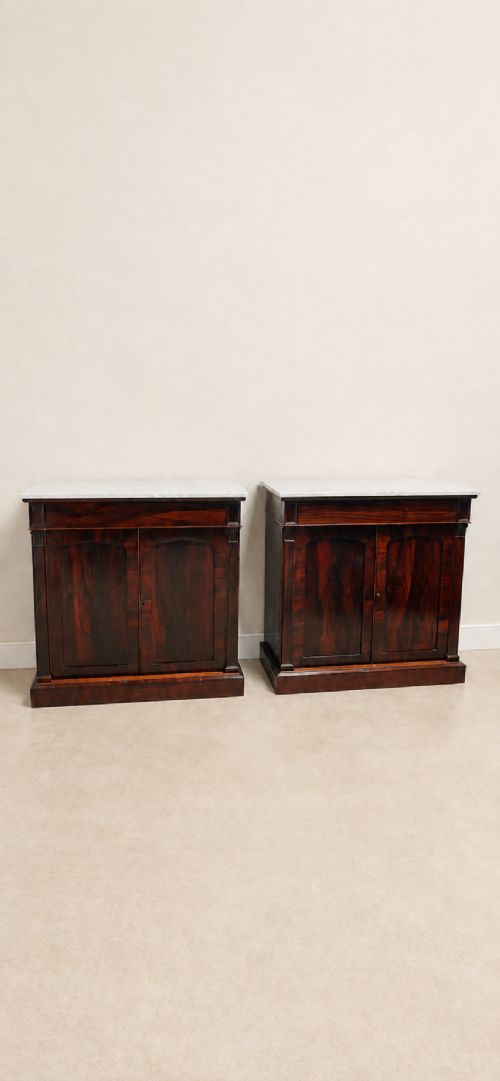
- A low cabinet with enclosed shelving below and often a raised superstructure. These pieces serve for storage in nineteenth-century interiors.
- Whatnot
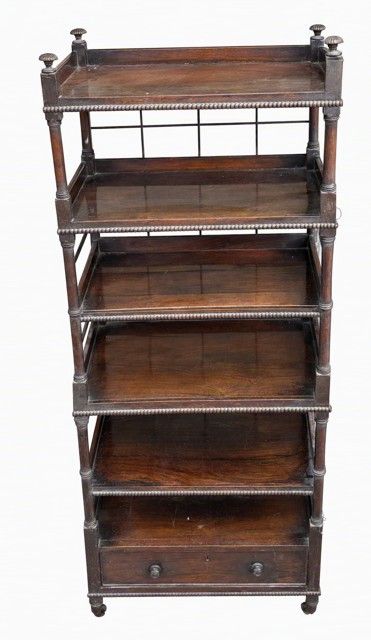
- An open set of multiple tiers used for displaying small objects. Examples range from Regency six-tier designs upward.
- Canterbury
- A low stand fitted with partitions for holding sheet music or books. Nineteenth-century versions frequently incorporate carrying handles and small castors.
Rosewood Furniture: Frequently Asked Questions
What is rosewood furniture?
Rosewood furniture comprises tables, desks, cabinets and seating constructed from dense, dark tropical timber during the eighteenth, nineteenth and early twentieth centuries.
These items range from formal brass-inlaid Regency card tables to carved Victorian centre tables and Edwardian revolving bookcases.
How do I identify a Regency rosewood table?
Regency tables in rosewood often display crisp brass inlay, sabre legs with brass castors, and architectural proportions derived from classical design.
Many incorporate fold-over tops intended for card games, revealing original baize or leather writing surfaces beneath.
Where were these pieces made?
The pieces originate primarily from British workshops, though French, Anglo-Indian and Chinese makers also contributed significantly to the surviving record.
British examples frequently bear the characteristics of London cabinet-makers, while others reflect regional styles from the 19th Century.
How do I care for rosewood?
Protect the timber from direct sunlight and extreme humidity fluctuations to prevent the natural oils from drying and the veneer from lifting.
Maintain the surface using traditional beeswax and soft cloths rather than modern silicone polishes.