





Quadform Base Card Table
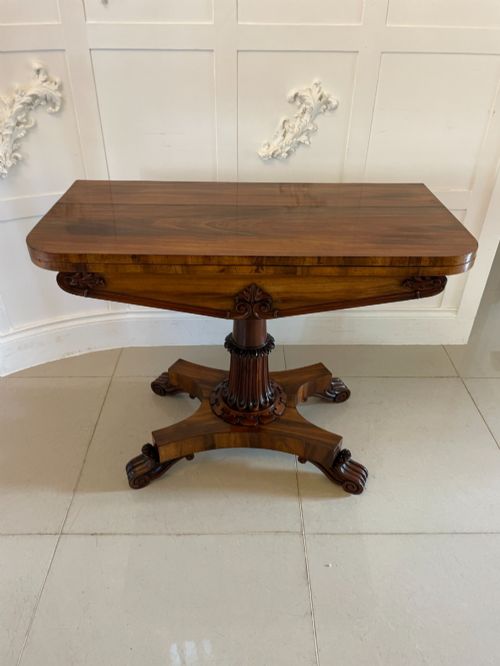
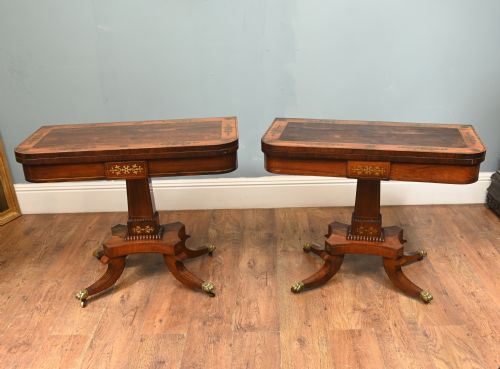
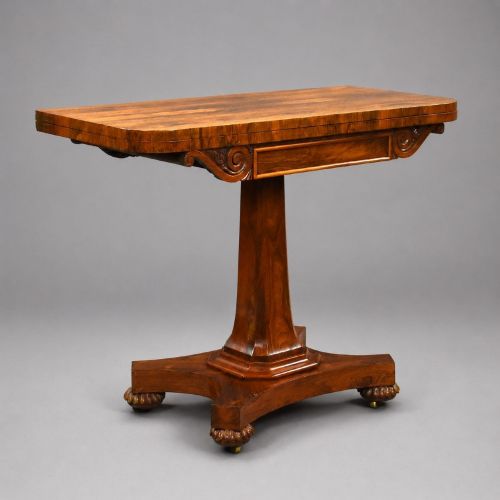
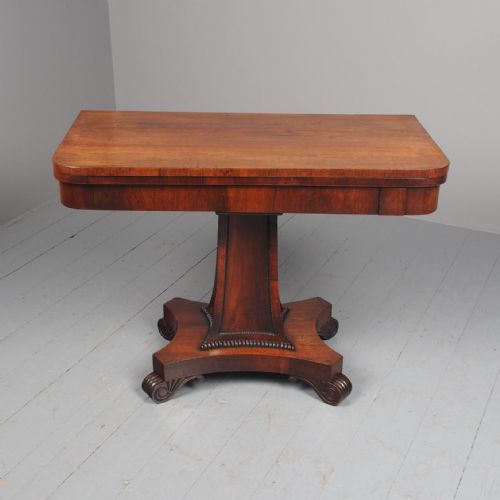
These quadform base card table pieces offer the classic folding top and pedestal support that collectors prize for period interiors.
Quadform Base Card Table
A quadform base card table is a versatile piece designed for parlour games and tea, folding over to display a baize or timber surface when required.
The examples seen on this page span the Georgian, Regency, William IV, and Victorian periods, stretching from the late eighteenth century through to eighteen fifty.
Rosewood and mahogany dominate the forms, frequently accompanied by burr yew and brass inlay details across various games and tea tables.
Materials and construction
Cabinet makers utilised dense timber stocks such as rosewood and mahogany, often pairing figured veneers with solid framing for stability.
Brass inlay and careful carving define the decorative language of the Regency and William IV iterations on show.
Quadform Base Card Table Retail Price Guide 2026
Typical asking prices for quadform base card table among the pieces listed under this phrase on Sellingantiques today, from the lower quarter to the upper quarter. They describe what is for sale here now, not the wider market.
The listings span five distinct periods: Georgian, Regency, William IV, Victorian, and eighteen fifty.
Judging quality
The crispness of the carved details on the quadform pedestal and the fidelity of the timber grain separate standard examples from finer work.
Hinges, pivoting mechanisms, and the alignment of the fold-over top indicate the precision applied by the original workshop.
William Trotter
The Quadform Base Card Table Glossary
- Quadform base
- A four-sided pedestal support structure typically resting on a platform or feet. This configuration provides sturdy weight distribution for the pivoting top.
- Fold-over
- A table top design where the surface hinges open to reveal double the area for dining or card playing. It conceals a shallow well underneath when closed.
- Baize
- A coarse woolen felt material traditionally used to line the playing surface of gaming tables. It provides a soft, non-slip texture for cards.
- Console table
- A side table designed to stand flat against a wall, frequently sharing stylistic details with contemporary card and games tables.
Quadform Base Card Table: Frequently Asked Questions
What is a quadform base card table?
It is a folding timber table featuring a four-sided pedestal foundation, built during the Georgian, Regency, and Victorian eras.
These pieces served a dual purpose in the home, functioning as compact side furniture before opening up for parlour games and social evenings.
How do you open the top?
The upper leaf pivots on a central hinge and rotates ninety degrees to rest securely across the base frame.
This reveals a flat surface, often lined with baize or finished in polished wood, designed to support cards and gaming accessories.
What woods were used?
Cabinet makers relied primarily on rich dark timbers such as rosewood and mahogany for their strength and grain pattern.
Burr yew and brass accents appear on specific pieces, adding visual contrast to the polished surfaces.
How do I date these tables?
Dating relies on stylistic markers such as the transition from carved Regency pedestal supports to heavier William IV and Victorian proportions.
Details like brass inlay and the specific configuration of the quadform base also point to the decade of manufacture.