

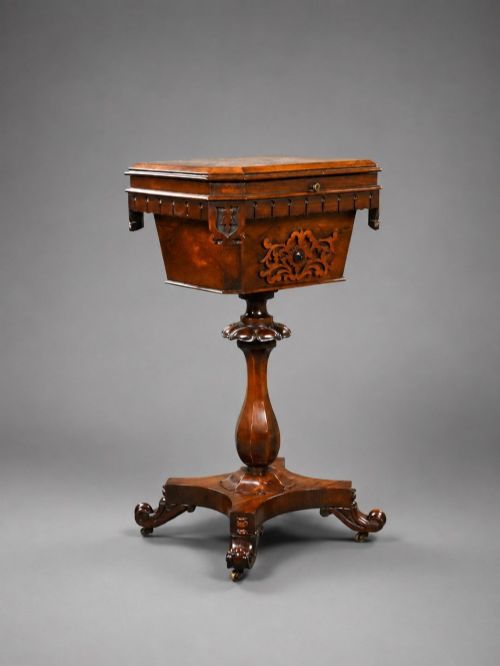
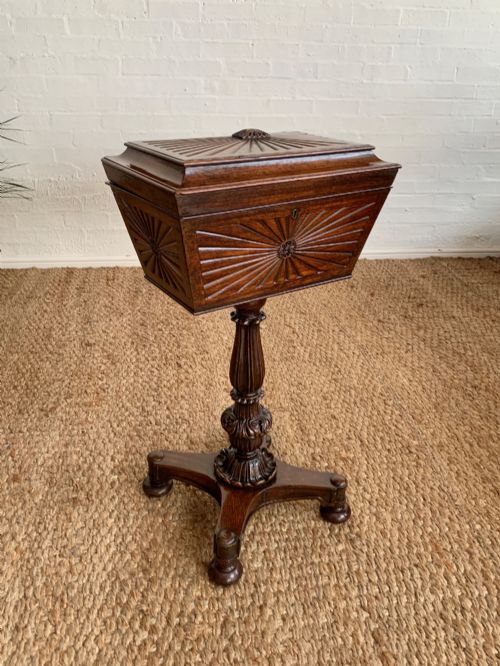
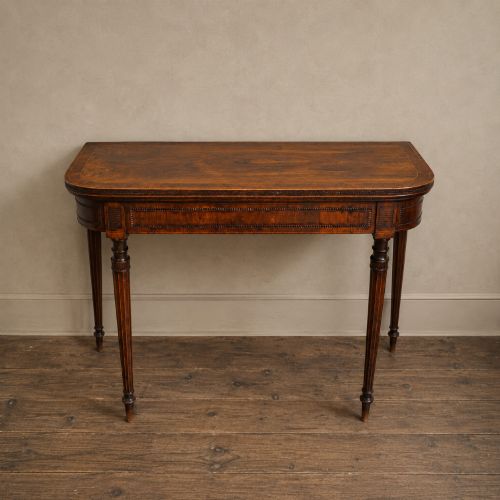
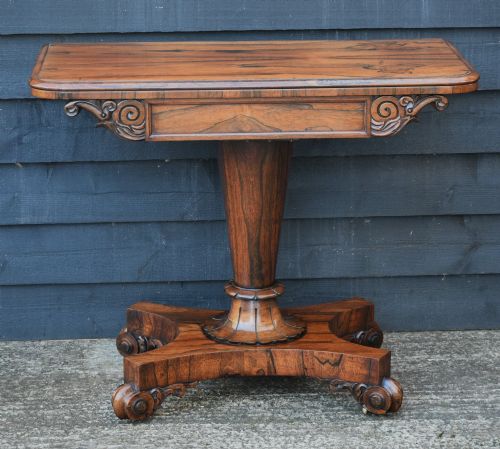
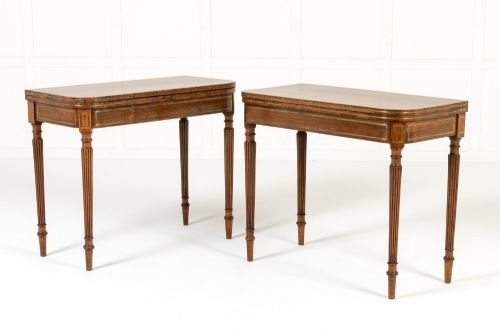
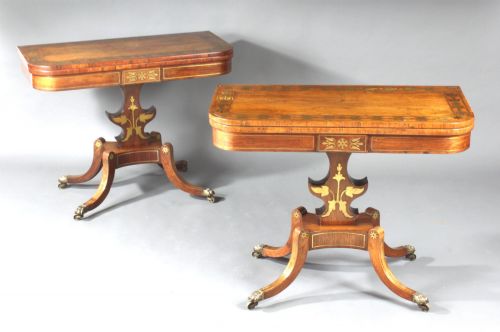
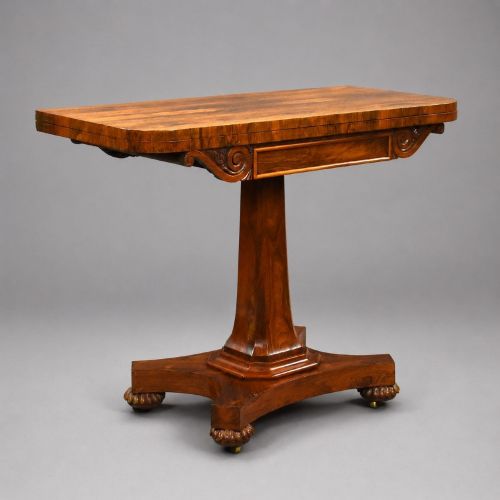
Regency Rosewood Tea Table
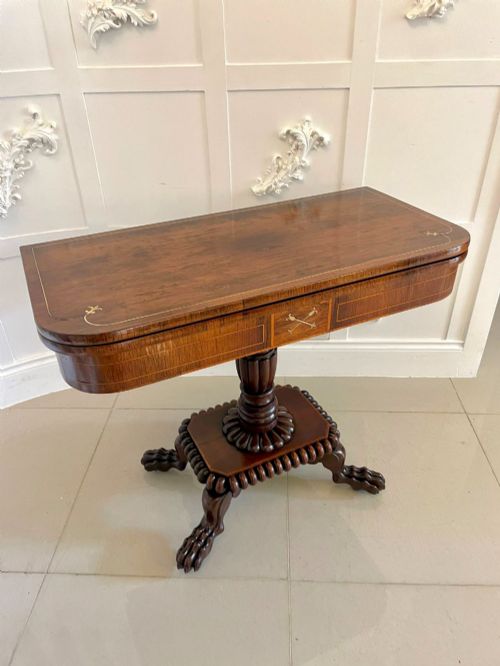
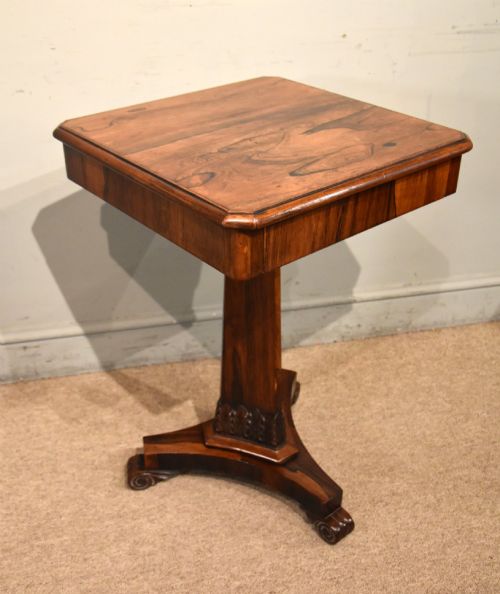
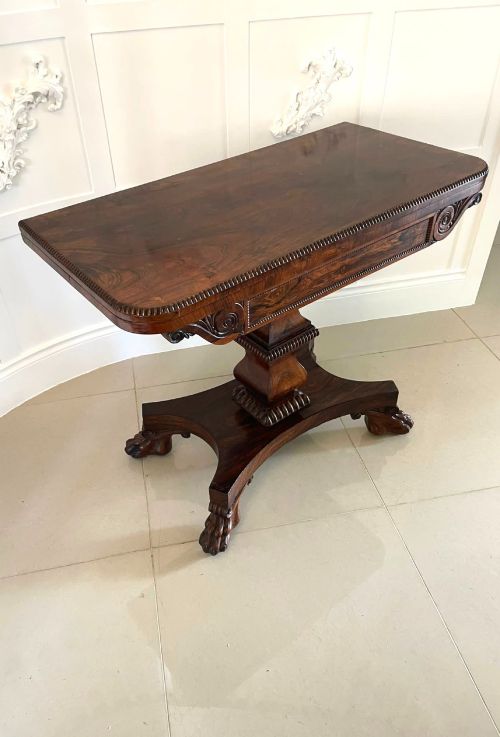
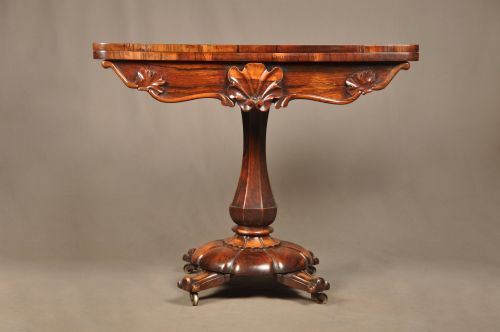
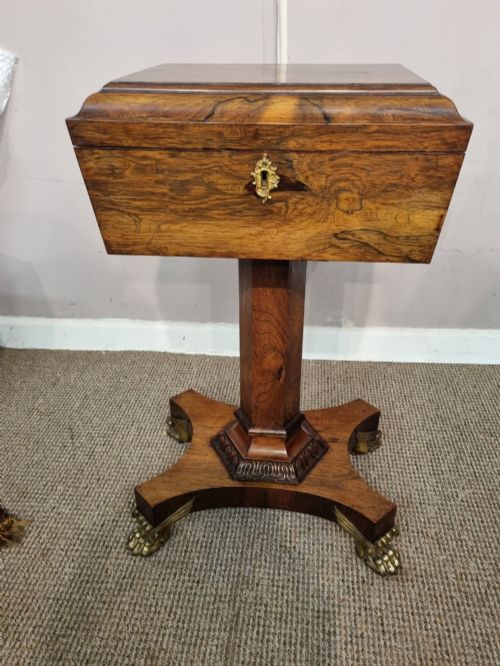
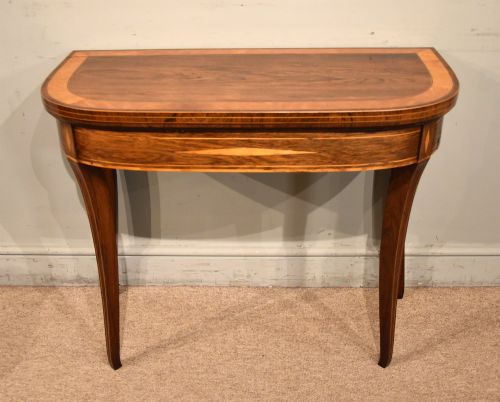
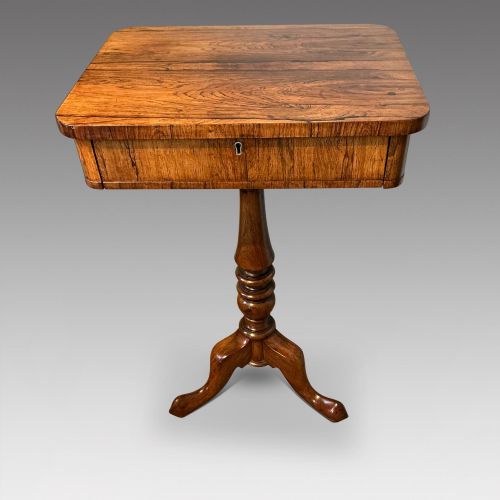
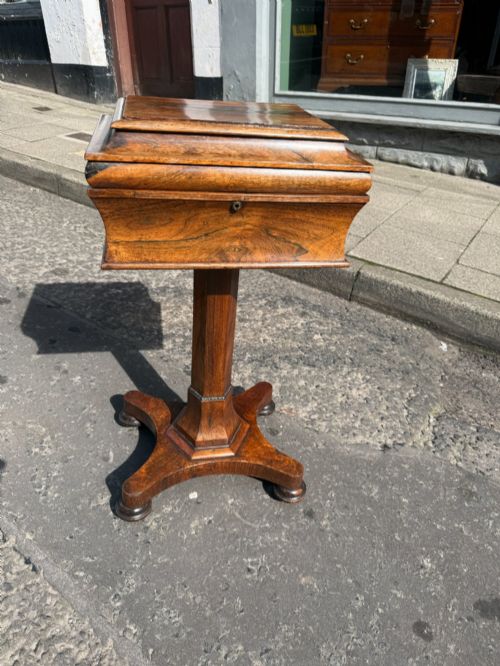
These regency rosewood tea table examples are versatile folding furniture pieces designed for entertaining, prized for their rich timber grain and clever pivoting tops.
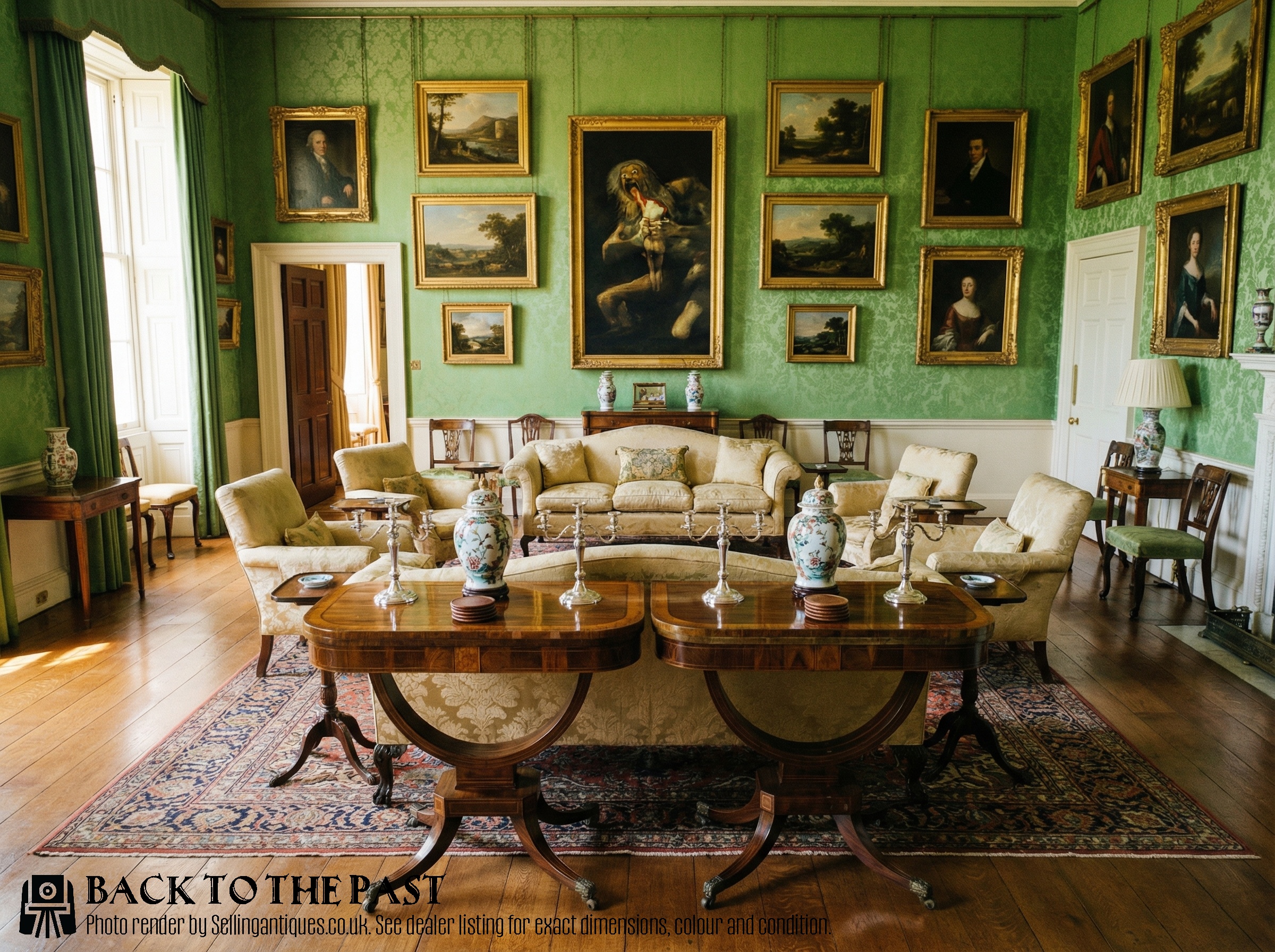
Forms and periods
Beyond the standard tea table form, the evidence records related multi-purpose pieces including games tables, card tables, console tables, side tables, and centre tables. Variations also appear with inlaid details or brass work, alongside specialised items like teapoys.
Materials and construction
Makers utilised rosewood as the primary timber, occasionally combining it with mahogany, satinwood, ebony, boxwood, and general timber. Surfaces frequently incorporate decorative crossbanding, inlaid borders, and contrasting stringing.
Hardware and structural accents include brass components such as inlaid details and original castors. Interiors often feature baize linings to facilitate card playing and entertaining when the leaves are turned over.
Retail Price Guide 2026
Typical UK retail prices for regency rosewood tea table, calculated from the Sellingantiques database of over a million retail prices indexed since 2003. This retail price guide relies exclusively on Sellingantiques data; no external sources or auction records are used, so the figures do not describe the wider market.
Listings demonstrate that rosewood and brass remain the dominant materials across these Regency and Georgian tea and games tables.
Judging quality
The standard of a regency rosewood tea table rests on the selection and matching of the rosewood veneer figures across the fold-over top. Superior examples demonstrate crispness in inlaid brass work and fine execution of boxwood and ebony stringing.
Structural integrity of the folding mechanism and the retention of original brass castors further distinguish higher-grade pieces. The refinement of the turning on pedestals and the depth of the timber polish complete the distinction between standard and top-tier workshop output.
The Regency Rosewood Tea Table Glossary
- Fold-over top
- A hinged table surface that doubles in area when opened for tea or games. This mechanism allows the furniture to save space against a wall when closed.
- Crossbanding
- A border of veneer applied to the edges of a tabletop with the grain running perpendicular to the centre. This decorative technique frames the primary rosewood surface.
- Stringing
- Thin inlay lines of contrasting wood such as boxwood or ebony inserted into channels on the timber. It provides delicate linear definition to table borders and friezes.
- Castor
- A small wheel fitted to the base of table legs to aid movement. Original brass examples add authenticity to period pieces.
- Baize
- A coarse woolen fabric used to line the playing surface of card and games tables. It protects counters and dampens the sound of play.
Frequently Asked Questions
How do I use a tea table?
These tables stand against a parlor wall with the top folded shut when not in use. For tea service or evening company, the hinged leaf swings open to reveal a larger surface.
Many examples also incorporate baize-lined interiors specifically configured for card games and social assemblies.
What is the difference between a tea table and a games table?
While both share a similar fold-over top construction during this period, games tables frequently house specialised felt or baize playing surfaces inside. Tea tables are primarily built for serving hospitality rather than gaming.
In practice, many surviving pieces served dual purposes for both tea and cards depending on the evening's needs.
How do I date a Regency table?
Dating relies on examining the timber species, secondary woods, and decorative motifs characteristic of the early nineteenth century. Rosewood veneers combined with brass inlay typically point towards the Regency and late Georgian eras.
Hardware details like original brass castors and construction joinery offer further chronological clues.
Where should I place a rosewood table at home?
These tables suit hallways, living rooms, and drawing rooms where their slim closed profile fits neatly against a wall. Placing them away from direct sunlight and heat sources protects the rosewood polish and timber.
They also function effectively as console or side tables when kept in their folded configuration.