
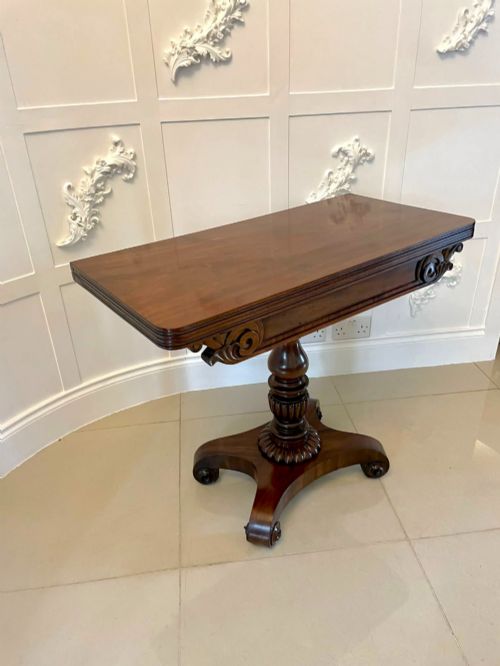

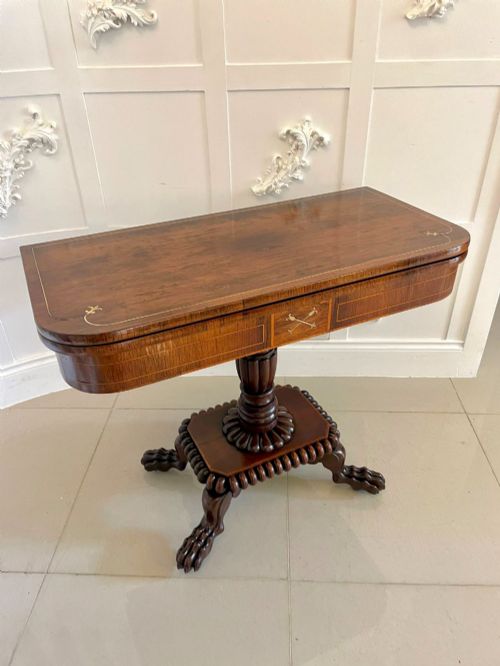
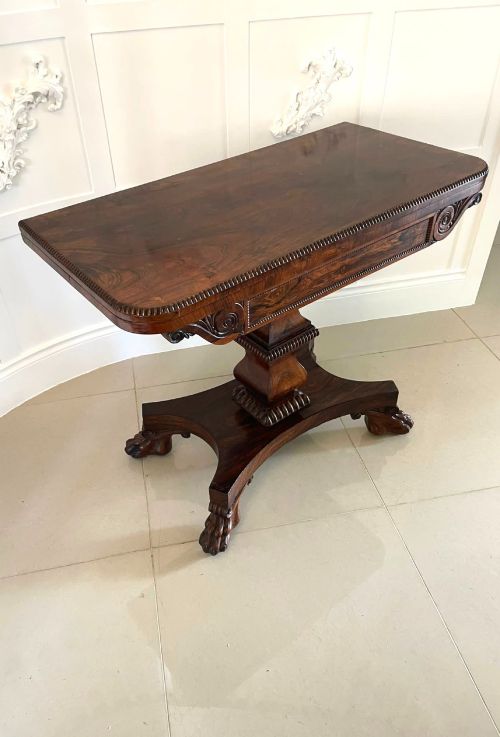
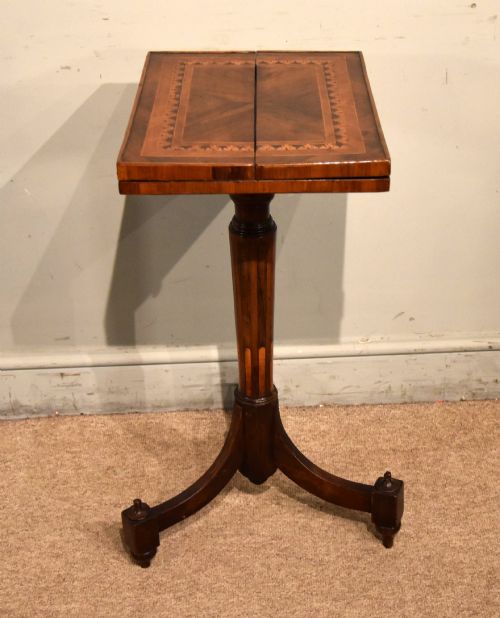
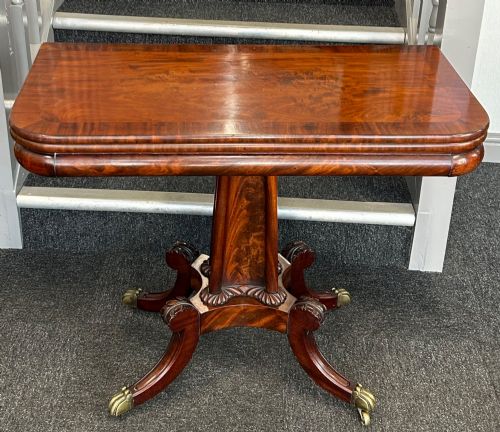


Nineteenth Century Games Table
A nineteenth century games table brings refined social play into a period drawing room with foldover leaves and inlaid boards.
What a nineteenth century games table is
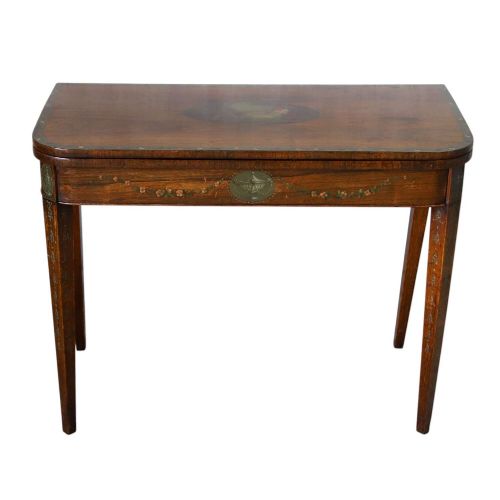
A nineteenth century games table serves as a versatile piece of drawing room furniture designed for cards and board play, appearing frequently in rosewood, mahogany, and walnut. These tables adapt to social gatherings through folding leaves, swivel tops, and concealed compartments that hold counters and playing pieces.
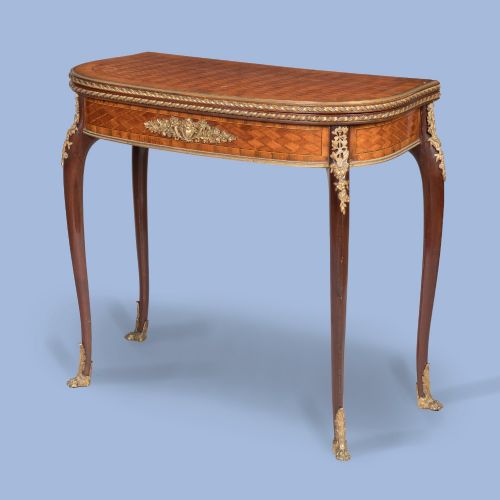
The Regency period and the wider nineteenth century dominate the examples seen here, often taking the form of card tables, occasional tables, or specialised work tables. Makers and workshops applied grand styles ranging from classical Regency lines to elaborate Louis XV revival marquetry and William IV robustness.
How they were made
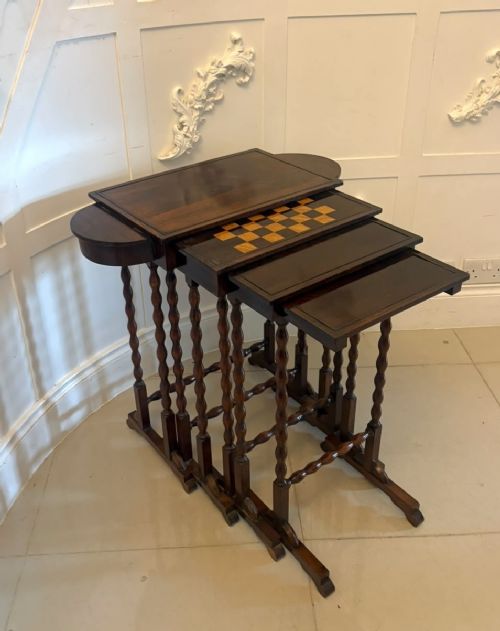
Cabinetmakers utilised dense timbers such as rosewood, kingwood, burr walnut, and mahogany, often enhanced by intricate parquetry or contrasting satinwood chequered tops. Structural support relied on turned stems, tripod bases, or carved dolphin bases.
Surface enrichment involved delicate brass inlay, cast ormolu mounts, and gilt bronze details that contrasted with ebonised wood elements. Scumbled finishes also appear, showing varied surface treatments applied over simpler woods to imitate grander materials.
Retail Price Guide 2026
Typical UK retail prices for nineteenth century games table, calculated from the Sellingantiques database of over a million retail prices indexed since 2003. This retail price guide relies exclusively on Sellingantiques data; no external sources or auction records are used, so the figures do not describe the wider market.
Listings feature rosewood, mahogany, walnut, and burr walnut, alongside brass inlay, ormolu mounts, and scumbled wood surfaces.
What varies in quality
The distinction between standard examples and top-tier pieces rests on the precision of the timber selection, such as richly figured burr walnut or masterfully matched rosewood veneers. Superior execution shows in the crispness of brass inlay and the sophistication of parquetry patterns.
Attribution to notable makers or prominent workshops elevates a piece, demonstrated through refined carving on supports like dolphin bases and the fluid movement of swivelling foldover mechanisms. The integration of ormolu mounts and finely cast gilt bronze further separates workshop tiers.
George Bullock·François Linke·Gillows of Lancaster and London
The Nineteenth Century Games Table Glossary
- Card table
- A specialised folding table designed for evening card games, featuring a baize-lined interior surface when opened. These pieces typically stand against a wall as a console when closed.
- Parquetry
- Geometric wood inlay forming patterned surfaces using contrasting timbers such as kingwood and satinwood. This technique creates decorative chessboard tops and geometric borders.
- Ormolu
- Gilt bronze mounts applied to furniture for decorative enrichment, common in revival styles. The technique involves applying a gold amalgam to bronze.
- Scumbled
- A paint finish manipulated to imitate the grain of more expensive woods or tortoiseshell. It allowed makers to achieve rich decorative effects on more accessible carcase timbers.
- Foldover leaf
- A hinged top that doubles the surface area of the table when opened for play. This mechanism conceals the interior well and gaming surface until needed.
Frequently Asked Questions
What is a nineteenth century games table used for?
These tables served primarily for evening entertainment, hosting card games, chess, and backgammon in formal drawing rooms. Their dual-purpose design allowed them to function as side or console tables when not in use.
The folding mechanisms and internal compartments kept playing pieces close at hand while maintaining a neat, decorative appearance during the day.
How do I identify a Regency games table?
Regency examples often feature rosewood construction, classical architectural lines, and distinct supports such as turned stems or carved dolphin bases. Brass inlay and stringing are common decorative hallmarks of this specific era.
Proportions tend to be crisp and restrained compared to later Victorian and revival pieces, reflecting the influence of classical antiquity on Regency design.
Can I use a card table for dining?
Most nineteenth century card tables are not suited for regular dining due to their narrow depth when closed and the delicate nature of their folding leaves and support structures. The internal hinges and swivel mechanisms are engineered for light social play rather than heavy daily dining use.
Using them occasionally for drinks or casual placement is safer, provided the weight remains modest and evenly distributed across the open top.
How do I care for rosewood and walnut surfaces?
Protect the polished timber by keeping the table away from direct sunlight and heat sources, which can dry out veneers and cause warping. Regular dusting with a soft, dry cloth maintains the finish without needing harsh chemical polishes.
Applying a traditional beeswax occasionally helps nourish older timber surfaces and preserves the natural lustre of the grain.