

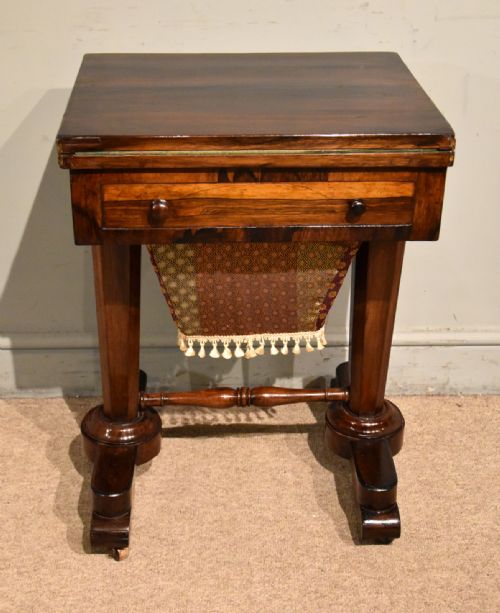


Rosewood Foldover Table
A rosewood foldover table offers the dual charm of a compact console and a spacious surface, making it an essential piece for period entertaining.
What these tables are
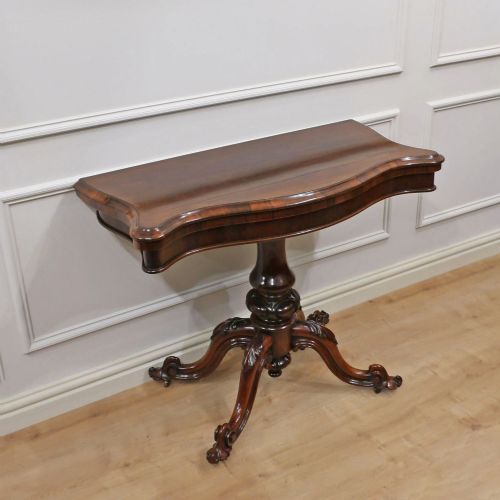
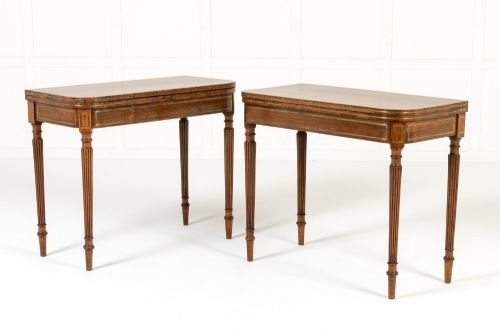
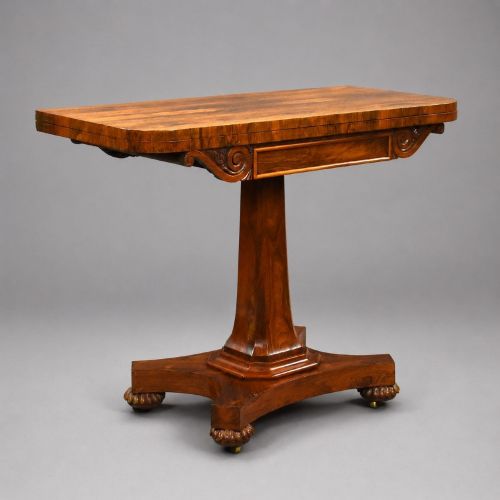
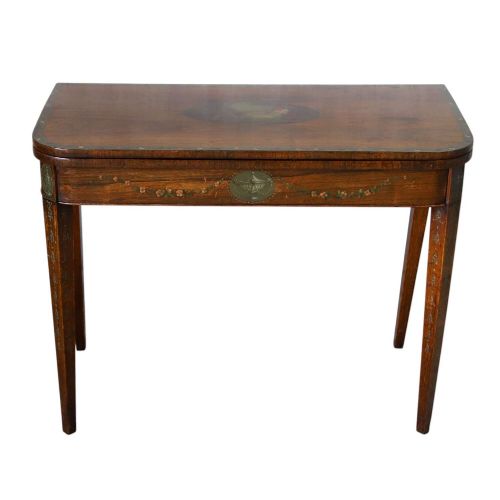
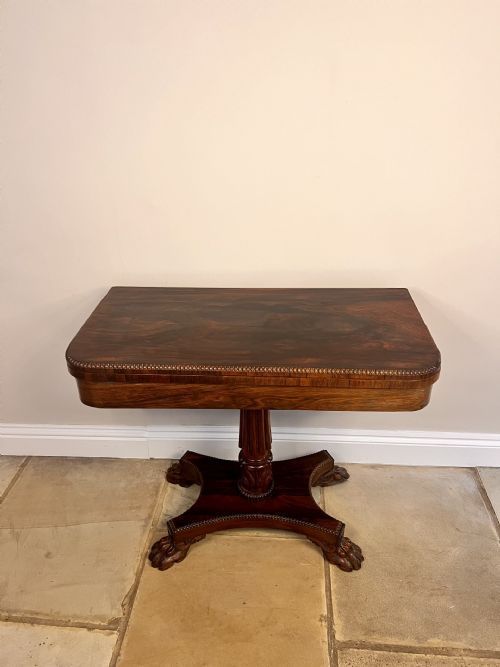
A rosewood foldover table functions primarily as a games table, card table, or tea table, adapting its form through a hinged top that opens to reveal a finished surface. These pieces appear across the Regency, William IV, and Victorian periods, alongside items dated to the eighteenth century and eighteen-fifty.
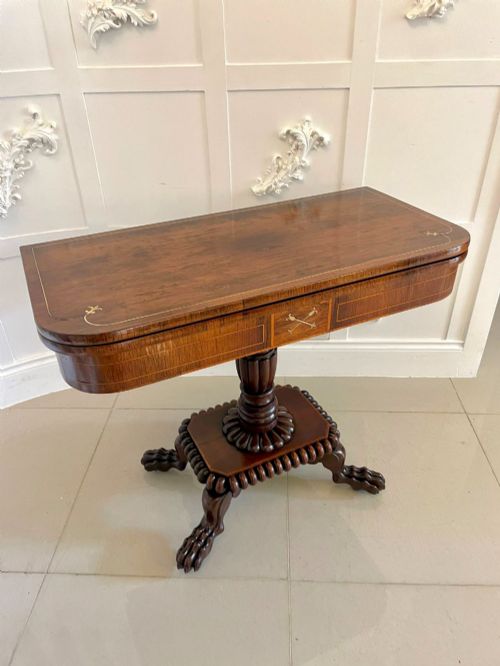
The inventory demonstrates a clear preference for pedestal bases and end supports, occasionally incorporating workboxes or pierced stretchers. Most examples date from the Regency era through the mid-nineteenth century, showing how cabinet makers prioritized versatile furniture for parlours and drawing rooms.
How they were made
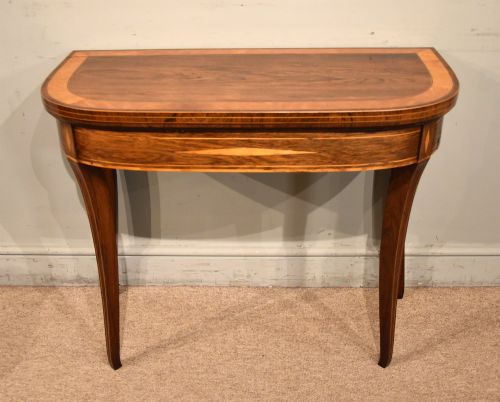
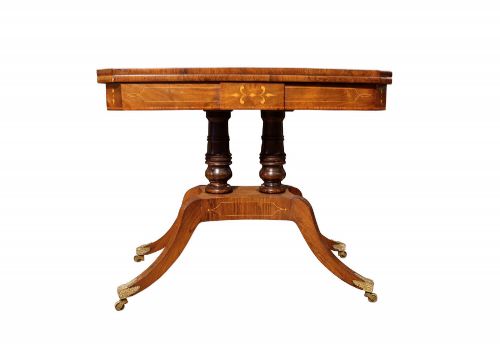
Construction relies heavily on dense rosewood timber, frequently complemented by satinwood stringing or contrasting inlay work. Cabinet makers utilised robust secondary timbers to support the heavy tropical hardwoods employed for the show surfaces.
Metal components appear in the form of brass fittings, particularly castors and hinges that facilitate the rotation and folding action of the top. Carved details adorn the pedestals and supports of the later Victorian examples.
Retail Price Guide 2026
Typical UK retail prices for rosewood foldover table, calculated from the Sellingantiques database of over a million retail prices indexed since 2003. This retail price guide relies exclusively on Sellingantiques data; no external sources or auction records are used, so the figures do not describe the wider market.
Some ladies found their tables doubled as workboxes for endless needlework.
What varies in quality
Quality rests in the selection of the rosewood grain and the precision of the satinwood contrast, where highly figured timber commands greater attention. The mechanical action of the foldover mechanism must operate smoothly, aligning the surfaces perfectly when closed or open.
The sophistication of the carving on the pedestal or end supports distinguishes standard production from finer cabinet work. Proportion and the integrity of the structural joints dictate the enduring success of each piece.
The Rosewood Foldover Table Glossary
- Foldover top
- A hinged surface that doubles the size of the table when opened for cards, games, or tea. This clever mechanism allows a console to transform into a functional gaming or dining surface.
- Pedestal base
- A central column supporting the table body, often resting on a platform with carved feet. This architectural form replaced four separate legs in many Regency and Victorian designs.
- End supports
- Pair of vertical uprights at each end of the table base, linked by a stretcher. This configuration provides sturdy structural support for heavy rosewood tops.
- Satinwood
- A pale, lustrous timber used for contrasting inlay and stringing on darker rosewood surfaces. It highlights the edges and geometric borders of the tabletop.
Frequently Asked Questions
What is a rosewood foldover table used for?
These tables served primarily as multi-purpose furniture for the home, functioning as console tables against a wall when closed. Opening the hinged top provided a stable surface for card games, board games, or serving tea.
Their dual nature made them indispensable in nineteenth-century drawing rooms where space economy and social entertaining mattered equally.
How do I date a rosewood foldover table?
Dating relies on stylistic clues such as the silhouette of the pedestal, the presence of carved ornamentation, and the overall proportions. Regency and William IV pieces often display clean classical lines or robust scrolling supports.
Victorian examples frequently introduce heavier carved elements and pierced stretchers, reflecting the changing tastes of the mid-nineteenth century.
Are these tables sturdy enough for daily use?
Rosewood is an exceptionally dense and heavy hardwood, which contributes to the inherent stability of these tables. The folding mechanism and supporting rails are engineered to bear the weight of the open leaf.
Careful handling of the hinge pivot ensures the mechanism remains reliable over decades of domestic use.
What is the difference between a card table and a tea table?
Card tables often feature lined interiors, historically fitted for gaming with baize or leather surfaces, alongside small compartments for counters. Tea tables typically present a polished wooden surface designed for the tea service.
Both utilise the same foldover mechanism to save space when not in active use.