
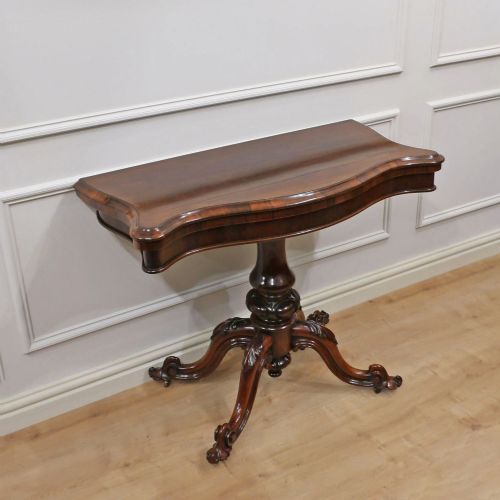

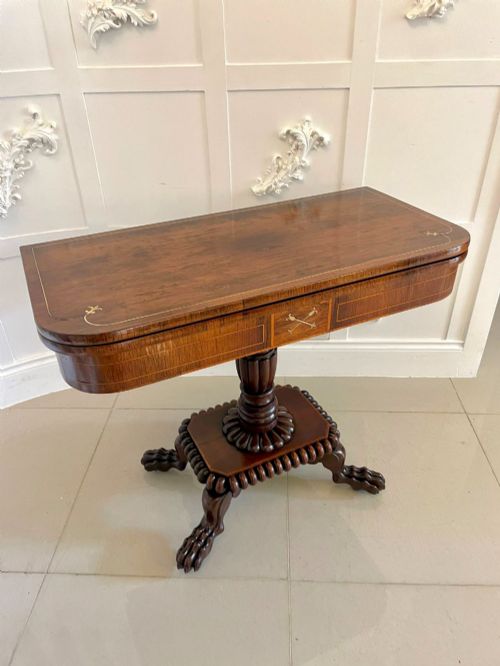
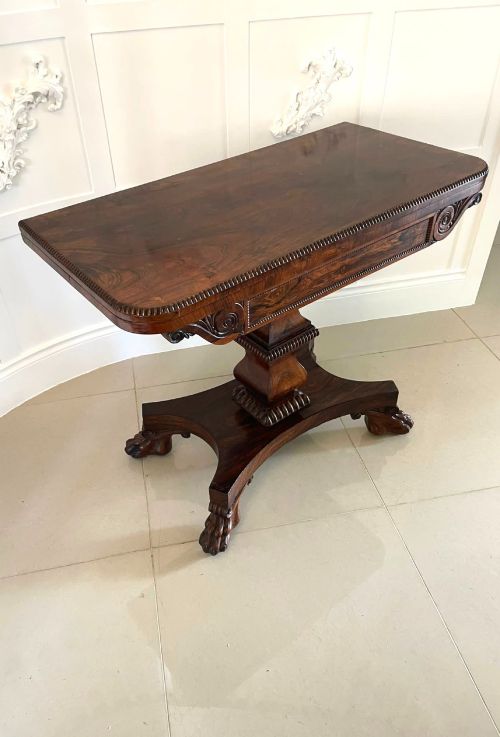
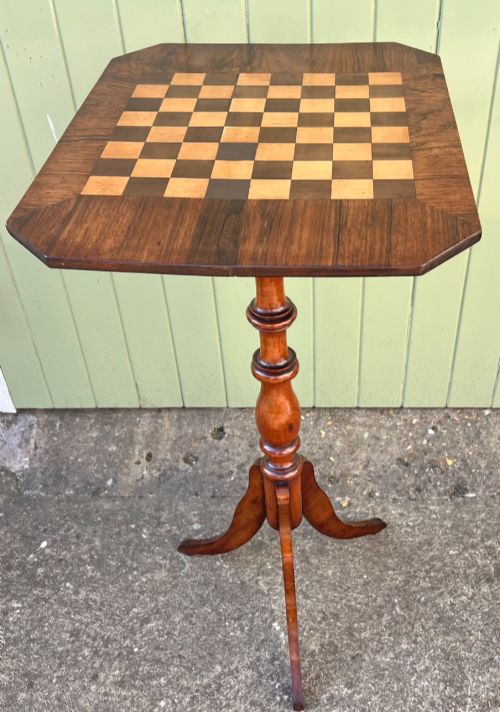
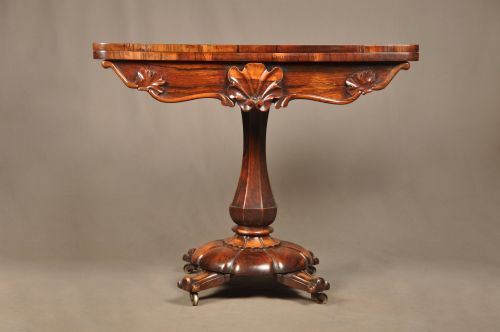
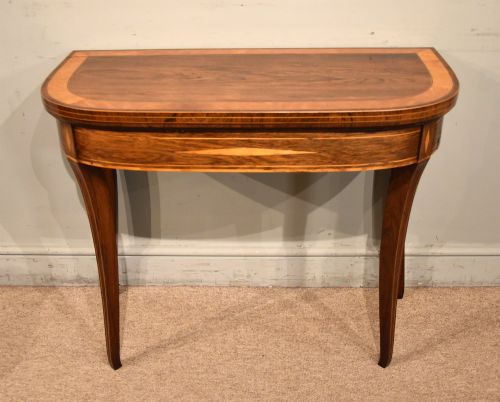
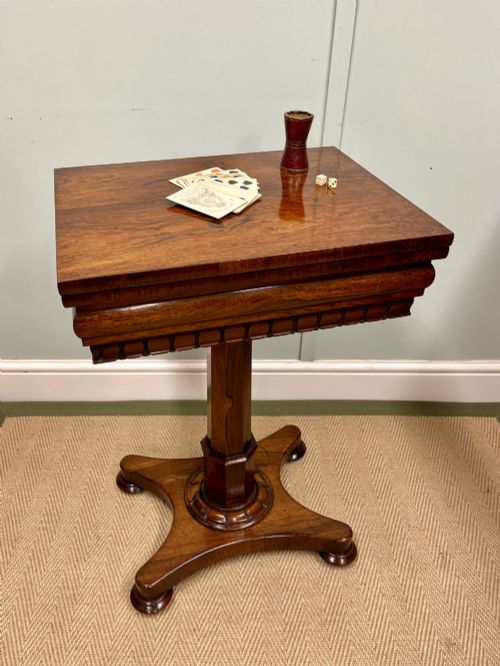
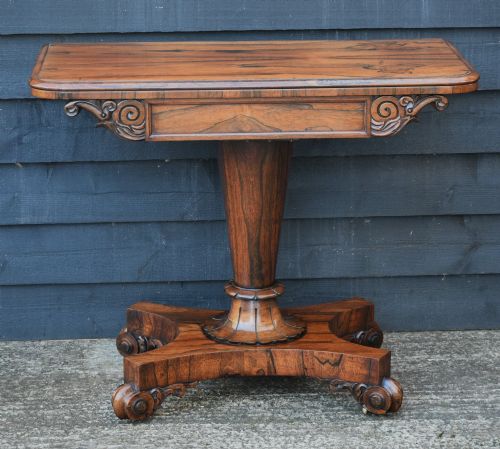
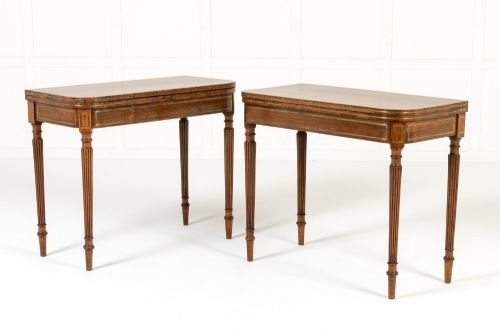
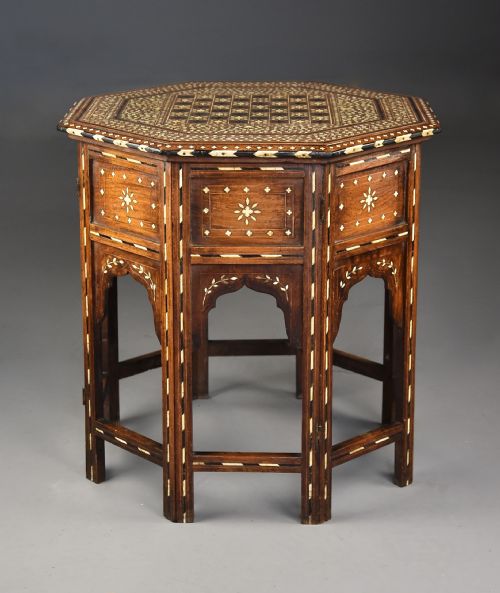
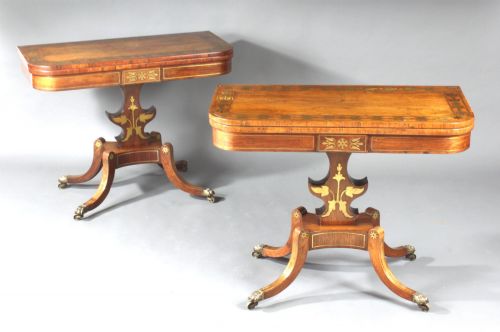
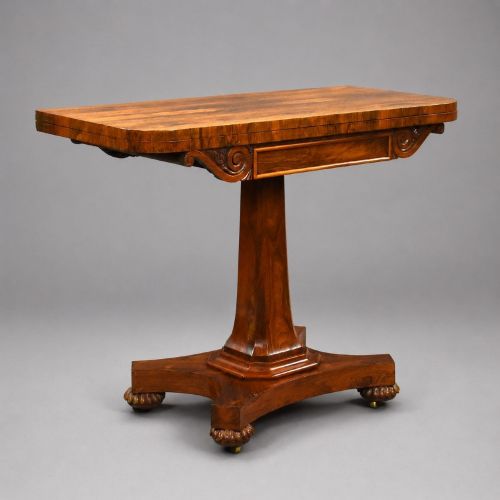
Dark Rosewood Games Table
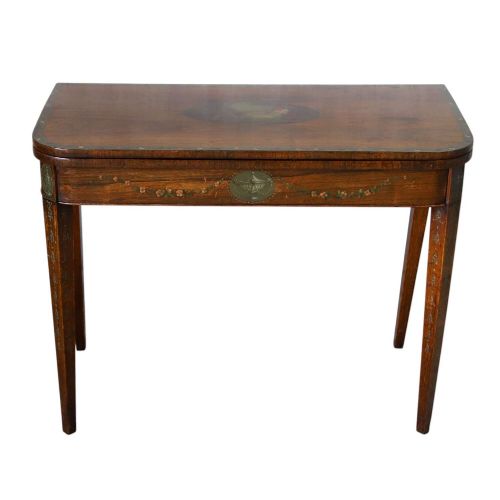
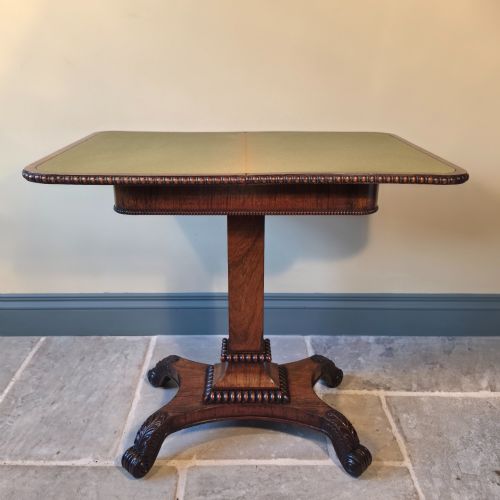
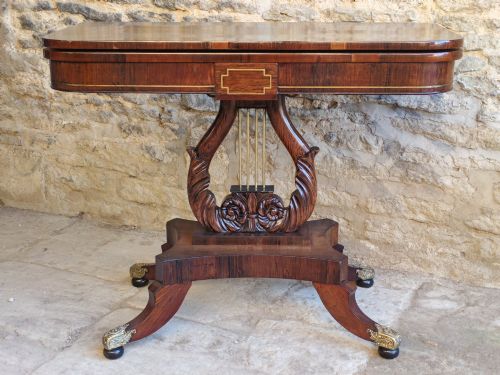
These dark rosewood games table examples bring refined folding surfaces into the home, combining rich woods with practical folding mechanics.
Identifying a dark rosewood games table
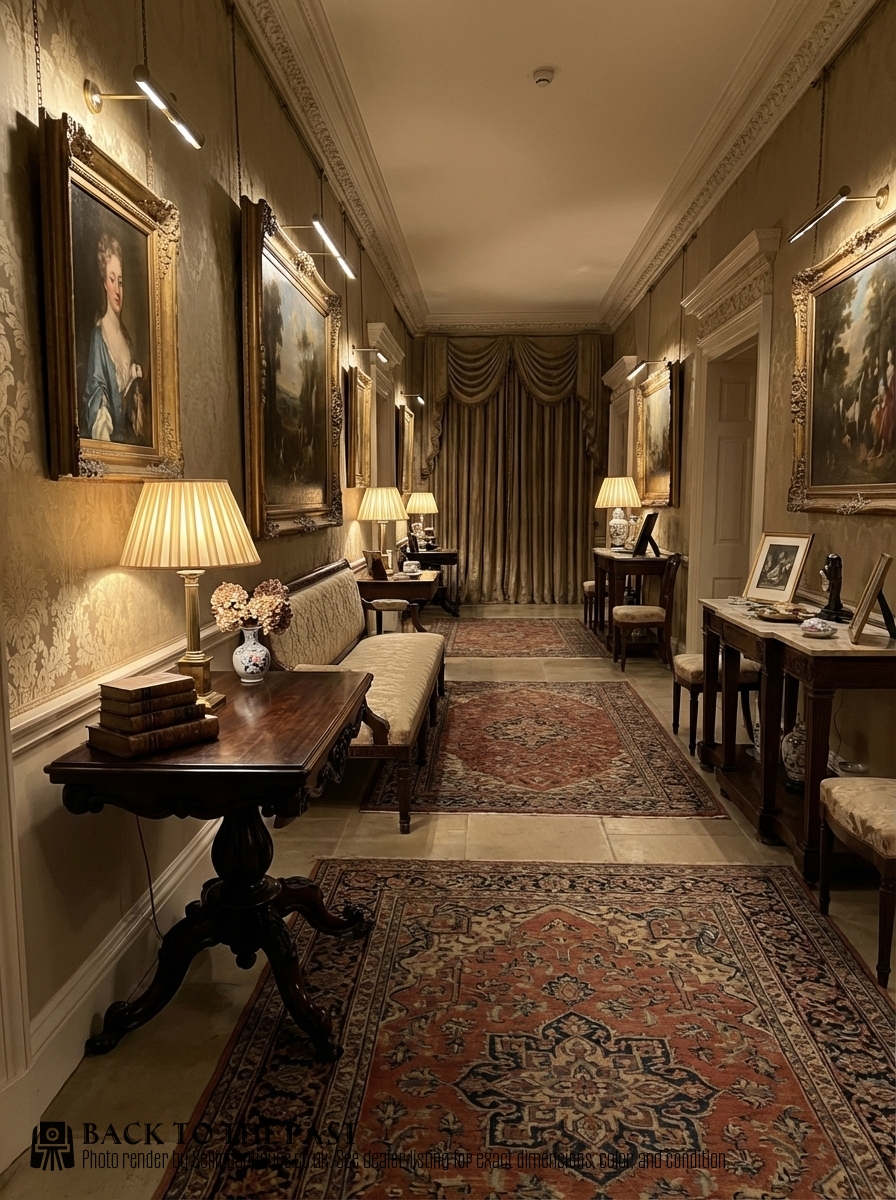
A dark rosewood games table serves as a dual-purpose piece designed for card playing, chess, and general leisure in traditional interiors. These items primarily appear from the Regency, William IV, and Victorian eras, spanning the eighteenth and nineteenth centuries.
English origins dominate the current selection, showcasing classic forms from the Regency and William IV periods. Buyers frequently encounter rectangular folding formats intended to sit flat against a wall when not in use.
Materials and construction
Construction relies heavily on dark rosewood timbers, often paired with contrasting satinwood inlay and brass details. Interior playing surfaces incorporate fabric or baize to provide a smooth area for cards.
Tables utilise fold-over mechanisms that conceal compartments or storage wells beneath the primary top. Carved elements appear on specific Victorian and William IV examples, adding texture to the solid timber framework.
Retail Price Guide 2026
Typical UK retail prices for dark rosewood games table, calculated from the Sellingantiques database of over a million retail prices indexed since 2003. This retail price guide relies exclusively on Sellingantiques data; no external sources or auction records are used, so the figures do not describe the wider market.
Listings span the Regency, William IV, and Victorian periods, with materials featuring rosewood, satinwood, and baize.
Assessing quality
Quality differentiates itself through the crispness of carved details and the careful selection of rosewood grain. Superior examples exhibit precise joinery in their folding mechanisms and smooth operation of internal compartments.
The integration of contrasting satinwood or fine brass elements indicates a higher tier of craftsmanship. Finer pieces maintain balanced proportions between the upper playing surface and the supporting base.
Gillows
The Dark Rosewood Games Table Glossary
- Rosewood
- A dense, dark timber prized for its rich grain patterns and durability in nineteenth-century furniture. It forms the primary structural and visual base for these items.
- Baize
- A woolen felt material traditionally used to cover the playing surfaces of card and games tables. It provides a soft, non-slip texture for dealing cards.
- Satinwood
- A luminous yellowish timber employed for contrasting stringing or inlay work on table tops. It highlights the darker tones of the surrounding rosewood.
- Fold-over
- A hinged tabletop design that doubles the surface area when opened for play. This mechanism defines the primary layout of these objects.
Frequently Asked Questions
What is a dark rosewood games table used for?
These tables provide a stable, dedicated surface for card games, chess, and sewing tasks within a reception room. Their folding top allows them to function as console surfaces when game time ends.
Historically, they sat against drawing room walls until guests gathered for evening entertainment. The integrated storage compartments kept playing cards and pieces close at hand.
How do you date a rosewood games table?
Dating relies on stylistic clues, comparing Regency, William IV, and Victorian design markers present in the woodwork and carving. Cabinetmakers shifted from neoclassical lines to heavier, carved forms as the nineteenth century progressed.
Materials like satinwood inlay and brass mounts also point to specific stylistic periods. Examining the construction of the fold-over hinges helps confirm the era of manufacture.
What is baize on a games table?
Baize is the green or coloured fabric lining the interior playing surface of the folding top. It creates a cushioned, tactile area designed to deaden the sound of dice and protect card surfaces.
This textile lining is an essential characteristic of period card tables. It defines the usable gaming area once the top is unfolded.
How do I care for a rosewood games table?
Maintenance involves keeping the timber away from direct sunlight and extreme temperature fluctuations to prevent wood splitting. Regular dusting with a dry cloth preserves the finish of the dark rosewood.
Care should be taken when operating the folding mechanism to avoid straining the original hinges. Protecting the baize surface from moisture ensures the interior remains tidy.