

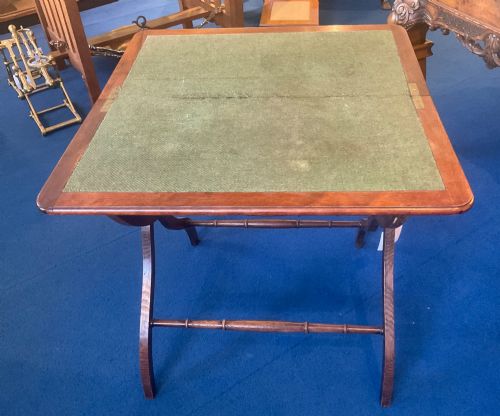
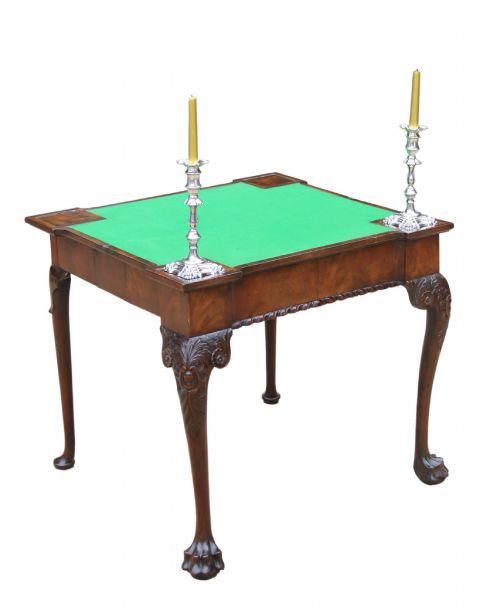
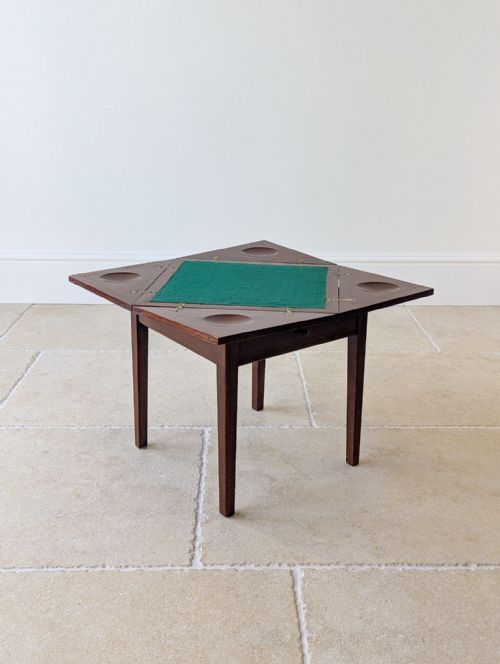
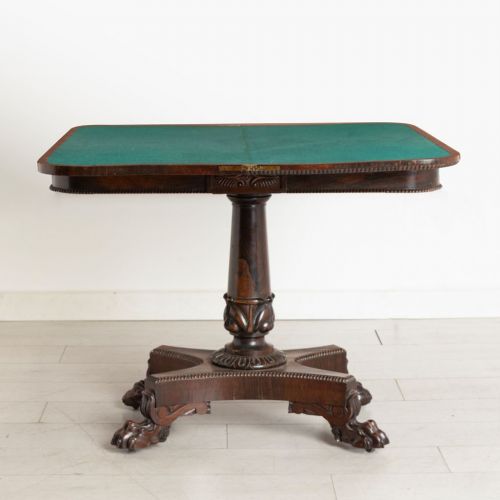


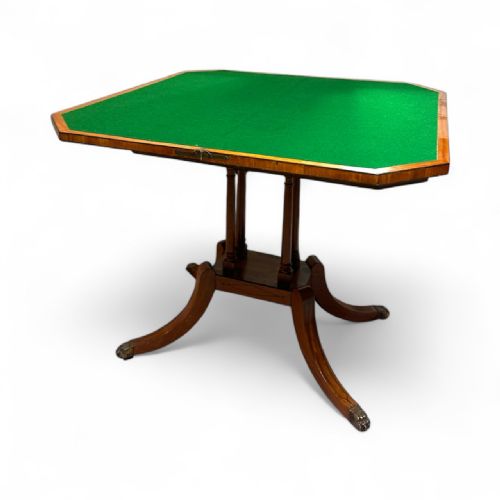

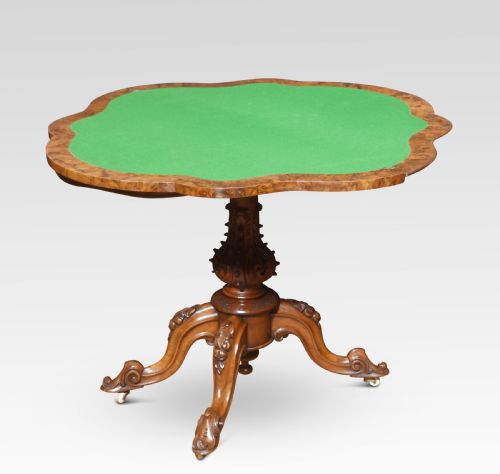

Green Baize Card Table
A green baize card table brings folding utility and rich timber into the room, offering a tactile surface for traditional parlour games.
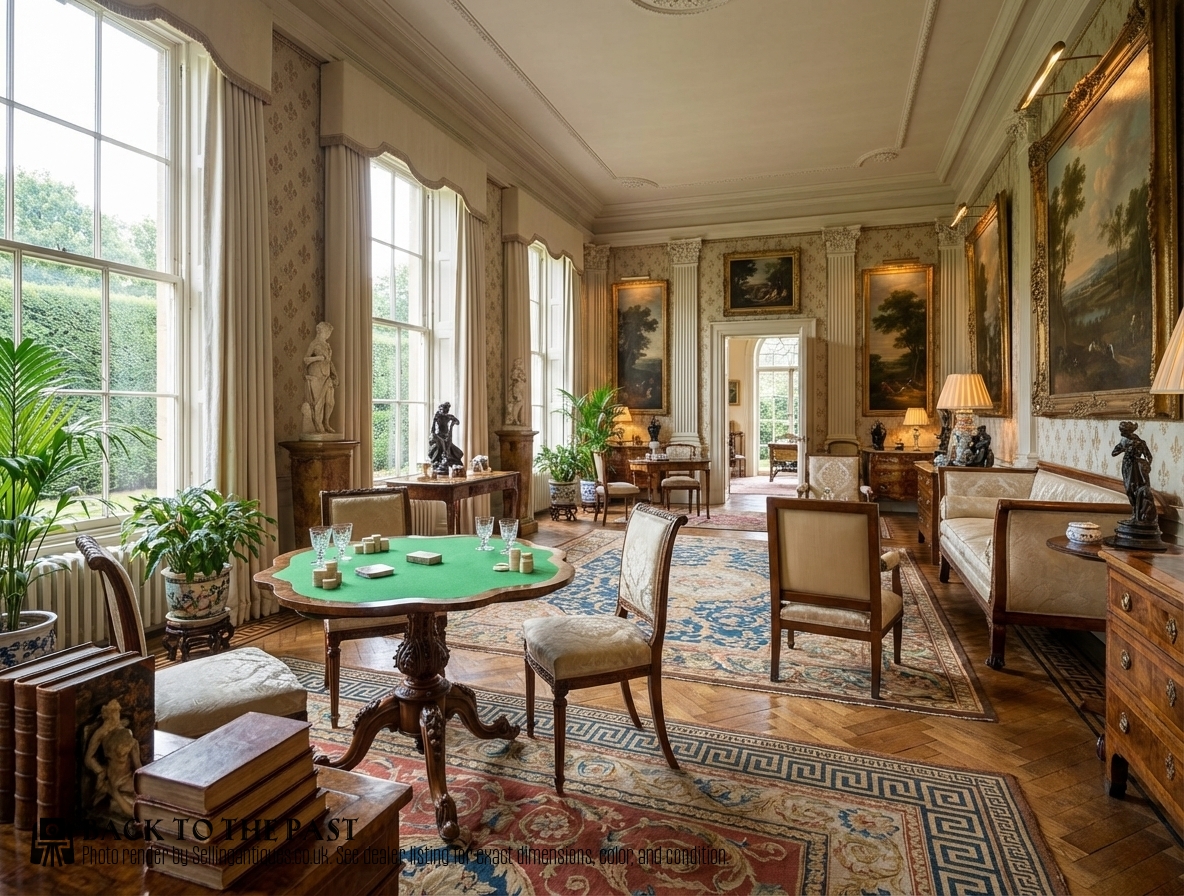
Understanding the Green Baize Card Table
A green baize card table serves as a dedicated surface for evening entertainment, designed to fold away or conceal its primary purpose when not in use. These pieces span several distinct periods including Regency, Victorian, and Edwardian eras, each bringing particular proportions to the domestic interior.
The forms on this page range from standard fold-over designs to specialised envelope tables and occasional games tables. Mahogany and walnut appear frequently as the primary woods, often complemented by inlaid wood or brass details.
Origins vary across English and French workshops, encompassing styles from classic Victorian to French Louis XV Revival. Buyers encounter robust 19th century examples alongside lighter Edwardian iterations and occasional papier-mache variants.
Materials and Construction
Cabinet makers utilised dense hardwoods such as mahogany, walnut, and burr walnut for the structural frames and table tops, frequently applying intricate inlaid wood decoration. Mother of pearl and ebonised papier-mache also feature in select decorative examples.
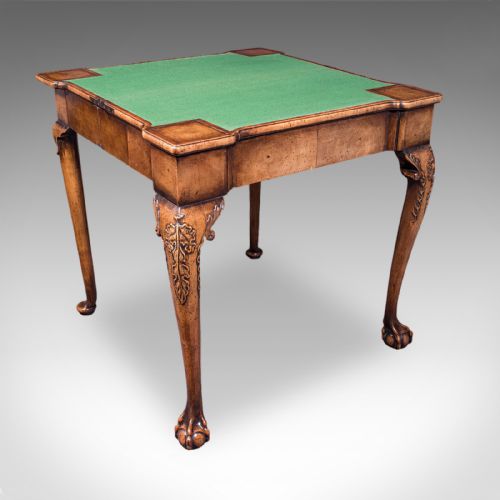
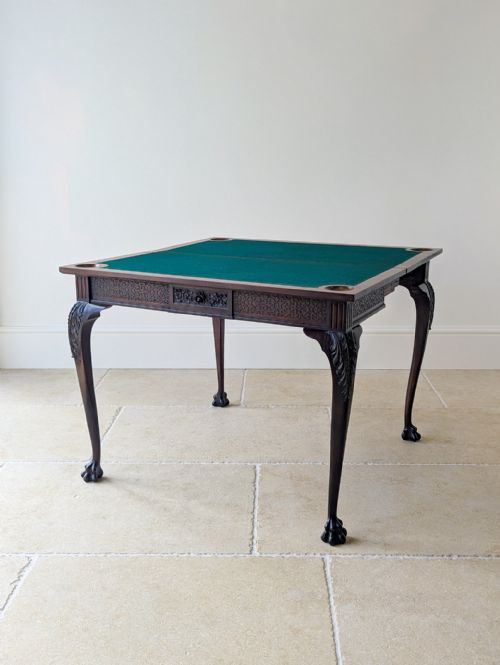
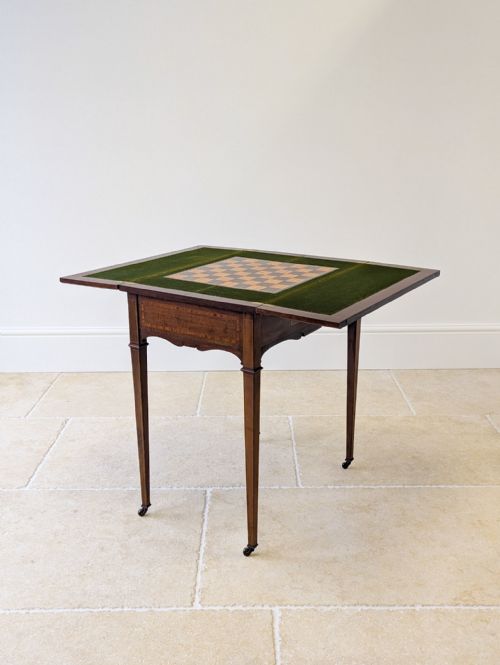
The central functional element relies on a textile lining of green baize, inset to provide a soft, non-slip playing field for cards and chess. Clever folding mechanisms and brass hinges allow the tops to swivel, unfold, or reveal internal storage compartments.
Retail Price Guide 2026
Typical UK retail prices for green baize card table, calculated from the Sellingantiques database of over a million retail prices indexed since 2003. This retail price guide relies exclusively on Sellingantiques data; no external sources or auction records are used, so the figures do not describe the wider market.
Periods represented across the inventory span the Regency, Victorian, and Edwardian eras.
Assessing Quality and Execution
Superior execution shows in the precision of the folding mechanism and the stability of the timber when opened, ensuring the playing surface remains entirely level. Lesser examples might exhibit stiffness or looseness in the joints and hinges.
The refinement of the timber grain, particularly in burr walnut and figured mahogany, dictates the visual distinction of the piece. Subtle details in inlaid wood and the quality of the green baize lining further separate standard production from master craftsmanship.
Edwards & Roberts
The Green Baize Card Table Glossary
- Baize
- A coarse woollen material resembling felt, traditionally green, used to cover the playing surface of games tables. It provides a durable and tactile texture for shuffling and dealing cards.
- Envelope table
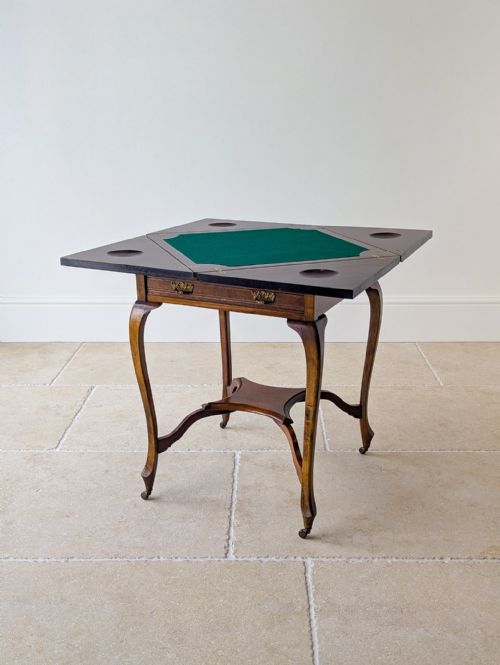
- A square card table with four triangular flaps that fold over each other like an envelope to conceal the baize interior. Rotating the top typically swings the legs out to support the opened flaps.
- Fold-over
- A table top construction featuring a hinged leaf that doubles the surface area when unfolded. This design allows a compact console or occasional table to transform into a full games surface.
- Papier-mache
- A composite material made of paper pulp reinforced with glue or resin, pressed and dried into sturdy forms. It accepts dark ebonisation and detailed mother of pearl inlay with great stability.
Frequently Asked Questions
What is a green baize card table used for?
These tables provide a stable and dedicated surface for playing cards, chess, and other parlour games in a domestic setting. The textile top prevents cards from sliding during play.
When not in use, the fold-over or envelope tops close to function as conventional occasional or side tables against a room's perimeter.
How do I identify a Regency card table?
Regency examples typically date from the early nineteenth century, showcasing clean classical lines, rich rosewood or mahogany timbers, and often bold brass mounts. Their proportions reflect the neoclassical tastes of the period.
Look for architectural pedestals or saber legs that anchor the design, distinguishing them from the more ornate Victorian or lighter Edwardian iterations.
Can I use an antique card table every day?
These pieces were built to withstand regular domestic use, employing robust hardwoods and sturdy folding mechanisms designed for frequent opening. However, mindful handling of the antique hinges and protecting the wooden finish is advisable.
Positioning the table away from direct heat sources and strong sunlight preserves both the structural timber and the traditional green baize lining.
What timber was used for Victorian games tables?
Victorian cabinet makers favoured dense and heavily figured woods such as mahogany, walnut, and burr walnut to construct their games furniture. These timbers offered the necessary structural strength for folding leaves.
Makers frequently enhanced these woods with delicate inlaid wood, contrasting veneers, or ebonised finishes to suit the decorative preferences of the later nineteenth century.