


Mother of Pearl Inlay Table
A mother of pearl inlay table brings geometric richness and iridescent focal points to a room, drawing the eye through intricate contrasting surfaces.
Mother of Pearl Inlay Table
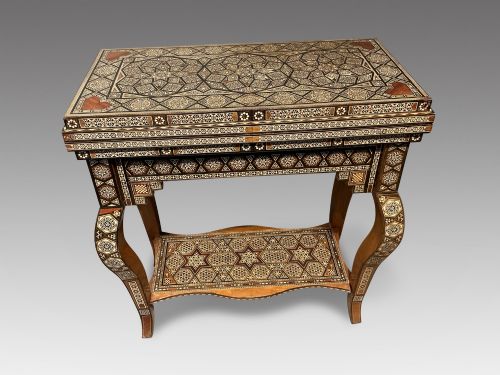
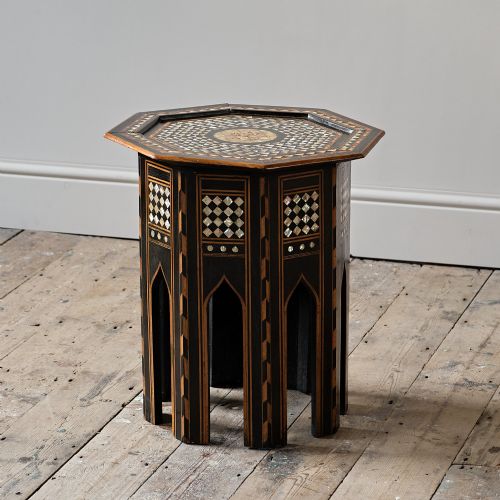
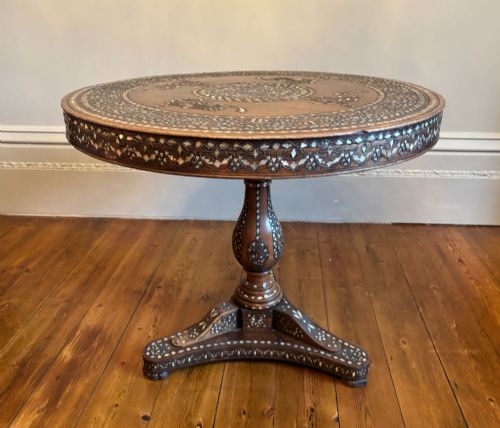
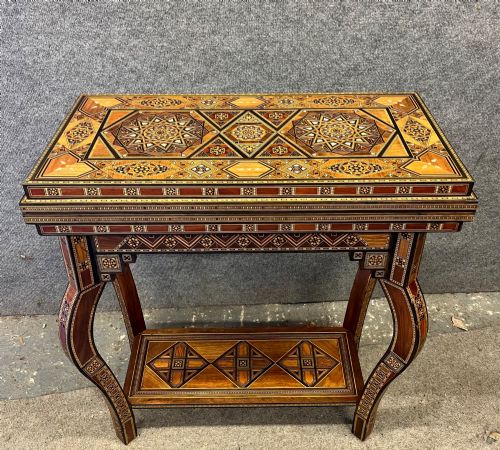
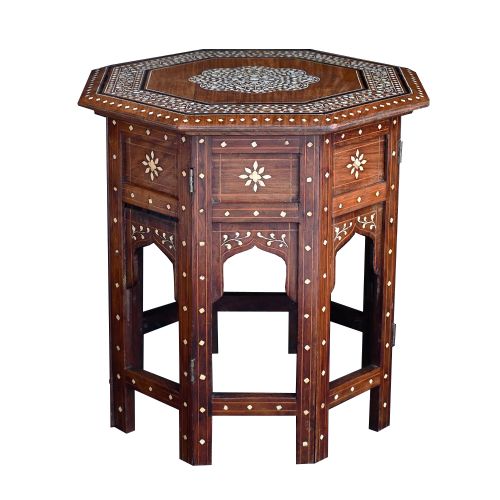
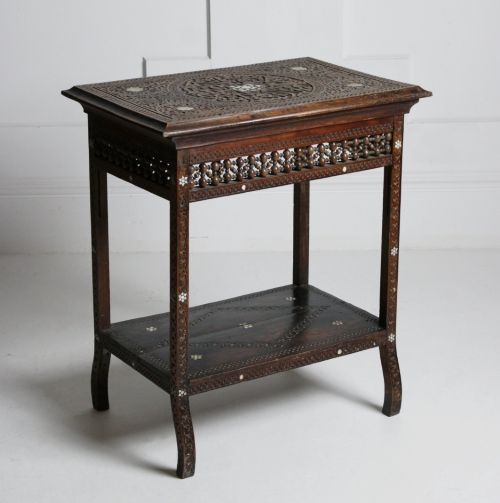
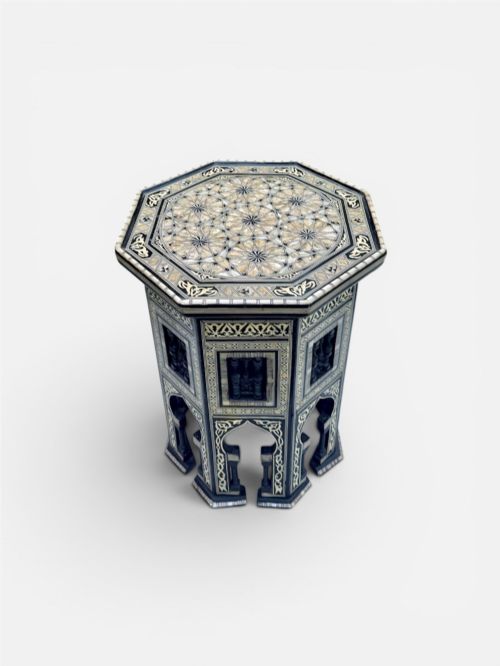
When you search for a mother of pearl inlay table, you are looking at surfaces ornamented with iridescent shell fragments set into timber. The forms on this page run from octagonal and hexagonal occasional tables to larger centre tables, folding Damascus pieces, and games tables arranged for chess and backgammon.
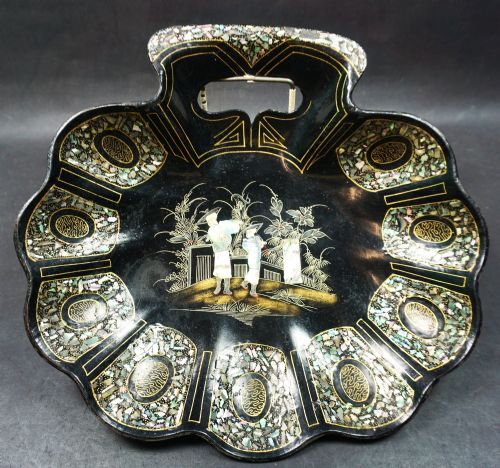
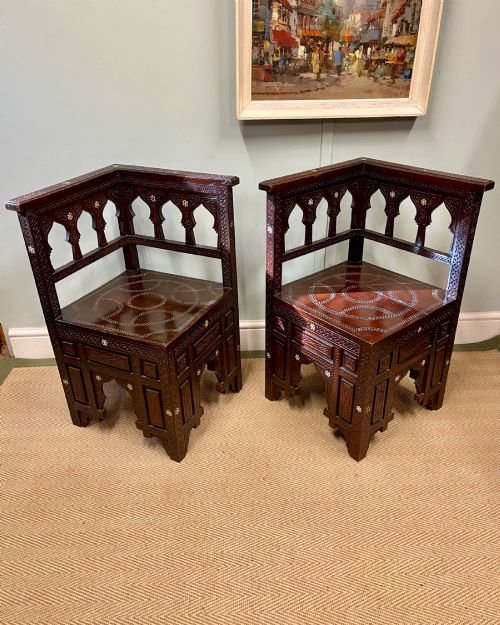
The regional origins of these works span widely, taking in Syrian, Ottoman, Levantine, Moorish Revival, Anglo-Indian, and Chinese workshops. Victorian papier-mâché and burr walnut examples also appear, alongside pieces associated with retailers such as Liberty and Co.
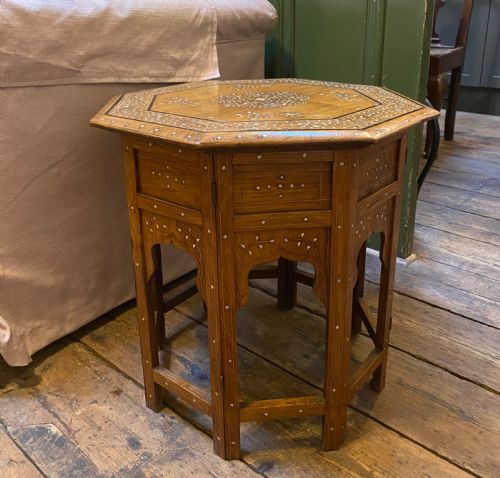
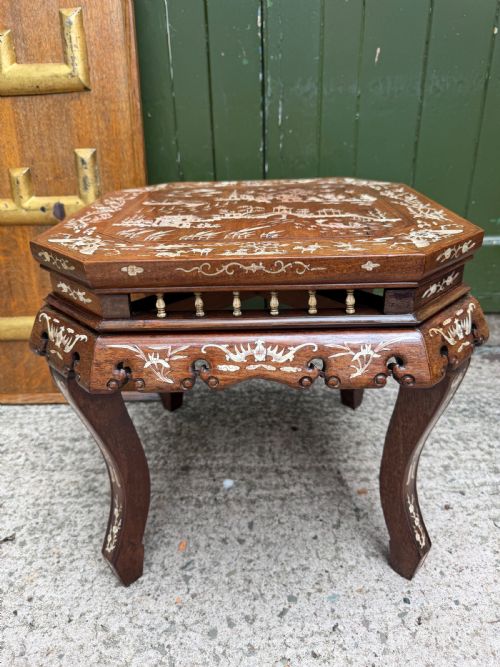
Octagonal and hexagonal side tables with folding or stationary bases represent the most common encounters on this page. These geometric forms serve well as lamp stands or small tea tables, bringing diverse cultural motifs into domestic interiors.
Materials and construction
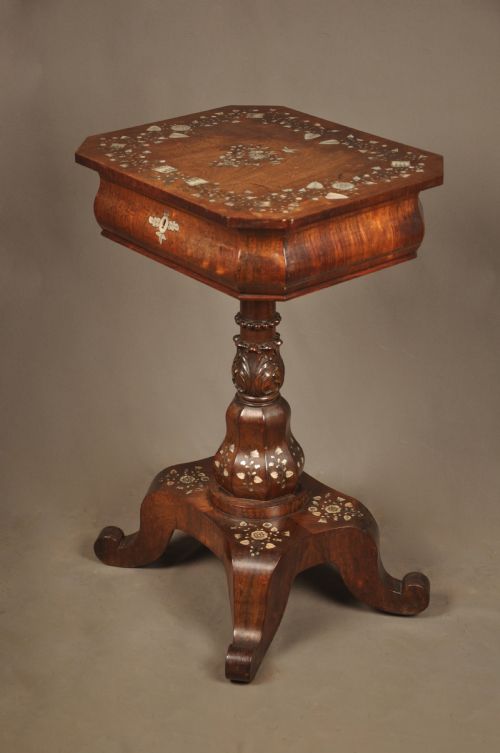
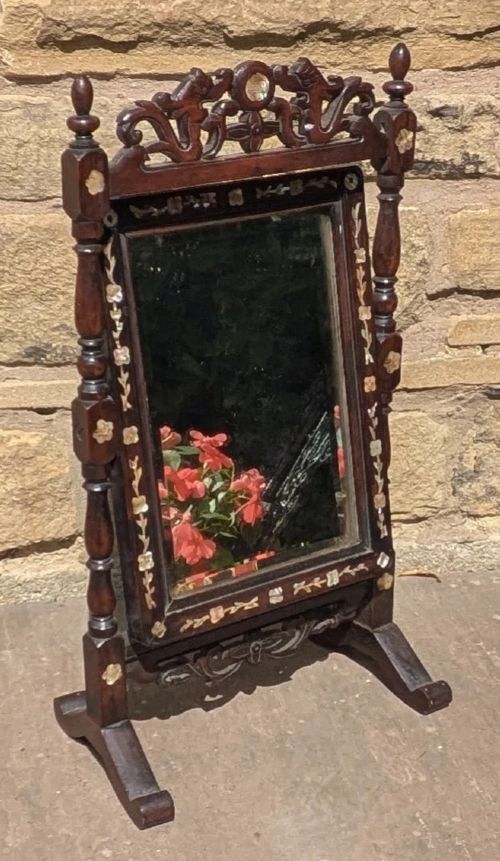
Makers set thin pieces of mother-of-pearl into prepared recesses within hardwood, walnut, rosewood, or papier-mâché foundations. The shell fragments are cut into polygonal, triangular, or star shapes to form continuous geometric and floral patterns across the top and sides.
Many Middle Eastern and Moorish Revival examples combine mother-of-pearl with bone or brass wire to outline the interlocking panels. In Chinese and Vietnamese pieces, the shell is sunk into dense dark hardwoods, occasionally accompanied by hand-painted details or lacquer finishes.
Mother of Pearl Inlay Table Retail Price Guide 2026
Typical asking prices for mother of pearl inlay table among the pieces listed under this phrase on Sellingantiques today, from the lower quarter to the upper quarter. They describe what is for sale here now, not the wider market.
The furniture forms include occasional tables, games tables fitted for chess and backgammon, chests, and wall-hanging cabinets.
Assessing the workmanship
Quality rests upon the precision of the joinery and the density of the mosaic work. Superior examples display tightly fitted shell segments with minimal gap-filling putty, maintaining crisp geometric lines that do not distort across the joints.
The variety and depth of the mother-of-pearl itself also distinguish finer items. Selected shell pieces exhibit strong natural pink and green fire rather than flat white opacity, enhancing the visual movement across the surface.
Liberty and Co·Jennings and Betteridge·Seller of Reading
The Mother of Pearl Inlay Table Glossary
- Mother-of-Pearl
- An iridescent internal layer of shells, particularly pearl oysters and freshwater mussels, used for decorative inlay. Its natural sheen catches light differently from various angles.
- Moorish Revival
- An architectural and decorative style popular in the nineteenth century that reinterpreted Islamic design motifs. It frequently incorporates intricate geometric woodwork and multi-material inlay.
- Damascus Table
- An octagonal or hexagonal occasional table originating from the Levant, characterised by dense geometric inlay of mother-of-pearl and bone. These pieces often feature folding bases formed from pierced arches.
- Papier-Mâché
- A composite material made from paper pulp or sheets of paper mixed with glue, moulded and dried before being painted or inlaid. It provides a smooth dark ground for nineteenth-century shell decoration.
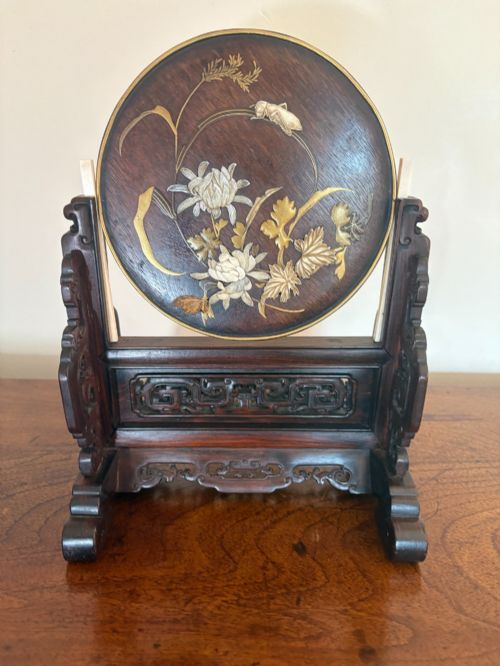
- Shibayama
- A Japanese decorative technique involving inlaid mother-of-pearl, ivory, and tortoiseshell to create pictorial scenes. Pieces bearing this work often appear on small screens and cabinets.
Mother of Pearl Inlay Table: Frequently Asked Questions
How do I clean a mother of pearl inlay table?
Dust the surface regularly with a soft, dry cloth to prevent particles from settling in the recesses between the shell and the wood. Avoid liquid polishes, abrasive cleaners, or excess moisture, which can loosen the older glues holding the individual tesserae in place.
Condition the surrounding timber occasionally with a suitable wax, applying it sparingly away from the shell inserts. Take care around older bone or wire elements, as aggressive rubbing can dislodge fine stringing.
Can these tables be used daily?
These tables handle normal decorative placement, such as holding a lamp or a small stack of books, provided they are kept away from direct heat sources and strong sunlight. Sudden temperature shifts can cause the timber to expand, putting pressure on the rigid inlay.
Use coasters under drinks to protect the wooden ground and the shell surface from moisture rings. Moving the table should be done by lifting it from the base rather than dragging it across the floor.
How do I tell Syrian tables from Chinese ones?
Syrian and Levantine tables generally rely on intricate geometric lattices made from walnut or other hardwoods, packed with triangular and star-shaped mother-of-pearl pieces alongside bone. Their forms are frequently hexagonal or octagonal with folding frames beneath.
Chinese pieces tend to feature dense, dark tropical hardwoods like rosewood or huanghuali, with floral or figurative motifs carved into the wood or inlaid as distinct pictorial elements. The shell in Chinese work often depicts birds, blossoms, or landscapes rather than repeating mathematical tessellations.
What caused pieces to lose their inlay?
Age, dry indoor environments, and changes in humidity cause the underlying timber to shrink or swell at a different rate than the shell and bone inserts. Over decades, this natural movement weakens the historical animal glues.
Impacts or shifting during transport can also dislodge small sections of tesserae where the adhesive has become brittle. Careful conservation involves re-securing loose fragments with appropriate modern conservation adhesives.