

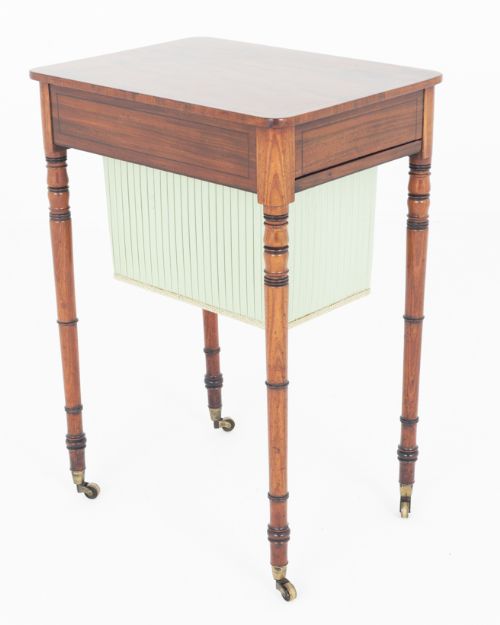


Georgian Sewing Box Table
These georgian sewing box table designs unite practicality and elegance, offering fitted compartments for needlework alongside the refined presence of period occasional furniture.
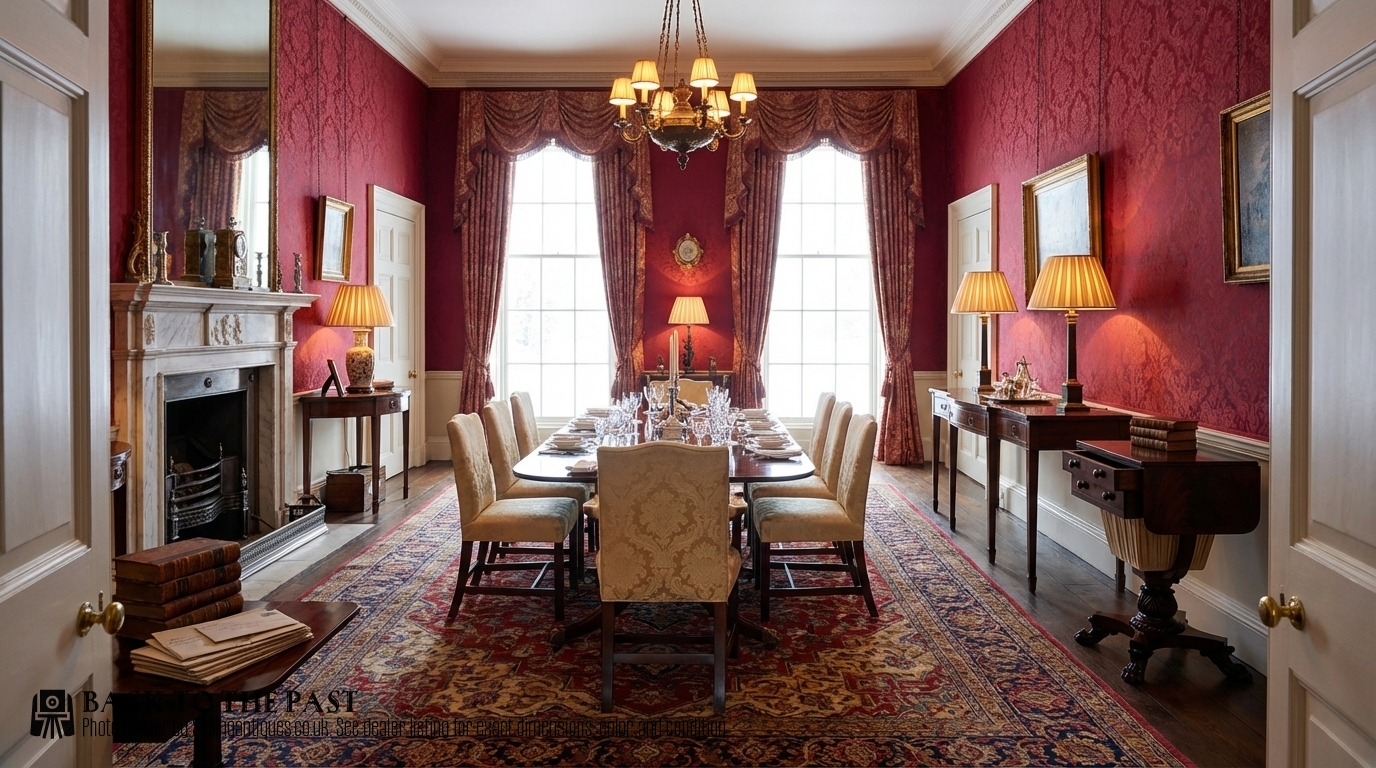
Georgian Sewing Box Table
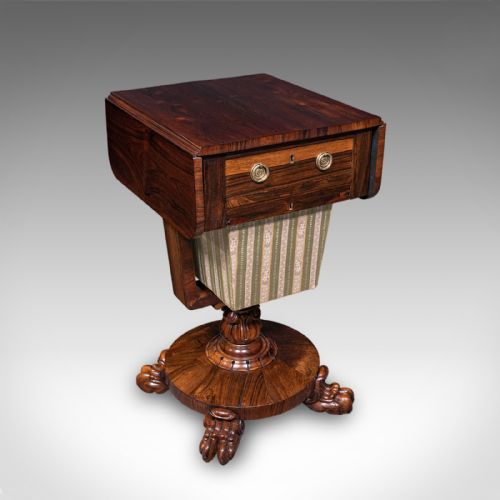
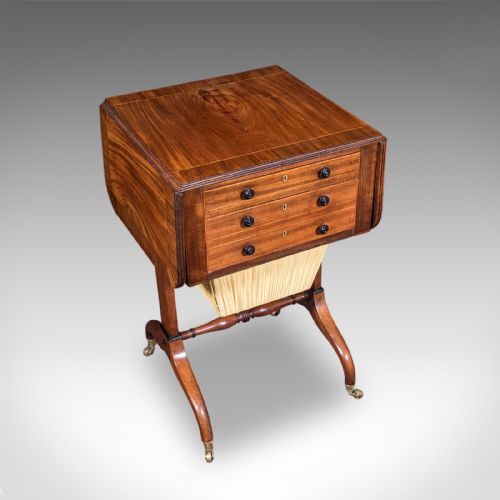
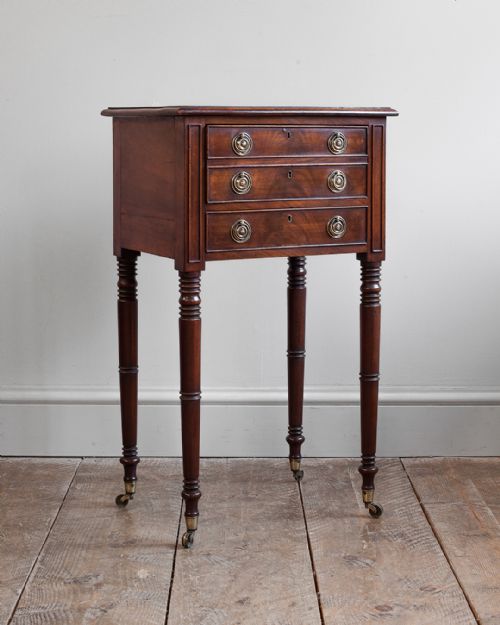
A georgian sewing box table typically presents as a compact side or occasional table equipped with a fitted interior compartment for needlework, threads, and small accessories. You will encounter various forms ranging from drop leaf sewing tables to freestanding pedestals and lyre-ended work tables.
The prevailing examples on this page date predominantly from the Regency era through to the wider Georgian and William IV periods, constructed primarily in England. These pieces frequently double as writing or lamp tables, combining utility with refined parlour aesthetics.
Makers and cabinetmakers produced these ladies' work tables in diverse styles spanning George III, Sheraton Neoclassical, and later Victorian revivals. They serve equally well today beside a sofa or as a decorative side table in a study.
Materials and construction methods
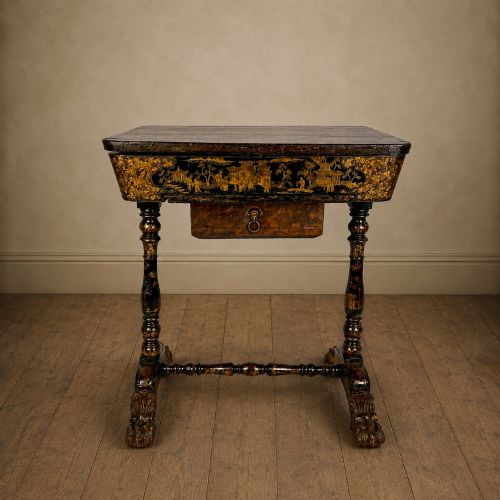
Cabinetmakers relied heavily on rich timbers such as mahogany, flame mahogany, and rosewood, often enhanced by decorative satinwood or brass inlay. Exotic materials like black and gilt lacquer also appear in Chinese export pieces and japanned workboxes.
Drop leaf mechanisms and lyre ends demonstrate sophisticated joinery, supporting hanging fabric bags or wooden boxes beneath the main surface. The integration of silk and fabric linings inside the compartments reflects meticulous interior detailing.
Georgian Sewing Box Table Retail Price Guide 2026
Typical asking prices for georgian sewing box table among the pieces listed under this phrase on Sellingantiques today, from the lower quarter to the upper quarter. They describe what is for sale here now, not the wider market.
Listings feature mahogany and rosewood as the dominant timbers, accompanied by satinwood and brass elements across nineteenth century examples.
Judging the quality of a georgian sewing box table
Quality rests significantly on the selection of timber veneers, where figured mahogany or rosewood displays strong natural grain patterns rather than flat surfaces. The crispness of inlay work and brass mounts also distinguishes superior cabinetmaking from standard production.
Internal arrangement dictates much of the functional merit, with fitted compartments retaining original trays and lidded sections holding higher appeal than altered interiors. Structural stability in drop leaf mechanisms and pedestals ensures the piece survives daily use.
Gillows of Lancaster
The Georgian Sewing Box Table Glossary
- Work Table
- A small occasional table designed specifically for needlework and sewing, featuring an internal box or suspended fabric bag. These pieces frequently served ladies in the parlour for storing threads and small implements.
- Drop Leaf
- A hinged table leaf that folds down on either side to save space when not in use. Such flaps allow the footprint of the table to expand during needlework tasks.
- Japanned
- European imitation of East Asian lacquerwork, created through layered varnishes and often painted decoration. Yellow or black japanning appears on select portable workboxes.
- Satinwood
- A lustrous, hard timber native to India and Ceylon, prized for its golden-yellow colour and smooth grain. Cabinetmakers employed it extensively for veneers and banded inlay.
Georgian Sewing Box Table: Frequently Asked Questions
What is a georgian sewing box table used for?
These tables served primarily as dedicated workstations for ladies to store sewing equipment, threads, and needlework supplies within fitted internal compartments. The top surface provided a convenient platform for handwork, reading, or small lamps.
Today, they function excellently as compact side tables or lamp tables in living spaces. Their historic utility translates smoothly into modern rooms needing small-scale surface area and concealed storage.
How do I identify a Regency sewing table?
Regency examples typically exhibit architectural influences, such as lyre ends, brass stringing, pedestal bases, and dense rosewood or flame mahogany veneers. Cabinetmakers working in this era drew heavily on classical Greek and Roman motifs.
Constructed predominantly in the early nineteenth century around eighteen-twenty, these pieces emphasise clean geometric lines and contrasting dark timbers. The presence of brass paw feet or ring handles often confirms the period style.
Are sewing tables different from work tables?
The terms are largely interchangeable within antique furniture, both describing small occasional tables equipped with storage for needlework. Some variations incorporate a hanging silk bag beneath the box rather than a wooden compartment.
Descriptions in period listings often combine these terms to cover drop leaf tables, pedestal workboxes, and ladies hobby tables. Each variation was built to assist with textile crafts while maintaining parlour elegance.
Can I use a sewing table as a bedside table?
Their compact dimensions and enclosed storage compartments make these tables suitable for placement beside a bed or sofa. The upper surface holds a reading lamp while the internal box secures small personal items.
Care should be taken with delicate rosewood or satinwood surfaces by utilising coasters to prevent moisture rings. Freestanding designs allow flexible placement anywhere in a room.