
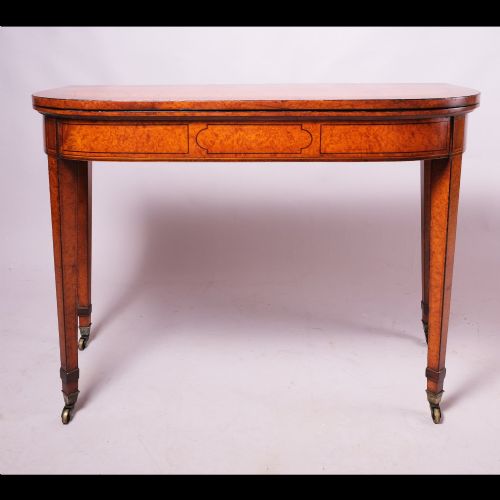
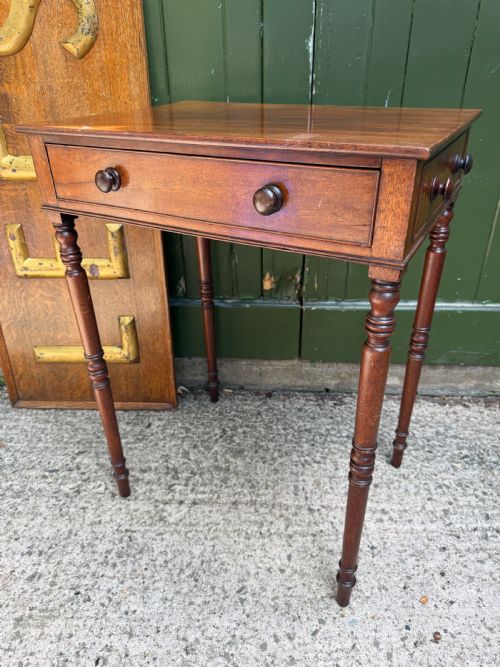
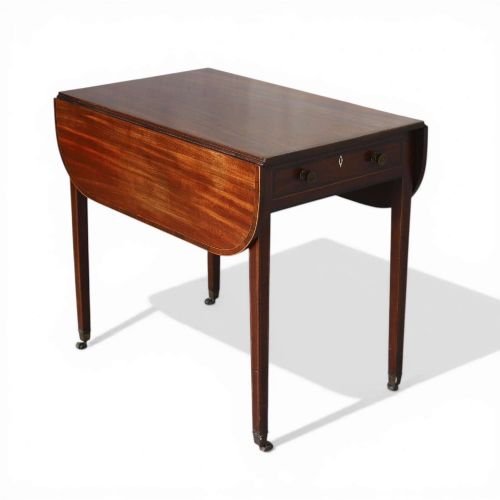
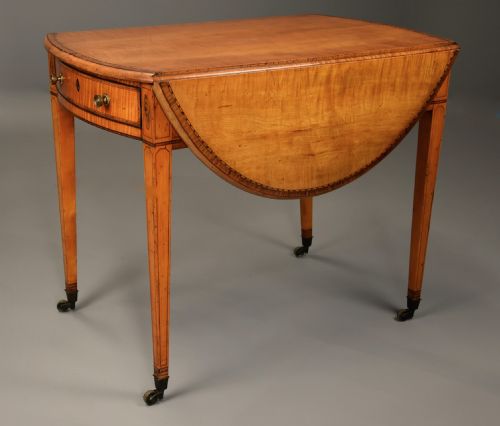
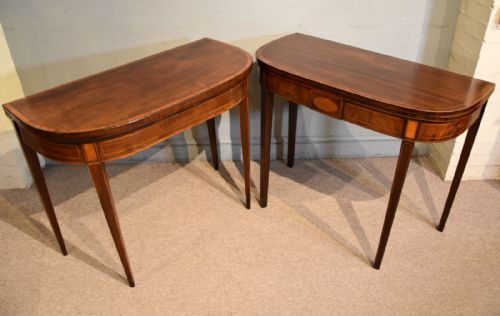
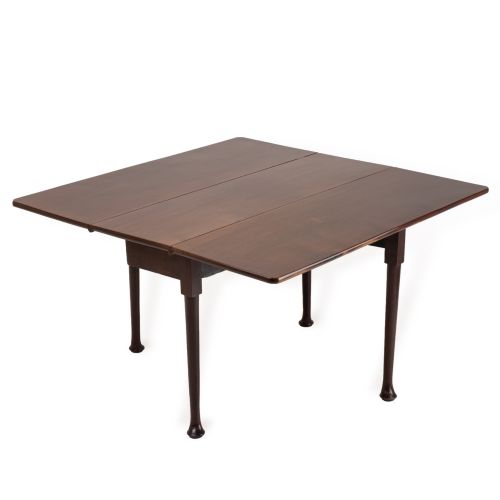


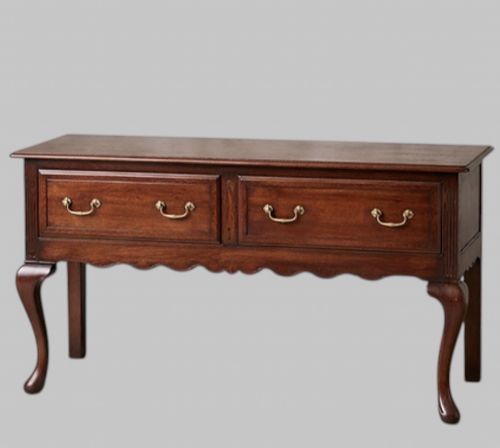
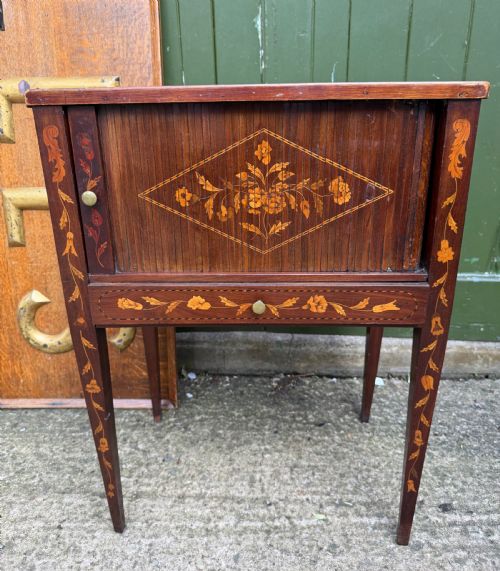
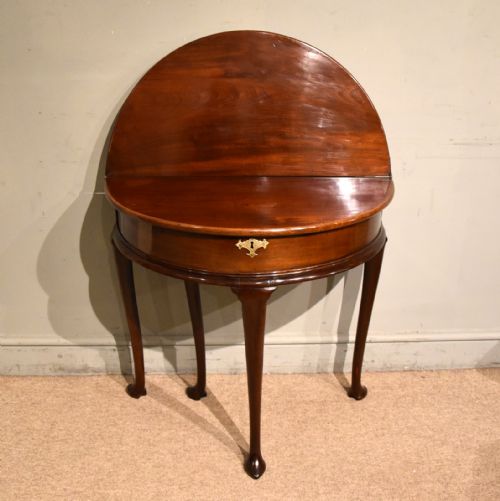
Late Georgian Side Table
A late georgian side table brings practical surface space and architectural warmth to a room, offering functional elegance through period timber.
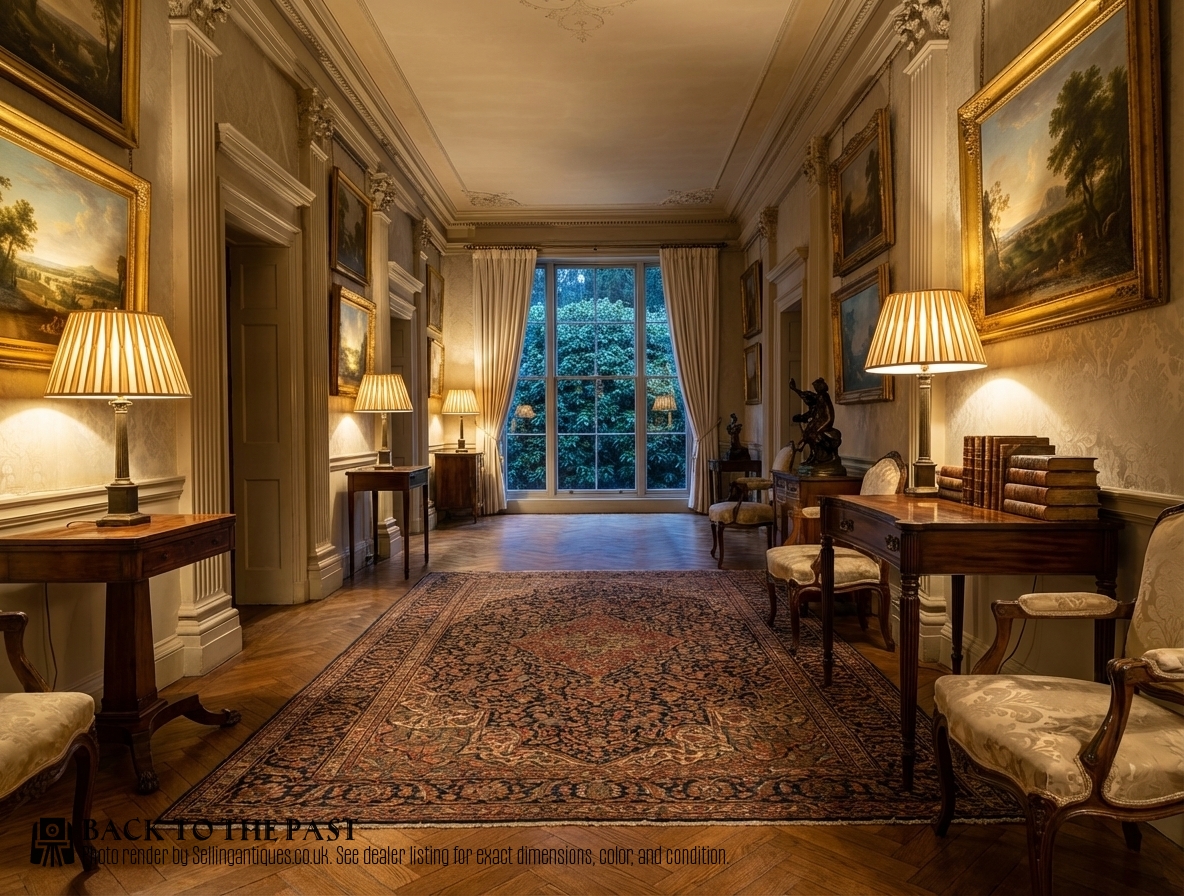
Forms and Origins
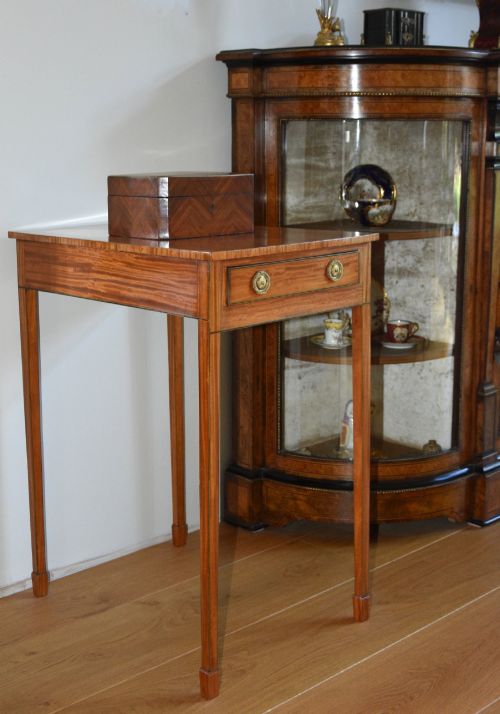
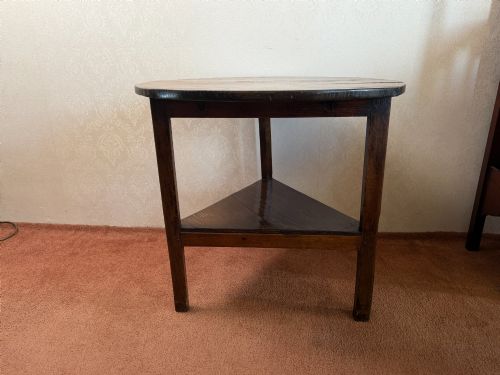
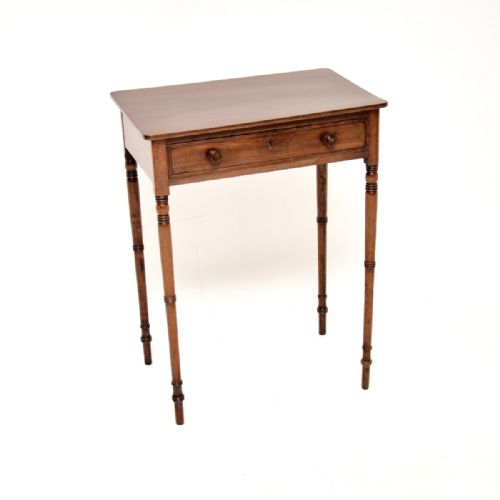
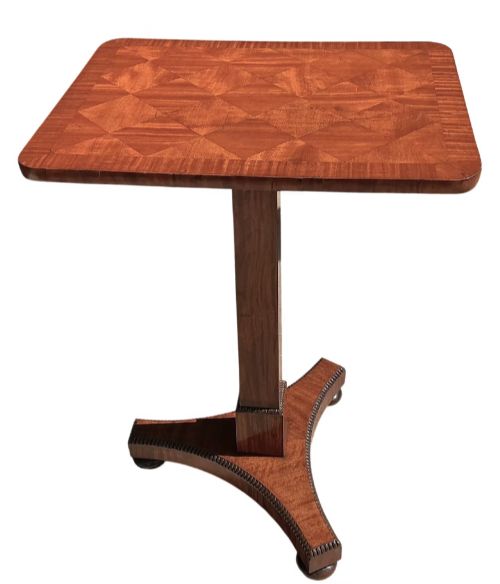
A late georgian side table encompasses compact rectangular surfaces, tilt-top variants, and single or multi-drawer formats designed for domestic utility. These pieces originate from the Georgian era around eighteen hundred, capturing the understated proportions typical of the period.
Mahogany forms the primary wood encountered in these listings, alongside painted pine, oak, and occasional satinwood. Specific variants include work tables, writing tables, bedside cabinets, and two-tier dresser bases associated with English workshops.
Materials and Construction
Cabinetmakers utilised solid mahogany, oak, and pine to construct these surfaces, often pairing dense hardwoods with secondary softwoods for internal drawer framing. Brass fittings and hand-painted geometric or floral motifs appear on selected pine and mahogany examples.
Joinery methods rely on traditional framing techniques to support tilt-top mechanisms, single drawers, and multi-drawer kneehole configurations. Surfaces occasionally display decorative paintwork applied during or after the primary period of manufacture.
Retail Price Guide 2026
Typical UK retail prices for late georgian side table, calculated from the Sellingantiques database of over a million retail prices indexed since 2003. This retail price guide relies exclusively on Sellingantiques data; no external sources or auction records are used, so the figures do not describe the wider market.
Listings feature mahogany, oak, pine, and satinwood across side tables, work tables, and bedside cabinets.
Proportion and Finish
The standard of a late georgian side table depends on timber selection, grain figure, and the crispness of its structural proportions. Superior examples maintain original hardware, well-fitted drawers, and balanced timber matching across the top and base.
Secondary decorative treatments, such as hand-painted geometric tops or later floral embellishments, alter the visual character of pine and oak specimens. The integrity of tilt-top mechanisms and the retention of original timber surfaces distinguish finer iterations from heavily altered pieces.
The Late Georgian Side Table Glossary
- Late Georgian
- A design period spanning the late eighteenth and early nineteenth centuries, marked by restrained classical lines.
- Tilt-top
- A table mechanism allowing the rectangular top to hinge vertically for storage when not in use.
- Lowboy
- A small low table with one or more drawers, frequently functioning as a side or dressing table.
- Kneehole
- A desk or table configuration featuring a central recessed space flanked by banks of small drawers.
Frequently Asked Questions
What is a late georgian side table used for?
These tables provide supplementary surface space in living areas, hallways, and bedrooms for lamps, books, or decorative objects. Single-drawer and multi-drawer formats additionally offer modest storage for writing materials and small household items.
Tilt-top and games variations adapt easily to occasional use, moving readily from wall placements to the centre of a room.
How do I identify a late georgian side table?
Look for characteristic proportions, straightforward rectangular tops, and timber choices such as mahogany, oak, and painted pine. Details like brass handles, tapered legs, and single-drawer arrangements point directly toward the broader Georgian aesthetic.
Construction methods involving traditional dovetailing and pegged joints further help distinguish pieces originating around the eighteen hundred period.
Where should I place a side table?
A side table sits comfortably beside seating in a drawing room, against a hallway wall, or serving as a compact bedside surface. Their modest footprints allow them to occupy awkward corners or narrow passages without crowding the floor.
Selecting a location away from direct heat sources helps protect older timber and painted pine finishes from drying out.
How do I care for antique mahogany?
Maintain timber surfaces by dusting regularly with a soft, dry cloth and avoiding silicone-based polishes that build up over time. Applying occasional natural wax preserves the grain and lustre of the wood.
Keep tables away from direct sunlight and damp environments to prevent the timber from warping or the painted pine from flaking.