

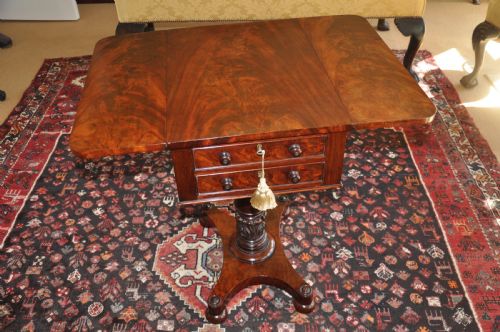


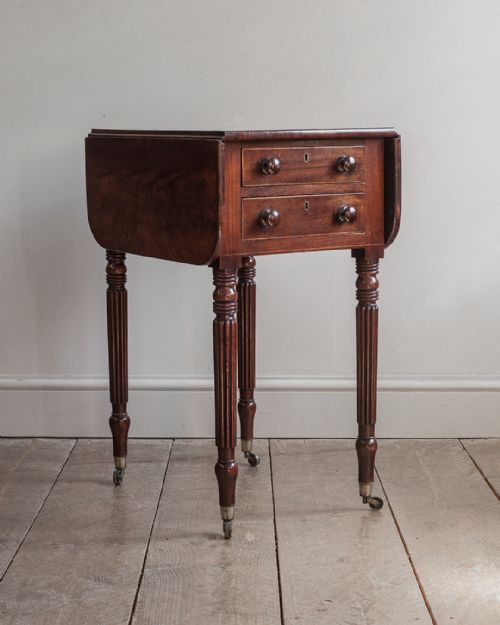


Regency Period Sofa Table
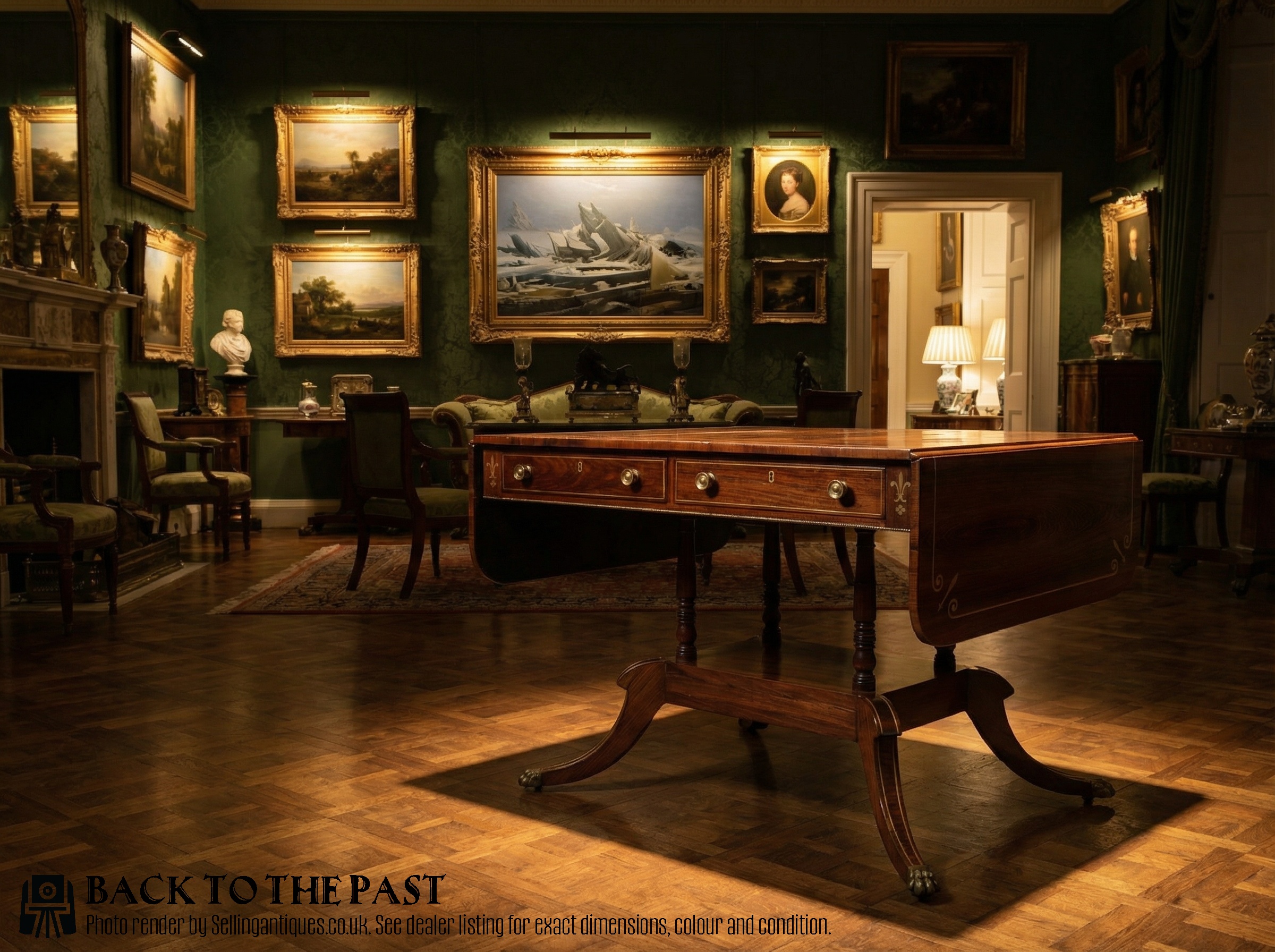
These pieces of furniture bring neoclassical elegance to a room, offering drop leaves and dual drawers designed for display behind a sofa.
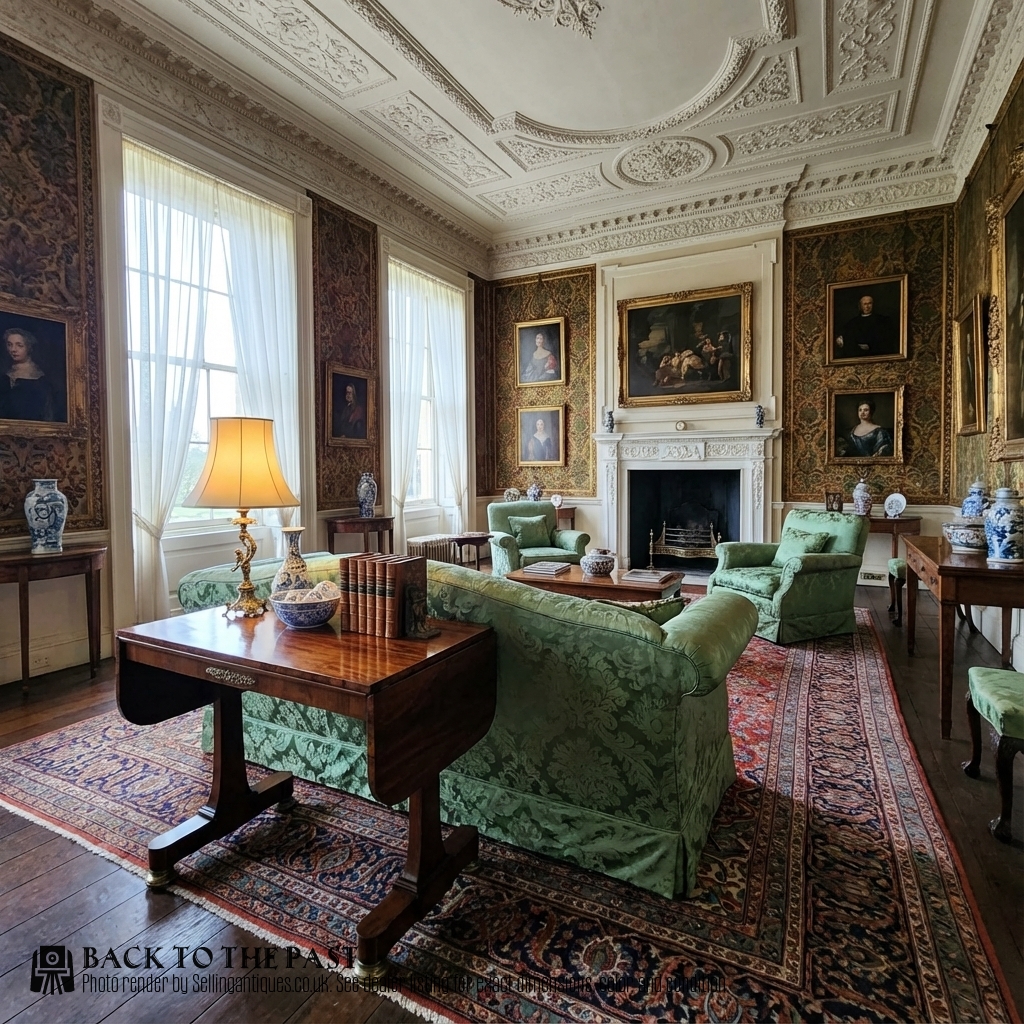
Regency Period Sofa Table
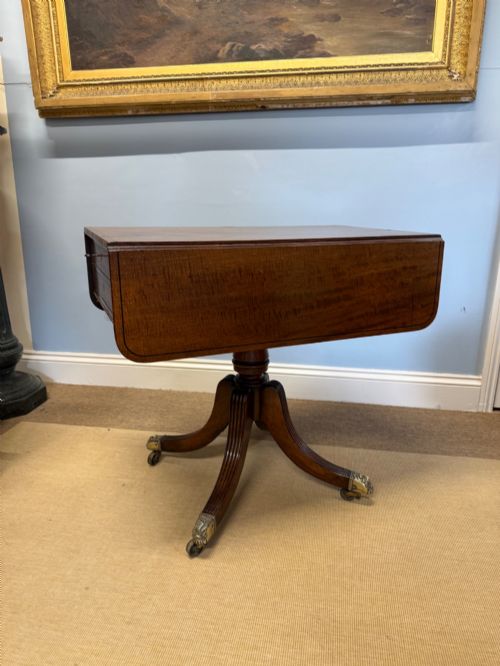
A regency period sofa table is a rectangular occasional table traditionally placed freestanding behind a sofa, featuring drop leaves at either end to extend its surface. The listings show forms spanning the late eighteenth century through the reign of William IV, with the classic Regency style predominating.
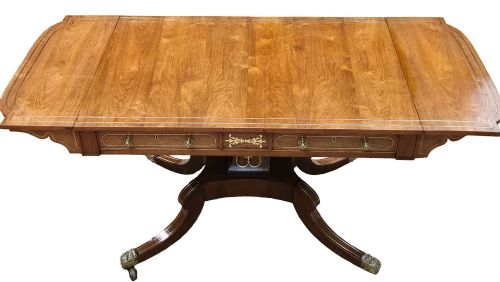
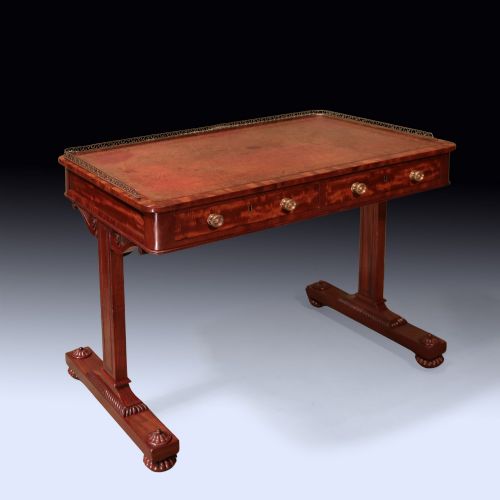
Makers utilised these versatile items for writing, reading, and needlework, incorporating twin frieze drawers opposite dummy drawers for practical storage. Mahogany and rosewood form the core of the available pieces, occasionally accented with inlay or brass mounts.
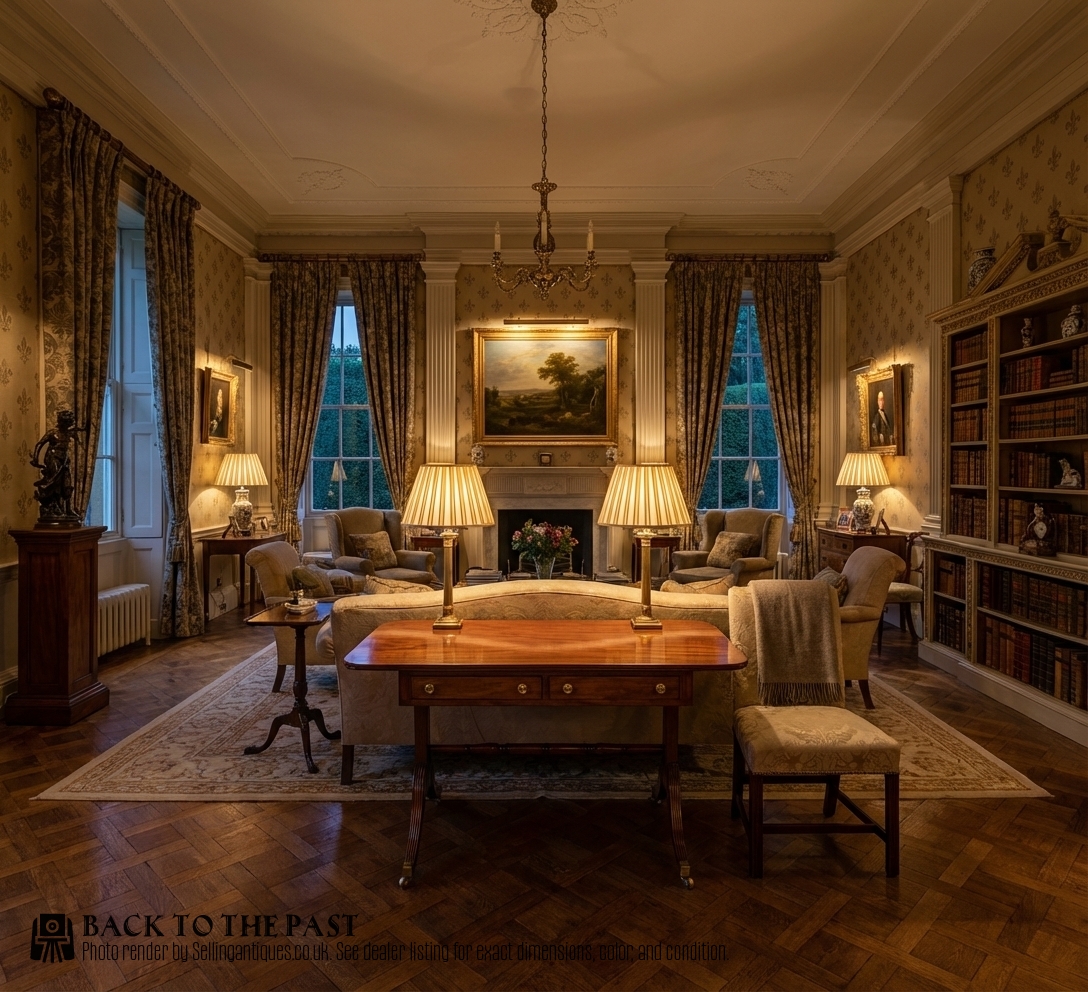
Materials and construction
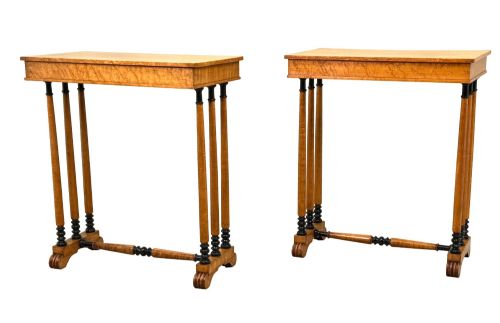
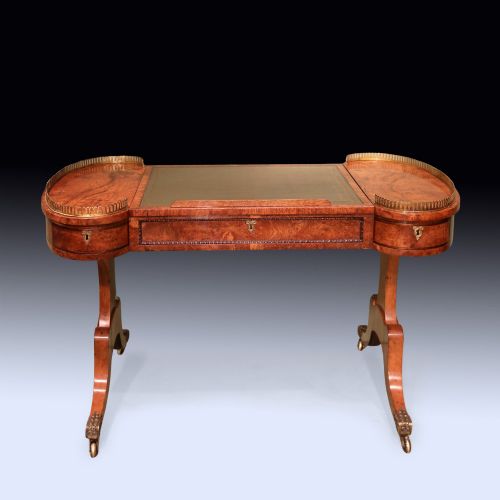
Cabinet makers selected dense, figured timbers such as mahogany and rosewood, frequently enhancing the surfaces with crossbanding, coromandel, or birdseye maple veneers. Brass inlay, ormolu mounts, and giltwood details appeared on high-status examples from the period.
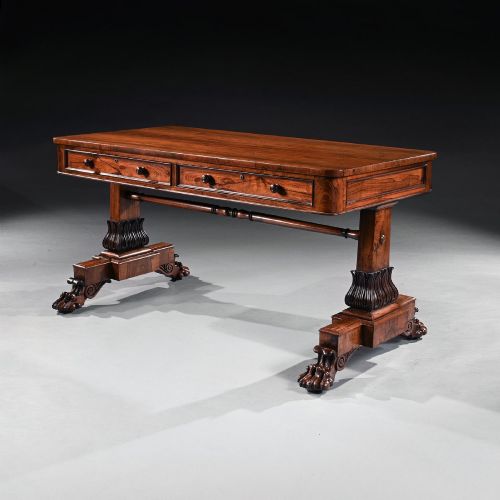
Structural support took several distinct architectural forms, including twin end supports linked by a stretcher, lyre-shaped pedestals, or carved pillar bases resting on lion paws and brass castors.
Regency Period Sofa Table Retail Price Guide 2026
Typical asking prices for regency period sofa table among the pieces listed under this phrase on Sellingantiques today, from the lower quarter to the upper quarter. They describe what is for sale here now, not the wider market.
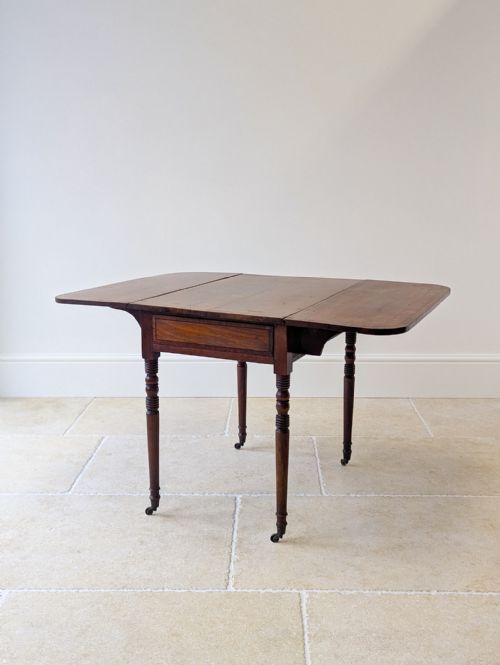
Structural bases range from simple turned legs to carved pillars resting on brass paw feet.
Markers of distinction
The choice of timber grain governs the visual impact, with deeply figured flame mahogany and richly contrasted rosewood commanding attention. Finer examples display meticulous precision in cut brass inlay and crispness in carved details like lion paw feet or dolphin bases.
Proportion and structural integrity define the architecture of the best specimens, where stability in the drop-leaf hinges and smooth movement in the drawers reflect superior workshop practice.
Jean-Joseph Chapuis·Gillows·Edwards and Roberts·George Oakley
The Regency Period Sofa Table Glossary
- Drop leaf
- A hinged flap on either end of a table that raises to extend the top surface. These leaves are supported by swing brackets.
- Crossbanding
- A strip of veneer applied to the border of a table top, with the grain running perpendicular to the main panel. This technique creates a distinct visual frame.
- Frieze drawer
- A drawer integrated into the horizontal band beneath the table top. Sofa tables typically feature two functional drawers paired with dummy drawers on the reverse.
- Ormolu
- Gilded bronze mounts applied to furniture for decoration. This French technique added costly metallic highlights to rosewood and mahogany surfaces.
Regency Period Sofa Table: Frequently Asked Questions
Where should I place a sofa table?
These tables sit naturally behind a sofa in the middle of a room, taking advantage of finished backs and symmetrical drawer arrangements.
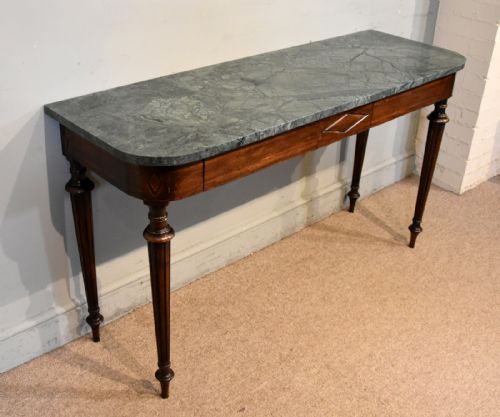
They also function effectively against a bare wall as a side or console table when floor space requires a shallower footprint.
Were these tables used for dining?
Their primary purpose involved writing, sewing, and displaying lamps or decorative objects rather than serving heavy meals.
The drop leaves provided extra surface area for correspondence or books, easily lowered when not in use.
How do I identify a Regency piece?
Regency furniture draws on neoclassical architecture, showing clean lines, dark imported woods, and classical motifs like lyres and brass inlay.
Pieces from this era date roughly from the late eighteenth century through the reign of George IV and William IV.
What is the difference between mahogany and rosewood versions?
Mahogany tables display reddish-brown tones with straight or figured grain patterns, prevalent throughout the entire period.
Rosewood offers a darker, heavily grained appearance that often paired well with brass inlay or gilt bronze mounts for formal reception rooms.