

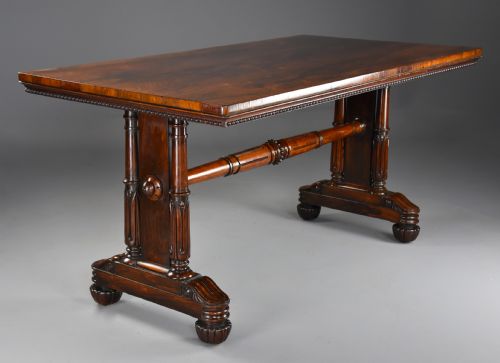


Regency Rosewood Writing Table
A regency rosewood writing table combines the rich grain of exotic timber with brass inlay and refined proportions, making it a functional centrepiece for any study.
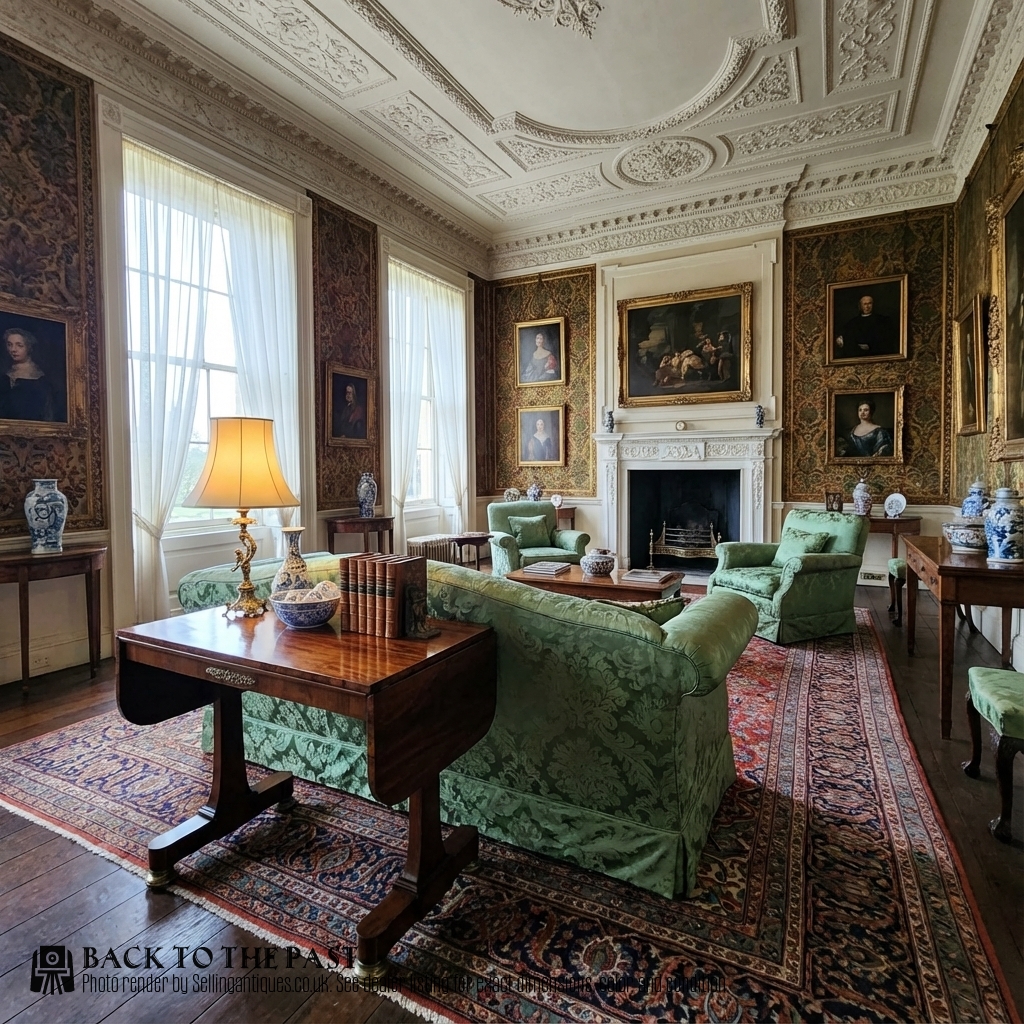
Regency Rosewood Writing Table
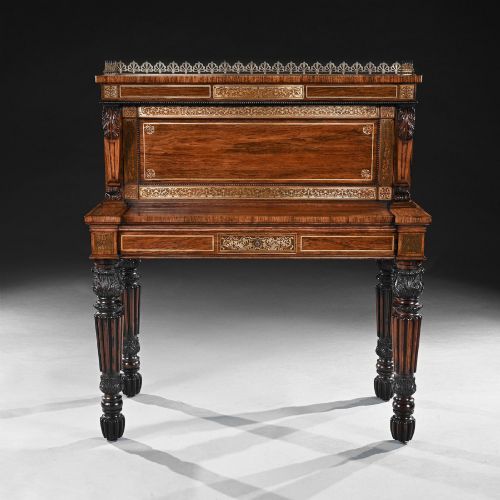
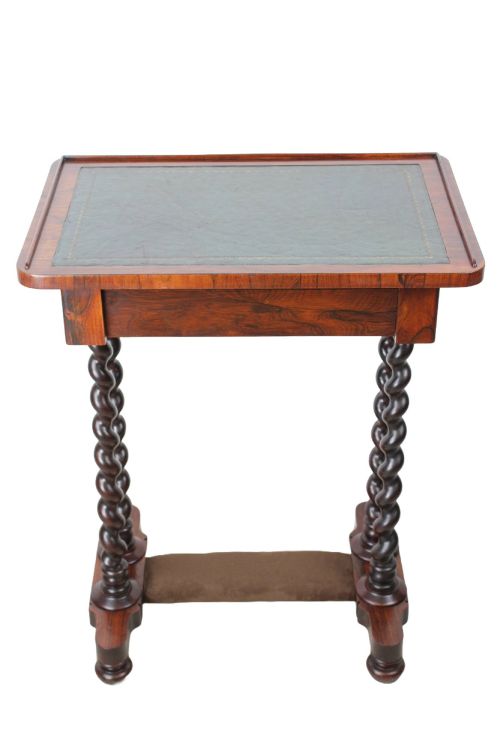
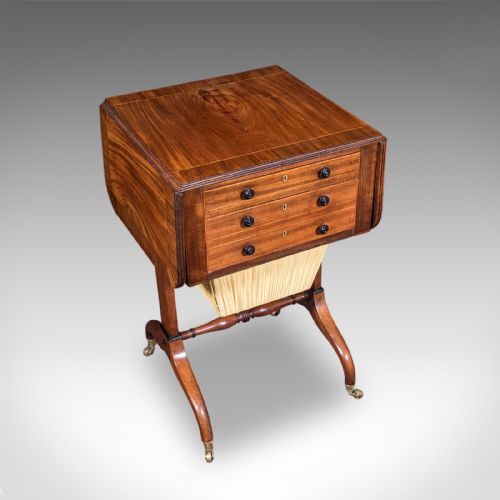
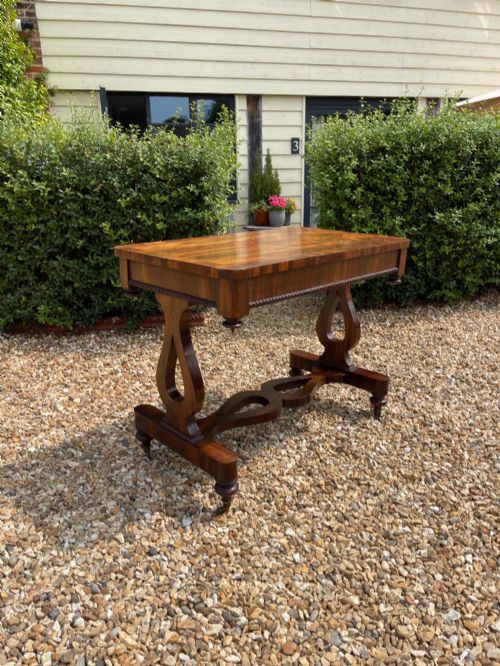
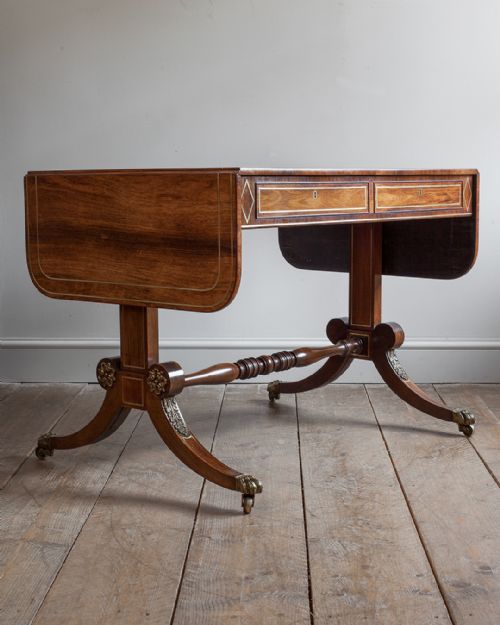
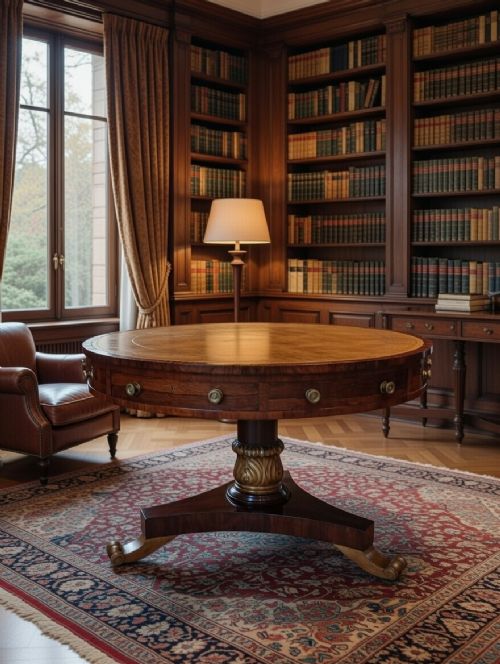
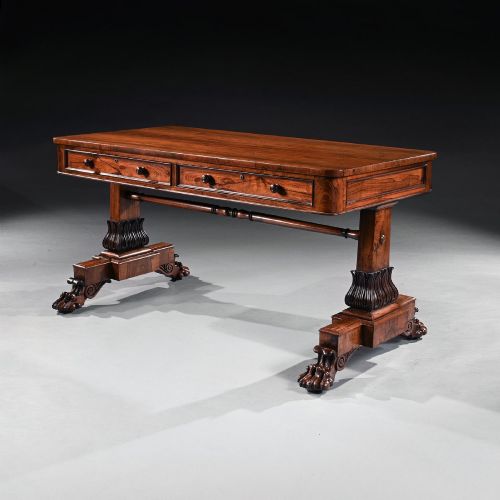
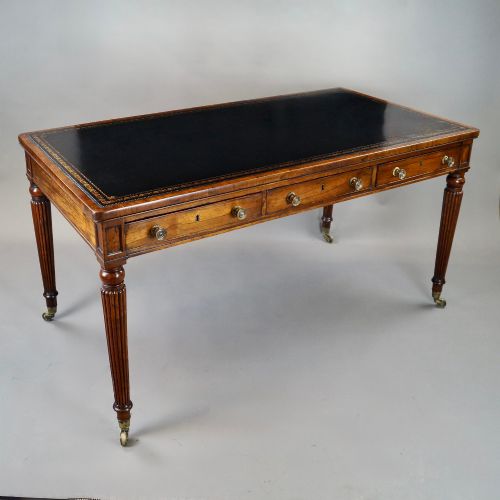
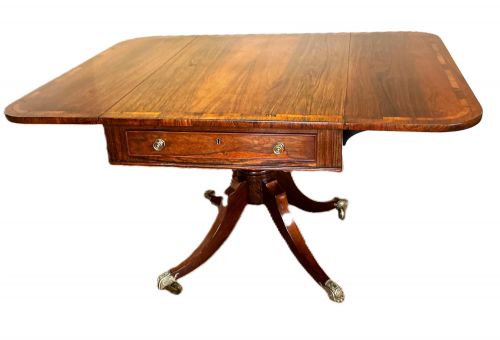
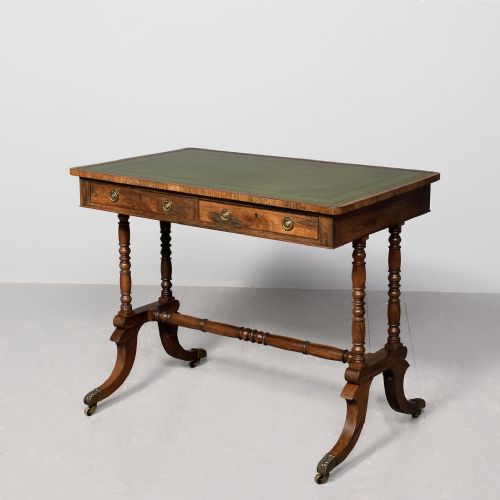
When you search for a regency rosewood writing table, you are looking at sophisticated furniture designed for correspondence, reading, and display during the early nineteenth century. These pieces encompass freestanding library desks, sofa tables with drop leaves, and compact side tables fitted with drawers.
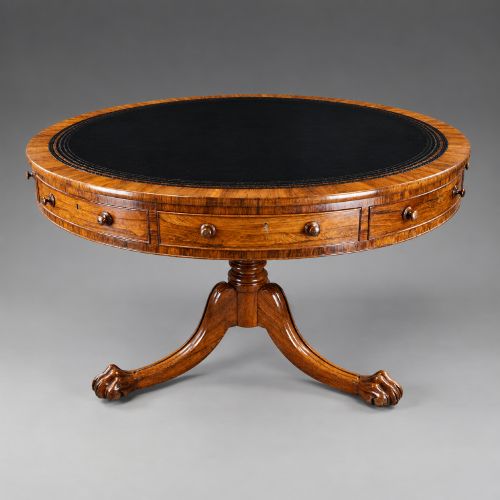
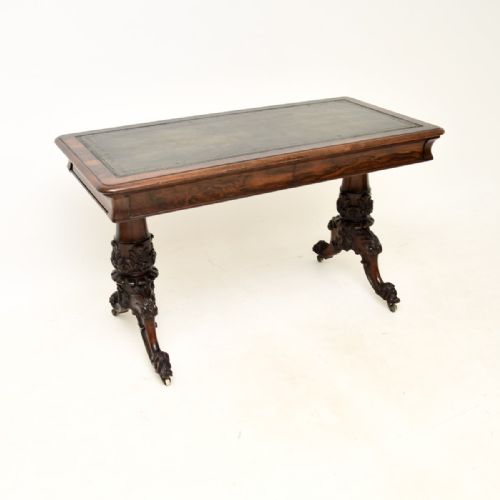
The version you are most likely to meet on this page dates from the Regency and William IV periods, characterised by rectangular tops, turned or pedestal supports, and rich timber surfaces. Many examples integrate leather writing inserts alongside brass stringing or gilt mounts.
Makers of this era produced forms ranging from pedestal desks to kidney-shaped reading tables, each built to stand centrally in a room with finished backs. The surviving pieces demonstrate the versatility of nineteenth-century domestic workspace design.
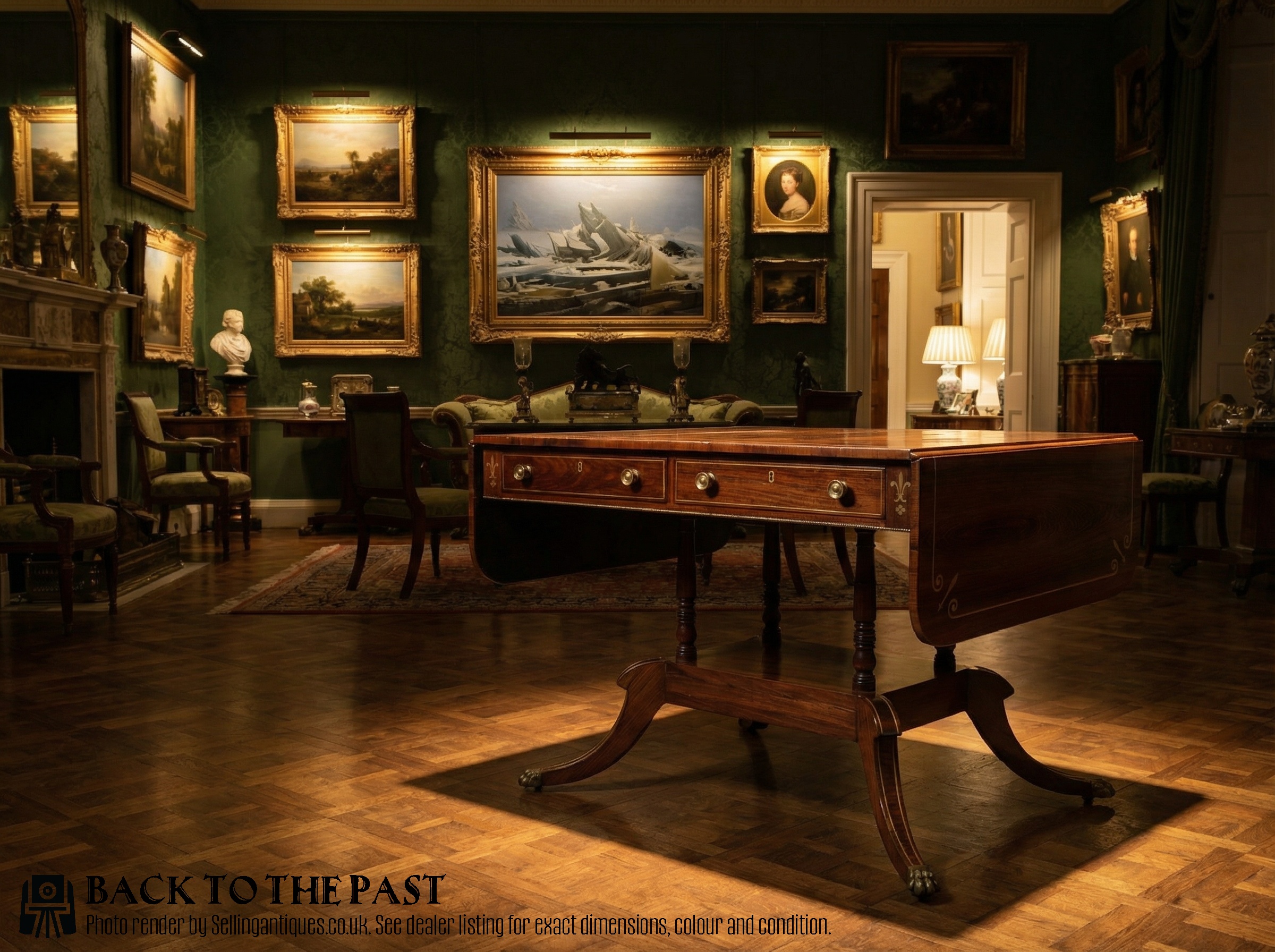
Materials and Construction
Cabinet makers built these tables using dense tropical rosewood veneers laid over stable secondary woods such as mahogany and oak, often highlighting the natural figure of the grain. Brass inlay, stringing, and cast mounts punctuate the dark timber surfaces.
Secondary materials include worked leather for writing surfaces, alongside goncalo alves and fabric components on specific variants. Frame construction relied on robust joinery to support heavy pedestals and lion's paw feet carved from solid timber.
Regency Rosewood Writing Table Retail Price Guide 2026
Typical asking prices for regency rosewood writing table among the pieces listed under this phrase on Sellingantiques today, from the lower quarter to the upper quarter. They describe what is for sale here now, not the wider market.
Several tables include clever pivoting mechanisms designed for reading and writing simultaneously.
Distinctions in Execution
Quality separates tables by the precision of their brass inlay and the selection of figured rosewood veneer across the top and drawer fronts. Superior workshops achieved seamless joins and crisp carving on pedestal supports and lion's paw feet.
Finer examples retain original brass mounts, fitted drawer interiors, and robust secondary timbers like oak rather than softer pine. The overall proportion and structural integrity under daily use distinguish high workshop production from standard commercial output.
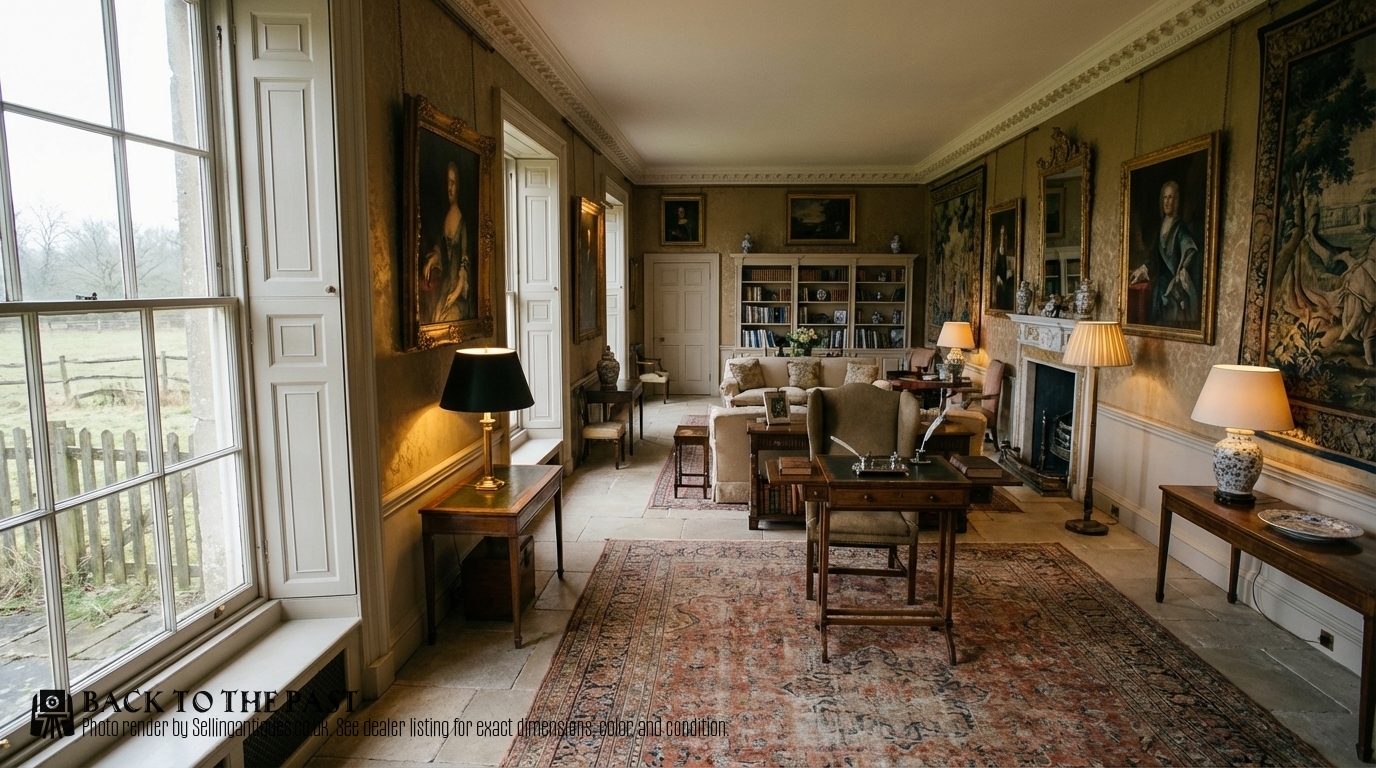
Gillows Oxford Street Workshop·James Mein Kelso·John MaClean
The Regency Rosewood Writing Table Glossary
- Rosewood
- A dense, heavily figured exotic timber prized for its dark grain and polished finish. It served as the primary surface material for elite nineteenth-century case furniture.
- Brass Inlay
- Fine strips or decorative motifs of brass embedded flush into the timber surface. This technique defined the refined aesthetic of high-end Regency cabinet making.
- Library Table
- A large freestanding table designed to be viewed from all sides, often fitted with drawers. These pieces sat in the centre of studies and libraries.
- Sofa Table
- A rectangular table with drop leaves on either side, originally designed to stand in front of a sofa. They frequently incorporate end supports and double as writing surfaces.
Regency Rosewood Writing Table: Frequently Asked Questions
How were these tables used originally?
Original owners utilised these tables for personal correspondence, reading, bookkeeping, and sewing.
Freestanding library versions allowed individuals to work away from the wall while displaying the finished timber back of the desk.
How do I identify a Regency period piece?
Regency pieces typically display classical proportions, rosewood veneers, brass stringing, and turned pedestals or carved lion's paw feet.
Later Victorian adaptations often introduced heavier proportions and different secondary framing woods.
Where should I place a library table?
Library tables work best positioned in the centre of a room rather than against a wall because their backs are fully finished.
They function effectively as executive desks, hallway console surfaces, or central display tables in spacious rooms.