


Nineteenth Century Writing Desk
A nineteenth century writing desk brings centuries of timber and craftsmanship into daily use, offering fitted drawers and leather surfaces built for letter-writing.

Nineteenth Century Writing Desk
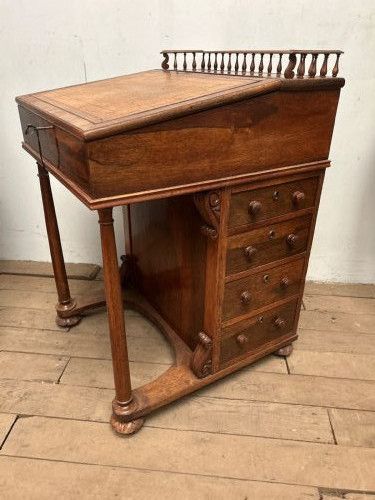
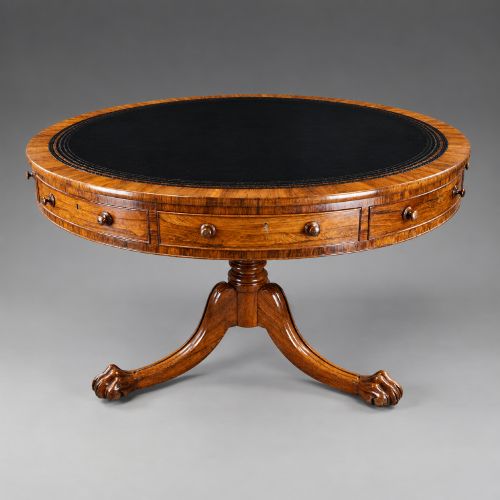
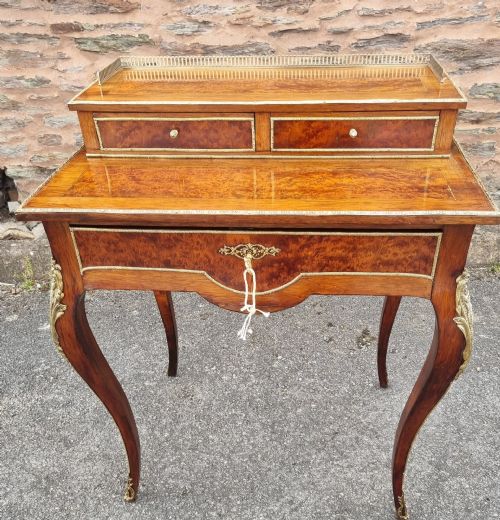
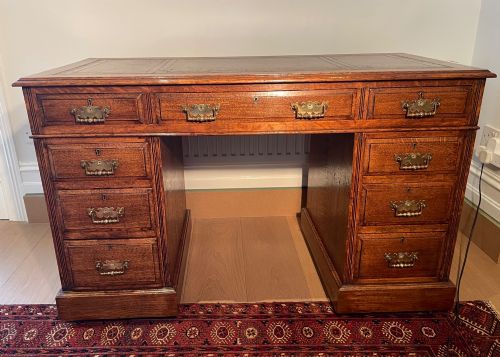
A nineteenth century writing desk encompasses diverse forms from compact Davenport desks and campaign slopes to large partners desks and pedestal tables. Most pieces encountered belong to the Victorian and Regency periods, appearing in mahogany, walnut, and rosewood.
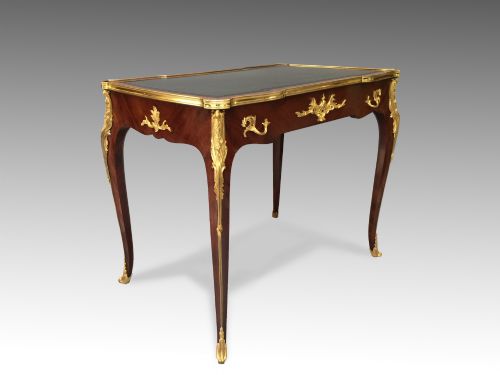
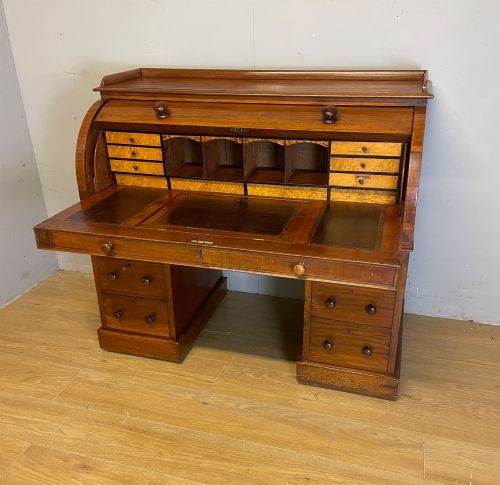
Makers and workshops produced specialised writing furniture including bureau plats, bonheur du jour cabinets, and cylinder desks. These items served domestic studies, libraries, and travelling writers with compartments for stationery and correspondence.
Materials and technique
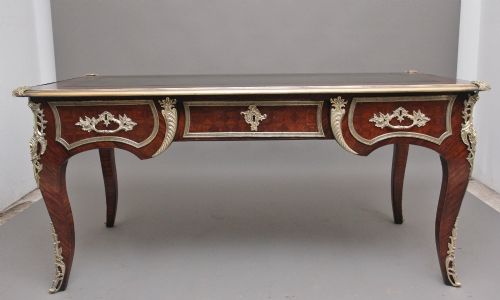
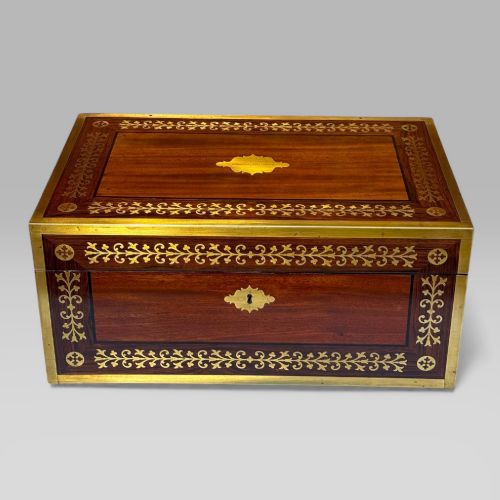
Cabinetmakers utilised solid and veneered timbers including flame mahogany, burr walnut, kingwood, and amboyna over sturdy oak or pine carcases. Surfaces frequently incorporated tooled leather writing inserts alongside brass handles, locks, and ormolu mounts.
Construction methods relied on dovetail joints for drawers and traditional cabinet framing to support heavy stationery loads. Finer examples integrated intricate marquetry, brass inlay, and porcelain plaques into the exterior structure.
Nineteenth Century Writing Desk Retail Price Guide 2026
Typical asking prices for nineteenth century writing desk among the pieces listed under this phrase on Sellingantiques today, from the lower quarter to the upper quarter. They describe what is for sale here now, not the wider market.
Some nineteenth century writing desks conceal secret compartments behind false drawer backs for hiding correspondence and valuables.
Distinctions in construction
Quality rests in the selection of figured timber veneers, the precision of brass or marquetry inlay, and the retention of original locks and leather inserts. Maker attribution to established firms like Gillows or Maple & Co elevates a piece.
Secondary woods, drawer linings, and the crispness of carved or ormolu-mounted details separate standard production furniture from exceptional workshop commissions intended for prominent libraries and drawing rooms.

Gillows·François Linke·Edwards & Roberts·Hobbs & Co·Maple & Co
The Nineteenth Century Writing Desk Glossary
- Campaign slope
- A portable writing box designed for travel, typically fitted with brass corners and flush handles for protection during transport.
- Pedestal desk
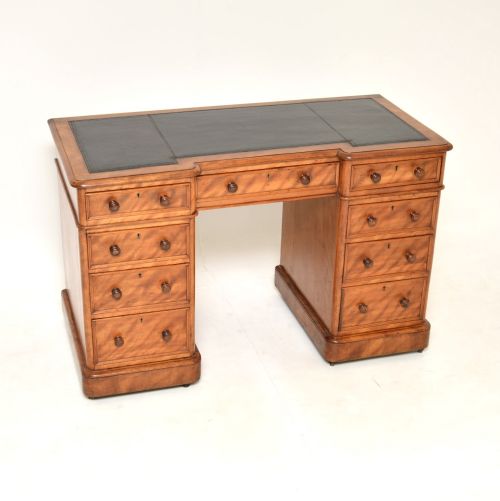
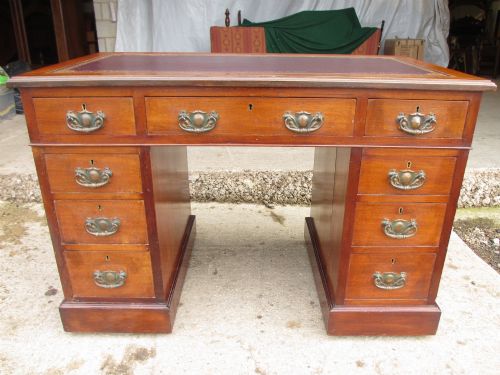
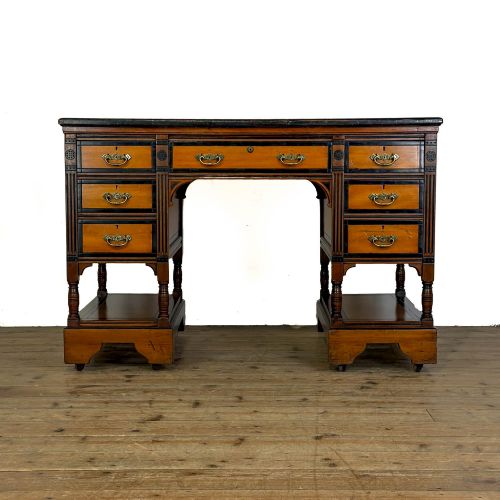
- A heavy freestanding desk comprising two supporting banks of drawers beneath a rectangular top inset with leather.
- Partners desk
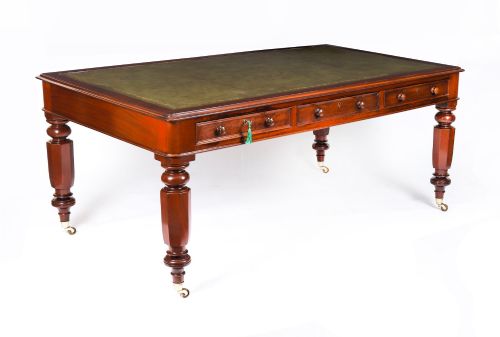
- A large double-sided desk built with drawers and cupboards on both faces to accommodate two people working opposite each other.
- Bonheur du jour
- A small light lady's writing desk featuring a raised cabinet or tier of pigeonholes and small drawers above the main work surface.
- Ormolu
- Gilded bronze used for decorative mounts, escutcheons, and feet on finer cabinet pieces.
Nineteenth Century Writing Desk: Frequently Asked Questions
What is a nineteenth century writing desk?
A nineteenth century writing desk is a piece of antique wooden furniture designed for correspondence, featuring drawers, compartments, and a dedicated writing surface.
These desks range from compact portable slopes to large pedestal and partners desks made from mahogany, walnut, and rosewood.
How were campaign writing slopes used?
Campaign writing slopes were built for officers and travellers who needed a portable desk while on the move. They folded shut to protect inkwells, paper, and letters inside.
When opened flat, the hinged lid created an angled writing surface lined with leather.
How do I identify a partners desk?
A partners desk is built to be freestanding in the middle of a room, featuring drawers and cupboards accessible from both sides. This allowed two people to sit opposite each other and work.
They are typically larger than standard pedestal desks and constructed from heavy timbers like mahogany or oak.
What is the difference between a Davenport and a pedestal desk?
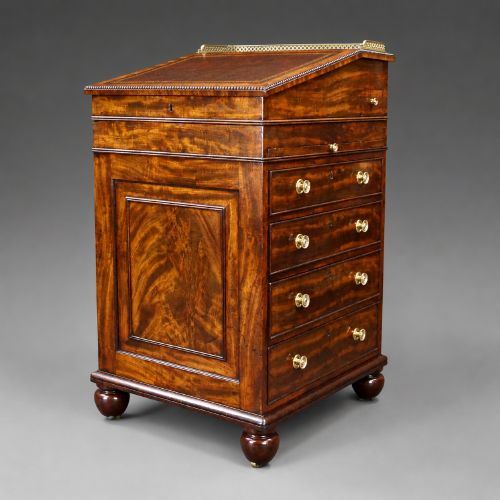
A Davenport is a compact desk with a sloping top for writing and a set of drawers opening to the side. It was often used in smaller private rooms.
Pedestal desks are much larger, featuring two full pedestals of drawers supporting a central top with a kneehole space in the middle.