


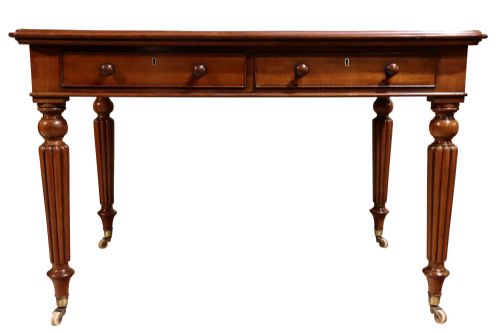
Reeded Leg Writing Desk
A reeded leg writing desk brings tactile elegance and classic proportion to a room, offering a disciplined workspace built from rich timbers.
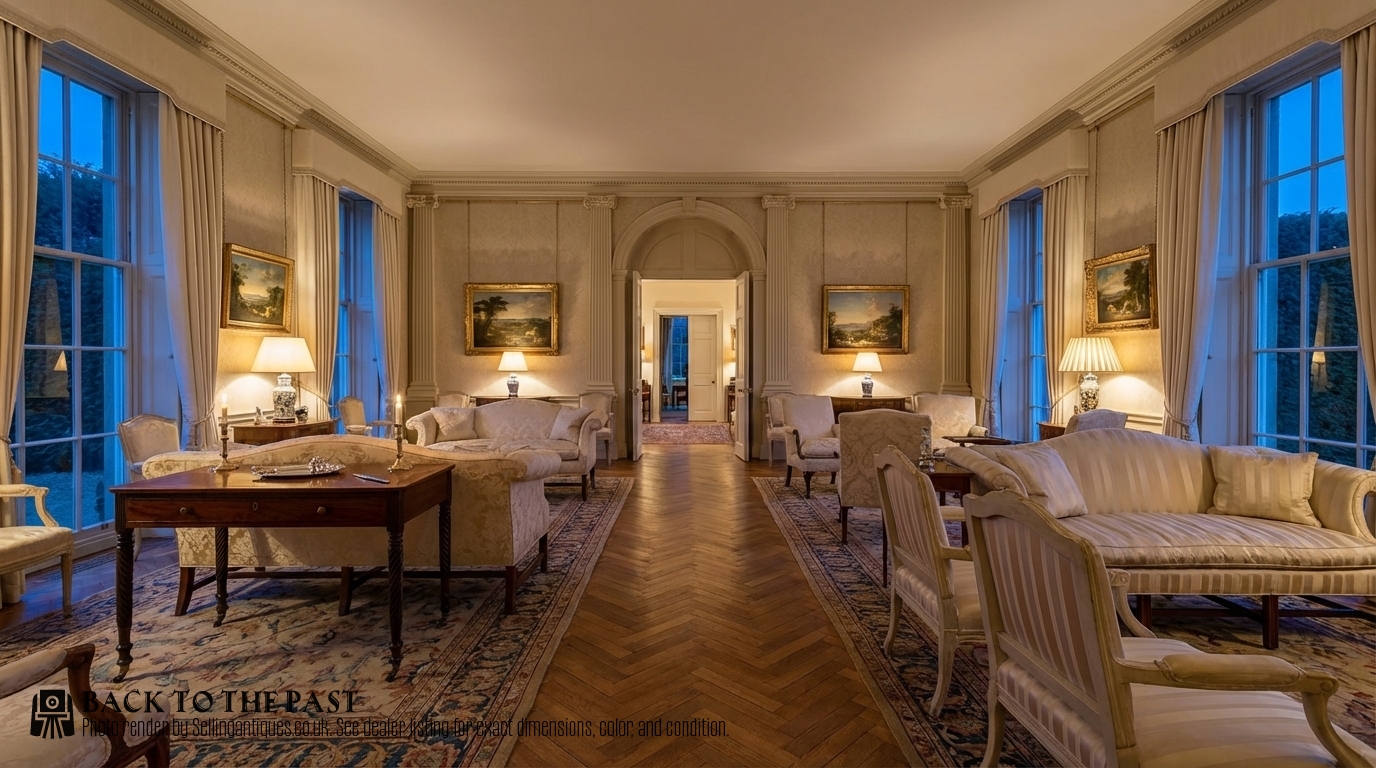
Reeded Leg Writing Desk
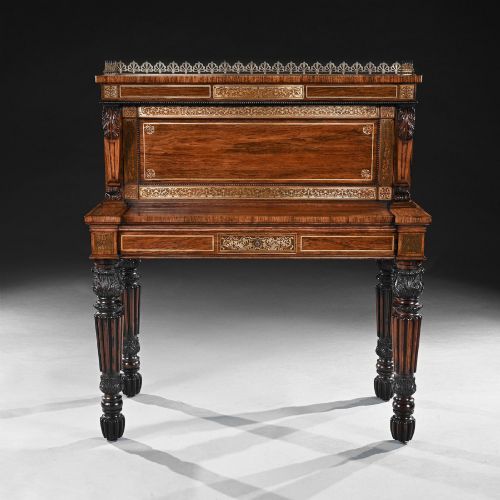
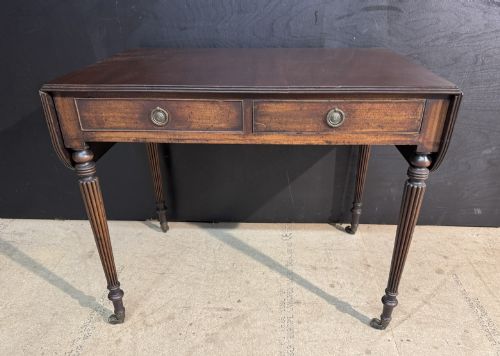
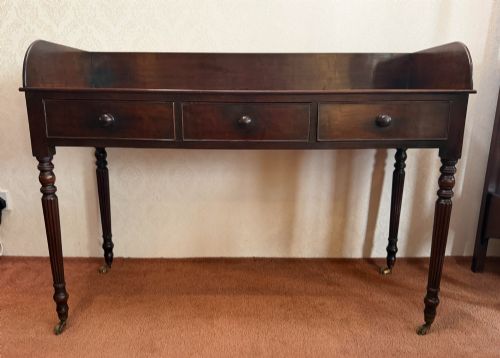
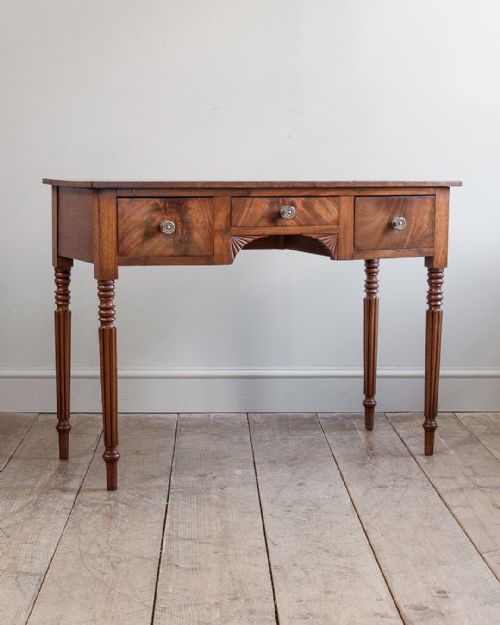
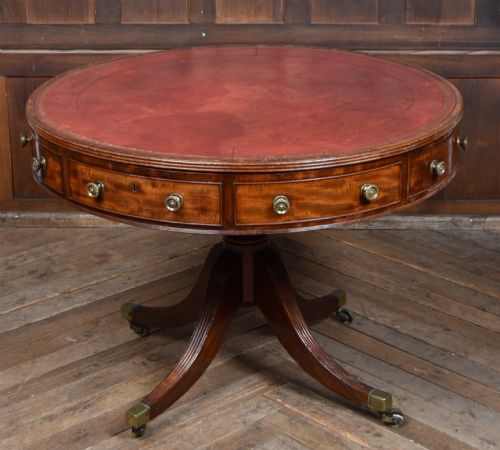
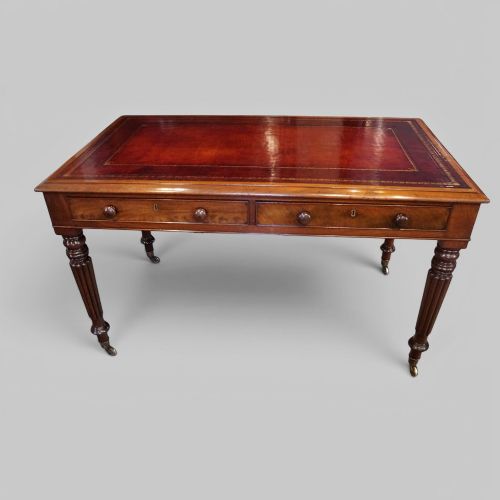
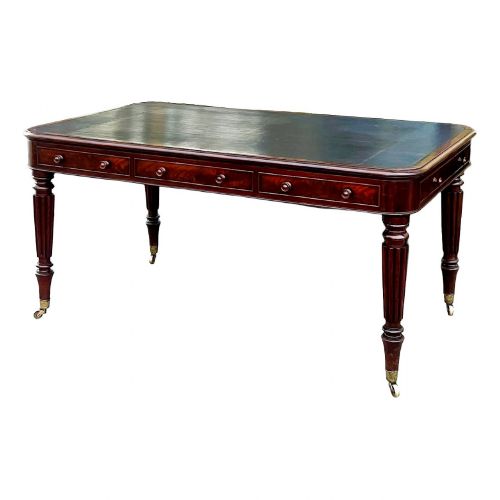
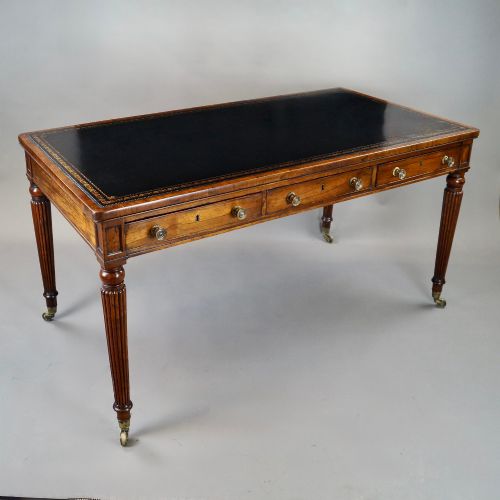
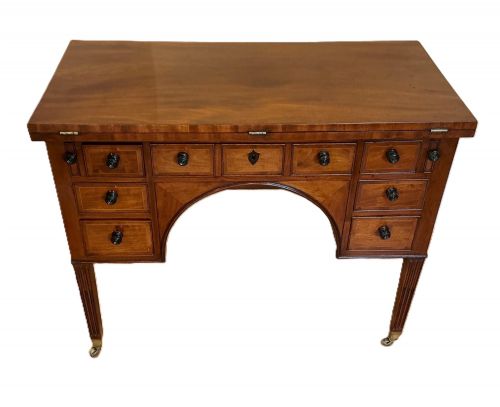
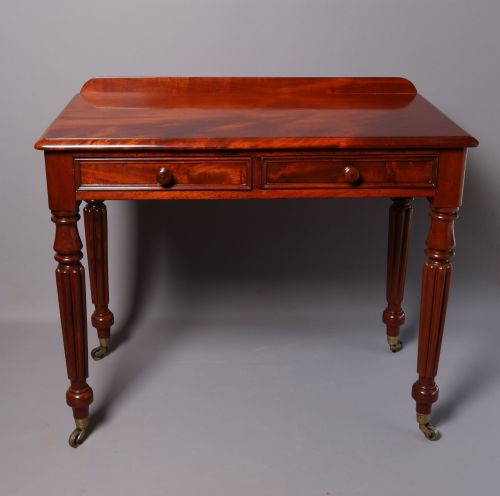
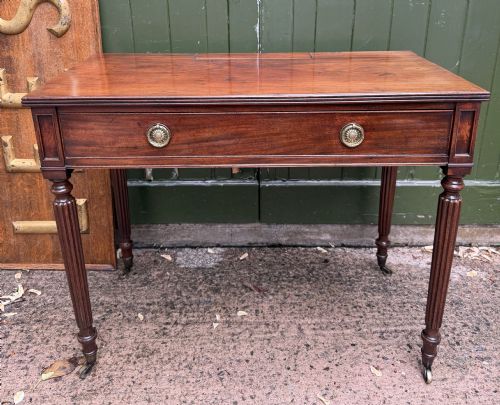
A reeded leg writing desk is a functional writing surface defined by vertically carved parallel mouldings on the supports, appearing primarily across Georgian, Regency, and Victorian periods. You will most frequently encounter mahogany examples styled as writing tables, side tables, and library tables.
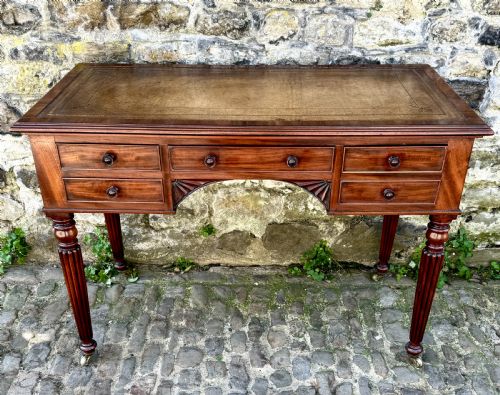
The form spans compact chamber desks to large partners tables, often incorporating leather writing surfaces and multiple drawers. Makers during the Regency and Georgian eras frequently utilised rosewood, ebony inlay, and brass galleries alongside the characteristic reeded legs.
Materials and construction
Cabinet makers built these desks predominantly in solid mahogany and rosewood, applying meticulous joinery to form stable writing surfaces and functional drawers. Selected pieces integrate contrasting ebony banding, brass inlay, and ceramic components.
Writing surfaces frequently feature tooled leather inserts set directly into the timber frame. The characteristic reeding on the legs is achieved through precise hand-carving or specialised moulding techniques, creating a textured surface that catches the light.
Reeded Leg Writing Desk Retail Price Guide 2026
Typical asking prices for reeded leg writing desk among the pieces listed under this phrase on Sellingantiques today, from the lower quarter to the upper quarter. They describe what is for sale here now, not the wider market.
Some nineteenth century writers kept miniature inkwells nestled inside secret compartments behind the reeded legs.
Markers of quality
Superior examples display crisp, uniform hand-carving on the reeded legs rather than shallow or machine-cut grooves. The selection of timber grain, particularly figured mahogany or rich rosewood, distinguishes finer commissions from standard utility pieces.
Attention to secondary details elevates a piece, such as precise brass inlay, well-fitted drawer linings, and original tooled leather inserts. Attribution to notable workshops like Gillows often accompanies higher standards of timber selection and structural joinery.
Gillows of Lancaster·Holland and Sons·William Trotter
The Reeded Leg Writing Desk Glossary
- Reeding
- Parallel convex mouldings carved vertically into furniture legs or columns. This decorative technique creates a slender, fluted appearance reminiscent of classical architecture.
- Partners desk
- A large double-sided writing table designed for two people to work opposite one another. These pieces typically feature banks of drawers on both sides.
- Sofa table
- A rectangular occasional or writing table traditionally placed in front of or behind a sofa. They often feature drop leaves and double pedestals or trestle supports.
- Ebony banding
- A thin strip of dark exotic wood inlaid into the primary timber surface to create a crisp border. This technique highlights the geometry of the desk top or drawer fronts.
- Brass gallery
- A delicate metal rail fitted around the upper edge of a table or desk top. It prevents items from rolling off the surface.
Reeded Leg Writing Desk: Frequently Asked Questions
How were these desks used?
These pieces served as functional writing surfaces for correspondence, accounting, and architectural drafting in libraries and parlours.
Larger versions with multiple drawers accommodated paperwork and stationery, while smaller chamber desks suited private bedrooms.
Are leather tops original?
Many desks retain their original tooled leather writing surfaces, though centuries of use often necessitate careful restoration or replacement.
Original leather typically exhibits distinct patination, dry tooling, and gold leaf embossing consistent with the period of manufacture.
How do I date a desk?
Dating relies on observing timber choices, hardware styles, structural joinery, and the overarching design idiom of the piece.
Georgian and Regency examples tend to feature lighter timbers like mahogany and rosewood, whereas Victorian pieces often display heavier proportions.