

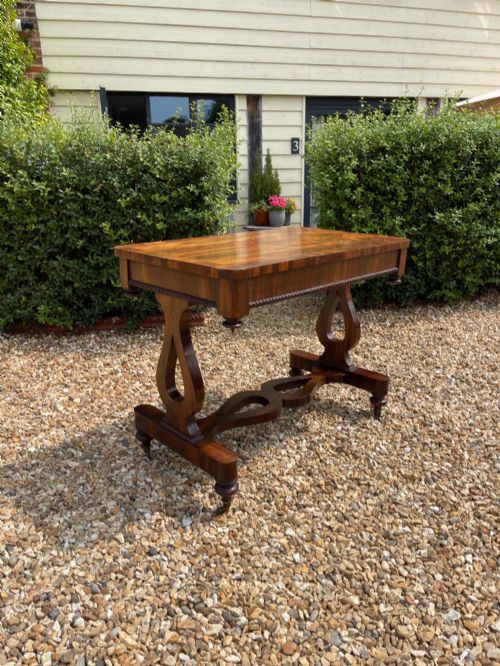
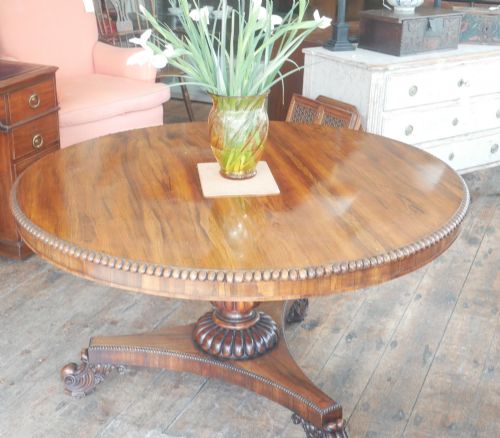


Regency Rosewood Library Table
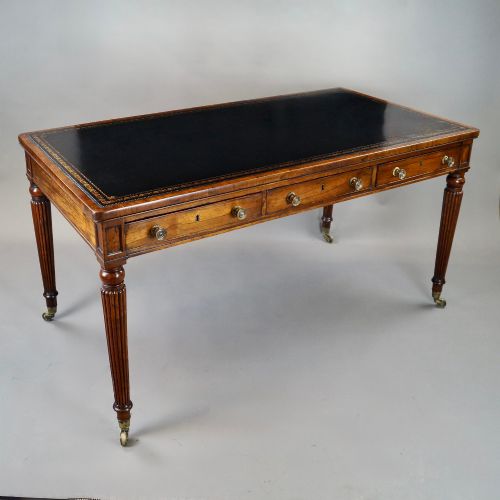
A regency rosewood library table stands as a masterwork of nineteenth-century cabinet making, offering both monumental presence and refined utility to a room.
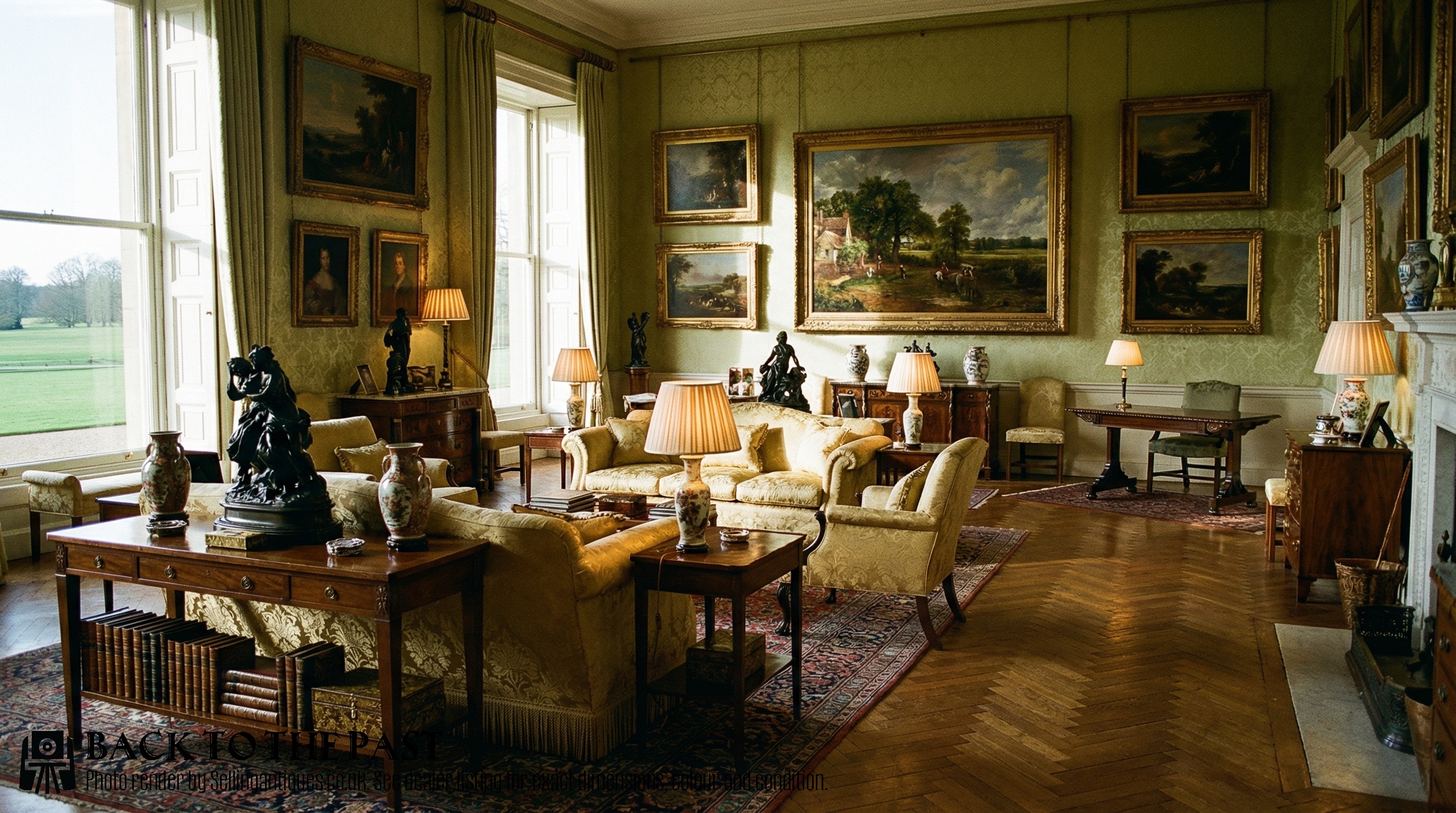
Regency Rosewood Library Table
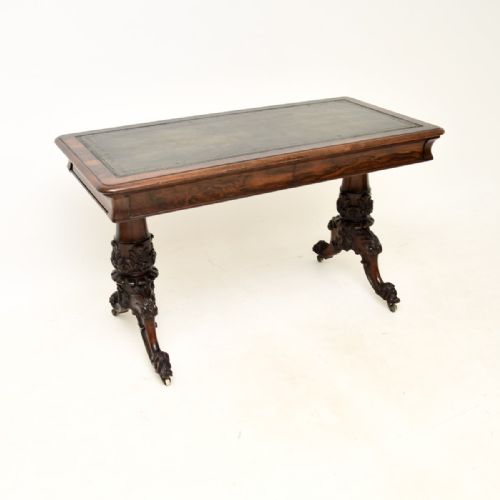
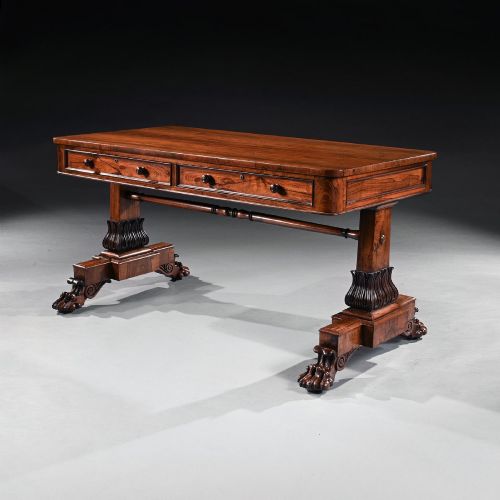
A regency rosewood library table is a sophisticated form designed for reading, writing, and displaying heavy volumes in the principal rooms of grand houses. Most examples encountered on this page date from the nineteenth century, spanning the Regency, George IV, William IV, and early Victorian periods.
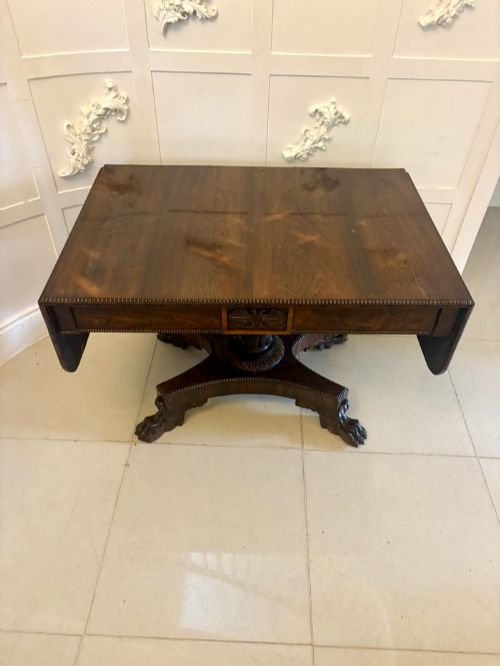
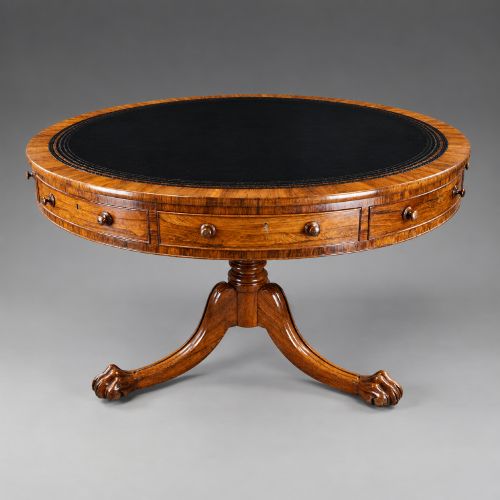
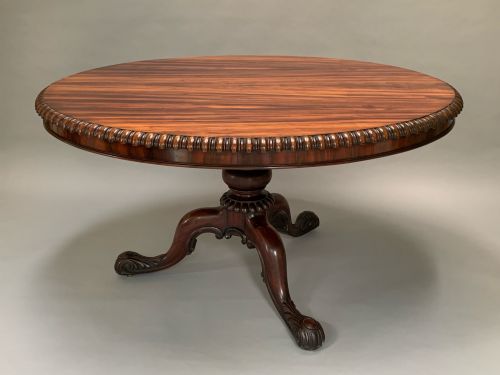
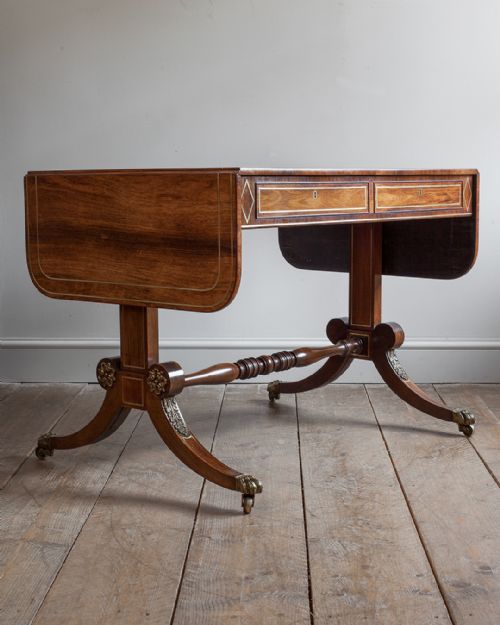
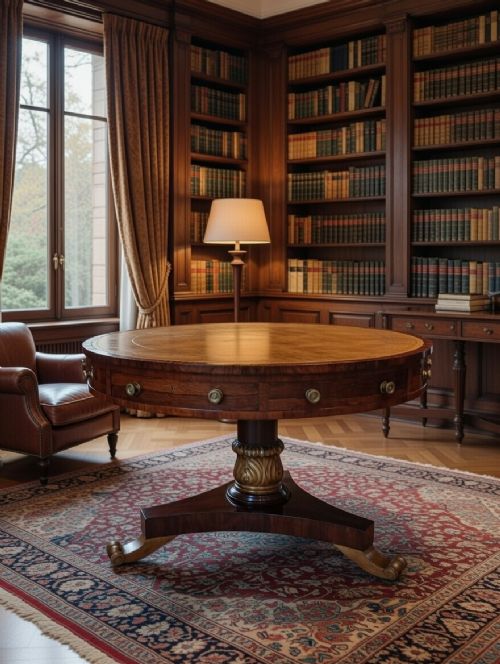
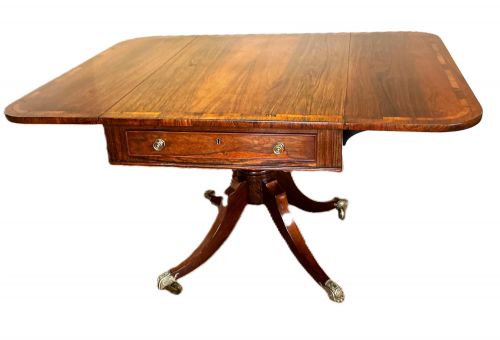
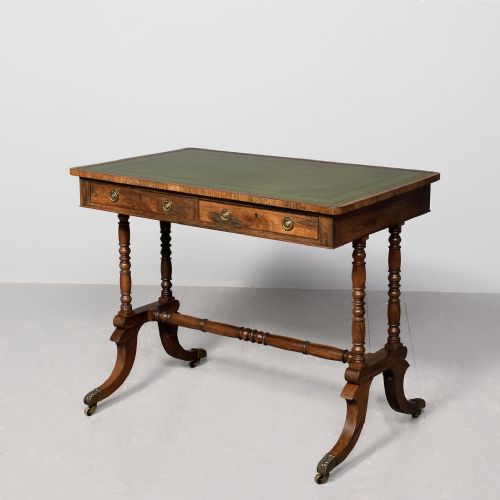
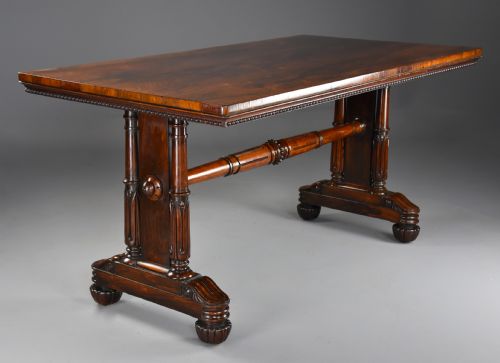
Beyond standard library tables, the category encompasses related forms such as sofa tables, drum tables, centre tables, and writing desks. These pieces were constructed to stand freely in the centre of a room rather than against a wall, displaying finished timber on all sides.
Origins and styling reflect the heights of Regency and early nineteenth-century design, often aligning with the output of esteemed workshops like Gillows. Buyers will find variations ranging from small freestanding writing tables to large library and reading tables fitted with drawers and brass mounts.
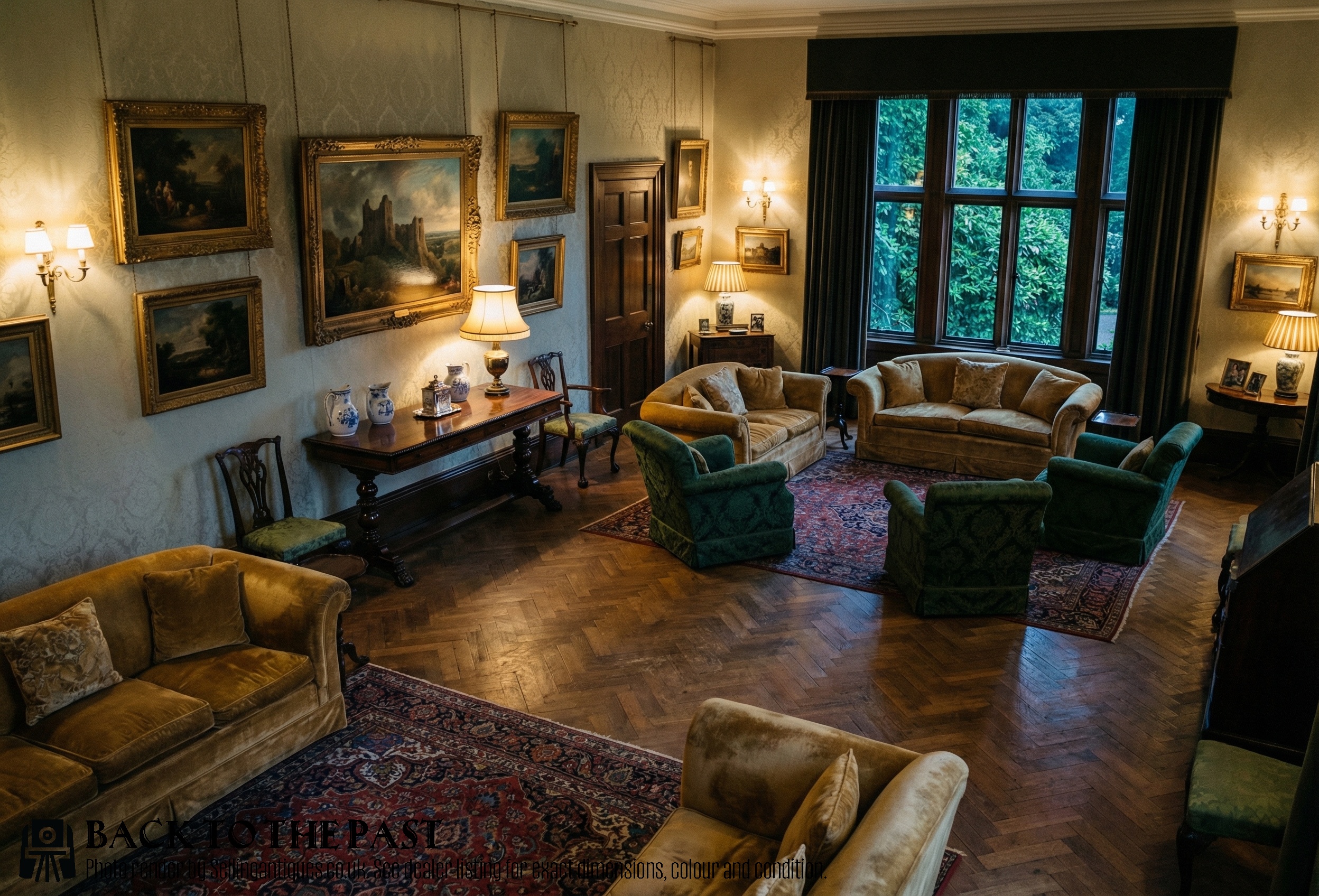
How They Were Made
Makers utilised dense timbers such as rosewood, goncalo alves, and mahogany as primary structural and surface materials, often selecting highly figured veneers for the top surfaces. Secondary woods like oak provided robust internal framing for drawers and underpinnings.
Decorative embellishments relied on precision craftsmanship, including brass line inlay, cut brass details, wood inlay, marquetry, and satinwood crossbanding. Metalwork mounts in ormolu and carved elements such as lions paw feet completed the construction.
Regency Rosewood Library Table Retail Price Guide 2026
Typical asking prices for regency rosewood library table among the pieces listed under this phrase on Sellingantiques today, from the lower quarter to the upper quarter. They describe what is for sale here now, not the wider market.
Some nineteenth-century readers needed tables with built-in revolving tops so multiple heavy volumes could be consulted without standing up.
What Varies in Quality
Execution of decorative details separates standard production from elite workshop output. Crisp carving on supports, precision in brass inlay, and the retention of original gilt metal mounts indicate the level of investment a patron made in the original commission.
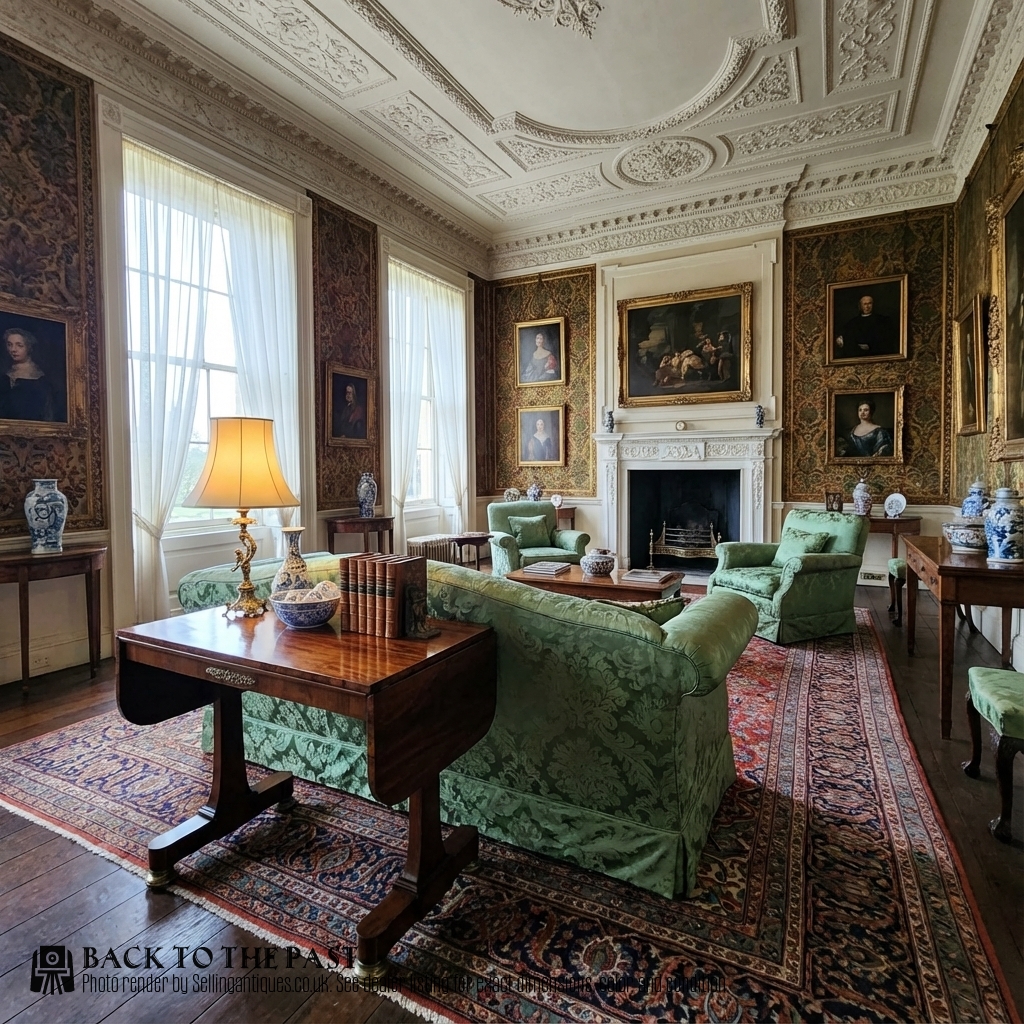
Gillows
The Regency Rosewood Library Table Glossary
- Crossbanding
- A strip of veneer applied to the border of a table top so that the grain runs perpendicular to the main surface. This technique provides a neat framing edge and showcases cabinet-making skill.
- Drum table
- A circular library table containing a deep top fitted with alternating drawers and faux drawers around the circumference. These tables typically rotate on a central pillar and platform base.
- Sofa table
- A rectangular table designed to stand in front of a sofa, featuring drop flaps on either end and usually twin pedestal supports or trestle ends.
- Ormolu
- Gilded bronze mounts applied to furniture for decorative enrichment during the Regency and related periods. The technique involves mercury gilding to achieve a bright, enduring metallic finish.
- Goncalo alves
- A dense exotic hardwood sometimes utilised in place of rosewood for high-end nineteenth-century tables, prized for its distinctive contrasting dark brown and golden figuration.
Regency Rosewood Library Table: Frequently Asked Questions
What is a regency rosewood library table used for?
These tables served as functional desks and reading surfaces in domestic libraries and studies of large nineteenth-century homes. They provided ample surface area for heavy folios and correspondence, supported by internal drawers for stationery.
Today, they function brilliantly as executive desks or centre tables in reception rooms, retaining their historic purpose while anchoring modern interior schemes.
How do I date a rosewood library table?
Dating relies on examining the secondary timbers, construction methods, and stylistic vocabulary exhibited across the piece. Regency and George IV examples from the early nineteenth century often feature crisper carving and specific brass inlay motifs.
Later pieces from the William IV and early Victorian eras tend towards heavier proportions, bolder pedestal bases, and distinct figuration in the rosewood veneers.
Are library tables designed to stand in the middle of a room?
Library tables were intentionally constructed as freestanding pieces finished on all four sides. This allowed them to occupy the centre of a library or drawing room rather than being pushed against a perimeter wall.
Because the backs and sides are fully finished with veneer and polish, they look correct from any viewing angle in an open interior layout.
What distinguishes a library table from a centre table?
Library tables generally incorporate functional drawers for storing books, papers, and writing implements beneath the top. Centre tables often omit drawers entirely, focusing instead on decorative geometric tops and elaborate pillar supports.
Both forms share the characteristic of being fully finished on all sides for central placement in a room.