





Leather Top Centre Table
A leather top centre table anchors a room with surface area and historic timber, turning an open floor into a place for books and writing.
Leather Top Centre Table
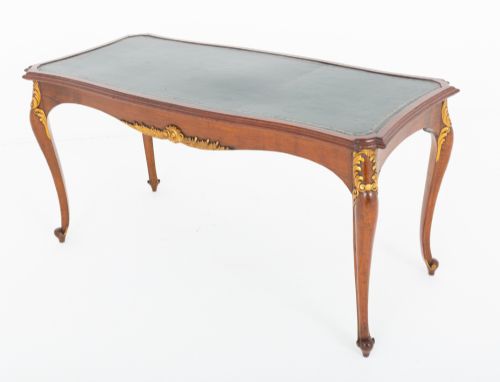
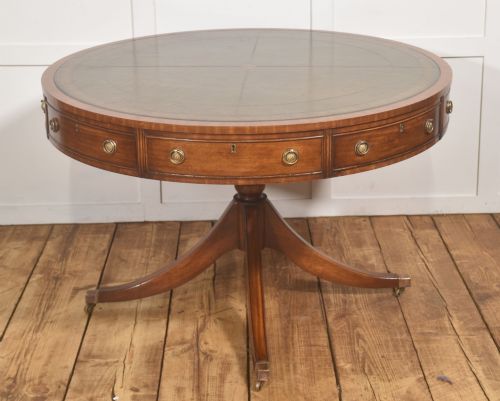
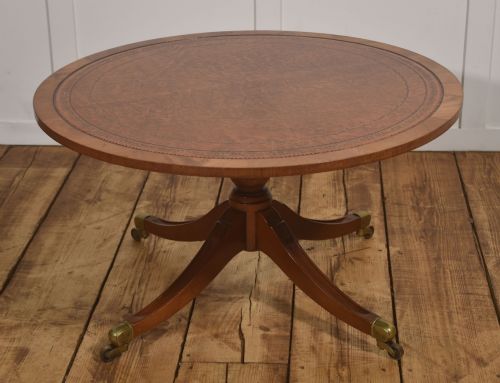
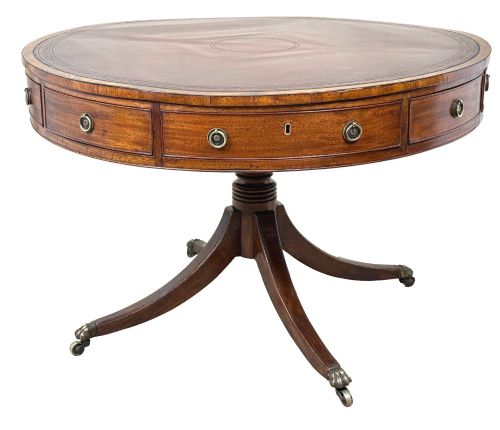
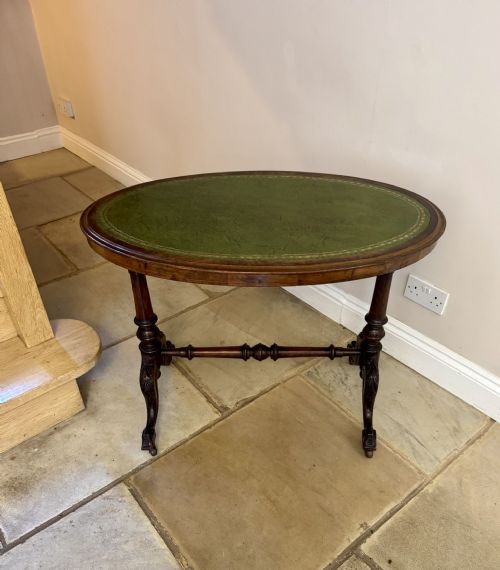
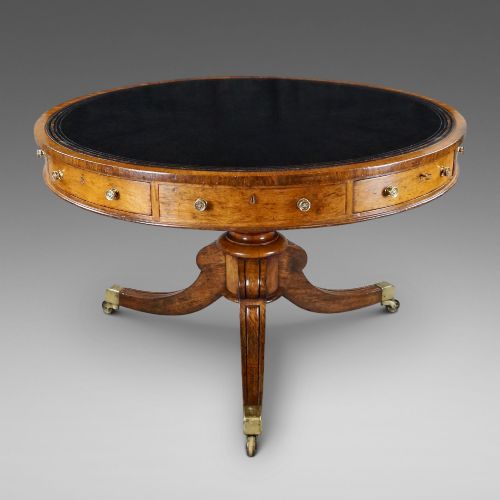
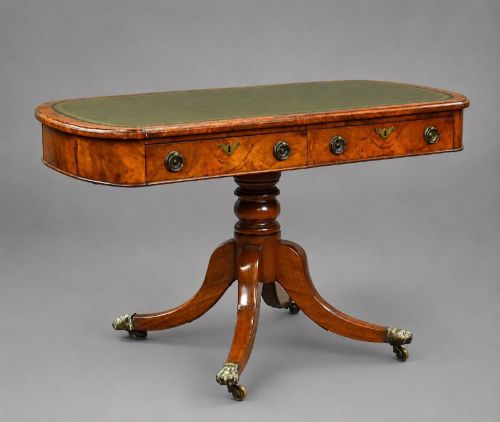
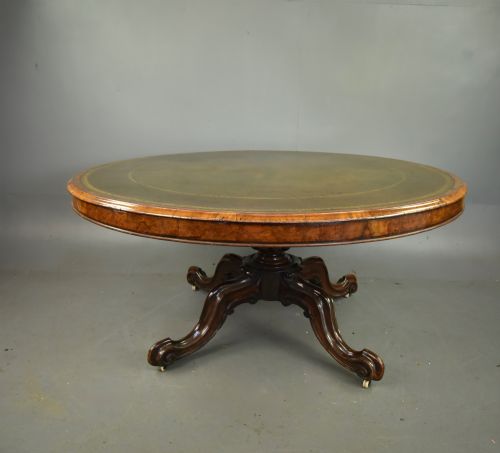
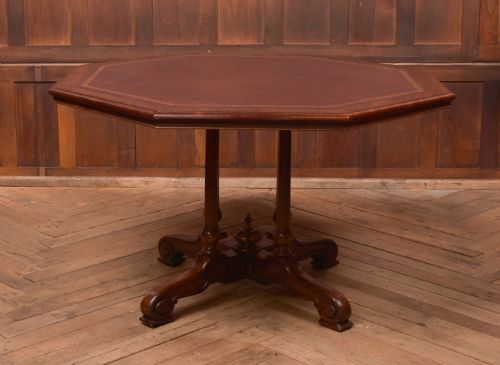
A leather top centre table appears in various guises across this selection, from round drum shapes to oval and octagonal library pieces produced during the Victorian and Regency periods. You will regularly encounter circular mahogany or walnut formats designed to stand free in a room rather than push against a wall.
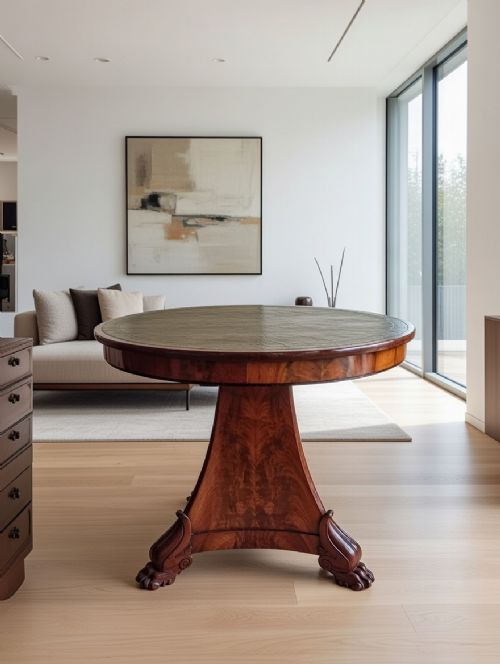
Makers utilised different timbers including oak, rosewood and flame mahogany to build these freestanding tables, sometimes adding brass details or carved elements in Gothic Revival and Georgian styles. The surfaces frequently feature inset leather, often tooled, serving as a durable writing plane.
The assortment spans from early nineteenth century examples to Edwardian iterations, encompassing coffee tables and writing desks alongside traditional library tables. These items reflect the domestic and scholarly requirements of their respective eras, prioritising stability and central placement.
Materials and construction
Cabinet makers constructed these pieces using solid and veneered timbers such as mahogany, walnut and oak, selecting dense woods that could support heavy use in libraries and reception rooms. Turned pedestals and multi-legged bases provided the necessary balance for freestanding circular and octagonal formats.
Workshops applied leather as the primary writing and display surface inset into the timber tops, frequently finishing the material with blind or gilt tooling along the margins. Brass fittings, castors and structural framing completed the construction, ensuring durability across decades of daily work.
Leather Top Centre Table Retail Price Guide 2026
Typical asking prices for leather top centre table among the pieces listed under this phrase on Sellingantiques today, from the lower quarter to the upper quarter. They describe what is for sale here now, not the wider market.
Listings feature walnut, mahogany and oak most frequently, spanning the Regency, Victorian and Edwardian periods.
Standards of craftsmanship
Quality reveals itself in the selection of timber figures, such as flame mahogany or burr walnut, and the precision with which the wood is joined to form stable pedestals and drum structures. Superior examples display refined carving and thoughtful proportions rather than purely utilitarian assembly.
The execution of the leather inset and its surrounding tooling distinguishes finer pieces, showing crisp lines and harmonious colour integration with the underlying wood. The presence of documented workshop signatures or high grade brass hardware further elevates an item's standing.
James Shoolbred And Co·Howard And Sons·Angiolo Barbetti Firenze
The Leather Top Centre Table Glossary
- Drum table
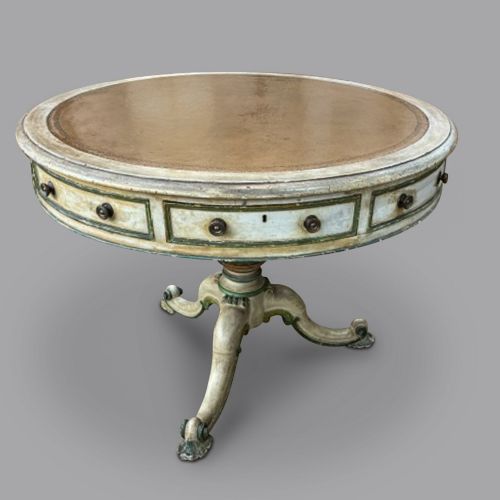
- A circular library table with a deep top containing drawers, resembling the shape of a drum.
- Gueridon
- A small French table, often round and supported by a single central pillar or caryatids.
- Library table
- A large freestanding table designed for books and reading, usually finished on all sides.
- Tooled leather
- Leather decorated with pressed patterns, often using gold leaf or blind stamping along the edges.
- Pedestal table
- A table supported by a central column resting on a footed base rather than four corner legs.
Leather Top Centre Table: Frequently Asked Questions
What is a leather top centre table used for?
These tables served primarily in libraries and studies as surfaces for reading, writing and handling large volumes. Their freestanding nature allowed people to access them from any side in the middle of a room.
Today, they function effectively in similar capacities as living room centre pieces, studies or large coffee tables. The leather surface provides a practical, resilient plane for daily use.
How do you date a drum table?
Dating relies on examining the timber species, construction methods, and stylistic cues such as Regency brass inlay or Victorian carved oak details. Turning styles on pedestals and drawer linings also offer clear clues to the decade of origin.
Comparing the piece against documented examples from specific reigns helps narrow the period further. Grain patterns and patination develop over generations, confirming the age of the wood.
Are these tables finished on all sides?
Freestanding library and drum tables are finished all the way around because they stood in the middle of rooms rather than against walls. This circular or symmetrical design allowed uninterrupted access.
Drawers often appear radially around the perimeter of drum tables, maintaining the balanced appearance. Every angle displays the chosen timber veneer and polished finish.
How do I care for the leather top?
Maintenance involves keeping the leather clean from dust and avoiding direct sunlight that can dry out the hide. Gentle conditioning with appropriate leather balms preserves the suppleness and protects the tooling.
Moisture should be kept away from the surface to prevent staining the hide or the wood beneath. Careful handling ensures the longevity of both the leather inset and the timber frame.