

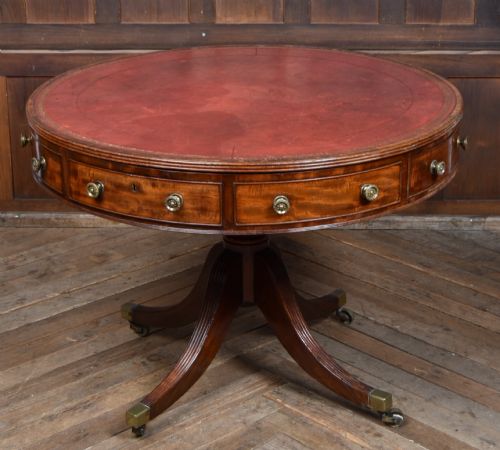


Regency Drum Table
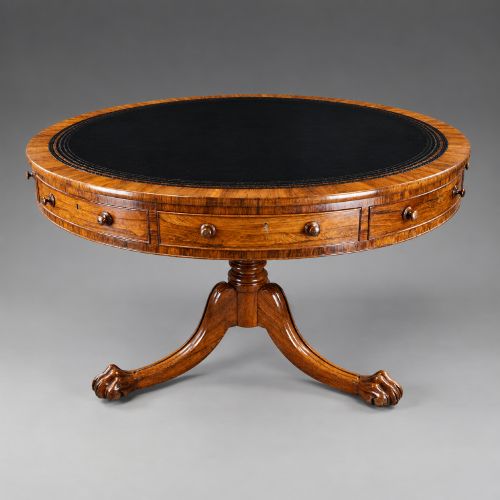
A regency drum table is a circular library piece designed for steady work and central placement, offering rotating drawers beneath a leather top.
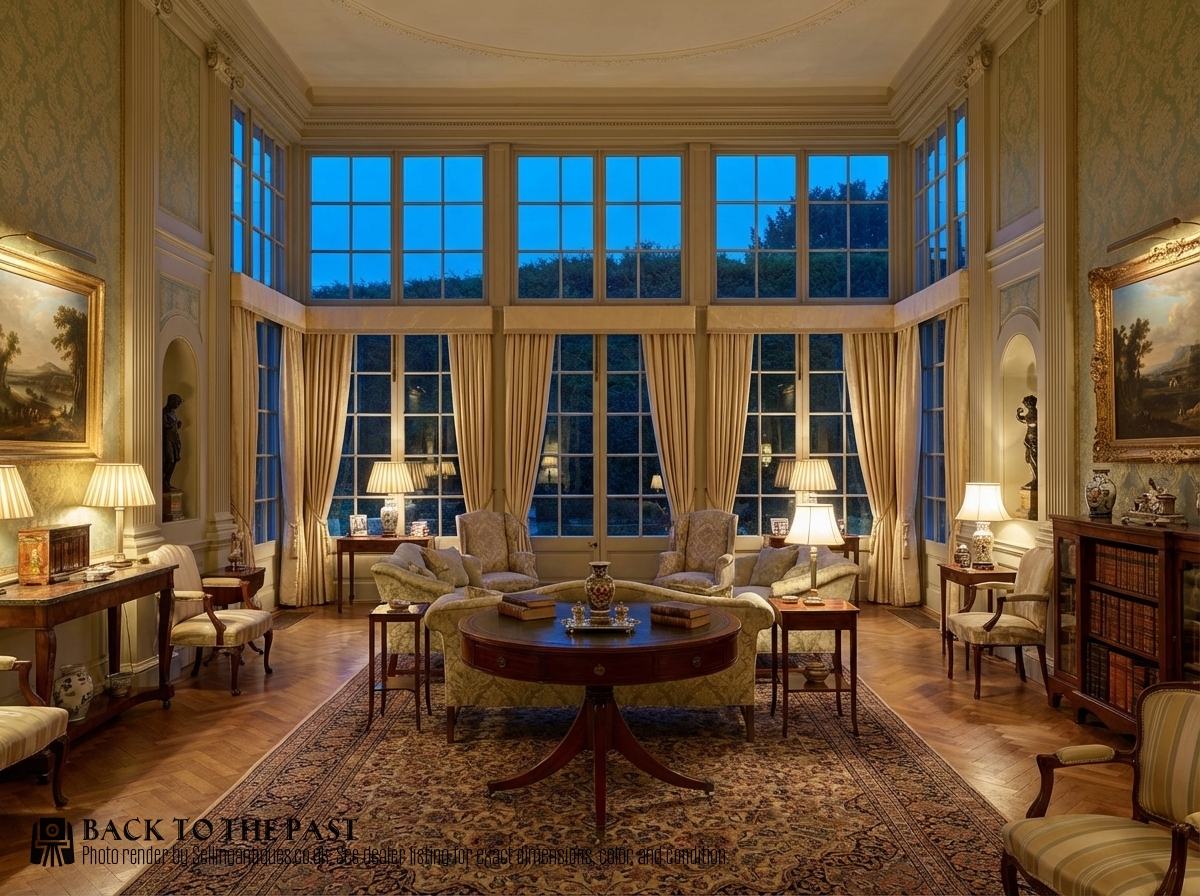
Regency Drum Table
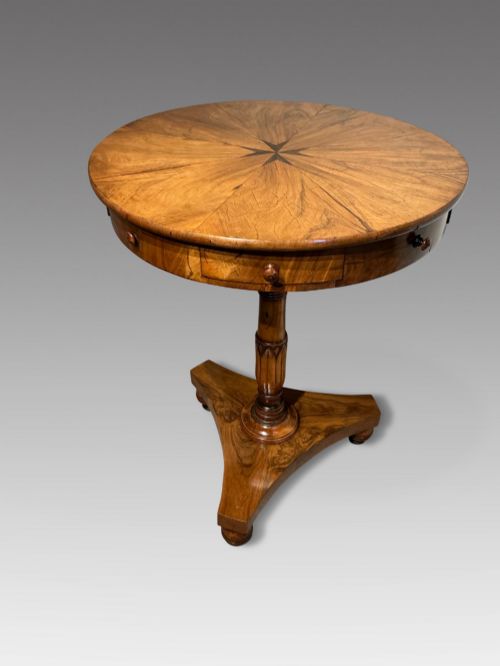
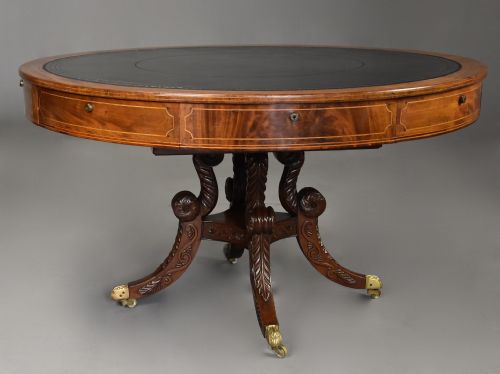
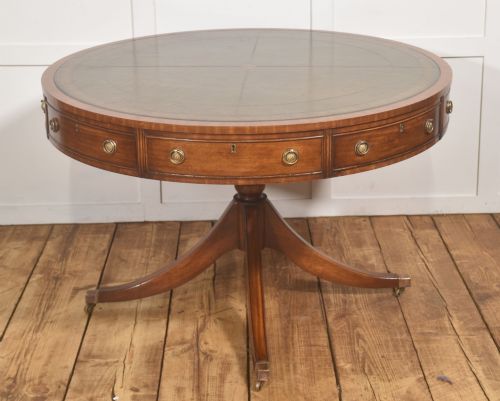
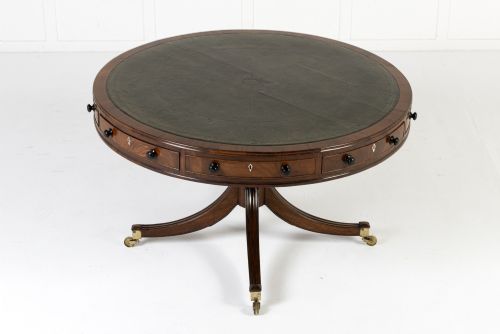
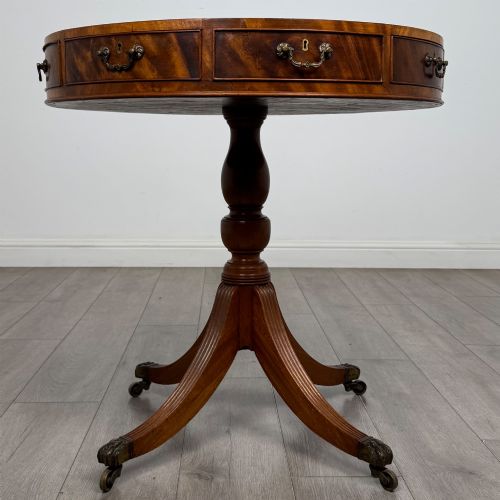
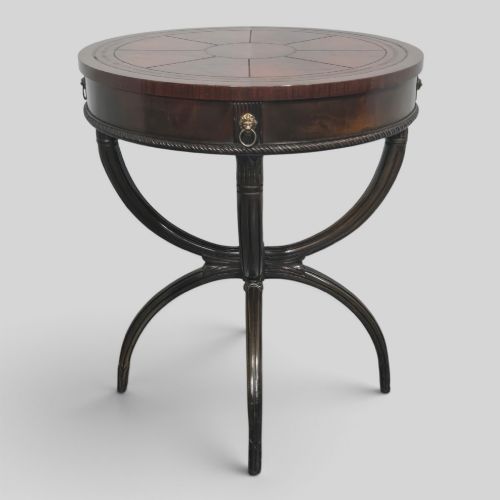
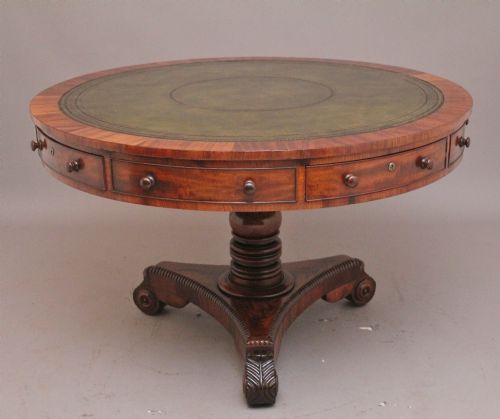
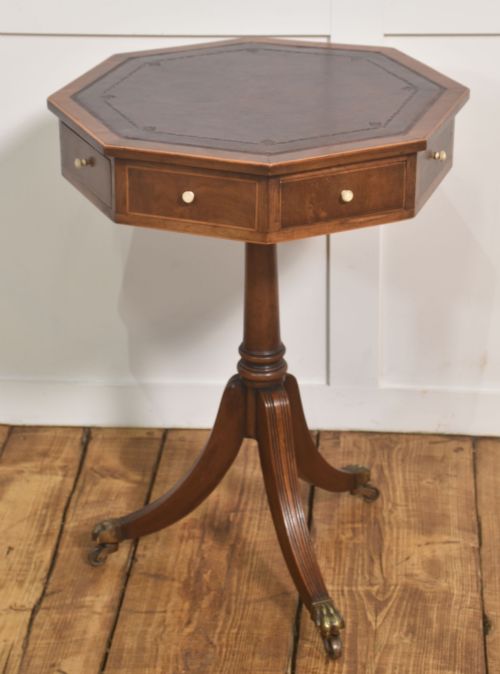
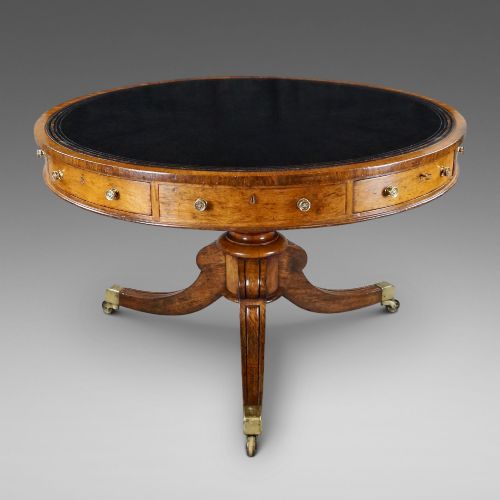
A regency drum table is a freestanding circular table with a deep top containing alternating drawers and dummy drawers, supported by a central pillar and a robust platform or leg base. When buyers search for a regency drum table, they encounter authentic pieces from the early nineteenth century alongside later revivals from the Edwardian era and the twentieth century.
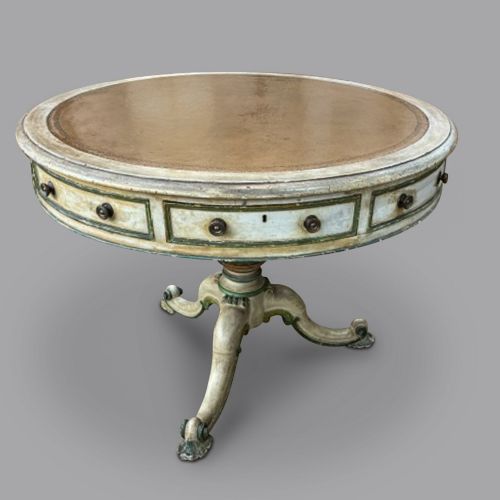
The form functions primarily as a library or centre table, allowing multiple users to access stationery or books from a seated position by rotating the entire top on its pedestal. Most examples on this page are constructed from mahogany or rosewood, though rarer iterations feature oak, burr oak, or painted wood.
Originating during the Georgian and Regency periods, these tables anchor large rooms by standing away from walls. Variations include small proportions, oval shapes, and occasional rotating mechanisms associated with William IV styles.
How They Were Made
Cabinet makers utilised dense timbers such as mahogany and rosewood, often selecting flame or figured veneers to cover the wide circular top. Leather inserts provided a flat writing surface, while brass inlays and brass knobs added functional contrast to the dark wood.
Construction relied on a central pillar resting on splayed legs or a platform base, housing an internal pivot mechanism that allowed the heavy circular top to rotate smoothly. Drawers incorporated mahogany linings and precise dovetail joints to withstand daily pulling and turning.
Regency Drum Table Retail Price Guide 2026
Typical asking prices for regency drum table among the pieces listed under this phrase on Sellingantiques today, from the lower quarter to the upper quarter. They describe what is for sale here now, not the wider market.
Object forms include library tables, occasional pieces, and centre tables alongside traditional drum tables.
What Varies in Quality
The selection of timber grain defines the visual weight of the piece, with figured flame mahogany and richly patterned rosewood sitting at the upper end of the scale. Plain secondary timbers and heavy later revivals lack the crispness of proportion found in genuine period examples.
Mechanisms dictate daily utility, distinguishing tables that rotate evenly on their original central pillar from those with stiff or misaligned pivots. The execution of brass inlay and the subtlety of drawer lining reveal the competence of the original workshop.
Gillows·Williams and Gibton·Henry Berkeley
The Regency Drum Table Glossary
- Drum Table
- A circular library table with a deep skirt containing drawers, supported on a central pedestal. The cylindrical shape gives the piece its common name.
- Centre Table
- A freestanding table finished on all sides for placement in the middle of a room. These pieces do not need to stand against a wall.
- Flame Mahogany
- A veneer cut from the fork of the mahogany tree to produce a repeating, flame-like pattern. Cabinet makers used this to create dramatic surfaces on table tops.
- Library Table
- A large work table designed for storing books and writing materials. They often feature leather tops and multiple drawers.
- Rotating Mechanism
- The internal pivot allowing the circular top to turn independently of the base. This allowed a seated reader to reach different drawers without moving.
Regency Drum Table: Frequently Asked Questions
What is a regency drum table?
A regency drum table is a circular library piece featuring a deep top with alternating drawers and dummy drawers. It stands on a central pedestal and rotates to give access from all sides.
Cabinet makers built these tables for libraries and studies where people needed a sturdy writing surface that could sit in the middle of a room.
How were they used originally?
These tables served as central desks and library work surfaces for sorting papers, reading heavy volumes, and storing ink and quills. The rotating top allowed users to reach different drawers without shifting their chair.
They stood away from walls as centrepieces in large rooms, combining storage utility with formal domestic display.
Where should I place one?
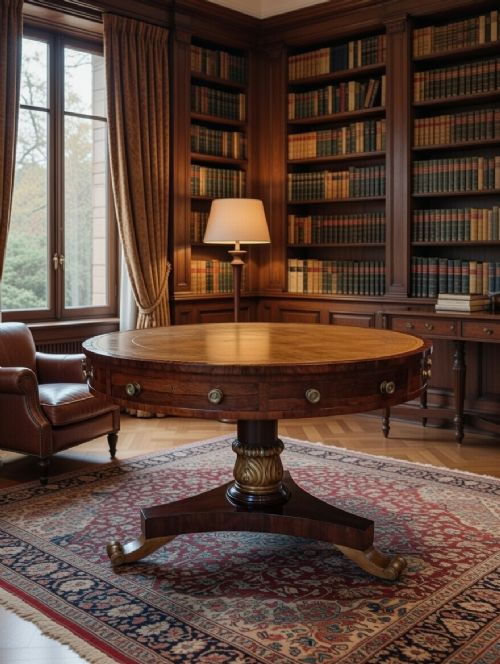
A drum table works best as a freestanding centrepiece in a study, library, or large hallway. Because the piece is circular and finished on all sides, it needs space to breathe away from walls.
Position it where people can walk around the perimeter and use the rotating drawers comfortably from any angle.
How do I tell periods apart?
Early nineteenth-century pieces display lighter proportions, fine flame mahogany veneers, and subtle brass inlays characteristic of the Regency style. Later revivals from the Edwardian era or the twentieth century tend to be heavier in build and simpler in timber selection.
Examining the drawer linings, internal pillar construction, and secondary woods helps distinguish original Georgian and Regency pieces from later copies.