



Georgian Drum Table
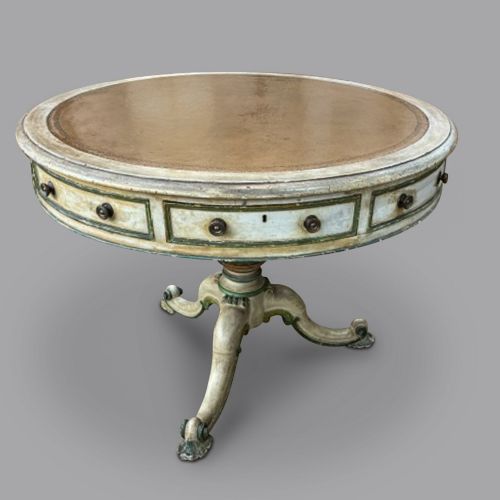
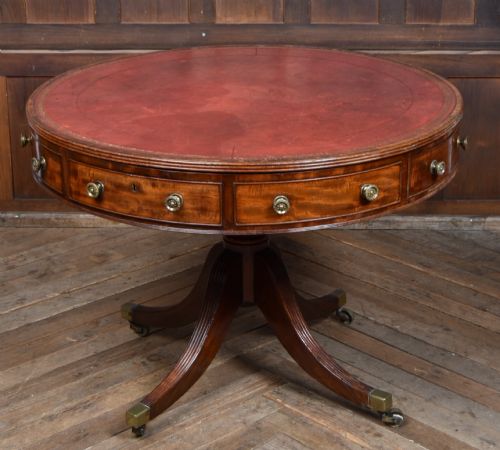
A georgian drum table is a circular library piece designed for papers and ledgers, offering a rotating top supported on a central pedestal.
Georgian Drum Table
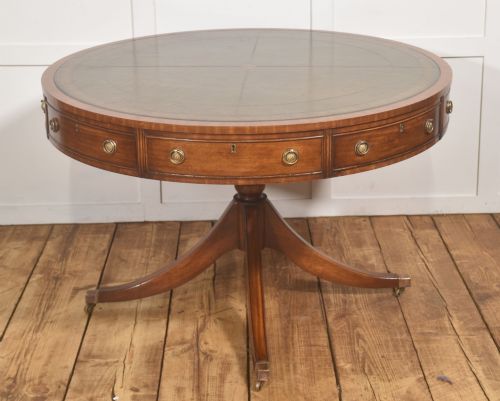
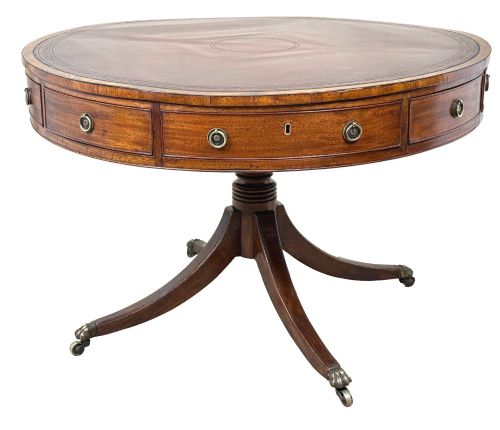
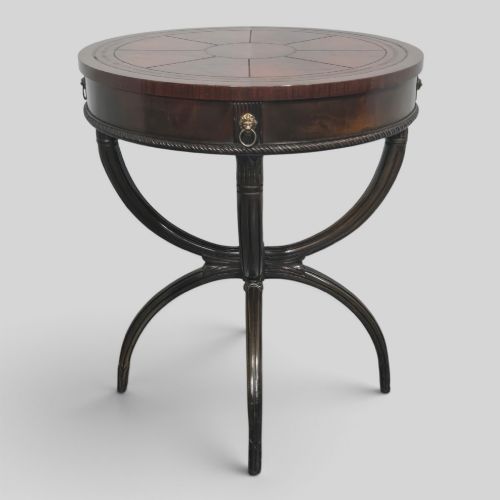
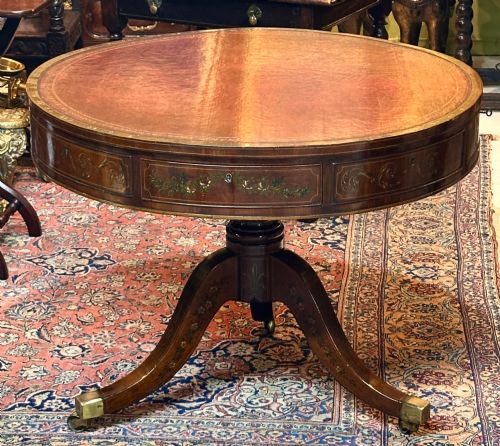
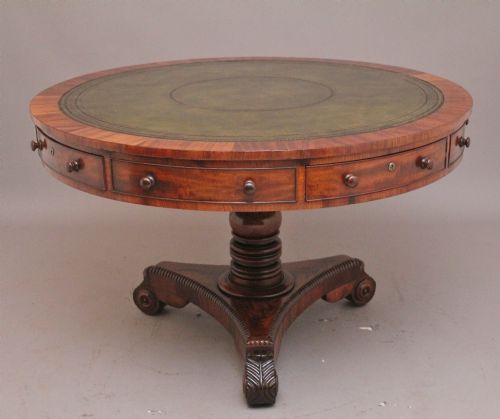
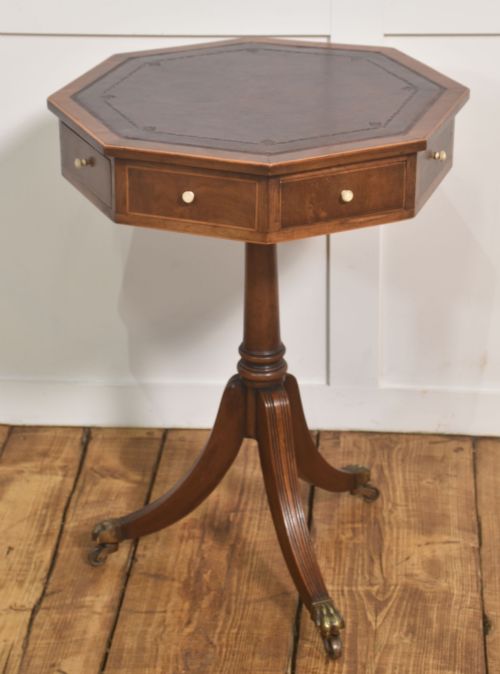
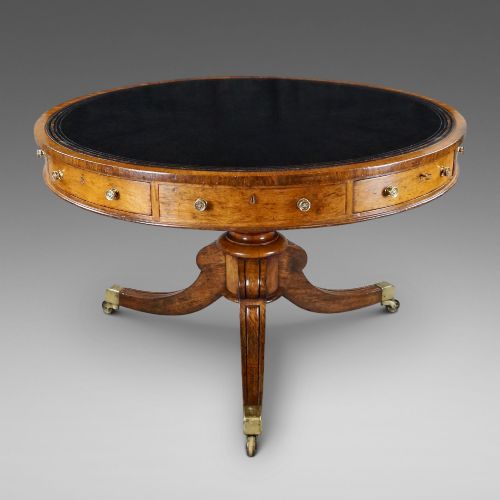
A georgian drum table stands as a circular piece of furniture constructed for libraries, studies, and grand rooms. These tables feature a deep cylindrical top that frequently incorporates drawers around the perimeter.
The version most commonly met on this page is formed from mahogany, often displaying figured flame grain or rosewood veneers. Pieces span periods from the Georgian and Regency eras through to later revival interpretations.
How they were made
Carpenters utilised solid mahogany and oak as structural timbers, applying book-matched flame mahogany veneers to the wide circular aprons. Leather inserts, frequently gold-tooled, were set into the top surface for writing.
Brass fittings appear as drawer handles, castors on the pedestal feet, and occasionally as inlaid stringing. Pedestals divide into multiple splayed legs to support the heavy rotating top.
Georgian Drum Table Retail Price Guide 2026
Typical asking prices for georgian drum table among the pieces listed under this phrase on Sellingantiques today, from the lower quarter to the upper quarter. They describe what is for sale here now, not the wider market.
Listings feature mahogany, rosewood, oak, and brass materials across Georgian, Regency, Victorian, and Edwardian periods.
The Georgian Drum Table Glossary
- Drum table
- A circular library or centre table with a deep cylindrical body containing drawers around the entire circumference. It usually rests on a central column and splayed feet.
- Rent table
- Another designation for a drum table, historically utilised by estate agents or land stewards for collecting rents and storing documents in the labelled drawers.
- Flame mahogany
- A veneer cut from the fork of the mahogany tree where the branches meet the trunk, producing a distinctive flickering flame pattern. Cabinet-makers reserved this timber for the primary visual surfaces.
- Cock-beading
- A narrow protruding moulding fixed around the edges of drawer fronts to protect the veneer joints and frame the opening. This detail signals careful construction.
- Fusee
- A conical pulley used in clockwork mechanisms to maintain equal power as the mainspring unwinds. This mechanism appears in drum head mantel clocks.
Georgian Drum Table: Frequently Asked Questions
What is a georgian drum table?
A georgian drum table is a round library table featuring a deep frieze fitted with alternating drawers and dummy drawers. They were built for domestic studies and offices to hold papers.
The top usually rotates on a central pillar, allowing a person seated at the table to access different compartments without moving around the room.
How were drum tables used?
These tables served as writing desks and storage centres for documents, account books, and stationery. The drawers were often lettered alphabetically to keep papers organised.
In larger houses, stewards used them as rent tables to collect payments and issue receipts across the desktop surface.
How do I tell Regency from Georgian pieces?
Georgian pieces often display simpler lines, solid mahogany construction, and understated bracket feet or pedestals. They date from the eighteenth and early nineteenth centuries.
Regency examples tend to incorporate bolder brass inlay, rosewood veneers, carved paw feet, and heavier pillar supports reflecting classical revival tastes.
Where should I place a drum table?
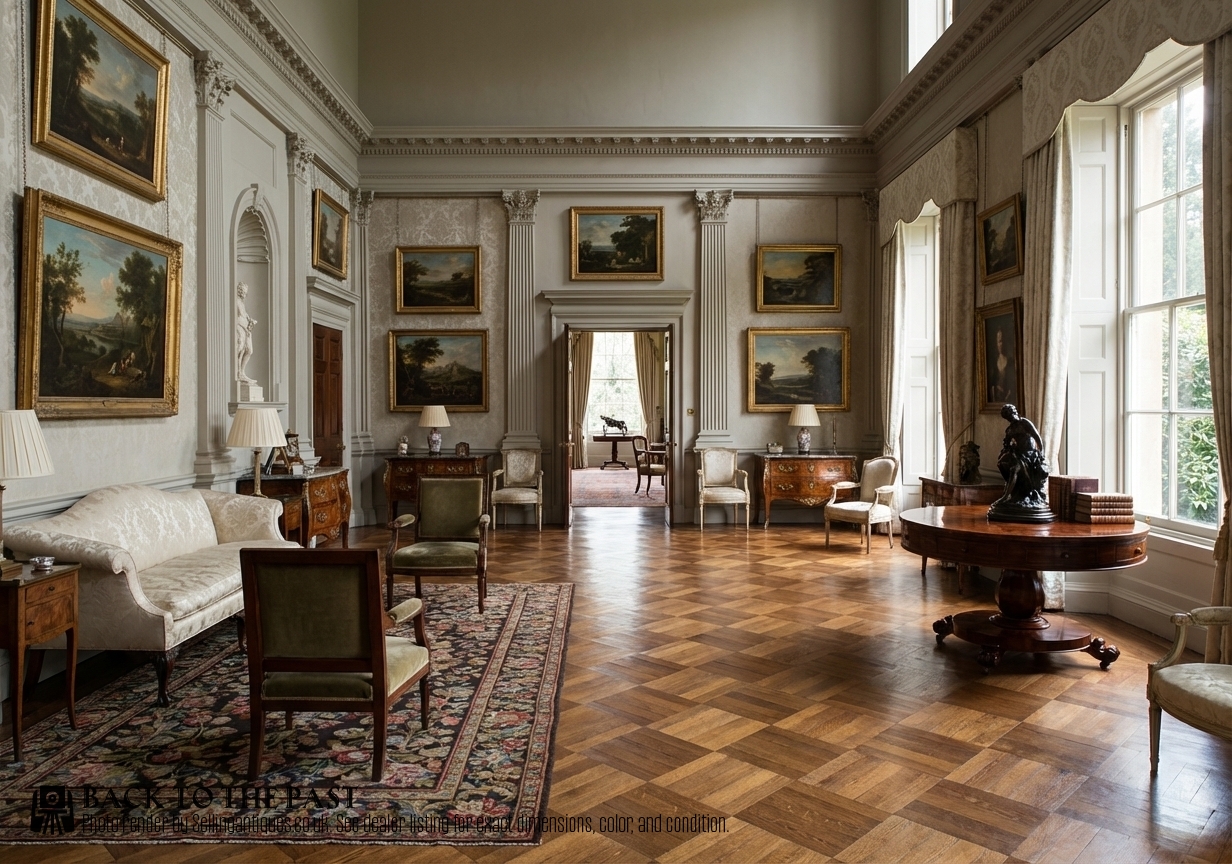
A drum table suits the middle of a study, library, or drawing room because the circular shape and revolving top allow access from all sides. They also function well as large centre tables.
Ensure there is adequate floor space around the perimeter so the drawers can open fully and chairs can pull up comfortably.