

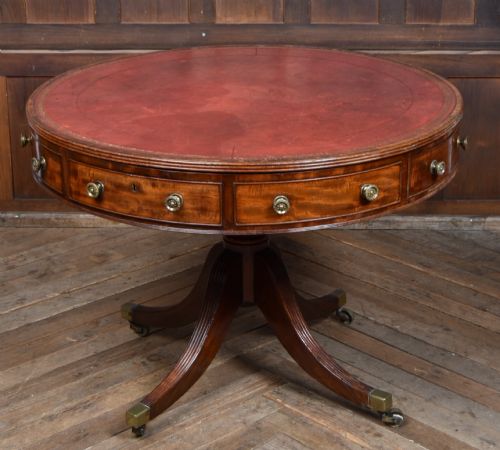


Leather Top Drum Table
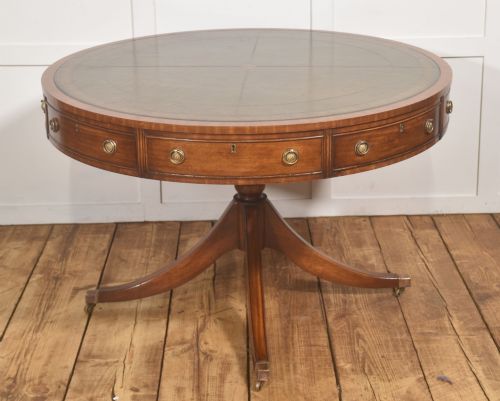
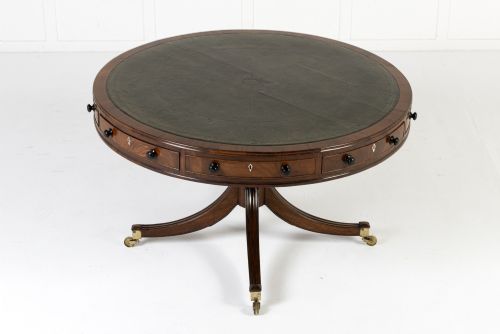
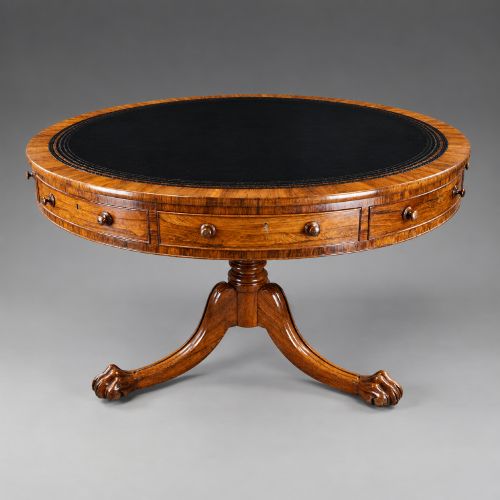
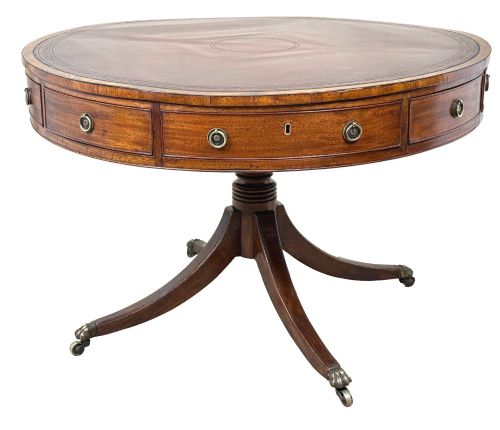
A leather top drum table brings a stately circular or octagonal silhouette to a library or study, prized for its fitted writing surface and revolving mechanism.

Leather Top Drum Table
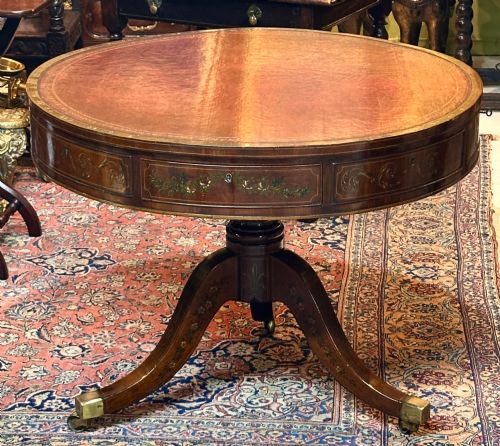
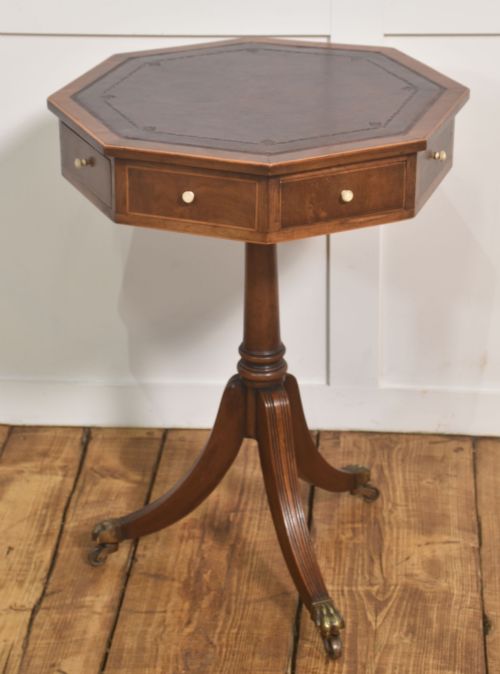
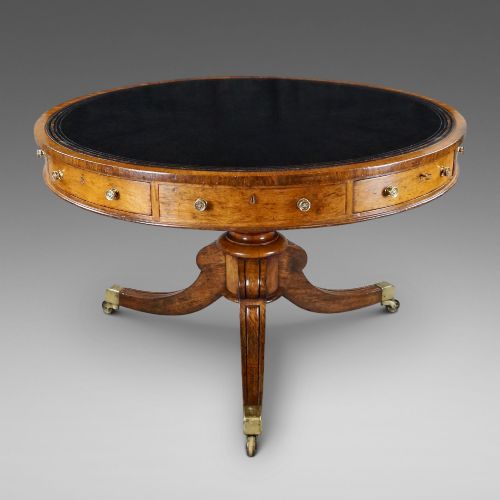
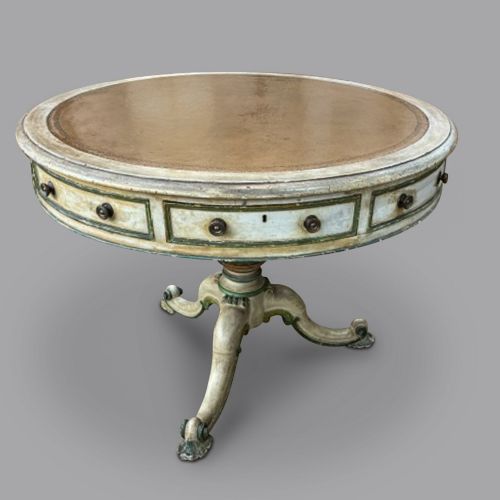
A leather top drum table is a circular or occasionally octagonal table housing drawers around its deep frieze, designed originally for libraries and studies. The pieces seen here span from the 18th century through the Georgian, Regency, Victorian, and Edwardian eras, with later revival pieces also represented.
Mahogany and rosewood dominate the listings, frequently paired with inset leather surfaces and brass hardware. Examples vary from compact proportions to large centre tables, alongside occasional library and campaign variants.
Materials and Construction
Makers constructed these tables primarily in mahogany, rosewood, and oak, often selecting figured timbers like flame mahogany for the top surfaces. Brass fittings appear on handles, campaign mounts, and castors.
Leather forms the inset writing surface, tooling around the perimeter. Many pieces incorporate rotating or revolving mechanisms within the pedestal base to access the frieze drawers.
Leather Top Drum Table Retail Price Guide 2026
Typical asking prices for leather top drum table among the pieces listed under this phrase on Sellingantiques today, from the lower quarter to the upper quarter. They describe what is for sale here now, not the wider market.
Listings span the 18th, 19th, and 20th centuries, including Georgian, Regency, Victorian, and Edwardian periods alongside revival pieces.
Assessing Quality
Quality rests upon the selection of timber veneers, the crispness of any carving or inlay, and the integration of the revolving mechanism. Solid secondary woods and well-fitted drawer linings distinguish superior examples.
Proportions and balance play a significant role, particularly in smaller or octagonal formats where the circular geometry must remain harmonious with the pedestal base.
The Leather Top Drum Table Glossary
- Drum table
- A circular library table with a deep frieze containing drawers, mounted on a central pillar and pedestal base. The name derives from its cylindrical shape.
- Frieze
- The broad horizontal band situated beneath the top of the table, which houses the drawers in these pieces. It often conceals alternating dummy and working drawers.
- Campaign style
- Portable furniture made for travel, typically featuring brass corners, recessed handles, and dismantling sections. These pieces are built for durability.
- Flame mahogany
- Timber cut from the fork of the mahogany tree to produce a distinctive flickering flame pattern. Cabinet makers reserved this veneer for prominent surfaces.
Leather Top Drum Table: Frequently Asked Questions
What is a drum table used for?
These tables served as library and writing desks where books, papers, and ledgers could be accessed easily from a seated position. The revolving top allowed a reader to reach different drawers without moving the chair.
Today they function as centre tables in studies or living rooms, providing surface space and concealed storage within the frieze.
How do I date a drum table?
Dating relies upon timber choices, hardware styles, and structural characteristics associated with periods like Georgian or Regency. Mahogany and rosewood predominate in earlier pieces, while oak and walnut appear across Victorian and Edwardian examples.
Revival pieces from around 1900 emulate earlier Georgian and Regency forms, requiring close inspection of secondary woods and construction methods to determine age.
What is a campaign drum table?
A campaign drum table includes portable elements such as recessed brass handles and robust construction designed for military travel. These pieces often feature octagonal tops and collapsible or modular framing.
Such variants combine the circular form of a standard library table with the practical adaptations required for transport.
Are all drum tables circular?
While the majority follow a cylindrical drum shape, a significant number feature octagonal or oval tops. These geometric variations retain the deep frieze and drawer arrangement characteristic of the form.
Octagonal examples appear frequently in campaign styles and Edwardian or revival pieces.